Weapons and Defense Technology
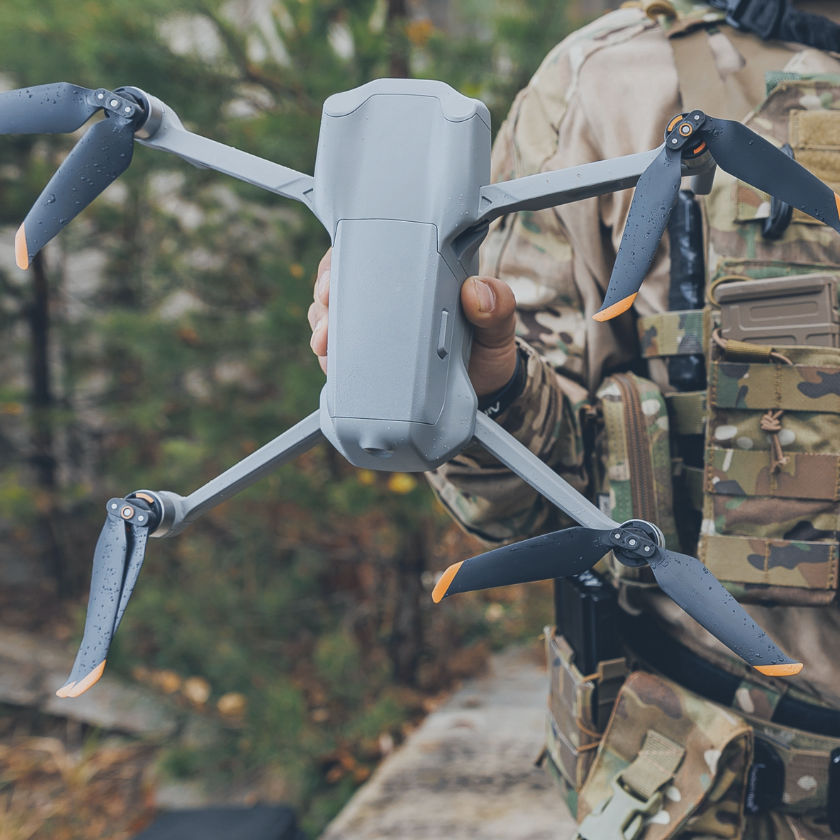
Today's armies are increasingly defined by their ability to innovate and integrate cutting-edge technologies such as cyberweapons, space systems, drones and artificial intelligence, all of which pose new operational and ethical challenges for combatants.
Related Subjects
Helicopter Warfare: The Future of Airmobility and Rotary Wing Combat.
Military helicopters have evolved into technologically sophisticated weapon systems. Originally designed to counter Soviet armor, attack helicopters now have to cope with a wide spectrum of threats, some of them bringing them back to their counterinsurgency roots.
La guerre des hélicoptères : L'avenir de l'aéromobilité et de l'aérocombat
Military helicopters have evolved into technologically sophisticated weapon systems. Originally designed to counter Soviet armor, attack helicopters now have to cope with a wide spectrum of threats, some of them bringing choppers back to their counterinsurgency roots.
The Development of Public-Private Partnerships in the European Satcom Sector
Public-Private Partnerships (PPPs) could help to enhance the societal benefits of communication satellites. However, European public entities must avoid the mistakes made during the Galileo concession negotiations.
Galileo, the Long Road to European Autonomy
Galileo is one of the most ambitious programs ever managed by the EU. As such, it illustrates the challenges and the opportunities offered by the development of a European Space Policy at the political, industrial, economic and international level.
German Military Engagement in Afghanistan: Conditions, Assessment, Outlook
Since the beginning of 2010, German authorities have become conscious of the fact that they cannot continue to maintain the Bundeswehr’s involvement in Afghanistan with a majority of the German population opposing it. It is clearly understood that the federal government and the Bundestag will adhere to President Obama’s plans to gradually withdraw national troops from ISAF, starting in the summer of 2011, and to hand over complete control of the country’s security to Afghani authorities.
Build and Maintain Air-Sea Superiority in a Contested Operational Environment – CNP 26
An exceptional opening roundtable at the 2026 Paris Naval Conference, bringing together the Chiefs of Naval Staff of the French, U.S., British, Italian and Dutch navies.
Replay - Navigating the Taiwan Strait Tensions: Perspectives from Japan, the Philippines, and France
Conference Replay - As tensions continue to rise in the Taiwan Strait and discussions grow about hybrid frictions potentially escalating into a kinetic conflict in the coming years, neighboring countries are bracing for impact. Japan and the Philippines would be on the front lines if a crisis were to erupt in the Taiwan Strait.
French-German future combat aircraft project on the brink of collapse
Eight years after Emmanuel Macron and Angela Merkel launched the SCAF, this symbol of European sovereignty in defense is on the verge of collapse. At issue are the demands of the project's main contractor, Dassault Aviation, which Berlin considers excessive, as well as political and strategic differences between France and Germany.
quoted by Leila Abboud in the Financial Times
2nd Maritime Security Conference: Threats to Maritime Trade and Maritime Infrastructure
Guillaume Furgolle, military fellow at the Defense Research Unit of the Security Studies Center at Ifri, participated in the 2nd Maritime Security Conference held on April 2, 2025. The topic of the conference was "threats to maritime trade and maritime infrastructure". Guillaume Furgolle spoke about the French vision of maritime security.
Support independent French research
Ifri, a foundation recognized as being of public utility, relies largely on private donors – companies and individuals – to guarantee its sustainability and intellectual independence. Through their funding, donors help maintain the Institute's position among the world's leading think tanks. By benefiting from an internationally recognized network and expertise, donors refine their understanding of geopolitical risk and its consequences on global politics and the economy. In 2025, Ifri supports more than 80 French and foreign companies and organizations.