




Practical information
List of invited participants:
Sean Bamford, Trades Union Congress, London
Norbert Cyrus, Hamburg Institute for Social Research (HIS), Hamburg
Pascal Decary, Veolia Propreté, Paris
Anna Delclòs, Fundacío Cecot Persona i Treball, Barcelona
Moulay El Akkioui, Fillea-CGIL, Roma
Don Flynn, Migrants" Rights Network, London
Johannes G. Knickenberg, Catholic Forum on Life in Illegality, Berlin
Sönke Rabisch, MigrAr, ver.di - Vereinte Dienstleistungsgewerkschaft, Hamburg
The Members of the ETFIM group are:
Arianna Cascelli, Sapienza University, Rome
Stefano Bertozzi, Bureau of European Policy Advisers (BEPA), EU Commission
Hector Cebolla Boado, National University of Distance Education, Madrid
Danièle Joly, Director of the Centre of Research in Ethnic Relations, University of Warwick
Barbara Laubenthal, Chair of Sociology Department, University of Bochum
Patricia Pielage, University of Bochum
Gemma Pinyol, Migration Program Coordinator at CIBOD, Barcelona
Ayesha Saran, Barrow Cadbury Trust, London
Sarah Toucas, Sciences Po Paris, France
Khursheed Wadia, Centre of Research in Ethnic Relations, University of Warwick
Catherine Wihtol de Wenden, Centre for International Studies and Research (CERI), Paris
The group is supervised by Christophe Bertossi, Senior Research Fellow and Director of the "Migrations, Identities, Citizenship" Program at Ifri, Paris.
Other events

Reinventing Coordination in an Age of Fragmentation 3rd Paris Geoeconomic Dialogue
The world economy is being reordered. The certainties of the post-Cold War era, open trade, dollar centrality, predictable multilateral coordination, are giving way to a landscape shaped by rivalry between the United States and China, the weaponization of interdependence, and a scramble to secure supply chains, technologies and critical resources. What once looked like a stable architecture now appears fragile, contested, and in places actively being dismantled.
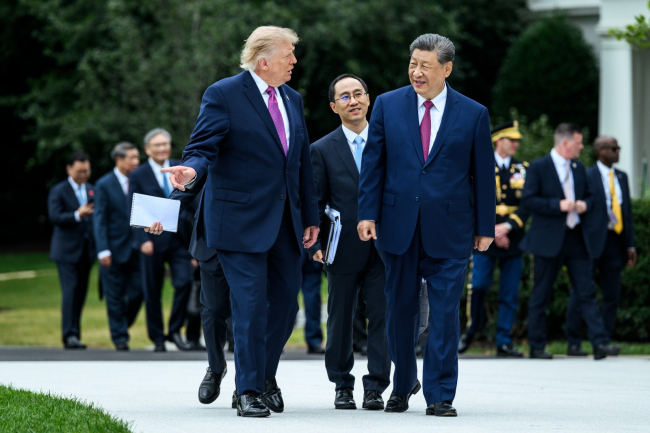
The United States, China and the Derisking Race in a Moment of “strategic stability”
For nearly a decade, relations between Washington and Beijing have been shaped by a contest over technology, supply chains, and the terms of economic interdependence. In The Derisking Race, Aaron Friedberg examines how this contest has moved well beyond tariffs and trade disputes toward a structural realignment of the global economy, in which both powers seek to reduce their exposure to one another even as the costs of doing so become harder to ignore.