


The United States, China and the Derisking Race in a Moment of “strategic stability”
Practical information
Accessibility
Themes and regions
Related centers and programs

Invitation-only event
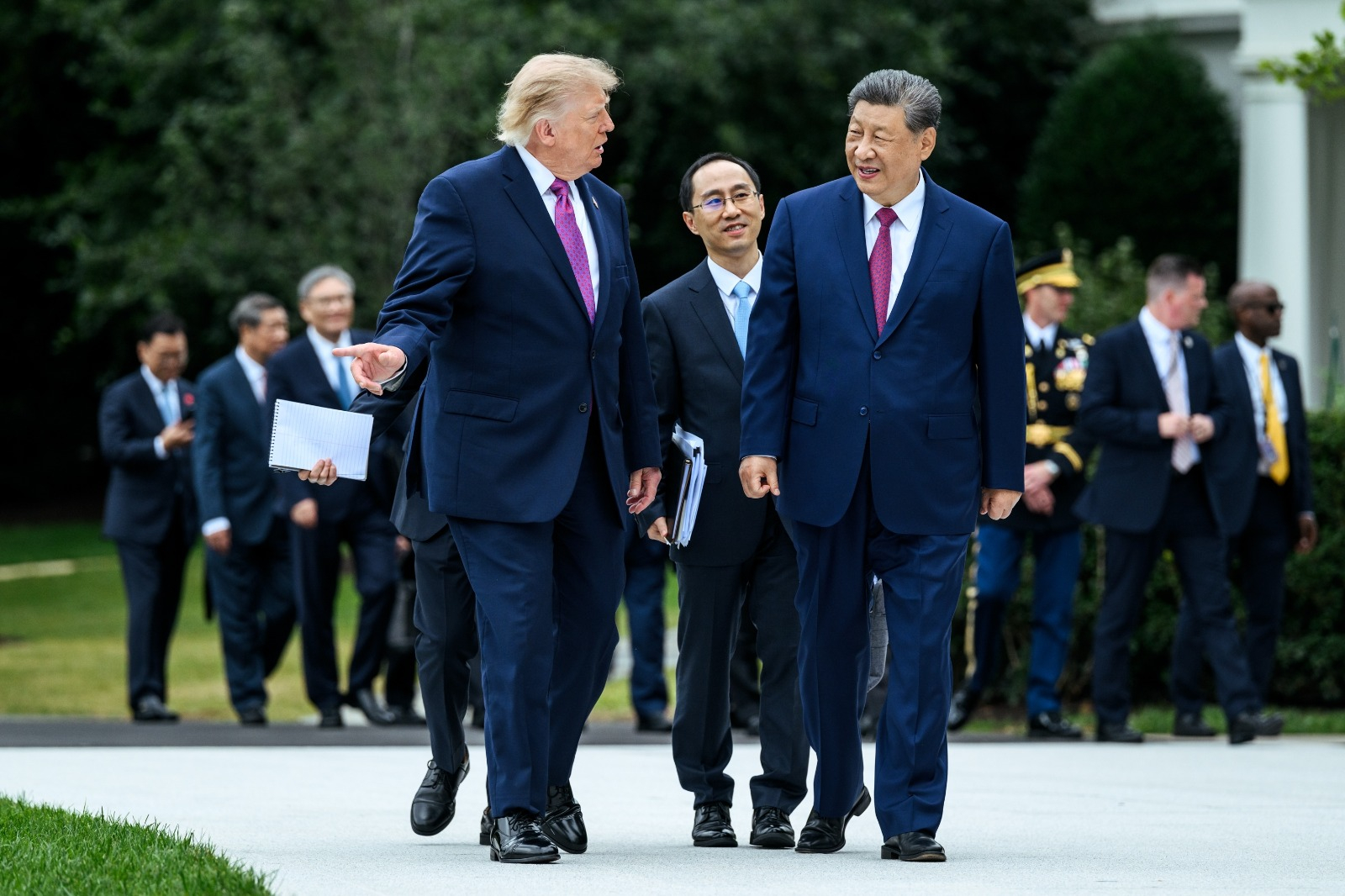
For nearly a decade, relations between Washington and Beijing have been shaped by a contest over technology, supply chains, and the terms of economic interdependence. In The Derisking Race, Aaron Friedberg examines how this contest has moved well beyond tariffs and trade disputes toward a structural realignment of the global economy, in which both powers seek to reduce their exposure to one another even as the costs of doing so become harder to ignore.
At the same time, since the Beijing summit in May 2026, and reaffirmed during Xi Jinping’s visit to Washington in September, both governments have embraced the language of a “constructive relationship of strategic stability.” Yet beneath that vocabulary, the underlying pressures persist: restrictions on technology, contested market access, and tariff frictions continue to generate tension on both sides. This seminar asks what the gap between declared stability and practical rivalry means for the future of the open global economy, the future of the US-China relationship and the global balance of power.
Speaker:
Aaron Friedberg, Professor of Politics and International Affairs, Princeton University, non-resident Senior Fellow at the American Enterprise Institute and author of The Derisking Race: China, America and the Fragmentation of the Global Economy, The Adelphi Series, IISS, 2026.
Discussants:
Sébastien Jean, Associate Director, Geoeconomics and Geofinance initiative, Ifri
Chair:
Marc Julienne, Director, Center for Asian Studies, Ifri
Contact
Attendance is by invitation only.
Please contact the Center for Asian Studies ([email protected]) for any question.
John SEAMAN
Research Fellow, Center for Asian Studies, Ifri

Speakers

Our team

Sébastien JEAN
Associate Director of Ifri's Geoeconomics and Geofinance initiative

Marc JULIENNE
Director, Center for Asian Studies, Ifri


Related Subjects
Other events

Reinventing Coordination in an Age of Fragmentation 3rd Paris Geoeconomic Dialogue
The world economy is being reordered. The certainties of the post-Cold War era, open trade, dollar centrality, predictable multilateral coordination, are giving way to a landscape shaped by rivalry between the United States and China, the weaponization of interdependence, and a scramble to secure supply chains, technologies and critical resources. What once looked like a stable architecture now appears fragile, contested, and in places actively being dismantled.