



Practical information
Themes and regions
Related centers and programs
The European Union (EU) enters a new political cycle and the Commission President-elect von der Leyen committed to propose a “Green Deal” in her first 100 days in office, with the ultimate ambition of making Europe the first climate-neutral continent.

Earlier this year, the Commission was invited to present a new “long-term EU industrial strategy” by the end of 2019. This can be a great opportunity to kill two birds with one stone: addressing the civilizational challenge of climate change, while creating quality jobs and ensuring the technological sovereignty of Europe.
To fuel the debate on the right policy toolbox and provide valuable insights to the new EU policy makers, the French Institute for International Relations (Ifri) and EIT InnoEnergy are jointly hosting a one-day high-level conference on the industrial dimension of the EU’s energy and climate strategy.
Following keynote speeches by the EU institutional triangle, the discussion will be articulated around three successive roundtables, each one addressing a prominent transversal aspect of the shift towards climate-neutrality: the human, policy and financial dimensions.
This conference will be held in English.
Programme:
8.45 - 9.15 Registration & coffee
9.15 - 10.15 Keynote speeches
- Juho Korteniemi, Ministry of Economic Affairs and Employment of Finland
- Hans van Steen, Director, DG Energy, European Commission
10.15 - 10.30 Special address
- Bertrand Piccard, Founder and Chairman, Solar Impulse Foundation
10.30 - 12.00 Workers, Researchers, Consumers, Entrepreneurs, Citizens: the key role of the human factor in the energy transition
- Marc Nézet, Senior Vice-President Innovation, Schneider Electric
- Giles Dickson, CEO, WindEurope
- Jean-Baptiste Pernot, Board Member, SAFT Batteries
- Sébastien Storme, Senior Advisor, Just Transition Centre, International Trade Union Confederation
- Walburga Hemetsberger, CEO, Solar Power Europe
- Ewelina Wójcik, Director, Regional Office of Silesia Voivodeship in Brussels
- Dirk Vansintjan, CEO, RESCoop.EU
Moderated by Carole Mathieu, Ifri
12.00 - 13.30 Networking Lunch
13.30 - 15.00 Standards, norms, incentives: which policy toolbox to create European low-carbon value chains?
- Gwénolé Cozigou, Director Industrial Transformation and Advanced Value Chains, DG GROW, European Commission
- Verena Fennemann, Director of EU office, Fraunhofer
- Emilie Alberola, Director of Research & Innovation, EcoAct
- Vincent Thouvenin, Director European Affairs, RTE
- Øyvind Vessia, Head of European Affairs, Ørsted
- Guy Ethier, SVP Environment, Health & Safety, Umicore
Moderated by Cédric Philibert, Ifri
15.00 - 15.20 Networking Coffee
15.20 - 16.50 How to finance a climate neutral continent?
- Jochen Hierl, Principal Adviser, European Investment Bank
- Christophe Desrumaux, Partner Venture, Demeter
- Christophe Hadjal, Head of Advisory & Business Development – Natural Ressources, Metals & Mining, Société Générale
- DG FISMA, European Commission (tbd)
- Michel Matheu, Head of EU Strategy and Stakeholder Relations, EDF
- Clive Pitt, CFO and board member, Allego
Moderated by Diego Pavia, InnoEnergy
16.50 Concluding remarks
- Pascal Canfin, Chair of ENVI committee, European Parliament
Related Subjects
Other events
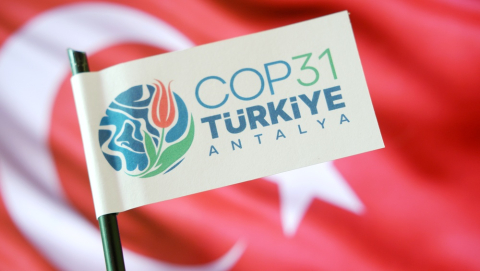
COP31 in Antalaya: State of the Global Climate Governance, Issues, Perspectives
COPs have become a year-end marathon to revigorate a world now entering the era of climate overshoot. While Türkiye exhibits the largest coal-fired power generation in OECD Europe, it has embraced the electrification agenda and aims at joining forces with Australia on fostering action and implementation. This is an unusual de facto co-presidency arrangement, but one that could yield promising results. This webinar will take stock of what climate governance has achieved and of the issues still to be negotiated, and explore what impetus this Turkish–Australian partnership could provide.
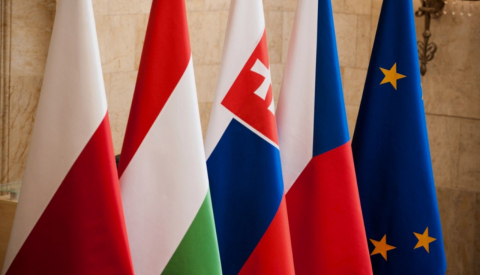
A New Moment for Central Europe? Regional Cooperation in a Time of European Strategic Choices
Recent political developments in Central Europe have revived the debate about the future of regional cooperation and the Visegrád Group. Changes in Hungary, Poland, the Czech Republic and Slovakia, together with Austria’s growing interest in closer cooperation with its neighbours, could create new opportunities for dialogue and coordination around shared priorities.