




Practical information
Themes and regions
Related centers and programs
|
9h30-9h45 |
Presentation of the results of the Building Bridges project Vivien Pertusot, Institut français des relations internationales (Ifri), France |
|
9h45-11h15 |
Do Europeans still like (each) others? With Julie Hamann, German Council on Foreign Relations (DGAP), Germany, Antoinette Primatarova, Centre for Liberal Strategies (CLS), Bulgaria and Marton Ugrosdy, Institute for Foreign Affairs and Trade (IFAT), Hungary. |
|
11h15-11h30 |
Coffee break |
|
11h30-13h00 |
Is growth still associated with the EU? With Yiannos Ioannou, Cyprus Centre for European and International Affairs, University of Nicosia, Cyprus, Lola Raich, Austrian Institute for International Politics (OIIP), Austria and Senada Selo Sabic, Institute for Development and International Relations (IRMO), Croatia. |
|
13h00-14h00 |
Lunch |
|
14h00-15h30 |
How to strengthen the EU in member states? With Ana Benje, Institute of European Studies and International Relations, Comenius Unversity, Slovakia, Maja Kluger Rasmussen, Think Europa, Denmark, Guido Lessing, Centre for European Studies and Research (CERE), Luxembourg and Mihai Sebe, European Institute of Romania (IER), Romania. |
|
15h30 -15h45 |
Coffee break |
|
15h45-17h15 |
Does the EU need to be more active in the world? With Dominique David, Institut français des relations internationales (Ifri), France, Sandra Fernandes, University of Minho, Portugal and Roderick Pace, Institute for European Studies, University of Malta. |
Please see the full programme below (PDF file).
Follow @Bridg_EU on Twitter and join the debate #BB4EU.
The project Building Bridges between National Perspectives on the EU is co-funded by the “Europe for citizens” programme of the European Union.
Related Subjects
Other events
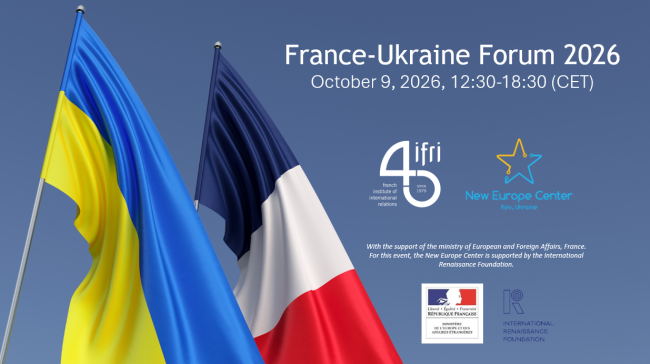
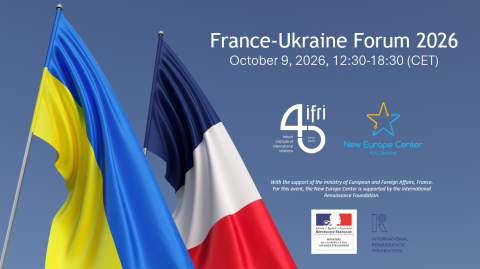
France-Ukraine Forum 2026
More than four and a half years after the start of the full-scale war launched by Russia against Ukraine, the 2026 France-Ukraine Forum will bring together policymakers, experts, academics, and civil society representatives from both countries to discuss three main topics: the formats and conditions for a lasting diplomatic settlement; Ukraine’s Euro-Atlantic integration, encompassing both the EU accession process and closer ties with NATO; and the societal transformations of postwar Ukraine, as well as its prospects for reconstruction.
The EU in a World of Economic Warfare: Trade, Geopolitics, and the Battle for Economic Sovereignty
The international trading system has become a primary theatre of geopolitical competition. Tariffs, sanctions, and technology controls have replaced dialogue as the default instruments of economic relations.
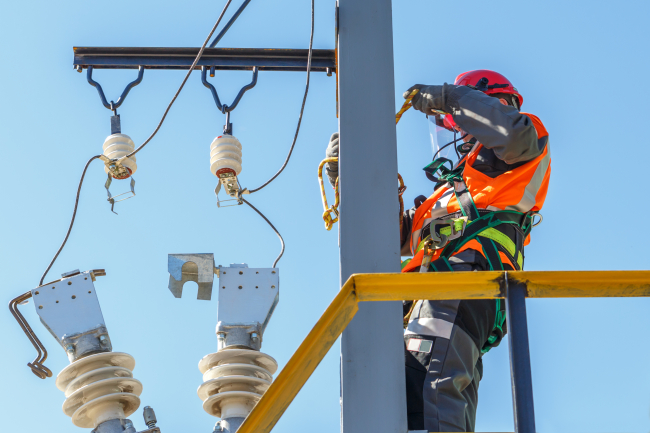
The Road to 27 Electrification Action Plans: Planning and Investing in Europe’s Electric Future
The European Commission’s Electrification Action Plan places the continent on an electric path to structurally reduce dependence on fossil fuel imports and boost the energy transition in industry, transport and buildings.