




How smaller EU states are reshaping Europe’s power structure
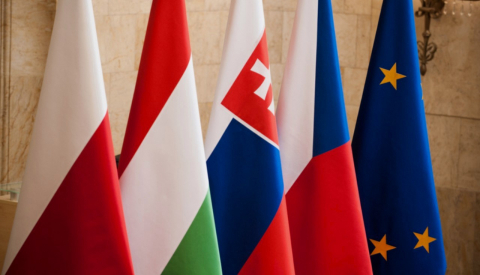
Changing economic and trans-Atlantic conditions have led to power restructuring in the 27-nation European Union, opening doors for more negotiating power for many smaller central and former Eastern European nations such as Hungary.
Shaping the future of the EU: reviving the Europeanisation process
More than ten years after joining the European Union (EU), the Central and Eastern European countries (CEECs) exhibit a puzzle of attitudes and conceptions regarding the EU.
The World of Yesterday and Tomorrow
In this special issue of Politique étrangère devoted to the proceedings of the conference organized by Ifri on April 10, 2019, in the Grand Amphitheater of the Sorbonne, on the occasion of its fortieth anniversary, discover the speech by Thierry de Montbrial, Founder and Executive Chairman of Ifri.

A week that will define Europe
In a few days’ time, the populist conservative Boris Johnson may well be on his way to becoming British prime minister. And the radical left Podemos movement could be close to the reins of power in Spain. There is the question of what role the current EU institutions — the Commission and the Parliament — might play in a new climate infused with Euro-wariness. “There’s a realization that Europe has changed much faster than its conservative, slow-moving institutional bodies,” said Vivien Pertusot.
Read the article.
Netherlands: Hoping For Balance and Convergence
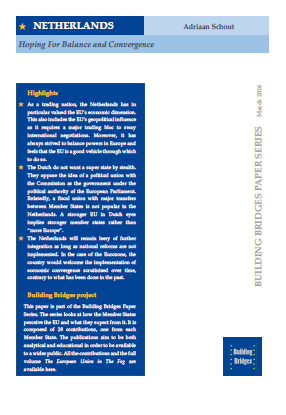
As a trading nation, the Netherlands has in particular valued the EU’s economic dimension. This also includes the EU’s geopolitical influence as it requires a major trading bloc to sway international negotiations. Moreover, it has always strived to balance powers in Europe and feels that the EU is a good vehicle through which to do so.
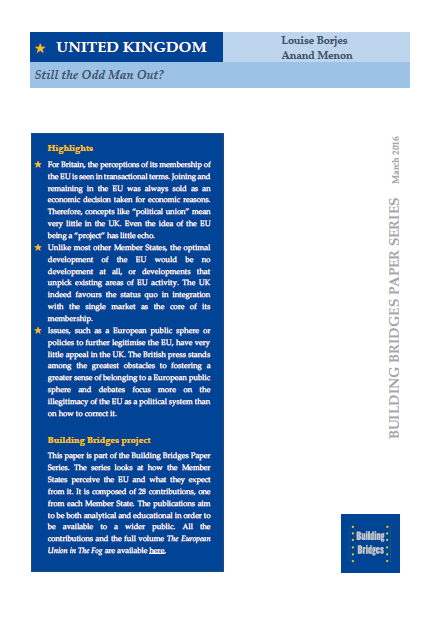
United Kingdom: Still the Odd Man Out?
For Britain, the perceptions of its membership of the EU is seen in transactional terms. Joining and remaining in the EU was always sold as an economic decision taken for economic reasons. Therefore, concepts like “political union” mean very little in the UK. Even the idea of the EU being a “project” has little echo.
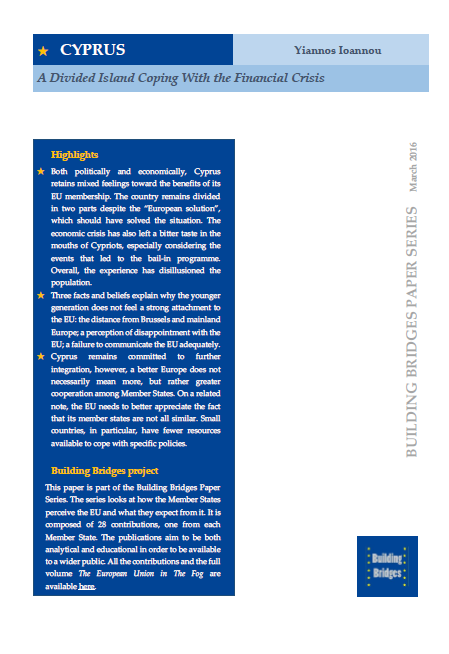
Cyprus: A Divided Island Coping with the Financial Crisis
Both politically and economically, Cyprus retains mixed feelings toward the benefits of its EU membership. The country remains divided in two parts despite the “European solution”, which should have solved the situation. The economic crisis has also left a bitter taste in the mouths of Cypriots, especially considering the events that led to the bail-in programme. Overall, the experience has disillusioned the population.
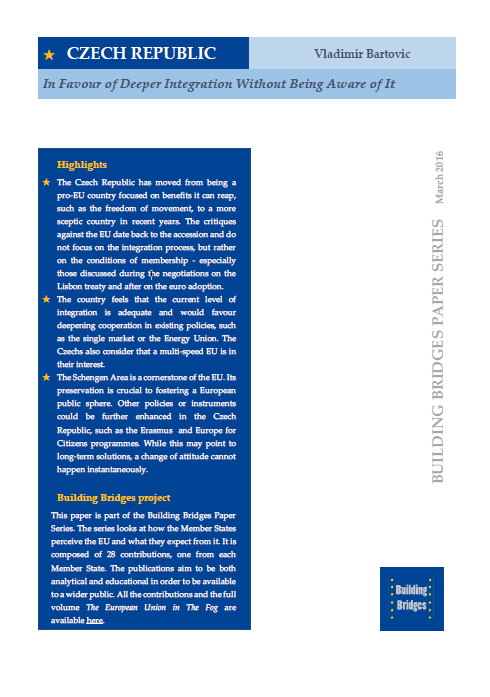
Czech Republic: In Favour of Deeper Integration Without Being Aware of It
The Czech Republic has moved from being a pro-EU country focused on benefits it can reap, such as the freedom of movement, to a more sceptic country in recent years. The critiques against the EU date back to the accession and do not focus on the integration process, but rather on the conditions of membership - especially those discussed during the negotiations on the Lisbon treaty and after on the euro adoption.

France: Disenchantment in Slow Motion
In France, Europe basically expresses four objectives: peace, parity with Germany, economic development, and leveraging French power. But today, the feeling abounds that none of these objectives are really being achieved.
Greece: Perspectives of Adjustment, Prospects for Reform
Greece has a record as a pro-integration country. Yet, the sovereign debt crisis and the adjustment programmes have sapped the Eurozone’s and the EU’s image, especially regarding its capacity to provide a framework for economic prosperity. Still, the refugee crisis proves that EU membership continues to offer a credible support system within which it can expect economic aid, organisational backing and the protection of its borders.
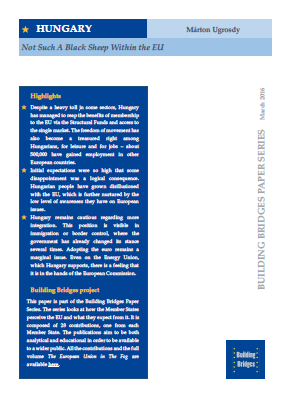
Hungary: Not Such a Black Sheep Within the EU
Despite a heavy toll in some sectors, Hungary has managed to reap the benefits of membership to the EU via the Structural Funds and access to the single market. The freedom of movement has also become a treasured right among Hungarians, for leisure and for jobs – about 500,000 have gained employment in other European countries.

Bulgaria: The Spectre of a Two-Speed Europe
One of Bulgaria’s paradoxes is that 25 years after the collapse of communism and almost ten years of EU membership, it seems to be quite unhappy with the transition but rather happy with its EU membership. In this way, the EU continues to be a beacon outside rather than the reality inside the country.
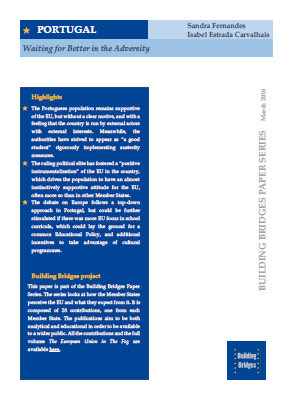
Portugal: Waiting for Better in the Adversity
The Portuguese population remains supportive of the EU, but without a clear motive, and with a feeling that the country is run by external actors with external interests. Meanwhile, the authorities have strived to appear as “a good student” rigorously implementing austerity measures.
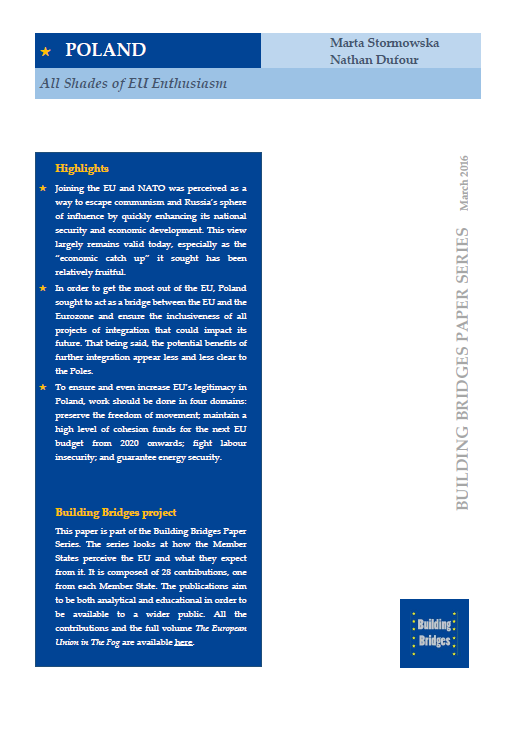
Poland: All Shades of EU Enthusiasm
Joining the EU and NATO was perceived as a way to escape communism and Russia’s sphere of influence by quickly enhancing its national security and economic development. This view largely remains valid today, especially as the “economic catch up” it sought has been relatively fruitful.
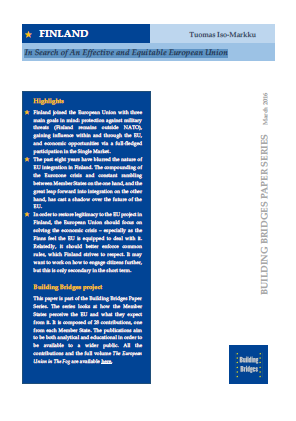
Finland: In Search of an Effective and Equitable European Union
Finland joined the European Union with three main goals in mind: protection against military threats (Finland remains outside NATO), gaining influence within and through the EU, and economic opportunities via a full-fledged participation in the Single Market.
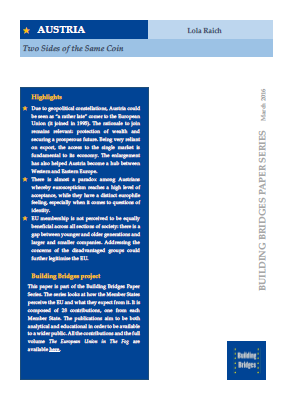
Austria: Two Sides of the Same Coin
Due to geopolitical constellations, Austria could be seen as “a rather late” comer to the European Union (it joined in 1995). The rationale to join remains relevant: protection of wealth and securing a prosperous future. Being very reliant on export, the access to the single market is fundamental to its economy. The enlargement has also helped Austria become a hub between Western and Eastern Europe.
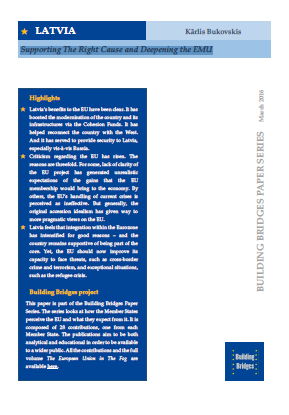
Latvia: Supporting the Right Cause and Deepening the Economic and Monetary Union
Latvia’s benefits to the EU have been clear. It has boosted the modernisation of the country and its infrastructures via the Cohesion Funds. It has helped reconnect the country with the West. And it has served to provide security to Latvia, especially vis-à-vis Russia.
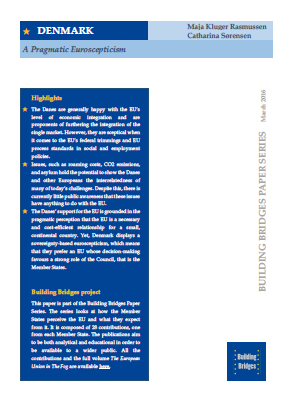
Denmark: A Pragmatic Euroscepticism
The Danes are generally happy with the EU’s level of economic integration and are proponents of furthering the integration of the single market. However, they are sceptical when it comes to the EU’s federal trimmings and EU process standards in social and employment policies.
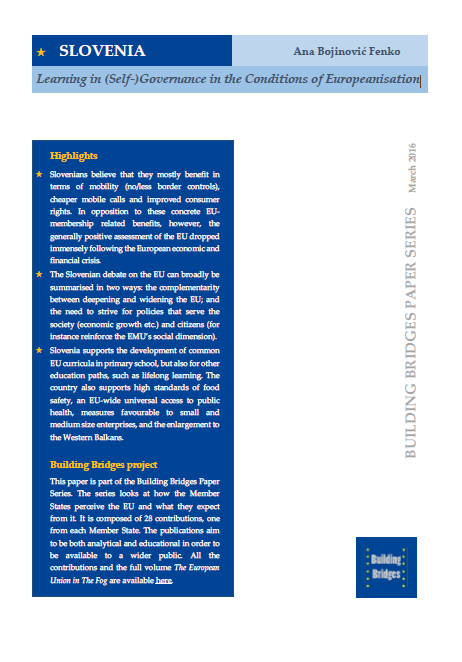
Slovenia: Learning in (Self-)Governance in the Conditions of Europeanisation
Slovenians believe that they mostly benefit in terms of mobility (no/less border controls), cheaper mobile calls and improved consumer rights. In opposition to these concrete EU-membership related benefits, however, the generally positive assessment of the EU dropped immensely following the European economic and financial crisis.
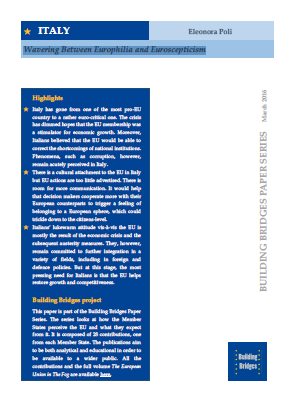
Italy: Wavering Between Europhilia and Euroscepticism
Italy has gone from one of the most pro-EU country to a rather euro-critical one. The crisis has dimmed hopes that the EU membership was a stimulator for economic growth. Moreover, Italians believed that the EU would be able to correct the shortcomings of national institutions. Phenomena, such as corruption, however, remain acutely perceived in Italy.
Shaping the future of the EU: reviving the Europeanisation process
More than ten years after joining the European Union (EU), the Central and Eastern European countries (CEECs) exhibit a puzzle of attitudes and conceptions regarding the EU.
The World of Yesterday and Tomorrow
In this special issue of Politique étrangère devoted to the proceedings of the conference organized by Ifri on April 10, 2019, in the Grand Amphitheater of the Sorbonne, on the occasion of its fortieth anniversary, discover the speech by Thierry de Montbrial, Founder and Executive Chairman of Ifri.
United Kingdom: Still the Odd Man Out?
For Britain, the perceptions of its membership of the EU is seen in transactional terms. Joining and remaining in the EU was always sold as an economic decision taken for economic reasons. Therefore, concepts like “political union” mean very little in the UK. Even the idea of the EU being a “project” has little echo.
Cyprus: A Divided Island Coping with the Financial Crisis
Both politically and economically, Cyprus retains mixed feelings toward the benefits of its EU membership. The country remains divided in two parts despite the “European solution”, which should have solved the situation. The economic crisis has also left a bitter taste in the mouths of Cypriots, especially considering the events that led to the bail-in programme. Overall, the experience has disillusioned the population.
Czech Republic: In Favour of Deeper Integration Without Being Aware of It
The Czech Republic has moved from being a pro-EU country focused on benefits it can reap, such as the freedom of movement, to a more sceptic country in recent years. The critiques against the EU date back to the accession and do not focus on the integration process, but rather on the conditions of membership - especially those discussed during the negotiations on the Lisbon treaty and after on the euro adoption.
France: Disenchantment in Slow Motion
In France, Europe basically expresses four objectives: peace, parity with Germany, economic development, and leveraging French power. But today, the feeling abounds that none of these objectives are really being achieved.
Greece: Perspectives of Adjustment, Prospects for Reform
Greece has a record as a pro-integration country. Yet, the sovereign debt crisis and the adjustment programmes have sapped the Eurozone’s and the EU’s image, especially regarding its capacity to provide a framework for economic prosperity. Still, the refugee crisis proves that EU membership continues to offer a credible support system within which it can expect economic aid, organisational backing and the protection of its borders.
Hungary: Not Such a Black Sheep Within the EU
Despite a heavy toll in some sectors, Hungary has managed to reap the benefits of membership to the EU via the Structural Funds and access to the single market. The freedom of movement has also become a treasured right among Hungarians, for leisure and for jobs – about 500,000 have gained employment in other European countries.
Bulgaria: The Spectre of a Two-Speed Europe
One of Bulgaria’s paradoxes is that 25 years after the collapse of communism and almost ten years of EU membership, it seems to be quite unhappy with the transition but rather happy with its EU membership. In this way, the EU continues to be a beacon outside rather than the reality inside the country.
Portugal: Waiting for Better in the Adversity
The Portuguese population remains supportive of the EU, but without a clear motive, and with a feeling that the country is run by external actors with external interests. Meanwhile, the authorities have strived to appear as “a good student” rigorously implementing austerity measures.
Poland: All Shades of EU Enthusiasm
Joining the EU and NATO was perceived as a way to escape communism and Russia’s sphere of influence by quickly enhancing its national security and economic development. This view largely remains valid today, especially as the “economic catch up” it sought has been relatively fruitful.
Finland: In Search of an Effective and Equitable European Union
Finland joined the European Union with three main goals in mind: protection against military threats (Finland remains outside NATO), gaining influence within and through the EU, and economic opportunities via a full-fledged participation in the Single Market.
Austria: Two Sides of the Same Coin
Due to geopolitical constellations, Austria could be seen as “a rather late” comer to the European Union (it joined in 1995). The rationale to join remains relevant: protection of wealth and securing a prosperous future. Being very reliant on export, the access to the single market is fundamental to its economy. The enlargement has also helped Austria become a hub between Western and Eastern Europe.
Latvia: Supporting the Right Cause and Deepening the Economic and Monetary Union
Latvia’s benefits to the EU have been clear. It has boosted the modernisation of the country and its infrastructures via the Cohesion Funds. It has helped reconnect the country with the West. And it has served to provide security to Latvia, especially vis-à-vis Russia.
Denmark: A Pragmatic Euroscepticism
The Danes are generally happy with the EU’s level of economic integration and are proponents of furthering the integration of the single market. However, they are sceptical when it comes to the EU’s federal trimmings and EU process standards in social and employment policies.
Slovenia: Learning in (Self-)Governance in the Conditions of Europeanisation
Slovenians believe that they mostly benefit in terms of mobility (no/less border controls), cheaper mobile calls and improved consumer rights. In opposition to these concrete EU-membership related benefits, however, the generally positive assessment of the EU dropped immensely following the European economic and financial crisis.
Italy: Wavering Between Europhilia and Euroscepticism
Italy has gone from one of the most pro-EU country to a rather euro-critical one. The crisis has dimmed hopes that the EU membership was a stimulator for economic growth. Moreover, Italians believed that the EU would be able to correct the shortcomings of national institutions. Phenomena, such as corruption, however, remain acutely perceived in Italy.
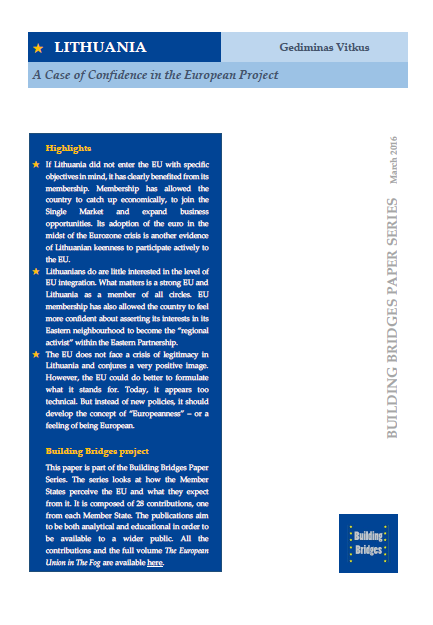
Lithuania: A Case of Confidence in the European Project
If Lithuania did not enter the EU with specific objectives in mind, it has clearly benefited from its membership. Membership has allowed the country to catch up economically, to join the Single Market and expand business opportunities. Its adoption of the euro in the midst of the Eurozone crisis is another evidence of Lithuanian keenness to participate actively to the EU.
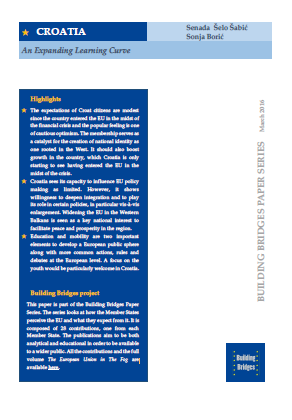
Croatia: An Expanding Learning Curve
The expectations of Croat citizens are modest since the country entered the EU in the midst of the financial crisis and the popular feeling is one of cautious optimism. The membership serves as a catalyst for the creation of national identity as one rooted in the West. It should also boost growth in the country, which Croatia is only starting to see having entered the EU in the midst of the crisis.

Slovakia: Country of Many Paradoxes
Slovakia might be perceived as a “latecomer” in preparing for EU accession only in the 1990s, but it caught up rapidly. Among its chief objectives was for Slovakians to achieve higher living standards and gain an external system of checks and balances, which would improve the country’s democratic processes and public administration.
How smaller EU states are reshaping Europe’s power structure
Changing economic and trans-Atlantic conditions have led to power restructuring in the 27-nation European Union, opening doors for more negotiating power for many smaller central and former Eastern European nations such as Hungary.
A week that will define Europe
In a few days’ time, the populist conservative Boris Johnson may well be on his way to becoming British prime minister. And the radical left Podemos movement could be close to the reins of power in Spain. There is the question of what role the current EU institutions — the Commission and the Parliament — might play in a new climate infused with Euro-wariness. “There’s a realization that Europe has changed much faster than its conservative, slow-moving institutional bodies,” said Vivien Pertusot.
Read the article.
Building Bridges Conversation Series - Ireland & the Netherlands
This new episode of the Building Bridges Conversation Series is part of the "Building Bridges" project, which aims to foster debate on the future of the European Union and offer top quality analyses on how each member state perceives the EU. In this video, Vivien Pertusot, coordinator of the project, discusses with Marie Cross from the Institute of International and European Affairs (Ireland) and Adriaan Schout from Clingendael (the Netherlands).
Building Bridges Conversation Series - Luxembourg & Spain
This new episode of the Building Bridges Conversation Series is part of the "Building Bridges" project, which aims to foster debate on the future of the European Union and offer top quality analyses on how each member state perceives the EU. In this video, Vivien Pertusot, coordinator of the project, discusses with Guido Lessing from the Centre d’études et de recherches européennes (Luxembourg) and Charles Powell from Real Instituto Elcano (Spain).
Building Bridges Conversation Series - Slovakia & Poland
This first episode of the Building Bridges Conversation Series is part of the "Building Bridges" project, which aims to foster debate on the future of the European Union and offer top quality analyses on how each member state perceives the EU. In this video, Vivien Pertusot, coordinator of the project discusses with Ana Benje from Comenius University (Slovakia) and Nathan Dufour from PISM (Poland).
Ifri, a foundation recognized as being of public utility, relies largely on private donors – companies and individuals – to guarantee its sustainability and intellectual independence. Through their funding, donors help maintain the Institute's position among the world's leading think tanks. By benefiting from an internationally recognized network and expertise, donors refine their understanding of geopolitical risk and its consequences on global politics and the economy. In 2026, Ifri partners with over 90 French and international companies and organizations.
