


The Pacific caught in the World Wide Web? Geopolitics of submarine cables in Oceania
This article provides a review of the digital connectivity of the Pacific Islands nations (Polynesia, Melanesia, and Micronesia) and the main challenges and prospects arising from it, at a time when the submarine cable market is undergoing profound change and a growing politicization of this technology on the international scene.
Chinese Nuclear Force Modernization and Doctrinal Change
Dating back to the first test in 1964, the Chinese nuclear force modernization process is motivated by other nuclear powers’ modernization across the years, mostly from the United States and the Soviet Union, but also by domestic factors such as economic debates and tensions in the scientific community.
Cyberspace Governance in China: Evolution, Features and Future Trends
As China’s political relations with most of the world’s technologically advanced states have worsened, Beijing has put in place the world’s most comprehensive regulatory and administrative system for governing cyberspace.
New government in Canberra: A reset for Australia’s Indo-Pacific approach?
Following the May Federal election, Australia has its first centre-left government in close to a decade, led by Prime Minister Anthony Albanese.
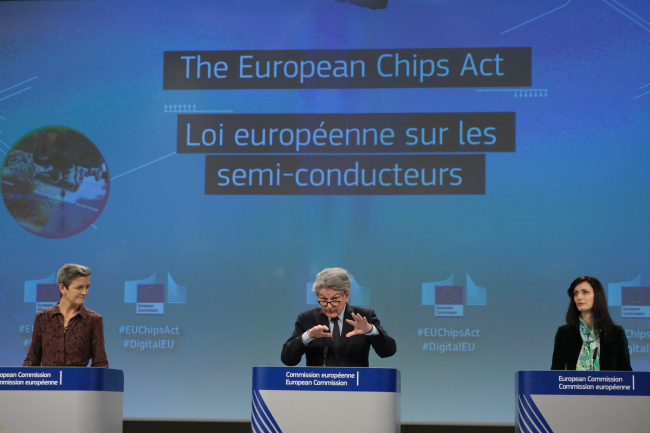
Fishing for Chips: Assessing the EU Chips Act
China, the United States, and the European Union (EU) are currently developing strategies for semiconductors aimed at financing R&D and the installation of new factories on their territories, in particular through subsidies. The EU Chips Act, announced in February 2022, represents a real break in Europe's industrial policy.


After support for Ukraine, Kishida aims for NATO unity on China
When Prime Minister Fumio Kishida becomes the first Japanese leader to attend a NATO leaders summit on Wednesday, he’ll be looking to stress the need for unity in preventing China from taking the “wrong lessons” from the Ukraine war as the bloc looks to expand its footprint in the Indo-Pacific.
Ukraine: Between Two Peaces?
We have reentered the world of war. In its first special report, Politique étrangère offers a range of in-depth analyses of the military and political dynamics at work in a Europe that has just woken up from its dream of enduring peace. The direct confrontation between Ukraine and Russia has pitted two military and defense systems against each other, whose asymmetrical logics, strengths, and weaknesses we are discovering as the conflict unfolds.

Deus ex machina : les enjeux de l’autonomisation des systèmes d’armes
While the automatization of machines is part of an already long historical, conceptual, and technical trajectory, the exponential progress of artificial intelligence techniques, robotics and their military applications suggest the emergence of systems that integrate more autonomy. Indeed, despite campaigns calling for a moratorium on autonomous weapons, most military powers are developing programs focused on autonomy.
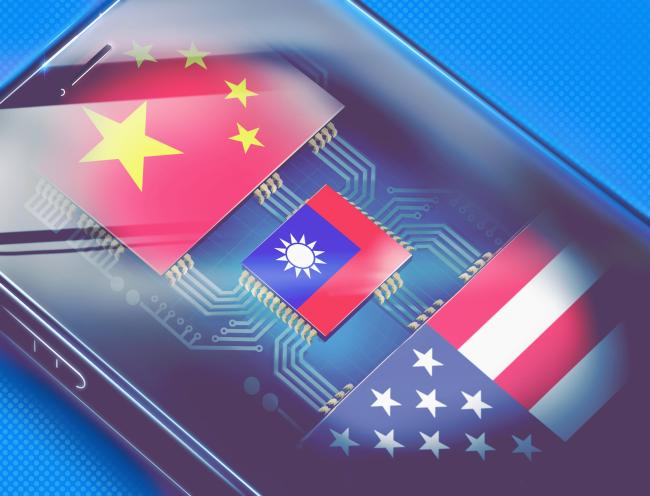
Implications of the Global Supply Chain Reform: A Taiwanese Perspective
How have both the private and public sectors in Taiwan sought to mitigate the challenges posed by the reform agenda for global supply chains (GSCs)?

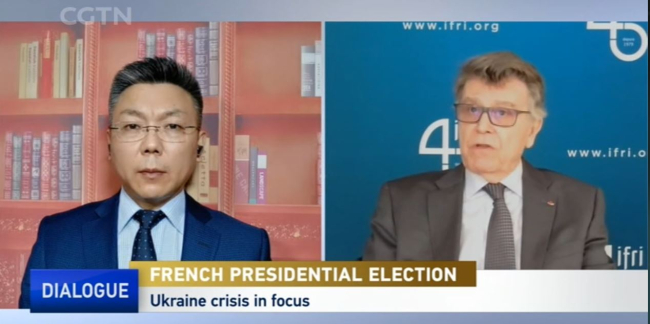
French Presidential Election, Ukraine crisis, China-France and China-EU relations
This week the guest of "Dialogue Weekend" on CGTV is Thierry de Montbrial, founder and executive chairman of Ifri, French Institute for International Relations. Last Sunday, Emmanuel Macron became the first French president to be re-elected since Jacques Chirac 20 years ago, with a 17-point victory over far-right populist Marine Le Pen.

Arctic: Toward the End of the Exception? Strategic, Nuclear and Maritime Issues in the Region
Through multiple international initiatives, including the creation of the Arctic Council at the end of the Cold War in 1996, the Arctic appears to be one of the last areas of peaceful cooperation in the world. This “Arctic exception” is also devoid of any serious territorial dispute between the neighboring countries, some of which are nevertheless great powers: Russia, the United States, Canada, but also Sweden, Norway, Denmark (via Greenland), Iceland and Finland.

Dependence in Europe's Relations with China: Weighing Perceptions and Reality
The idea that Europe has grown dependent on China is now a common refrain, but just how is this notion understood in capitals across the continent?

Emmanuel Macron: The Preferred Choice for Taipei and Beijing
The second round of the French presidential election on April 24 will decide whether Emmanuel Macron, the incumbent president, or Marine Le Pen, the leader of the far right nationalist party Rassemblement national (national gathering), will become president of the French Republic for the next five years.


Meet the woman researching the geopolitics of technology
Alice Pannier is leading a new programme looking at the relationship between technology and geopolitical alliances. Recent events have proven this to be more important than ever.
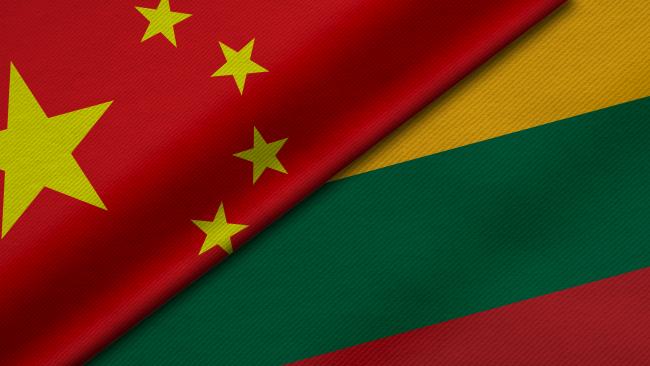
The Sino-Lithuanian Crisis: Going beyond the Taiwanese Representative Office Issue
The year 2021 marked the 30th anniversary of the establishment of diplomatic relations between China and Lithuania. Instead of commemorative events and customary lofty rhetoric, the bilateral relationship rapidly plunged to a level rarely seen in either country’s foreign policies since the end of the Cold War.

France and China link up in global infrastructure projects
Paris and Beijing have agreed to build infrastructure projects in Africa, South East Asia and Eastern Europe. But will this help shine light on China’s opaque foreign investments? Or just give the appearance of doing so?

Convince and Coerce: U.S. Interference in Technology Exchanges Between its Allies and China
The tough-on-China policy adopted by the Trump and Biden administrations has – and will increasingly have – important consequences for Washington’s allies, both on their infrastructure choices (5G, submarine cables...) and on their technological exchanges with China.

China's Quantum Dream: A Giant's Aspirations in the Infinitely Small
Quantum physics, a field little known to the general public and relatively difficult to grasp as its laws are counter-intuitive, constitutes nevertheless a critical field of international strategic competition.

A Sino-Congolese Scandal. Illegal Exploitation of Minerals and Forests by Chinese Companies in South Kivu
Since 2020, the exploitation of gold from mining sites in the Wamuzimu chiefdom in the South Kivu province by Chinese companies has aroused great discontent among the population.
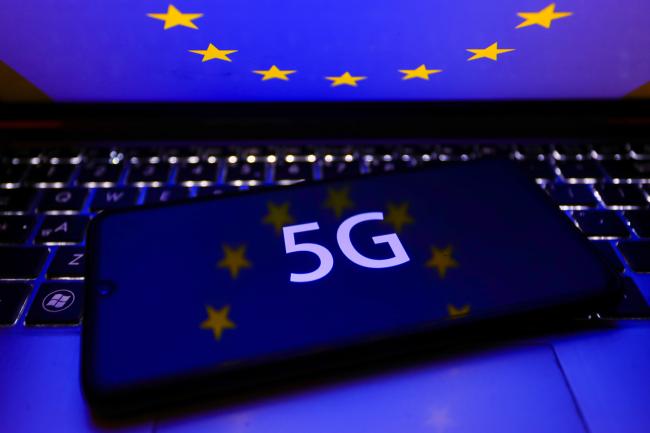
Europe and the Geopolitics of 5G: Walking a Technological Tightrope
The acute Sino-American tensions which started in 2018 have been coupled with controversies around 5G technology, exemplified by the spotlight placed on Chinese equipment manufacturer Huawei and the security risks associated with its use. For Europe, the 5G challenge at the international level is drawing a very complex landscape.
Rare Earths and Clean Energy: Analyzing China's Upper Hand
An ominous resource crunch in the so-called “rare earth elements” is now threatening the development of a number of key industries from energy to defense to consumer electronics. As key components in the latest generation of technologies, including specialized magnets for windmills and hybrid cars, lasers for range finders and “smart” munitions, and phosphors for LCD screens, demand for these rare metals is expected to grow rapidly in the years to come.
Chinese Perceptions of the Utility of Nuclear Weapons: Prospects and Potential Problems in Disarmament
This paper takes a careful look at China's perceptions of the role of nuclear weapons in its national security policy and defense posture.
A Shadow over the Himalayas: India's Tibet Problem
This article explains the central role of the Tibetan issue in complicating Sino-Indian relations.
Energy Security, Transnational Pipelines and China's Role in Asia
In recent decades, China's transformation from a regional energy supplier to one of the world's largest net energy importers, in particular with regards to oil and gas, has led to an increasing sense of energy insecurity in Chinese policy circles. Guaranteeing adequate supplies of energy to fuel economic growth is a central element in Beijing's efforts to maintain legitimacy in the face of economic reform and transformation. To combat energy insecurity a number of initiatives are being undertaken to diversify energy inputs, suppliers, and the means of their transport.
From Kunming to Mandalay: The New "Burma Road". Developments along the Sino-Myanmar border since 1988
The present paper aims to describe the vitality and complexity of bilateral trade along the Sino-Myanmar border.
The Development of Road Networks in China: Miscalculations and Inequalities
China has some of the densest road networks of any developing country, accounting for the vast majority of paved roads among lower- and middle-income countries. However, statistical data at the national and provincial levels show two puzzling trends.
Getting Carbon Out: Tougher Than it Looks. An Assessment of EU, US & Chinese Pledges
This paper intends to examine the emissions trajectories of the three largest emitters, China, the US and the European Union through the optics of indicators and assess the feasibility of their targets for 2020.
The Institutions of Energy Governance in China
International collaboration, in any form, requires trust, and such trust is built on understanding. In the case of collaboration in the field of energy, potential partners need to have an appreciation of frameworks for energy governance in each others’ countries. Only then can they accurately interpret the data, the statements and the declared commitments provided by other parties. Nowhere is this ignorance of greater relevance to today’s challenges than the case of China.
Ifri, a foundation recognized as being of public utility, relies largely on private donors – companies and individuals – to guarantee its sustainability and intellectual independence. Through their funding, donors help maintain the Institute's position among the world's leading think tanks. By benefiting from an internationally recognized network and expertise, donors refine their understanding of geopolitical risk and its consequences on global politics and the economy. In 2026, Ifri partners with over 90 French and international companies and organizations.