





Strategic Shift in NATO’s Support for Ukraine. A Study of NSATU and PURL Initiatives
While NATO’s support to Ukraine in 2022 was largely limited to non-lethal assistance and capacity-building measures, in 2025 it assumed a direct role in the coordination and provision of military support to Ukraine. This was influenced by several factors, and not least by the changing policy of the new US administration vis-à-vis Ukraine. NSATU currently coordinates more than 80% of all military support to Ukraine, while PURL became a key mechanism for the provision of critical air-defense capabilities—supplying 75% of all missiles for Ukraine’s Patriot systems and 90% of the missiles used in other air-defense systems.
The first section looks at the origins of the establishment of the NATO Security Assistance and Training for Ukraine and its interconnection with other pre-existing coordination formats, such as US European Command Control Center-Ukraine (ECCU), International Donor Coordination Center (IDCC), Security Assistance Group-Ukraine (SAG-U) and Ukraine Defence Contact Group (UDCG). It also examines NSATU’s core functions, such as the coordination and delivery of equipment, and the coordination of training and force development.
The second section focuses on the PURL mechanism and analyzes the dynamics of its implementation since its establishment in August 2025. In particular, it assesses key issues related to the sustainable funding of the initiatives, as well as burden-sharing among the Allies and political dynamics shaping participation in the initiative.
While highlighting the successes of NSATU and PURL in improving the coordination, predictability, and effectiveness of support to Ukraine, the study also identifies important limitations and risks. It argues that the long-term sustainability of these initiatives may be undermined by funding shortfalls, unequal burden-sharing and industrial capacity constraints. Growing political divisions between the United States and its European Allies represent another key source of vulnerability.

Available in:
Themes and regions
ISBN / ISSN
Share
This page contains only a summary of our work. If you would like to have access to all the information from our research on the subject, you can download the full version in PDF format.
Strategic Shift in NATO’s Support for Ukraine. A Study of NSATU and PURL Initiatives

European & Transatlantic Security
The European & Transatlantic Security Program aims to contribute to the strategic debate by developing analyses around three main axes: European defense and the security architecture of the European continent, institutional and strategic links between the Treaty Organization of North Atlantic (NATO) and the European Union (EU), as well as the evolution of the transatlantic relationship.
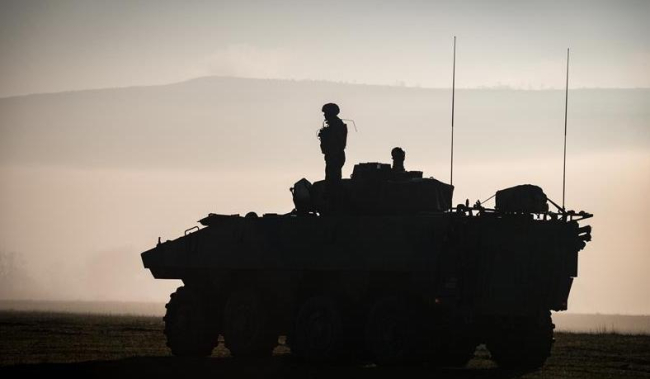
Security Studies Center
Heir to a tradition dating back to the founding of Ifri, the Security Studies Center provides public and private decision-makers as well as the general public with the keys to understanding power relations and contemporary modes of conflict as well as those to come. Through its positioning at the juncture of politics and operations, the credibility of its civil-military team and the wide distribution of its publications in French and English, the Center for Security Studies constitutes in the French landscape of think tanks a unique center of research and influence on the national and international defense debate.
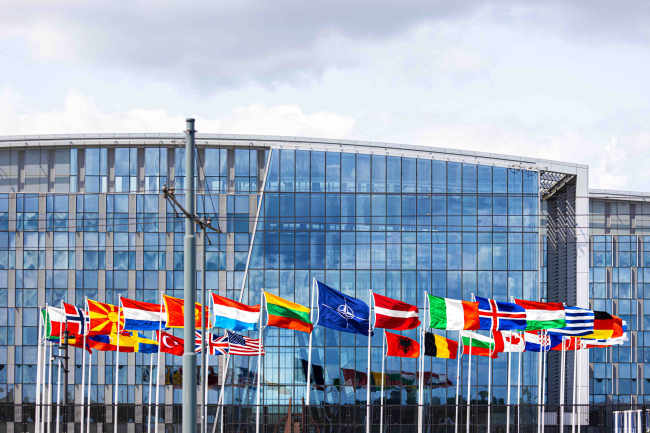
Taking the Pulse: Enough with the Annual NATO Summits, Already?
Over the past ten years, NATO has held almost as many summits as it did during the entirety of the Cold War. Are they still useful, or is it time to stop holding annual meetings?
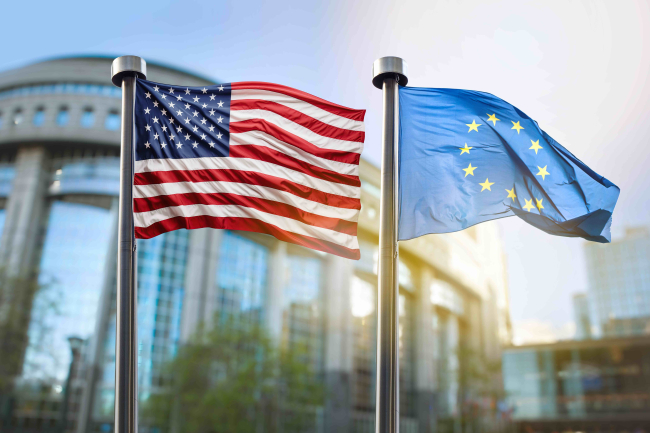
A Transatlantic Defense Industrial Base? Two Contrasting Views
The evolving landscape of global defense cooperation has brought the transatlantic relationship between the United States (US) and Europe into sharp focus. As geopolitical tensions rise and the threat environment becomes more complex, the question of how Europe can best ensure its security while navigating its relationship with the United States has become paramount. This double feature report offers two contrasting views on the dynamics of US-Europe defense industrial relations, highlighting the challenges and opportunities that lie ahead for both parties.
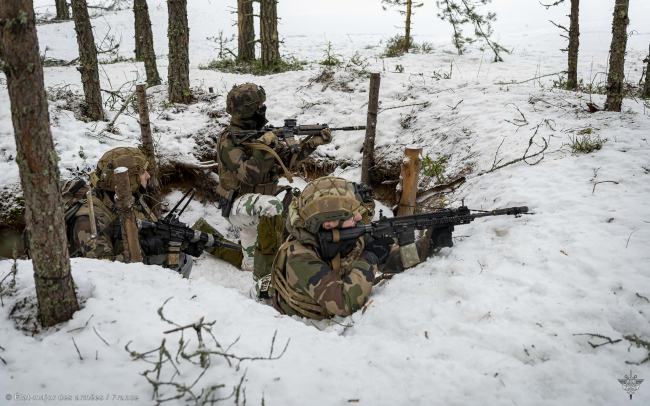
Return to the East: the Russian Threat and the French Pivot to Europe's Eastern Flank
Russia’s full-scale invasion of Ukraine on February 24, 2022, has flung Europe’s Eastern flank into a new phase of strategic confrontation. It has had a major effect on France’s position, which was previously somewhat timid, leading it to significantly reinforce its deterrence and defense posture in support of the collective defense of Europe, in the name of strategic solidarity and the protection of its security interests.
France’s Place Within NATO: Toward a Strategic Aggiornamento?
With a rapidly deteriorating security environment, a chaotic withdrawal from Afghanistan, internal disputes exploding into public view, and questions being raised about the scope of its security responsibilities, the North Atlantic Treaty Organization (NATO) seemed to be in dire straits at the time of Russia’s invasion of Ukraine on February 24, 2022.