
Moscow’s tried and tested Georgia strategy now tailored for Ukraine
Western powers appear unable to thwart Putin’s strategy to reassert Russian influence
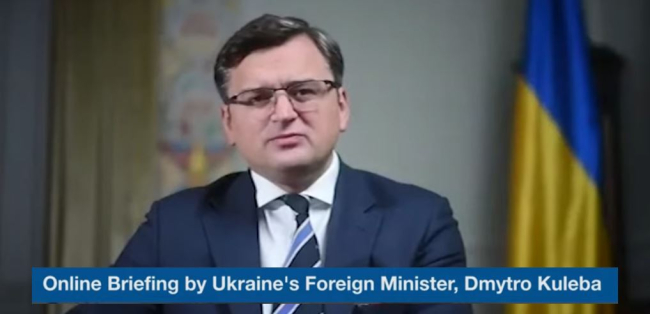
Security Situation in & around Ukraine. Online Briefing by Ukraine’s Foreign Minister Dmytro Kuleba
Since 2014, Ukraine's territorial integrity and security have been challenged by Russia's annexation of Crimea and by the conflict in Donbas. Military maneuvers in spring and October 2021 have raised the threat of open armed conflict between Ukraine and Russia. Kyiv, on the other hand, continues to strengthen its defense capabilities.

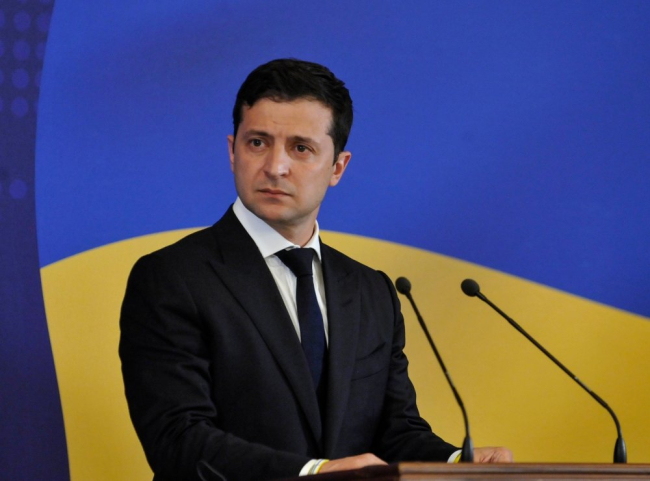
President Zelensky’s Increasingly Critical Stance toward the West
After the recent intensification of dialogue between official Kyiv and President Biden’s administration, in the wake of the rising threat to Ukraine posed by Russia and in anticipation of President Biden’s visit to the UK and EU, President Volodymyr Zelensky and his team began sharpening their rhetorical stance toward Ukraine’s Western partners.


France and Germany back Ukraine’s call for Russian troop pullback
Zelensky’appeal for help in Paris follows Biden’s condemnation of Russian ‘aggression’.
One Year of Zelensky’s Presidency: One Step Forward, One Step Back
The election of Volodymyr Zelensky as president of Ukraine created very high expectations in the society.

Justice and Might
Looking back on the last few weeks, a famous quote by Goethe (from his report on the siege of Mainz in 1793) came to mind: “Better to commit an injustice than to countenance disorder.” In other words, disorder engenders more injustice than it eradicates. But, if one word characterizes the world at the end of summer 2020, it is disorder.
Russia-Ukraine Gas Relations: The Mother of All Crises or a New Start to 2030?
Ten years after the January 2009 gas crisis, Russian-Ukrainian gas relations are at another turning point: the then concluded contracts are terminating on 31 December 2019. While trilateral talks brokered by the European Commission (EC) have started in July 2018, the real negotiations about the future of this relationship can be expected to start no earlier than in December, that is in the midst of the winter and a second to midnight. Crucial months lie ahead.
Rival public diplomacies in the Ukrainian crisis : RT and Ukraine Today
The Ukrainian crisis has brought to light the key role played by new international networks as instruments of public diplomacy in time of war. Focusing on RT and Ukraine Today in the asymmetrical conflict between Russia and Ukraine, this article analyzes the operation and strategies of diffusion of these two media, and inquires into their antagonistic narratives and political rationales. This case study focuses on this conflict’s two dimensions of storytelling and news that several actors and observers have described as a “war of information”.
The Gazprom-Naftogaz Stockholm Arbitration Awards: Time for Settlements and Responsible Behaviour
The signing in January 2009 of the gas supply and transit contracts between Gazprom and Naftogaz marked a turning point in Russian-Ukrainian gas relations: yearly intergovernmental, last minute and non-transparent winter deals were replaced by a predictable, long term commercial relationship.
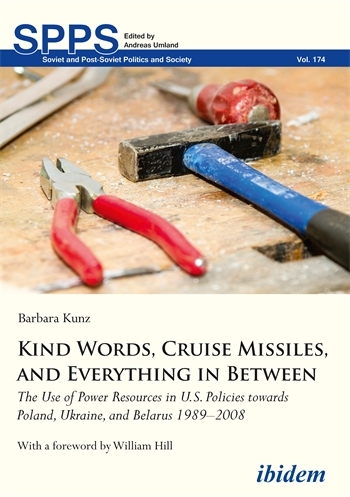
Kind Words, Cruise Missiles, and Everything in Between. The Use of Power Resources in U.S. Policies towards Poland, Ukraine, and Belarus 1989–2008
According to realist premises, the United States has an interest in remaining the world's only superpower, thus creating the need to manage and maintain unipolarity. The pursuit of this grand strategy, however, required the U.S. to adapt its various strategies to individual states. Poland, Ukraine, and Belarus have played very different roles.
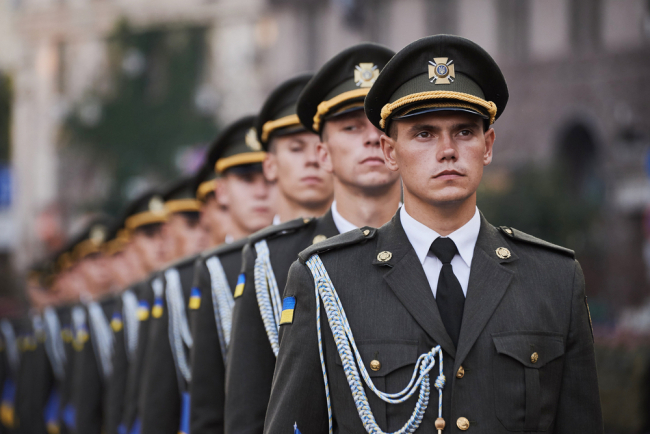
Reforming Ukrainian Defense: No Shortage of Challenges
Ukraine’s conflict with Russia has highlighted the catastrophic state of Ukraine’s defense apparatus.

Cyber Attacks and Energy Infrastructures: Anticipating Risks
This study analyses the likelihood of cyber attacks against European energy infrastructures and their potential consequences, particularly on the electricity grid. It also delivers a comparative analysis of measures taken by different European countries to protect their industries and collaborate within the European Union.
Does Russia still have an "energy weapon"?
What are the Current Challenges for Gazprom and Russia’s Energy Policy? What are the Gas Risks for Europe? Is the Nord Stream-II a Risk or an Opportunity for Europe?
The Far Right in the Conflict between Russia and Ukraine
From the very beginning, the armed conflict that broke out in the Donbass in the spring of 2014 drew in right-wing radicals, on the Ukrainian as well as on the Russian side. Organised ultra-nationalist groups and individual activists established their own units of volunteers or joined existing ones.
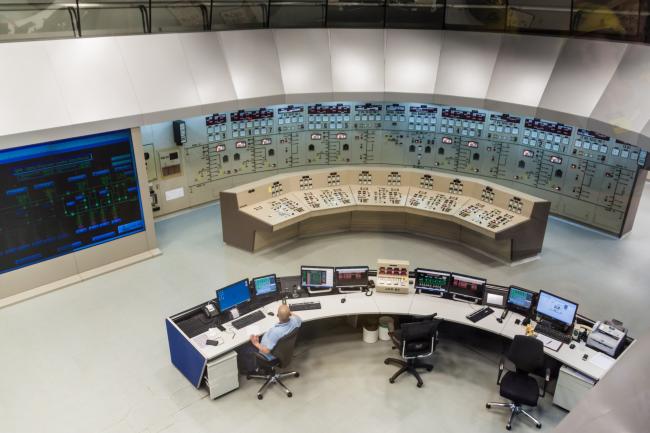
Cyber Attacks: A New Threat to the Energy Industry
The Network and Information Security (NIS) Directive has been adopted on July 6th, 2016 by the European Parliament, three years after the initial proposal by the European Commission. It paves the way for a much needed common cyber security strategy within the EU. This Edito explains the reasons why the energy industry is particularly vulnerable to cyber attacks, and what tools this new directive brings about to protect European critical infrastructures.
Forces terrestres et réassurance : Quelles options pour l'Alliance ?
Born into the Cold War, the very notion of ‘reassurance’ was revived in the wake of the 2014 Ukraine crisis as NATO had to label the measures destined to reassert the lasting relevance of collective defense towards its member states.
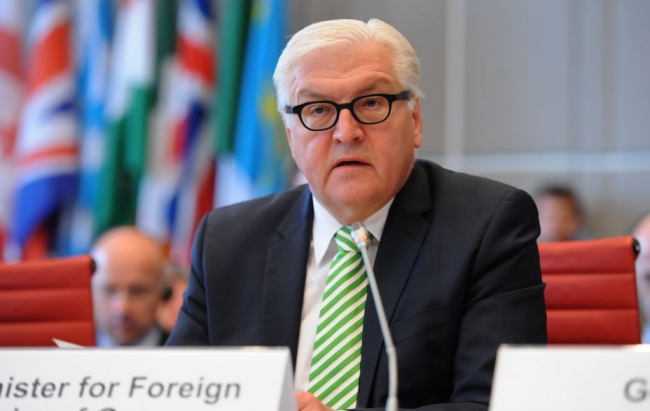
The German OSCE Chairmanship in 2016: Towards a renewed dialogue with Russia?
The Organization for Security and Cooperation in Europe (OSCE) represents the perfect framework for discussion of pan-European security issues thanks to its unique composition - fifty-seven member states of the Euro-Atlantic sphere, including the United States and Russia. The OSCE remains indeed one of the few forums of institutionalized dialogue between Western countries and Moscow and the only one to also include Washington.
Can Washington move beyond "Ukraine fatigue"?
For the past two years, the United States has been at grips with an increasingly revisionist Russia in continental Europe. The crisis in Ukraine deteriorated the state of the bilateral relationship with Moscow [1] to what could be an all-time low since the end of the Cold War [2].

RAMSES 2016. Climat : une nouvelle chance ?
Written by Ifri's research team and its network of associates, the new RAMSES 2016 analyses geopolitics on a worldwide scale. The major theme of this 34th edition is Climate: A new chance? In addition, RAMSES 2016 tackles the insertion of Africa in globalization and the uncertainties of democracy today in post-industrial societies, but also in the South.
Vladimir Putin’s Non-Economic Logic
Russia’s economic crisis was not caused by decisions taken by the West following the Russia-Ukraine conflict. It was predicted and widely mediatized.
Ifri, a foundation recognized as being of public utility, relies largely on private donors – companies and individuals – to guarantee its sustainability and intellectual independence. Through their funding, donors help maintain the Institute's position among the world's leading think tanks. By benefiting from an internationally recognized network and expertise, donors refine their understanding of geopolitical risk and its consequences on global politics and the economy. In 2026, Ifri partners with over 90 French and international companies and organizations.