The Plight of Russia’s Air Power in the Ukraine War: Drone-Driven Innovations and Transformation of Traditional Air Force
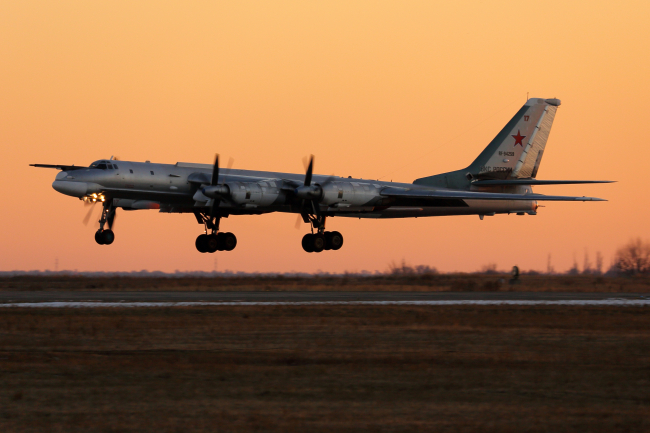
Since the start of the Ukraine War, Russian strategic guidelines on the application of air power—seen as the decisive instrument for achieving success in modern wars—have proven to be outdated, irrelevant and even self-defeating.

Confronting Russia’s High-Velocity Arsenal: European Challenges and Solutions
Since February 2022, Russian missile and long-range drone strikes against Ukraine have served as near-daily reminders of what European states could face in a war with Russia. The same weapon systems battering Ukrainian infrastructure and population centers would be directed against European military and civilian targets in any confrontation between Russia and NATO. As Russian missile production expands and its arsenal diversifies, Europe must confront an uncomfortable question: how to deter, and if push comes to shove, fight Russia's long-range strike arsenal?
On (New) War
Are the new dynamics of power assertion, the redistribution of influence, and the emergence of new technologies changing both the place of war in the everyday life of our societies and the way war is waged when it occurs? Does the obsession with conflict, combined with technical efficiency, impose upon us a state of permanent latent war? And when weapons speak, does the involvement of modern technologies and the companies that produce them revolutionize both the political decision-making process and the way people are engaged in war? These are fundamental questions raised by the conflicts in Ukraine and the Middle East, and they are already shaping current thinking on military strategy and organization.
Silicon Valley and War: Lessons from Ukraine
Over the course of international conflicts, and particularly in Ukraine, major tech companies have emerged as central actors. Initially subject to wartime maneuvering, they have since become decisive actors in their own right, privatizing a significant share of wartime exchanges, shaping the information flows of societies, and presenting themselves as providers of security. This situation raises important questions about states’ autonomy in making decisions and taking action.
The Global Economy: Caught in the Storm / Politique étrangère, Vol. 91, No. 1, 2026
The global economy has become the primary arena for the clash of power ambitions in a world where understanding, coordination, and concerted multilateralism seem to have been permanently marginalized. In this fragmented landscape, how will American and Chinese strategies interact? Will the European Union manage to break out of its decades-old framework in order to face new competition? And will it be able, like others, to integrate the announced shift from a production economy to a digital, information economy? And what role will financial institutions, and central banks in particular, play in this transitioning international economy?

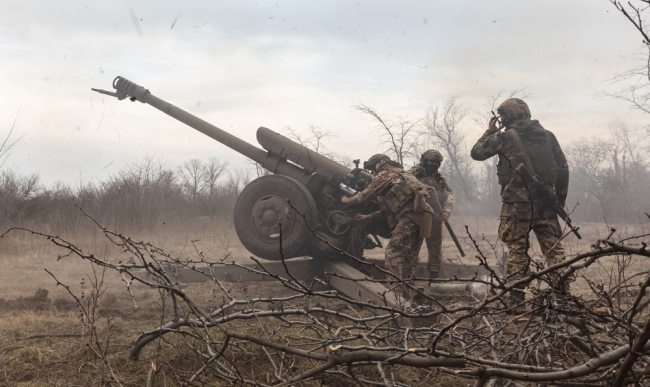
The war could still last for years and paradoxically, time is not on the Kremlin's side
Dimitri Minic, Scientific Director of the Observatory on Russia, Eastern Europe, the Caucasus, and Central Asia and a Research Fellow at Ifri’s Russia/Eurasia Center, argues in an interview with Le Monde that “Ukraine should not be buried too quickly,” even if the current balance of power favors Russia.
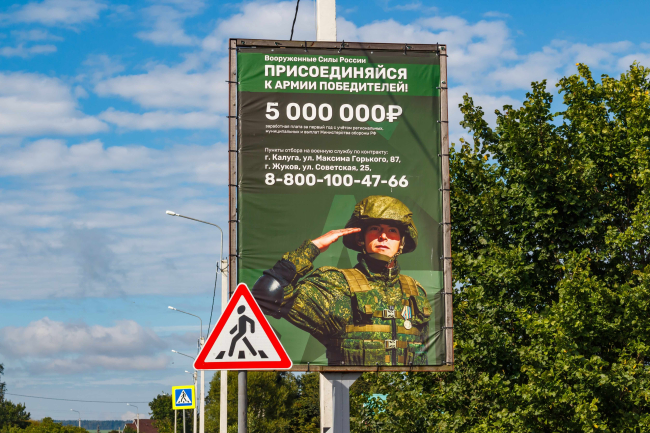
Deathonomics: The Social, Political, and Economic Costs of War in Russia
The report attempts to outline and examine a truly new phenomenon in Russian society, dubbed “deathonomics”—the making of a mercenary army against the backdrop of the Kremlin’s war in Ukraine, eventually replacing both the Soviet (conscript) and early new Russian (contract) armies. It notes that, by the end of 2023, this trend had turned the military service into one of the highest-paying professions in the country, something not seen in Russia on such a scale since the late 17th century.
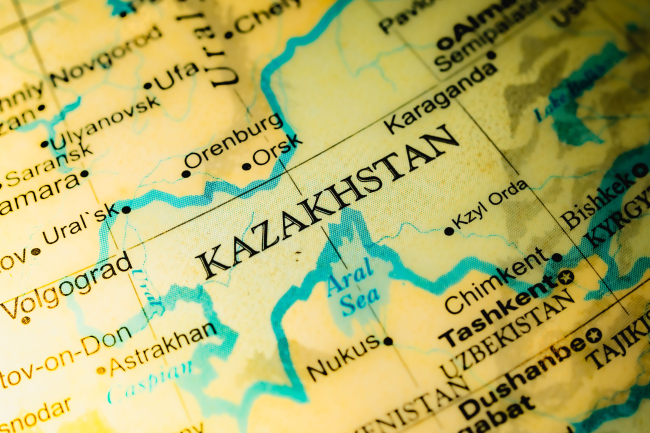
Kazakhstan After the Double Shock of 2022: Political, Economic and Military Consequences
The year 2022 represented a dual shock for Kazakhstan. In January, the country faced its most severe political crisis since independence, followed in February by Russia’s full-scale invasion of Ukraine, which cast uncertainty over the borders of post-Soviet states. These consecutive crises profoundly shaped Kazakhstan’s domestic and foreign policy.
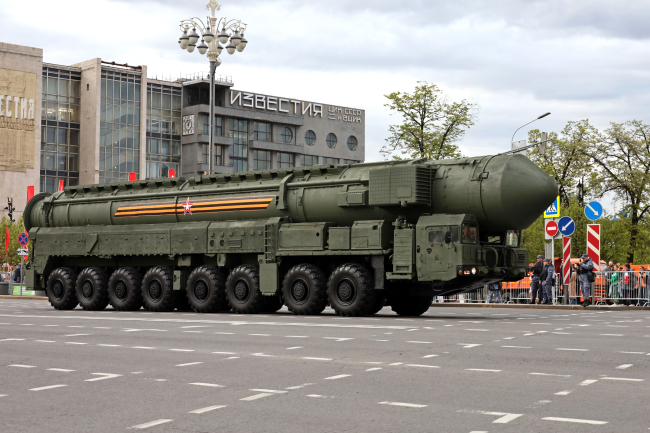
Russia's Nuclear Deterrence Put to the Test by the War in Ukraine
From the outset of its “special military operation” (SVO) against Ukraine on February 24, 2022, Russia, which possesses one of the world’s largest nuclear arsenals, has adopted aggressive deterrence measures and a resolutely menacing rhetorical stance.
Replay - France-Ukraine Forum 2025
Replay of the France-Ukraine Forum 2025. - Three years after the start of Russia's full-scale war against Ukraine, the France-Ukraine 2025 Forum will welcome politicians, experts, academics, and civil society representatives from both countries to discuss three main topics: Ukraine's current military strategy and strategic perspectives; the country's resilience and recovery; Ukraine's European and transatlantic perspectives, including the EU accession process and its aspirations to join NATO.

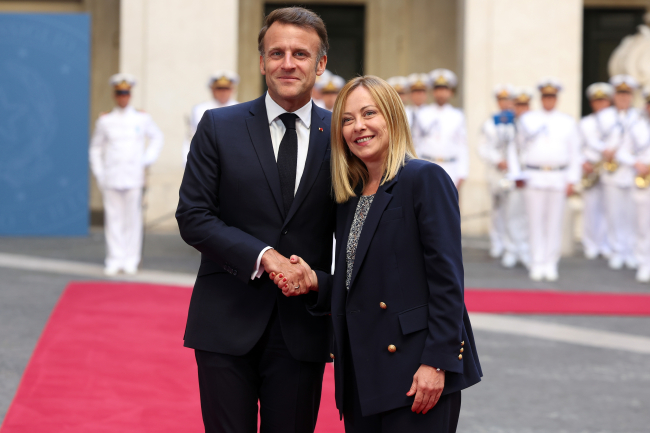
European safety guarantees for Ukraine: The torch burns between Paris and Rome
Last week, France summoned the Italian ambassador in a dispute that reveals the differences between Europeans over the security guarantees they would be prepared to provide to Ukraine in the event of a peace agreement.

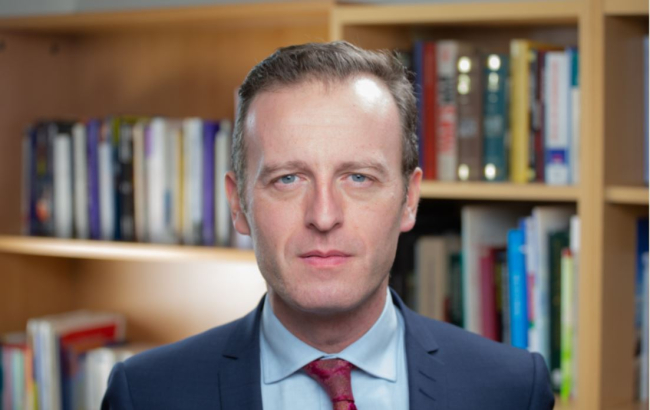
Thomas Gomart, director of the French Institute of International Relations: 'Trump reasserts the US' strategic centrality'
By bombing Iran alongside Israel, Donald Trump has performed a show of force aimed at China and Russia, explains the director of the French Institute of International Relations in an interview.
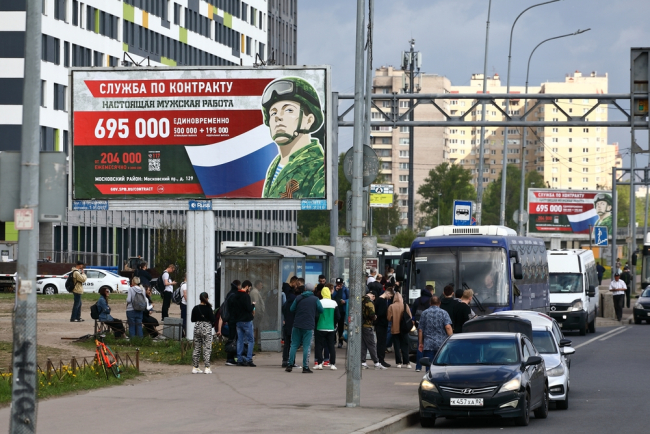
War as Social Elevator: The Socioeconomic Impact of Russian Military Keynesianism
In order to finance its war effort, the Russian state has spent substantial sums of money and implemented a form of “military Keynesianism” that is transforming society at both the socioeconomic and cultural levels. This has partially rebalanced the wide disparities in wealth, levels of consumption, and social prestige in Russian society by granting significant financial and symbolic advantages to peripheral Russia, which has long been overlooked by the central government.
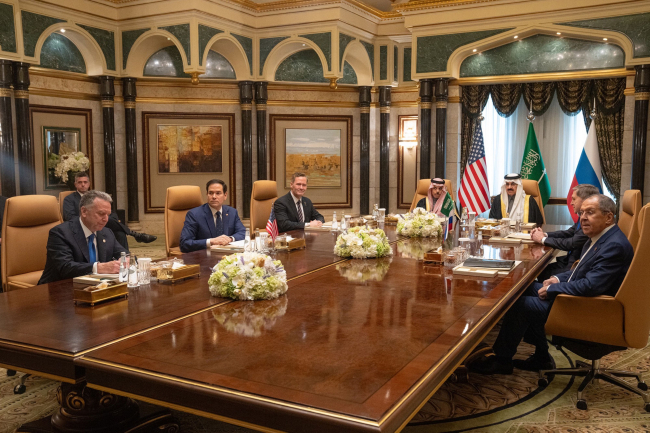
How the US under Trump Became a Strategic and Ideological Adversary of Europe
The Europeans' worst security nightmare seems to be coming true: on Tuesday, February 18, 2025, U.S. Secretary of State Marco Rubio and Russian Foreign Minister Sergey Lavrov met in Saudi Arabia to initiate the normalization of relations between their two countries. The meeting also aimed to set up peace negotiations for Ukraine. However, despite having the potential to affect the entire continent, the discussions took place without the Europeans or the Ukrainians being present.

The China-Russia Partnership and the Ukraine War: Aligned but not allied
China and Russia maintain a strategic partnership rooted in shared opposition to the U.S. and liberal democracies, but their relationship is shaped more by pragmatism than trust.
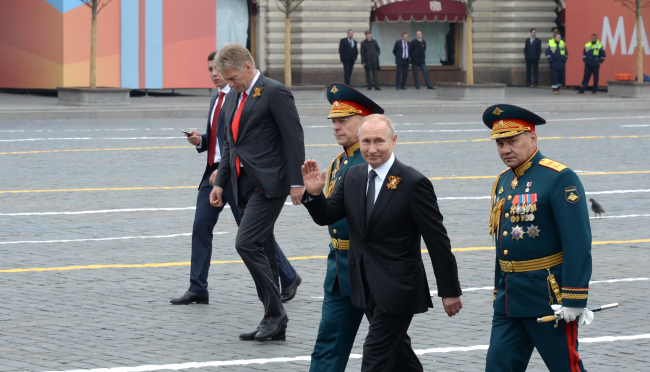
Commanders of Putin's Long War: Purged, Reshuffled and Disgruntled
The trend of reshuffling the Russian top military command in the course of a fast-evolving and far from successful war has progressed unevenly both across the Armed Forces’ structures and in time. The rationale for and timing of the abrupt cadre decisions made by Commander-in-Chief Putin often defy logical explanation, and the rare official clarifications are no more informative than the usual information blackout.
The New Geopolitics of Energy
Following the dramatic floods in Valencia, and as COP29 opens in Baku, climate change is forcing us to closely reexamine the pace—and the stumbling blocks—of the energy transition.
From Cuba to Ukraine: Strategic Signaling and Nuclear Deterrence
Strategic signaling—the range of signs and maneuvers intended, in peace time, to lend credibility to any threat to use nuclear weapons—is back.
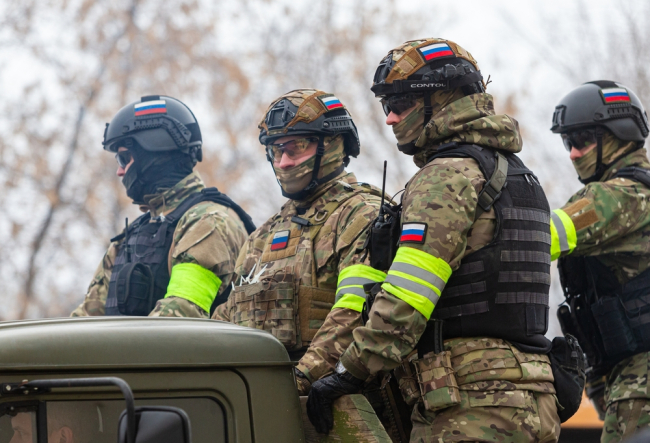
Russian Military Manpower After Two and a Half Years of War in Ukraine
In addition to a military victory in Ukraine, the Russian leadership is planning to build up sizable troop formations for a possible conflict with NATO in the Baltic region and the Kola Peninsula. In particular, current plans aim for the military manpower to grow by about 350,000, reaching a total of 1.5 million soldiers and commanders. In the context of the current conflict in Ukraine, this cannot be accomplished without a new wave of mass mobilization.

Russian Strategic Thinking and Culture Before and After February 24, 2022: Political-Strategic Aspects
Written by Dimitri Minic, the scientific article "Russian Strategic Thinking and Culture Before and After February 24, 2022: Political-Strategic Aspects" in Russia’s war against Ukraine: Complexity of Contemporary Clausewitzian War by the National Defence University Department of Warfare, Helsinki 2024.
The Plight of Russia’s Air Power in the Ukraine War: Drone-Driven Innovations and Transformation of Traditional Air Force
Since the start of the Ukraine War, Russian strategic guidelines on the application of air power—seen as the decisive instrument for achieving success in modern wars—have proven to be outdated, irrelevant and even self-defeating.
Confronting Russia’s High-Velocity Arsenal: European Challenges and Solutions
Since February 2022, Russian missile and long-range drone strikes against Ukraine have served as near-daily reminders of what European states could face in a war with Russia. The same weapon systems battering Ukrainian infrastructure and population centers would be directed against European military and civilian targets in any confrontation between Russia and NATO. As Russian missile production expands and its arsenal diversifies, Europe must confront an uncomfortable question: how to deter, and if push comes to shove, fight Russia's long-range strike arsenal?
On (New) War
Are the new dynamics of power assertion, the redistribution of influence, and the emergence of new technologies changing both the place of war in the everyday life of our societies and the way war is waged when it occurs? Does the obsession with conflict, combined with technical efficiency, impose upon us a state of permanent latent war? And when weapons speak, does the involvement of modern technologies and the companies that produce them revolutionize both the political decision-making process and the way people are engaged in war? These are fundamental questions raised by the conflicts in Ukraine and the Middle East, and they are already shaping current thinking on military strategy and organization.
Silicon Valley and War: Lessons from Ukraine
Over the course of international conflicts, and particularly in Ukraine, major tech companies have emerged as central actors. Initially subject to wartime maneuvering, they have since become decisive actors in their own right, privatizing a significant share of wartime exchanges, shaping the information flows of societies, and presenting themselves as providers of security. This situation raises important questions about states’ autonomy in making decisions and taking action.
Deathonomics: The Social, Political, and Economic Costs of War in Russia
The report attempts to outline and examine a truly new phenomenon in Russian society, dubbed “deathonomics”—the making of a mercenary army against the backdrop of the Kremlin’s war in Ukraine, eventually replacing both the Soviet (conscript) and early new Russian (contract) armies. It notes that, by the end of 2023, this trend had turned the military service into one of the highest-paying professions in the country, something not seen in Russia on such a scale since the late 17th century.
Kazakhstan After the Double Shock of 2022: Political, Economic and Military Consequences
The year 2022 represented a dual shock for Kazakhstan. In January, the country faced its most severe political crisis since independence, followed in February by Russia’s full-scale invasion of Ukraine, which cast uncertainty over the borders of post-Soviet states. These consecutive crises profoundly shaped Kazakhstan’s domestic and foreign policy.
Russia's Nuclear Deterrence Put to the Test by the War in Ukraine
From the outset of its “special military operation” (SVO) against Ukraine on February 24, 2022, Russia, which possesses one of the world’s largest nuclear arsenals, has adopted aggressive deterrence measures and a resolutely menacing rhetorical stance.
War as Social Elevator: The Socioeconomic Impact of Russian Military Keynesianism
In order to finance its war effort, the Russian state has spent substantial sums of money and implemented a form of “military Keynesianism” that is transforming society at both the socioeconomic and cultural levels. This has partially rebalanced the wide disparities in wealth, levels of consumption, and social prestige in Russian society by granting significant financial and symbolic advantages to peripheral Russia, which has long been overlooked by the central government.
How the US under Trump Became a Strategic and Ideological Adversary of Europe
The Europeans' worst security nightmare seems to be coming true: on Tuesday, February 18, 2025, U.S. Secretary of State Marco Rubio and Russian Foreign Minister Sergey Lavrov met in Saudi Arabia to initiate the normalization of relations between their two countries. The meeting also aimed to set up peace negotiations for Ukraine. However, despite having the potential to affect the entire continent, the discussions took place without the Europeans or the Ukrainians being present.
The China-Russia Partnership and the Ukraine War: Aligned but not allied
China and Russia maintain a strategic partnership rooted in shared opposition to the U.S. and liberal democracies, but their relationship is shaped more by pragmatism than trust.
Commanders of Putin's Long War: Purged, Reshuffled and Disgruntled
The trend of reshuffling the Russian top military command in the course of a fast-evolving and far from successful war has progressed unevenly both across the Armed Forces’ structures and in time. The rationale for and timing of the abrupt cadre decisions made by Commander-in-Chief Putin often defy logical explanation, and the rare official clarifications are no more informative than the usual information blackout.
From Cuba to Ukraine: Strategic Signaling and Nuclear Deterrence
Strategic signaling—the range of signs and maneuvers intended, in peace time, to lend credibility to any threat to use nuclear weapons—is back.
Russian Military Manpower After Two and a Half Years of War in Ukraine
In addition to a military victory in Ukraine, the Russian leadership is planning to build up sizable troop formations for a possible conflict with NATO in the Baltic region and the Kola Peninsula. In particular, current plans aim for the military manpower to grow by about 350,000, reaching a total of 1.5 million soldiers and commanders. In the context of the current conflict in Ukraine, this cannot be accomplished without a new wave of mass mobilization.
Russian Strategic Thinking and Culture Before and After February 24, 2022: Political-Strategic Aspects
Written by Dimitri Minic, the scientific article "Russian Strategic Thinking and Culture Before and After February 24, 2022: Political-Strategic Aspects" in Russia’s war against Ukraine: Complexity of Contemporary Clausewitzian War by the National Defence University Department of Warfare, Helsinki 2024.
From Ukraine to Gaza: Military Uses of Artificial Intelligence
The wars in Ukraine and Gaza show us the extent to which artificial intelligence (AI) has become integral to battlefield operations.
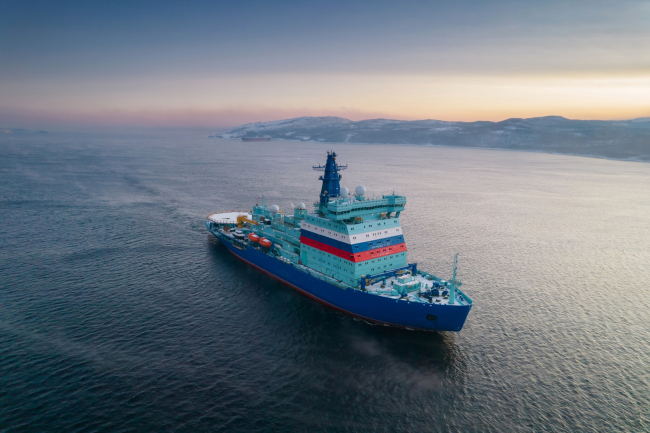
Russia in the Arctic: The End of Illusions and the Emergence of Strategic Realignments
Russia’s full-scale invasion of Ukraine has triggered profound changes in the Arctic region, the consequences of which remain uncertain in the long term.
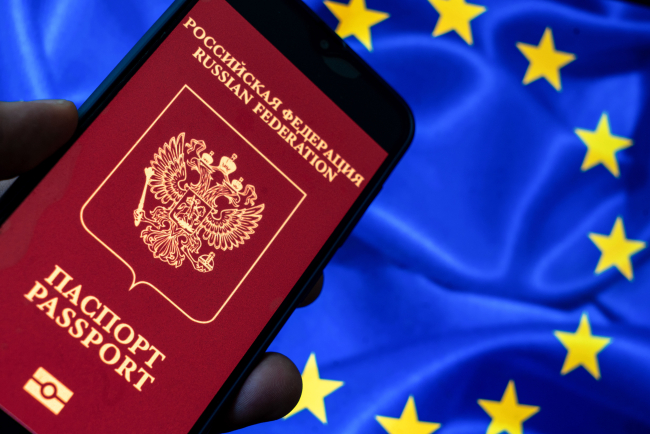
The New Russian Diaspora: Europe’s Challenge and Opportunity
This report assesses both the scale and the roots of the outward migration from the Russian Federation coinciding with Putin’s turning of Russia into an aggressive authoritarian state.
Global Governance, Ukraine, and the European Union: Quo Vadis?
The technological revolution of the latter half of the twentieth century, 9/11, and the 2007–2008 financial crisis have delimited the West’s dream of harmonious globalization.
The Wind Rose’s Directions: Russia’s Strategic Deterrence during the First Year of the War in Ukraine

How the Russian Army Changed its Concept of War, 1993-2022
The traditional and high-intensity war that has occurred in Ukraine since Russia decided to invade raises a key issue: did post-soviet Russian strategic thought really prepare Russia for waging this war?
The war could still last for years and paradoxically, time is not on the Kremlin's side
Dimitri Minic, Scientific Director of the Observatory on Russia, Eastern Europe, the Caucasus, and Central Asia and a Research Fellow at Ifri’s Russia/Eurasia Center, argues in an interview with Le Monde that “Ukraine should not be buried too quickly,” even if the current balance of power favors Russia.
European safety guarantees for Ukraine: The torch burns between Paris and Rome
Last week, France summoned the Italian ambassador in a dispute that reveals the differences between Europeans over the security guarantees they would be prepared to provide to Ukraine in the event of a peace agreement.
Thomas Gomart, director of the French Institute of International Relations: 'Trump reasserts the US' strategic centrality'
By bombing Iran alongside Israel, Donald Trump has performed a show of force aimed at China and Russia, explains the director of the French Institute of International Relations in an interview.

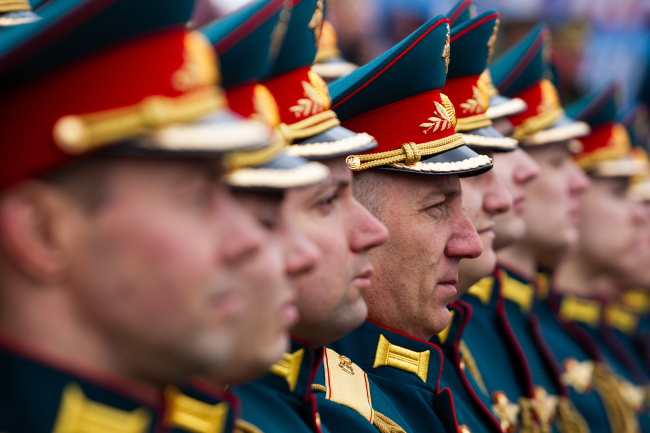
In Putin's wartime Russia, military corruption is suddenly taboo
To be sure government spending reaches the battlefield in Ukraine, President Vladimir Putin is suddenly putting high priority on purging Defense Ministry officials accused of corruption. Russia's war in Ukraine has turned out to be a powerful anti-corruption initiative — at least at the Ministry of Defense.
Germany and France agree Ukraine may strike Russian Military Targets
German Chancellor Olaf Scholz said Germany would not prohibit Ukrainian attacks on Russian military targets, saying Ukraine "is allowed to defend itself."

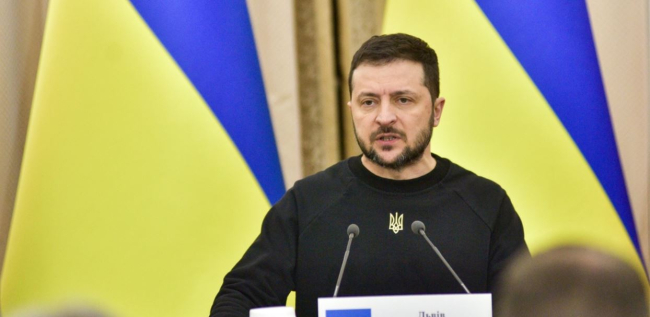
Cracks In Western Support Pose New Challenge For Ukraine
Ukraine faces growing diplomatic headwinds after its summer counter-offensive against Russia's forces faltered, with aid from vital backers in the United States and EU being increasingly called into question.

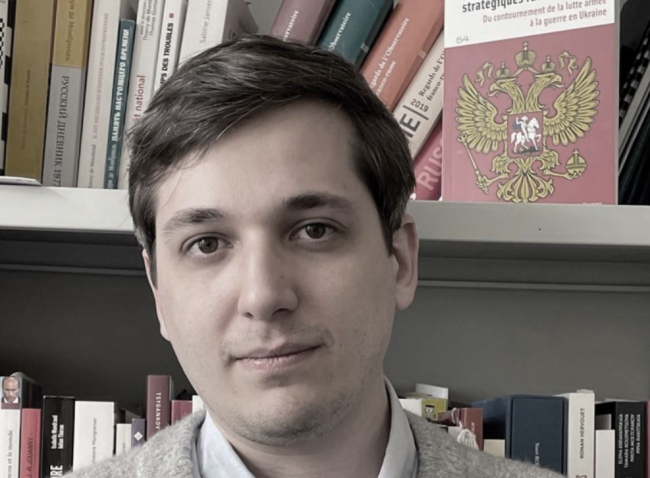
Dimitri Minic: 'The Kremlin's credibility has been shaken'
For this Russian army specialist, at least part of the armed forces rallying behind the founder of the Wagner group, Yevgeny Prigozhin, cannot be ruled out.

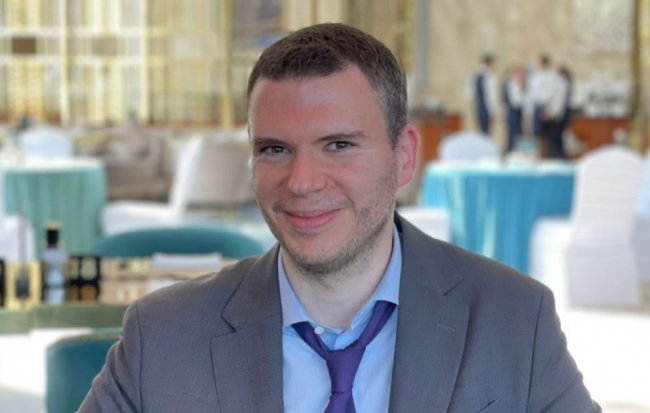
French Expert Says Afghanistan-Related Challenges Loom Large for Central Asia as Geopolitical Competition Intensifies
Addressing the situation in Afghanistan remains on top of the agenda for Central Asia, said Michael Levystone, an associate research fellow at the Institut Français des Relations Internationale (IFRI) Russia/Eurasia Center, in an exclusive interview with The Astana Times. The expert, who participated in the Astana International Forum (AIF) on June 8-9, also discussed the intensifying geopolitical competition in Central Asia, regional connectivity and water scarcity.
Dimitri Minic: 'The Russian army is influenced by beliefs that detaches it from objective reality'
According to the researcher, the failure of the Russian army in Ukraine is the result of the implementation of a theory that emerged in the 2000s, which places a central focus on 'psychological-informational' warfare rather than armed combat.

Japan PM Kishida’s Africa tour lays groundwork for G7 summit, as China and Russia concerns loom large
While the impact of Kishida’s tour is ‘marginal, it can still send ‘a message of solidarity’ that it intends to take the continent’s concerns seriously. Getting the African countries to take active measures against Russia will be difficult if they are not offered strong incentives in exchange, one analyst notes.

France's Macron is sending China the wrong signals
More realistic posture would strengthen Paris' role in Indo-Pacific region

France’s Macron Renews Call for a Sovereign Europe Less Reliant on Foreign Powers
French president’s remarks follow criticism over his warning that Europe should steer clear of U.S.-China tensions over Taiwan

Does Macron's stance on Taiwan weaken G7 deterrence against China?
One of Prime Minister Fumio Kishida’s top goals for next month’s Group of Seven summit in Hiroshima is to create a united front on issues like China and Ukraine. But finding a unified approach to dealing with Beijing’s assertiveness might have just become harder.
Europe is ‘counting on China’ to end Russia’s war in Ukraine, leaders tell Xi Jinping in Beijing
European Commission chief Ursula von der Leyen and French President Emmanuel Macron deliver united message to Chinese president during visit ; but as French leader signed over 20 business deals on China trip, EU chief took sterner line with Xi on economic grievances, human rights and Taiwan
In China, Macron appeals to Xi to help end Ukraine conflict
French President Emmanuel Macron called on Chinese President Xi Jinping to help convince Russia to hold negotiations toward ending the war in Ukraine as the two leaders met in Beijing on Thursday.

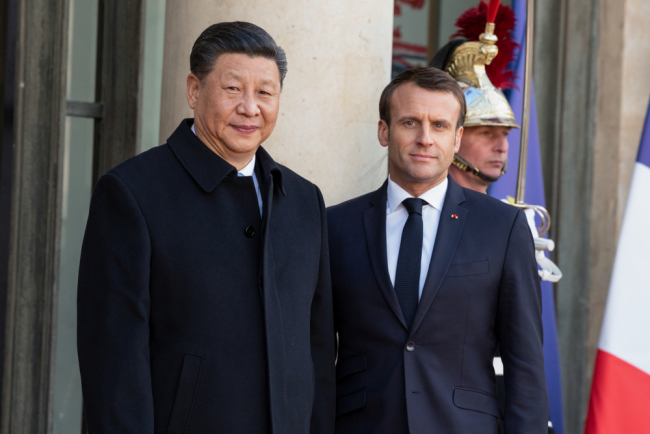
France’s Emmanuel Macron to Press Xi Jinping on China’s Support of Russia
French President Emmanuel Macron is expected to press Chinese leader Xi Jinping during a trip to China this week to limit support for Russia in its war against Ukraine, according to French officials, amid growing Western concerns over Beijing’s deepening economic and political ties with Moscow.
Xi's Moscow Visit Risks Further Emboldening Putin: Analysts
There is no sign the visit of Chinese President Xi Jinping to Moscow will rein in President Vladimir Putin in his war in Ukraine, even if it again highlights a lopsided relationship where Russia is clearly the junior partner, analysts say.

France is already sending an armored ‘oddity’ to Ukraine. Now this can send a little odd.
France may send Ukraine its AMX-10Ps, an amphibious infantry fighting vehicle that was phased out of service by the French army nearly a decade ago.

The E.U. Offered to Embrace Ukraine, but Now What?
The European Union and NATO have promised a path to membership for the embattled country. But real partnership will hold risks and benefits for both sides.

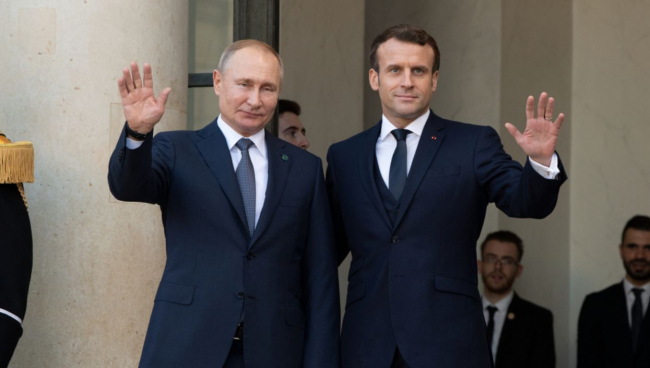
Macron pirouettes on Russia to the strains of ‘Churchill and Chamberlain’
President Emmanuel Macron’s nuanced position on the war in Ukraine is part and parcel of yet another French specificity, an attitude towards Russia which is unique in Europe. Macron prides himself on being a moderate among western warmongers.
Replay - France-Ukraine Forum 2025
Replay of the France-Ukraine Forum 2025. - Three years after the start of Russia's full-scale war against Ukraine, the France-Ukraine 2025 Forum will welcome politicians, experts, academics, and civil society representatives from both countries to discuss three main topics: Ukraine's current military strategy and strategic perspectives; the country's resilience and recovery; Ukraine's European and transatlantic perspectives, including the EU accession process and its aspirations to join NATO.

Germany passes military service bill
In the wake of the war in Ukraine, Germany and France are working to define security guarantees for Kyiv.

The European Pillar of Security
Leo Litra and Lesia Ogryzko are joined by Élie Tenenbaum and Oleksandr Sushko to discuss June’s NATO summit—and what Europe’s security step up means for Ukraine.
The War in Ukraine and Rising Global Tensions: A Southeast Asian Perspective (Replay)
A debate with Simon Tay, Chairman of the Singapore Institute of International Affairs (SIIA), Associate Professor at the National University of Singapore, and Singapore’s Ambassador to Greece.
Interview with David Miliband, President and CEO of the International Rescue Committee
Can you describe the humanitarian impact of the war in Ukraine, in Europe, including with regards to displacement, and beyond the outside of Europe?
Toward a New European Security Order? Foreign Policy Shifts in Response to Russia’s War on Ukraine (webinar)
This online discussion takes stock of how Russia’s invasion of Ukraine has changed national foreign and security policies and how these shifts affect Europe’s security architecture.
Neutrality and non-alignment after the Russian Invasion of Ukraine
The Russian invasion of Ukraine has reignited discussions about the status of neutrality and non-alignment in several parts of Europe.
Ifri, a foundation recognized as being of public utility, relies largely on private donors – companies and individuals – to guarantee its sustainability and intellectual independence. Through their funding, donors help maintain the Institute's position among the world's leading think tanks. By benefiting from an internationally recognized network and expertise, donors refine their understanding of geopolitical risk and its consequences on global politics and the economy. In 2026, Ifri partners with over 90 French and international companies and organizations.