





Practical information
Depuis le début des "printemps arabes", une onde de crises se répand au Moyen-Orient, entraînant la région dans un chaos qui semble incontrôlable. De nouveaux foyers de conflits se superposent aux anciens contentieux et les aggravent : la guerre civile syrienne menace la stabilité de tous les pays voisins, la découverte de gigantesques ressources en hydrocarbures en Méditerranée orientale entraîne d'insolubles conflits de répartition, la paix avec Israël est remise en cause... Quel est aujourd'hui le niveau de risque dans la région, et comment y faire face ?
Ce déjeuner reçoit le soutien de la
Other events
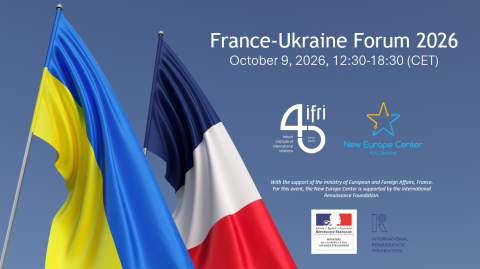
France-Ukraine Forum 2026
More than four and a half years after the start of the full-scale war launched by Russia against Ukraine, the 2026 France-Ukraine Forum will bring together policymakers, experts, academics, and civil society representatives from both countries to discuss three main topics: the formats and conditions for a lasting diplomatic settlement; Ukraine’s Euro-Atlantic integration, encompassing both the EU accession process and closer ties with NATO; and the societal transformations of postwar Ukraine, as well as its prospects for reconstruction.
The EU in a World of Economic Warfare: Trade, Geopolitics, and the Battle for Economic Sovereignty
The international trading system has become a primary theatre of geopolitical competition. Tariffs, sanctions, and technology controls have replaced dialogue as the default instruments of economic relations.
The Road to 27 Electrification Action Plans: Planning and Investing in Europe’s Electric Future
The European Commission’s Electrification Action Plan places the continent on an electric path to structurally reduce dependence on fossil fuel imports and boost the energy transition in industry, transport and buildings.