








Practical information
In December 2018, the EU-Japan Economic Partnership Agreement (EPA) and Strategic Partnership Agreement (SPA) were formally adopted, entering into force in February 2019 and opening an era of unprecedented cooperation between the two players.
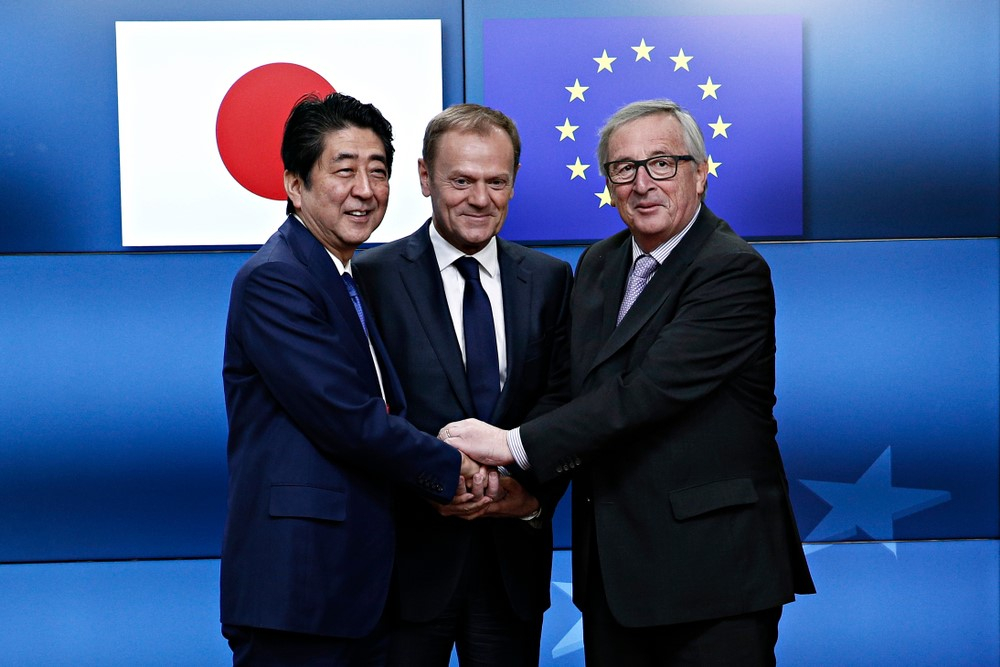
These deals bear a particularly strong significance as the multilateral system is challenged both by revisionist powers such as China and Russia, but also by a US President who focuses on narrow national interests. The EPA is thus the symbol of the EU’s and Japan’s commitment to defend multilateral solutions and act as norms shapers in a very fluid international context. The EU and Japan thus stand as key defenders of the rules-based, multilateral order. The EPA should also allow the two players to deepen their economic cooperation in challenging times marked by Brexit.
Japan and the EU also share the same dedication to supporting international stability. The two players have a similar, comprehensive approach of security focusing on sustainable development, connectivity and a human-centered vision. The SPA thus commits them to coordinating their approaches and actions more closely in an effort to weigh on international security affairs.
This conference will gather speakers from Japan, France, and EU institutions and member states to discuss the significance and implementation of the EPA and SPA.
This conference will be held in English.
9:30-10:45 – The EU-Japan EPA: How will the future economic and trade partnership fare?
Main questions to be discussed:
- What are the strategic effects of the Japan-EU EPA in promoting free trade?
- How to assess the concrete effects of the EPA on bilateral economic exchanges?
- What is the impact of Brexit on bilateral EU-Japan economic relations?
Chair: Françoise NICOLAS, Director, Center for Asian Studies Ifri
- Yuka FUKUNAGA, Professor, Waseda University
- Iana DREYER, Founder and Editor, Borderlex
- Koichi INOUE, Deputy Director-General, JETRO Paris
Q/A session
Listen to the recording of the panel :
11:00-12:15 – The EU-Japan SPA: How to advance the strategic partnership in development, connectivity and environmental domains?
Main questions to be discussed:
- How to foster cooperation on connectivity issues (quality infrastructure, etc.)?
- How can Japan and the EU work together on climate change and SDG objectives?
- How to ensure greater coordination between the EU and Japan in international settings?
Chair: Céline PAJON, Research fellow, Center for Asian Studies, Ifri
- Yukari TAKAMURA, Professor, Tokyo University
- Axel BERKOFSKY, Professor, University of Pavia, Italy and Co-Head of ISPI Asia Center
- Romana VLAHUTIN, Ambassador at Large for Connectivity, European External Action Service
Q/A session
Listen to the recording of the panel :
Other events
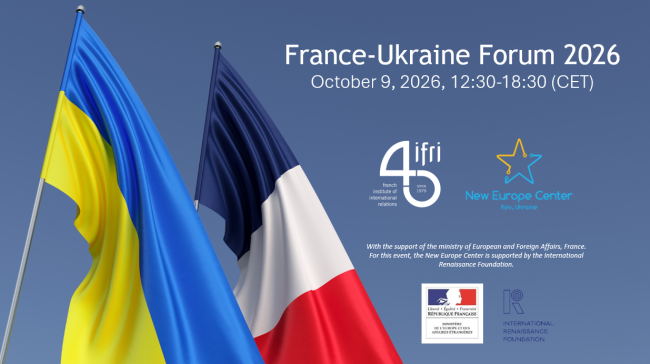
France-Ukraine Forum 2026
More than four and a half years after the start of the full-scale war launched by Russia against Ukraine, the 2026 France-Ukraine Forum will bring together policymakers, experts, academics, and civil society representatives from both countries to discuss three main topics: the formats and conditions for a lasting diplomatic settlement; Ukraine’s Euro-Atlantic integration, encompassing both the EU accession process and closer ties with NATO; and the societal transformations of postwar Ukraine, as well as its prospects for reconstruction.
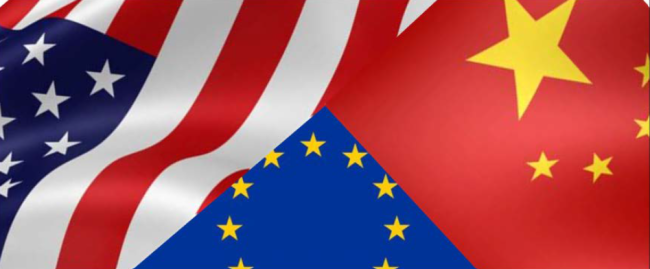
The EU in a World of Economic Warfare: Trade, Geopolitics, and the Battle for Economic Sovereignty
The international trading system has become a primary theatre of geopolitical competition. Tariffs, sanctions, and technology controls have replaced dialogue as the default instruments of economic relations.
The Road to 27 Electrification Action Plans: Planning and Investing in Europe’s Electric Future
The European Commission’s Electrification Action Plan places the continent on an electric path to structurally reduce dependence on fossil fuel imports and boost the energy transition in industry, transport and buildings.