


After the Hydrogen Bubble Bursts: The Factors Shaping and Possibly Unfolding International Hydrogen Value Chains
Briefings de l'Ifri, September 17, 2021
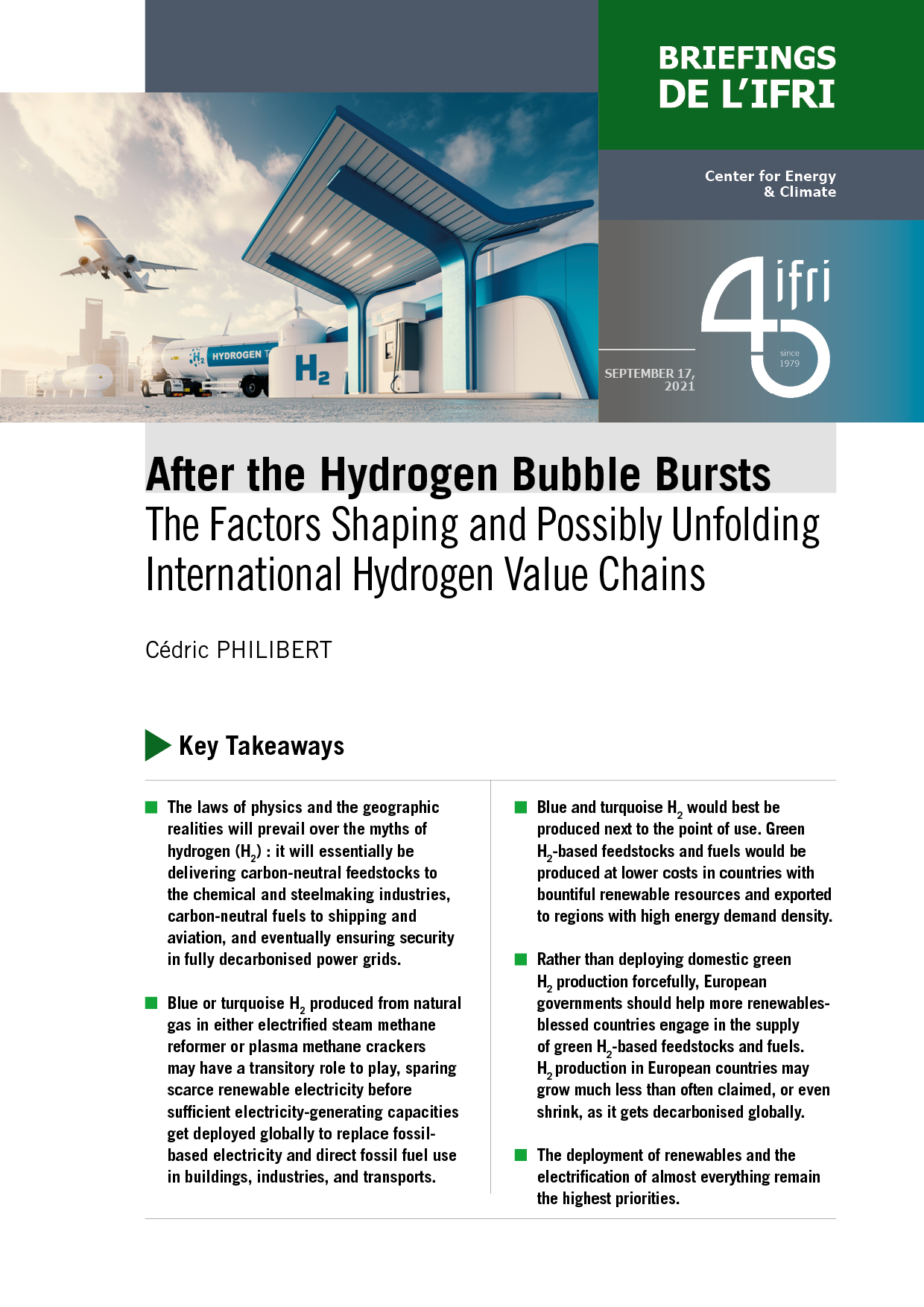
The laws of physics and the geographic realities will prevail over the myths of hydrogen (H2): it will essentially be delivering carbon-neutral feedstocks to the chemical and steelmaking industries, carbon-neutral fuels to shipping and aviation, and eventually ensuring security in fully decarbonized power grids.
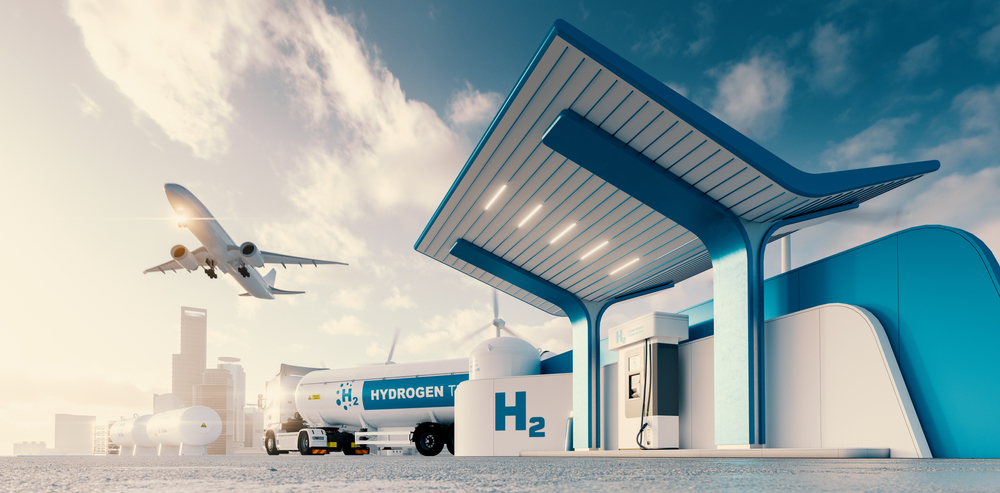
• Blue or turquoise H2 produced from natural gas in either electrified steam methane reformer or plasma methane crackers may have a transitory role to play, sparing scarce renewable electricity before sufficient electricity-generating capacities get deployed globally to replace fossil-based electricity and direct fossil fuel use in buildings, industries, and transports.
• Blue and turquoise H2 would best be produced next to the point of use. Green H2-based feedstocks and fuels would be produced at lower costs in countries with bountiful renewable resources and exported to regions with high energy demand density.
• Rather than deploying domestic green H2 production forcefully, European governments should help more renewables-blessed countries engage in the supply of green H2-based feedstocks and fuels. H2 production in European countries may grow much less than often claimed, or even shrink, as it gets decarbonized globally.
• The deployment of renewables and the electrification of almost everything remain the highest priorities.

Available in:
Regions and themes
ISBN / ISSN
Share
This page contains only a summary of our work. If you would like to have access to all the information from our research on the subject, you can download the full version in PDF format.
After the Hydrogen Bubble Bursts: The Factors Shaping and Possibly Unfolding International Hydrogen Value Chains

Center for Energy & Climate
Ifri's Energy and Climate Center carries out activities and research on the geopolitical and geoeconomic issues of energy transitions such as energy security, competitiveness, control of value chains, and acceptability. Specialized in the study of European energy/climate policies as well as energy markets in Europe and around the world, its work also focuses on the energy and climate strategies of major powers such as the United States, China or India. It offers recognized expertise, enriched by international collaborations and events, particularly in Paris and Brussels.
EU-UK Summit: The Need for a Reset
Since Brexit officially entered into force in 2020, the United Kingdom (UK) has worked to forge a new partnership with the European Union (EU). Serving its interests has meant getting closer to the EU in several economic sectors, without ever officially working towards EU reaccession.
Strategic Redundancy beyond Hormuz: Alternative Oil and Gas Corridors and Türkiye’s Emerging Role
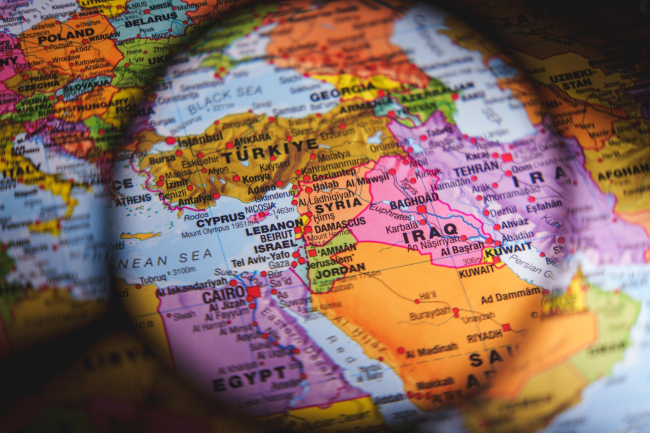
The central question raised by the present crisis in the Gulf and the disruption of navigation through the Strait of Hormuz is not simply how quickly and lastingly normal flows can be restored, but whether the regional energy architecture can continue to rely so heavily upon a single maritime corridor.
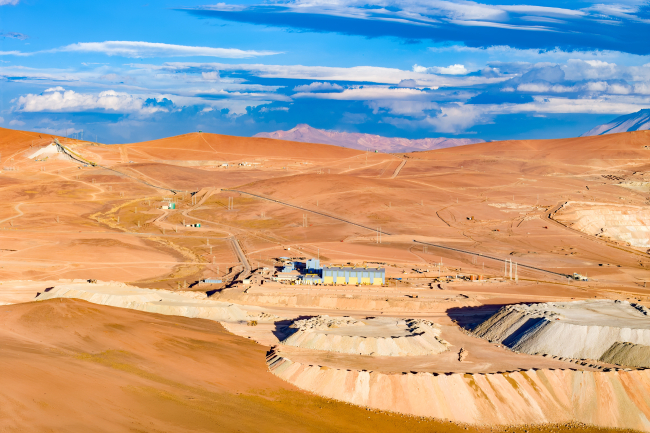
Mining Nationalism and Export Restrictions: The Challenges of Economic Development
Since the end of the 2000s and especially the 2010s, resource nationalism has been on the rise.

Solar Radiation Management: A Climate Tool with Geopolitical Implications
The Paris Agreement (2015) aims to keep global warming below 2 °C, preferably 1.5 °C, above pre-industrial levels. Mitigation (reducing greenhouse gas emissions) remains the core tool for reaching net carbon neutrality by mid-century. However, a temperature overshoot is anticipated. The United Nations Environment Programme (UNEP) forecasts that the 1.5 °C threshold will be exceeded in the coming years, with warming potentially peaking between 2.2 °C and 3.6 °C this century. Against this backdrop, three trends characterize the climate policy debate.