

Turkey's re-imagined neighborhood policy after the Arab Spring

Joshua W. Walker was a speaker at the international conference on “The international consequences of the Arab Spring” held at Ifri on March 13th, 2012. This paper is a follow up on his oral intervention.
Turkey’s emergence in the 21st century as a regional power has been in the making for the last decade, but only fully crystallized in the wake of the “Arab Spring” in 2011. Unlike regional powers like Iran and Saudi Arabia that actively supported counter-protest movements to deflect attention away from their own domestic shortcomings, Turkey’s vibrant civil society nudged the government onto the side of the Arab street even at the expense of investments made with previous regimes. Given Turkey’s recent economic success and democratic character in a Muslim context, Ankara’s courtship of the newly emerging Arab democracies in the Maghreb region has been notably successful in contrast to underlining tensions with its own neighbors that has limited the potential of Turkish influence.
Turkey did not transform itself from a defeated post-Ottoman Empire state to a flourishing market-based Muslim-majority democracy overnight; it has been almost a century in the making. The lessons learned and the opportunities offered by Turkey are unique, yet it is still being offered as a “model” for how “neighbors” might be able to transform themselves. The Justice and Development Party (AKP), that prefers to be an “inspiration” rather than a “model”, has been quick to seize the opportunities presented to it in 2011 by inserting itself in every possible arena and role wherever possible in the region. Under AKP’s rule, Turkey has earned a reputation for being pragmatic and active actor in the Middle East.

Available in:
Regions and themes
ISBN / ISSN
Share
Download the full analysis
This page contains only a summary of our work. If you would like to have access to all the information from our research on the subject, you can download the full version in PDF format.
Turkey's re-imagined neighborhood policy after the Arab Spring

Author(s)
Related centers and programs
Discover our other research centers and programs
Center for Asian Studies
Asia is a nerve center for multiple global economic, political and security challenges. The Center for Asian Studies provides documented expertise and a platform for discussion on Asian issues to accompany decision makers and explain and contextualize developments in the region for the sake of a larger public dialogue.
The Center's research is organized along two major axes: relations between Asia's major powers and the rest of the world; and internal economic and social dynamics of Asian countries. The Center's research focuses primarily on China, Japan, India, Taiwan and the Indo-Pacific, but also covers Southeast Asia, the Korean peninsula and the Pacific Islands.
The Centre for Asian Studies maintains close institutional links with counterpart research institutes in Europe and Asia, and its researchers regularly carry out fieldwork in the region.
The Center organizes closed-door roundtables, expert-level seminars and a number of public events, including an Annual Conference, that welcome experts from Asia, Europe and the United States. The work of Center’s researchers, as well as that of their partners, is regularly published in the Center’s electronic journal Asie.Visions.
Find out more
Discover all our analyses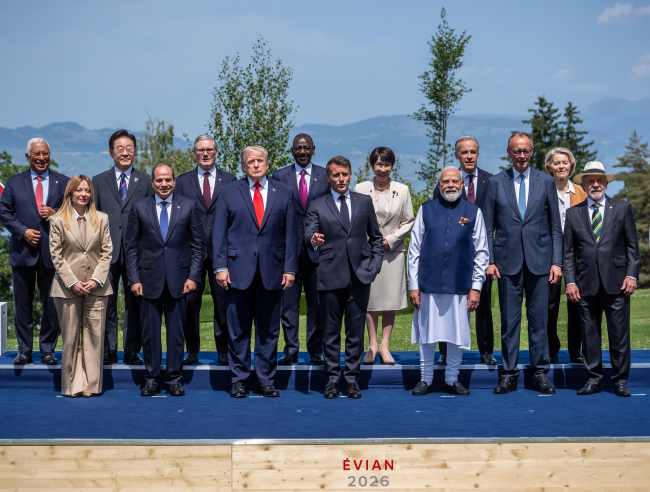
The G7 Leaders’ Summit in France: An Unexpected Success
Overall, it was a successful summit for President Macron. However, caution is warranted regarding the 2026 G7’s lasting legacy, as the unpredictability of the U.S. president could affect the durability of commitments made.

China’s EV Rise and the Strategic Challenge for Japan’s Automotive Industry
China’s rapid expansion in electric vehicle production is reshaping global automotive competition for both European and Japanese automakers. Japan —a pioneer in hybrid vehicles— is struggling to translate this leadership into battery electric vehicles (BEVs), as Chinese manufacturers rapidly scale production and exports. At the same time, China’s dominance in battery manufacturing and critical mineral processing exposes upstream vulnerabilities for Japan’s automotive industry. Together, these developments create a dual challenge: intensifying downstream competition in electric vehicle (EV) markets and continued dependence on Chinese-controlled supply chains.
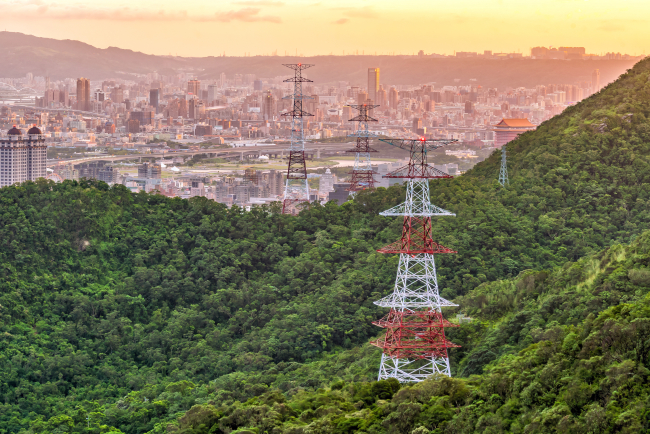
Crisis in the Strait of Hormuz. A Stress Test for Taiwan with Global Implications
The large-scale military operation carried out by the United States (US) and Israel against Iran triggered an Iranian retaliation that resulted in the partial destruction of natural gas liquefaction infrastructure and severe disruption of maritime traffic in the Strait of Hormuz. The economies of East Asia—South Korea, Japan, and Taiwan in particular—are highly exposed to this crisis due to their reliance on liquefied natural gas (LNG) imports for electricity generation.
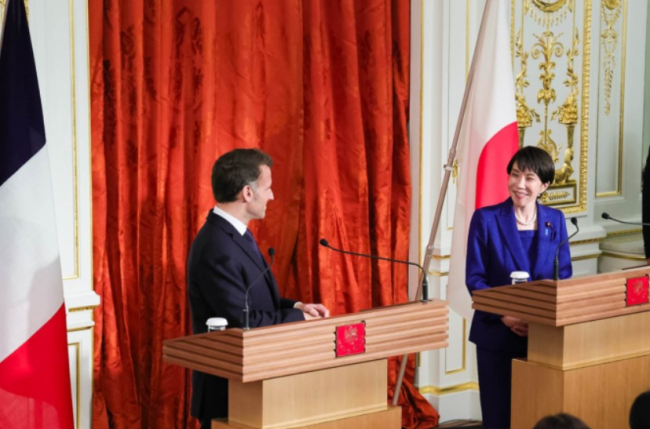
Emmanuel Macron in Japan and South Korea: A Historic Opportunity for Euro-Asian Rapprochement
President Emmanuel Macron is touring Japan and South Korea at a time when the interests of these three countries have never been more aligned, and more broadly between Europe and East Asian democracies.