

Wortkrieg um das europäische Selbstverständnis : eine Vergleichsanalyse der Türkei-Debatte in Deutschland und Frankreich
Debate on European identity : French-German analysis of Turkish membership issue
Since a few years not only a handful of experts or politicians have serious discussions about the Turkish membership issue, in fact it has become a topical subject of public debates in Europe. The French electoral campaign for elections in the EU in 2004 and the German one for presidency in 2005 are evidence of the presence the Turkish membership issue faces likewise on the level of the political agenda of both countries. Not only the attitude towards Christianity and Islam is questioned but even more the political values, the principales of the EU as well as the ongoing European integration and the gurantee of security at European borders.With the help of these four essential topics, the following article wishes to examine in detail the public debate (especially among politicians, Fellows and essayists) on the Turkish accession to EU from a German and French point of view. It is not by a coincidence that exactly these two countries had been chosen. Thus it is because they are having passionate debates and also their way of discussing is very dissimilar which highlights remarkable historical and cultural-political differences. The study was carried out between autumn 2003 and October 2005 beginning with the declaration of the former French president Giscard and the German historian Wehler and the opening of the negotiations between Turkey and the EU.

Author(s)
Related centers and programs
Discover our other research centers and programs
The Study Committee on Franco-German Relations (Cerfa)
The Study Committee on Franco-German Relations (Cerfa) was created in 1954 by an inter-governmental agreement between the Federal Republic of Germany and France, in order to raise awareness of Germany in France and analyze Franco-German relations, including in their European and international dimensions. In its conferences and seminars, which bring together experts, political leaders, senior decision-makers and representatives of civil society from both countries, Cerfa develops the Franco-German debate and stimulates political proposals. It regularly publishes studies through two collections: Cerfa notes and studies as well as Franco-German visions.
Cerfa maintains close relations with the network of German foundations and think tanks. In addition to its research and debate activities, Cerfa promotes the emergence of a new Franco-German generation through original cooperation programs. This is how in 2021-2022, Cerfa led a program on multilateralism with the Konrad Adenauer Foundation in Paris. This program is aimed at young professionals from both countries interested in the issues of multilateralism in the context of their activities. It covered a wide range of themes relating to multilateralism, such as international trade, health, human rights and migration, non-proliferation and disarmament. Previously, Cerfa had participated in the Franco-German future dialogue, co-led with the DGAP from 2007 to 2020, and supported by the Robert Bosch Foundation and the Daniel Vernet group (formerly the Franco-German Reflection Group) which was founded in 2014 upon the initiative of the Genshagen Foundation.
Find out more
Discover all our analyses
France and EU Enlargement: From Strategic Hesitation to a Geopolitical Shift
Paris has come a long way in its approach to enlarging the European Union. However, French support remains fragile, due in part to a lack of public support.
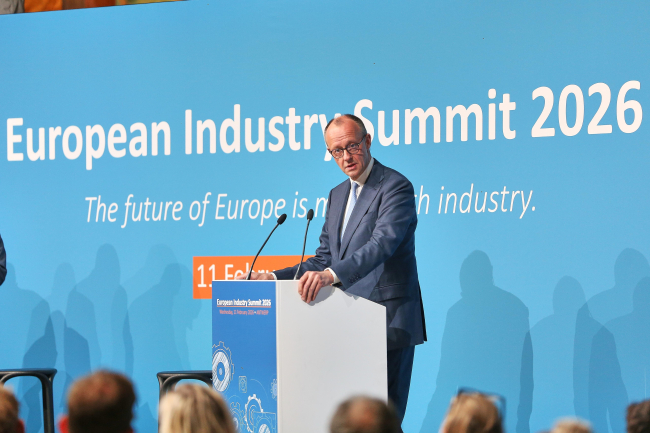
Reviving the German Economy: Balancing Economic, Social, and Defense Priorities
Germany is facing fundamental challenges to its economic and social model and is seeking a new course. The German post-war model was hugely successful, leading to economic strength and prosperity over many decades, but now it is steadily faltering. The previously latent fear of deindustrialization is becoming more concrete, particularly due to the weakening of a key sector: the automotive industry.
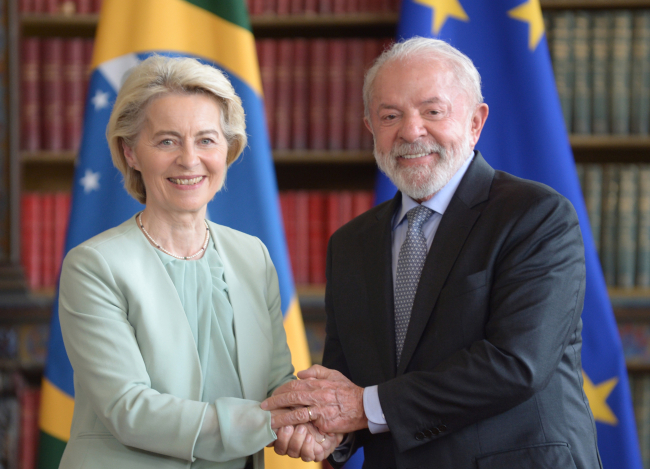
Entry into force of the EU-Mercosur agreement: last act of an endless drama for Germany?
At the World Economic Forum in Davos on January 20, 2026, Ursula von der Leyen, the President of the European Commission, stated that "geopolitical shocks can and must serve as opportunity for Europe".
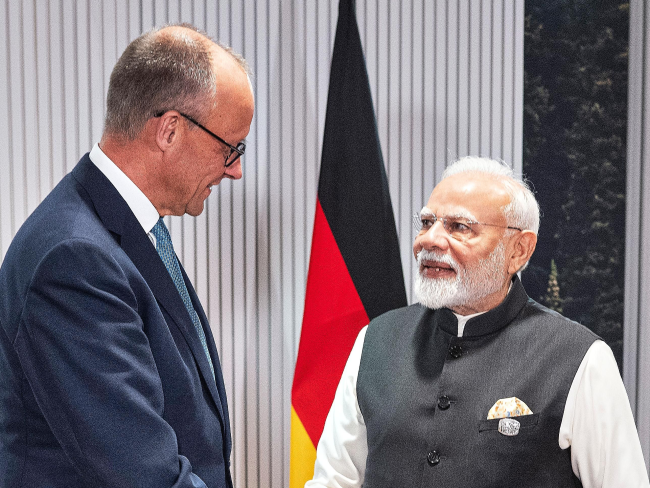
German-Indian Relations: a Partnership based on values or on interests?
In recent years, virtually no other Asian country has seen such a rise in prominence in German foreign policy as India.