



Germany
An in-depth analysis of Germany's trajectory through its foreign and European policies, its relations with France, its economy and its domestic politics, offering a perspective on the country and its role in the world.
Related Subjects
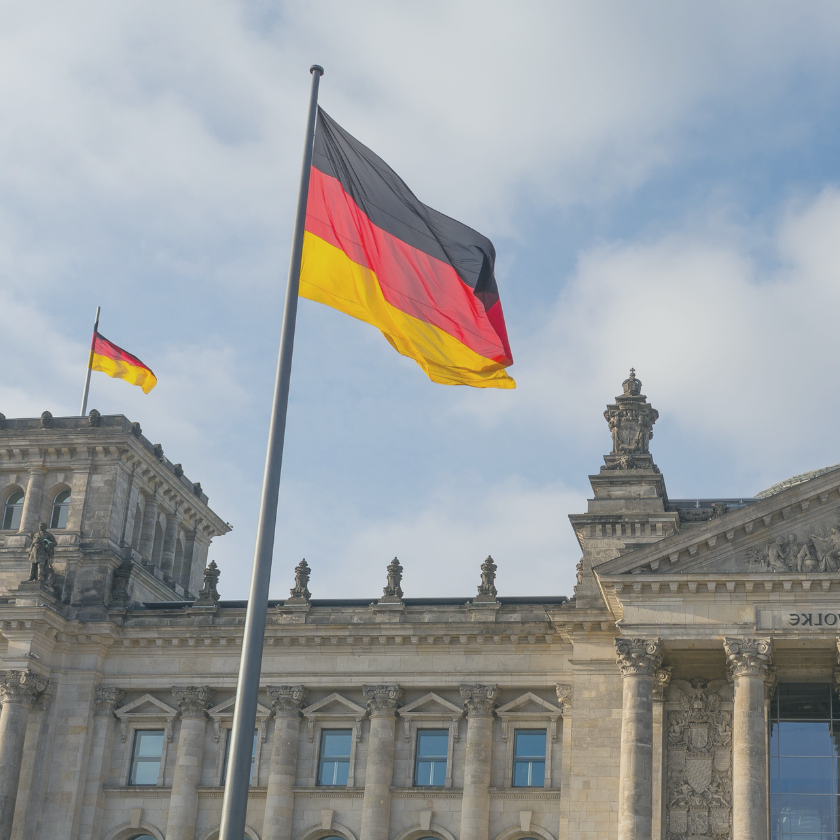
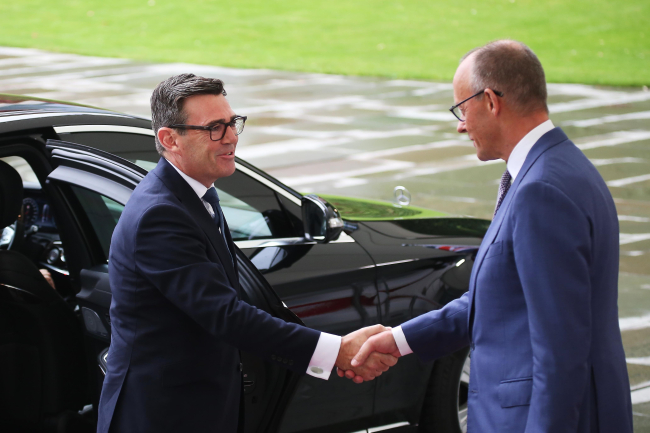
A Partnership Built on Security: Post-Brexit Rapprochement between Germany and the United Kingdom
Since the UK’s withdrawal from the EU, UK-German relations have undergone a remarkable transformation: from Berlin’s deliberate distancing from London during the Brexit negotiations, when Germany consistently prioritised EU-27 unity over bilateral arrangements, to a gradual rapprochement, culminating, for the time being, in the 2025 Kensington Treaty of Friendship.


"A shadow hangs over the BND": the secret dealings of August Hanning, the former German spy chief arrested for "treason"
This close friend of John le Carré acted as a mercenary for foreign powers, trading German intelligence documents for money. The DGSE discussed this unprecedented scandal, not seen since the Cold War, with L'Express.
MAGA and AfD: Toward a Transatlantic Alliance of Nationalist Right-Wing Parties
The rapprochement between Donald Trump’s MAGA movement and Germany’s AfD has accelerated significantly since Trump’s return to the White House.
Franco-German Relations Through the Lens of Donald Trump’s Second Term: Between Strategic Realignments, European Sovereignty, and the Enduring Transatlantic Bond
Donald Trump’s return to the presidency of the United States in 2025 acts as a powerful catalyst for the Franco-German relationship. Faced with growing uncertainty over the reliability of US security guarantees, Germany, more directly affected by the questioning of the transatlantic relationship, is gradually moving closer to the French position in favor of strengthening European strategic sovereignty.
VW, Mercedes, and BMW in the Face of Donald Trump—A Tightrope Walk Between Investing in the U.S., Maintaining Operations in Europe, and Catching Up in Electric Mobility
The German automotive industry faces a threefold challenge: competition from China; a difficult transition to electric vehicles; and US tariffs.
Recalibrating Europe’s Security: Building Partnerships in an Era of ‘Wrecking-Ball Politics
The 2026 Munich Security Conference report observes that “the world has entered a period of wrecking-ball politics.” Indeed, the era of Western predominance, dependable alliances and capable multilateral institutions has given way to shifting balances of power and deepening uncertainty.
'Merz is in a very, very fragile situation'
The far right AfD claims it has become Germany’s new “people’s party”. The statement comes after AfD claimed its second regional election win in as many weeks, ramping up pressure on the poorly performing CDU and Chancellor Friedrich Merz. The far-left party also advanced, winning its third regional election thanks to its latest victory in Berlin.
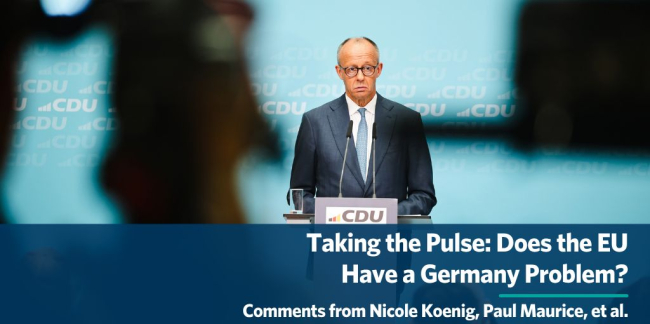
Taking the Pulse: Does the EU Have a Germany Problem?
Are Germany’s economic, industrial, and political struggles becoming a liability for the EU’s ability to rise to the geopolitical moment?
German far right's breakthrough shakes Europe to its core
The result was not enough to win outright, but certainly enough to shake Germany and Europe to their core: the far-right Alternative für Deutschland (AfD) trounced the ruling conservatives in the impoverished former East German state of Saxony-Anhalt in Sunday's election. We ask about the consequences of voting for an anti-immigrant, pro-Russian party that wants schools to teach less about the ills of Hitler and more about the glory of Bismarck.
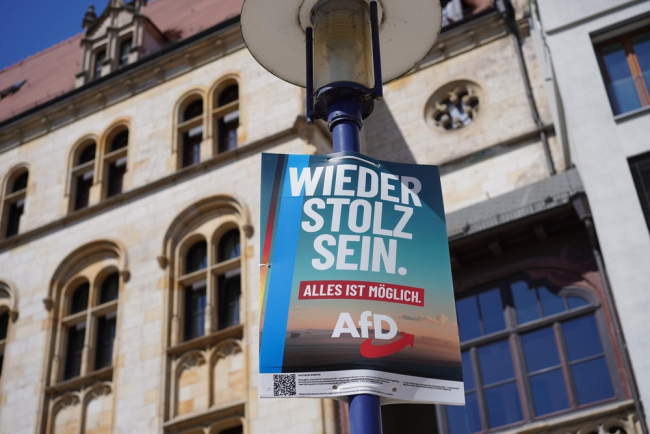
From Protest to Power? The AfD Ahead of the Eastern State Elections
The September state elections will test the AfD’s transition from protest force to potential governing power amid growing political fragmentation and dissatisfaction with Chancellor Friedrich Merz and his coalition. While firmly established in eastern Germany, the AfD is also gaining ground in the west, raising questions about coalition-building and the future direction of German politics.
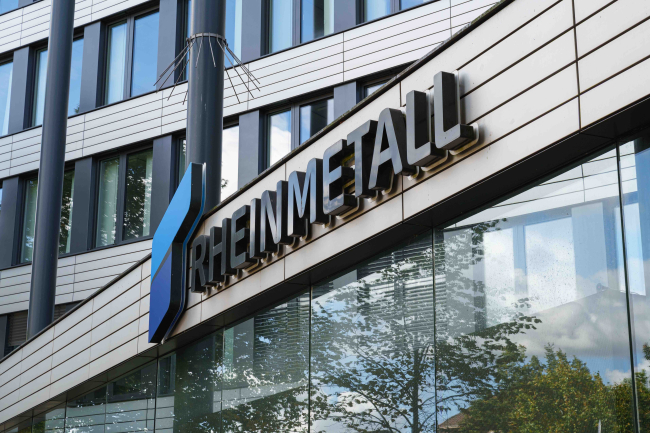
"The US’s Trojan horse in Europe": Rheinmetall, the German defence giant with an insatiable appetite
Top secret. Land, sea, air and even space… Armin Papperger, the very powerful head of the German defence group, has grand ambitions—to the point of irritating France.

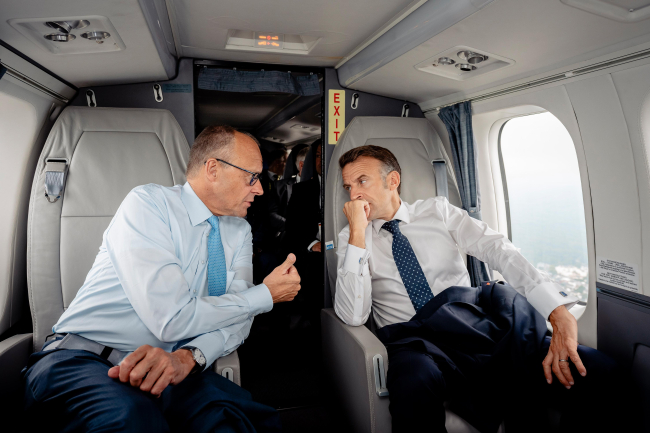
Europe Express: Macron and Merz move on from fighter jet heartbreak
The threat of a Le Pen presidency has provided an incentive for Paris and Berlin to come together.
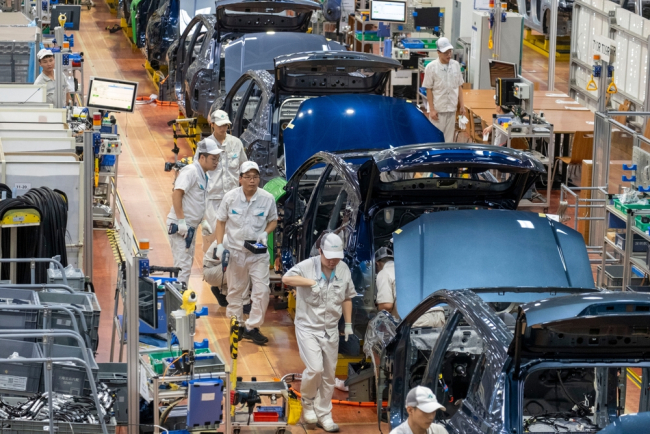
Rethinking Global Imbalances
Today’s global imbalances, starting with China's massive trade surplus, are not simply the result of poor macroeconomic coordination. Rather, they reflect long-term strategic thinking and a departure from the bias toward openness on which the postwar trade order was built.
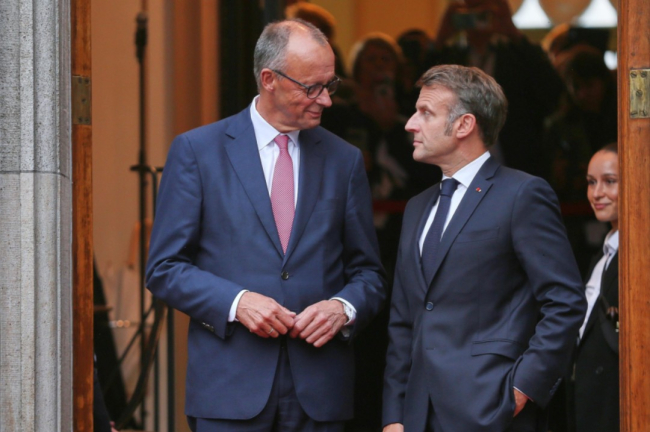
France and Germany seek to showcase military cooperation after FCAS collapse
President Emmanuel Macron and Chancellor Friedrich Merz were to hold a joint defense council and the traditional French-German Council of Ministers on Friday in North Rhine-Westphalia.
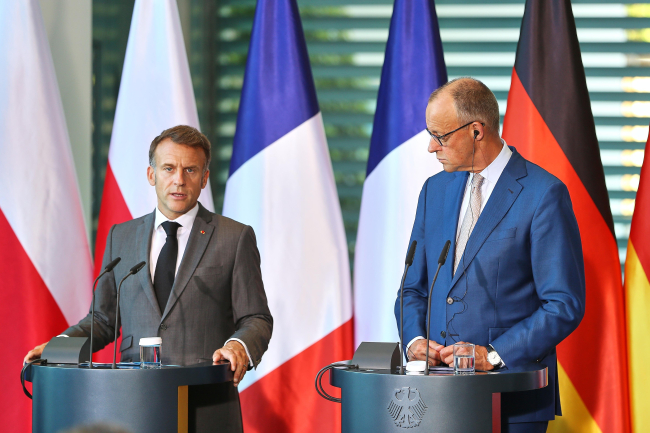
France-Germany: Overcoming Differences to Strengthen European Sovereignty
The Franco-German “reset” launched with Friedrich Merz’s appointment as Chancellor in May 2025 and given concrete form at the Franco-German Council of Ministers (FGCM) in Toulon in August 2025 was intended to address the structural challenges affecting the bilateral relationship. Yet it is clear that these ambitions have only been partially translated into concrete action. Since the beginning of 2026, Franco-German relations have entered a phase in which short-term challenges have combined with deeper divergences over priorities, policy approaches, and strategic culture.
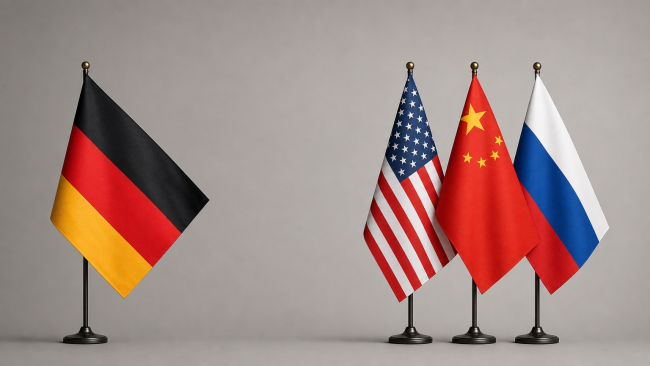
Germany in the Shadow of the United States, Russia, and China – Systemic Paradigm Shifts
Since reunification, Germany has built its prosperity on an international order based on free trade, multilateralism, and geopolitical stability. This model relied on three relationships considered complementary: U.S. military protection, Russian energy supplies, and economic integration with China. For several decades, Berlin viewed these interdependencies as factors contributing to peace, growth, and security.
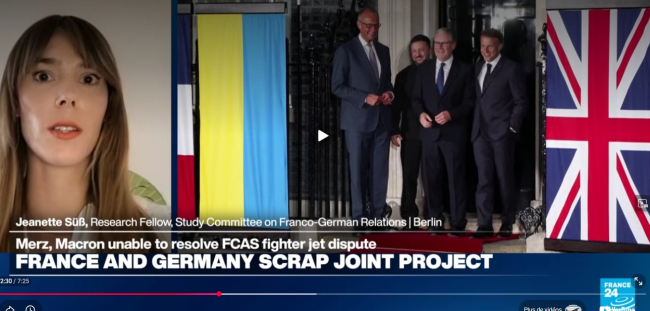
FCAS project failure: 'France, Germany characterised by totally different strategic cultures'
France and Germany said on Monday they had agreed to abandon a joint fighter jet programme due to disagreements between the companies involved, in a blow to European efforts to boost defence cooperation.
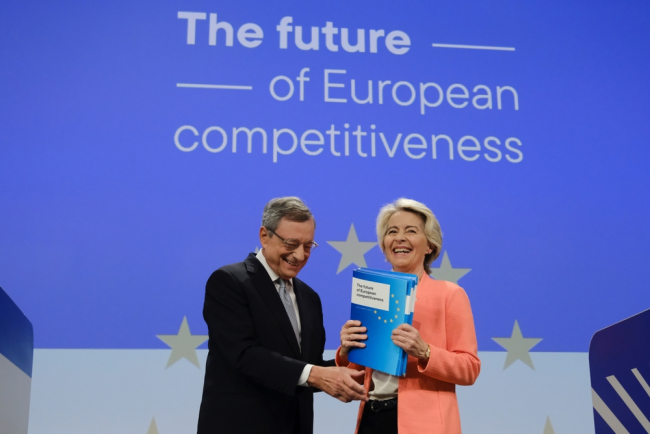
Under construction: Europe’s economic repositioning in a fragmented international order
„Under Destruction“– this was this year’s motto at the Munich Security Conference. A motto that applies both to security and economy in an increasingly fragile international system. In 2024, Mario Draghi’s report on the EU’s competitiveness rang the alarm bell: Europe is slipping behind the US and China, European companies struggle with Brussels' bureaucracy, and the internal market is too fragmented. However, two years later only about 15 % of his recommendations were implemented: the wake-up call was not heard.
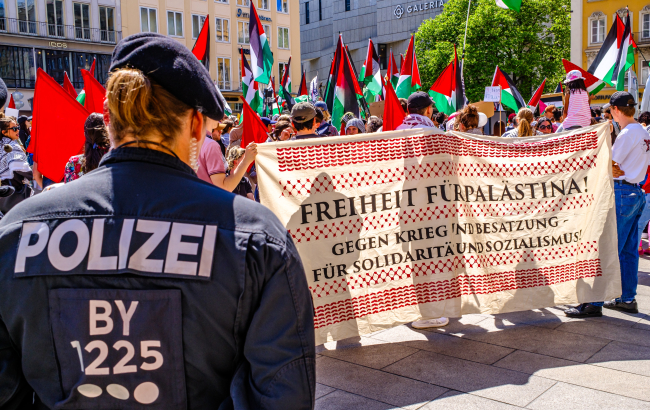
Overwhelmed: Germany’s Israel Policy after October 7th
Few countries have been as profoundly affected by the attacks of October 7th and the subsequent Gaza war as Germany. This is not merely a political controversy. It reflects a deeper structural problem: German-Israel policy has long rested on two guiding principles—a particular historical responsibility toward Israel derived from the Holocaust, and a firm commitment to universalist norms, above all international law and human rights.
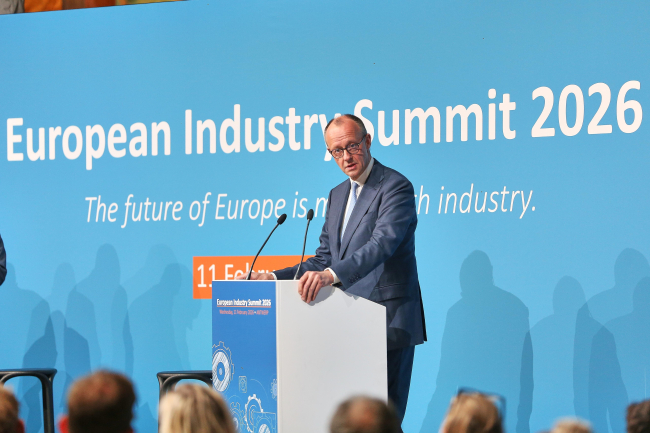
Reviving the German Economy: Balancing Economic, Social, and Defense Priorities
Germany is facing fundamental challenges to its economic and social model and is seeking a new course. The German post-war model was hugely successful, leading to economic strength and prosperity over many decades, but now it is steadily faltering. The previously latent fear of deindustrialization is becoming more concrete, particularly due to the weakening of a key sector: the automotive industry.
A Partnership Built on Security: Post-Brexit Rapprochement between Germany and the United Kingdom
Since the UK’s withdrawal from the EU, UK-German relations have undergone a remarkable transformation: from Berlin’s deliberate distancing from London during the Brexit negotiations, when Germany consistently prioritised EU-27 unity over bilateral arrangements, to a gradual rapprochement, culminating, for the time being, in the 2025 Kensington Treaty of Friendship.
VW, Mercedes, and BMW in the Face of Donald Trump—A Tightrope Walk Between Investing in the U.S., Maintaining Operations in Europe, and Catching Up in Electric Mobility
The German automotive industry faces a threefold challenge: competition from China; a difficult transition to electric vehicles; and US tariffs.
MAGA and AfD: Toward a Transatlantic Alliance of Nationalist Right-Wing Parties
The rapprochement between Donald Trump’s MAGA movement and Germany’s AfD has accelerated significantly since Trump’s return to the White House.
Franco-German Relations Through the Lens of Donald Trump’s Second Term: Between Strategic Realignments, European Sovereignty, and the Enduring Transatlantic Bond
Donald Trump’s return to the presidency of the United States in 2025 acts as a powerful catalyst for the Franco-German relationship. Faced with growing uncertainty over the reliability of US security guarantees, Germany, more directly affected by the questioning of the transatlantic relationship, is gradually moving closer to the French position in favor of strengthening European strategic sovereignty.
Recalibrating Europe’s Security: Building Partnerships in an Era of ‘Wrecking-Ball Politics
The 2026 Munich Security Conference report observes that “the world has entered a period of wrecking-ball politics.” Indeed, the era of Western predominance, dependable alliances and capable multilateral institutions has given way to shifting balances of power and deepening uncertainty.
Taking the Pulse: Does the EU Have a Germany Problem?
Are Germany’s economic, industrial, and political struggles becoming a liability for the EU’s ability to rise to the geopolitical moment?
From Protest to Power? The AfD Ahead of the Eastern State Elections
The September state elections will test the AfD’s transition from protest force to potential governing power amid growing political fragmentation and dissatisfaction with Chancellor Friedrich Merz and his coalition. While firmly established in eastern Germany, the AfD is also gaining ground in the west, raising questions about coalition-building and the future direction of German politics.
France-Germany: Overcoming Differences to Strengthen European Sovereignty
The Franco-German “reset” launched with Friedrich Merz’s appointment as Chancellor in May 2025 and given concrete form at the Franco-German Council of Ministers (FGCM) in Toulon in August 2025 was intended to address the structural challenges affecting the bilateral relationship. Yet it is clear that these ambitions have only been partially translated into concrete action. Since the beginning of 2026, Franco-German relations have entered a phase in which short-term challenges have combined with deeper divergences over priorities, policy approaches, and strategic culture.
Germany in the Shadow of the United States, Russia, and China – Systemic Paradigm Shifts
Since reunification, Germany has built its prosperity on an international order based on free trade, multilateralism, and geopolitical stability. This model relied on three relationships considered complementary: U.S. military protection, Russian energy supplies, and economic integration with China. For several decades, Berlin viewed these interdependencies as factors contributing to peace, growth, and security.
Under construction: Europe’s economic repositioning in a fragmented international order
„Under Destruction“– this was this year’s motto at the Munich Security Conference. A motto that applies both to security and economy in an increasingly fragile international system. In 2024, Mario Draghi’s report on the EU’s competitiveness rang the alarm bell: Europe is slipping behind the US and China, European companies struggle with Brussels' bureaucracy, and the internal market is too fragmented. However, two years later only about 15 % of his recommendations were implemented: the wake-up call was not heard.
Overwhelmed: Germany’s Israel Policy after October 7th
Few countries have been as profoundly affected by the attacks of October 7th and the subsequent Gaza war as Germany. This is not merely a political controversy. It reflects a deeper structural problem: German-Israel policy has long rested on two guiding principles—a particular historical responsibility toward Israel derived from the Holocaust, and a firm commitment to universalist norms, above all international law and human rights.
Reviving the German Economy: Balancing Economic, Social, and Defense Priorities
Germany is facing fundamental challenges to its economic and social model and is seeking a new course. The German post-war model was hugely successful, leading to economic strength and prosperity over many decades, but now it is steadily faltering. The previously latent fear of deindustrialization is becoming more concrete, particularly due to the weakening of a key sector: the automotive industry.
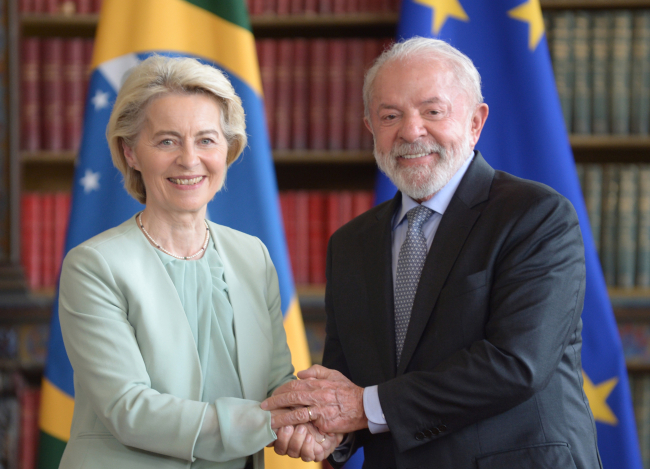
Entry into force of the EU-Mercosur agreement: last act of an endless drama for Germany?
At the World Economic Forum in Davos on January 20, 2026, Ursula von der Leyen, the President of the European Commission, stated that "geopolitical shocks can and must serve as opportunity for Europe".
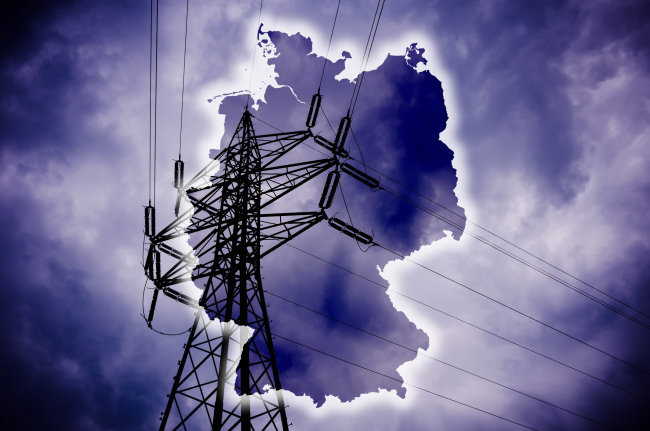
Germany Maintains Its Single Electricity Price Zone: Implications
In December 2025, Germany refused to split its bidding zone despite recommendations from ENTSO-E, in order to preserve its federal unity, market liquidity, and the competitiveness of its industry, at the cost of persistent North-South imbalances.
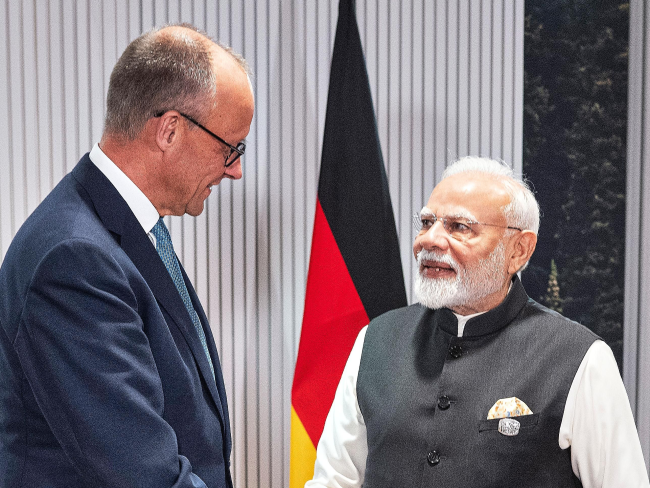
German-Indian Relations: a Partnership based on values or on interests?
In recent years, virtually no other Asian country has seen such a rise in prominence in German foreign policy as India.
Germany: The Return of Military Service?
Abolished in 2011, conscription returned to Germany in 2025, albeit in a new, voluntary form. The decision in 2011 was broadly supported. Public opinion, like the political sphere, is more divided now. The reintroduction of voluntary service for men reflects the demands of the geopolitical landscape and the Bundeswehr’s need for troops. It remains to be seen whether the model chosen will fulfill the requirements of defense chiefs.
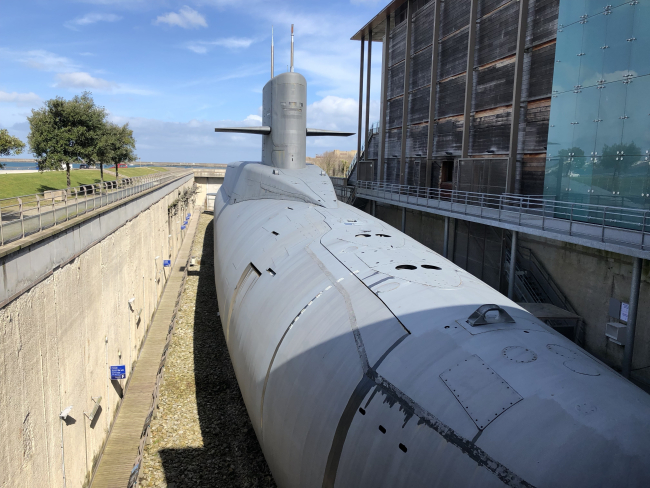
France has a new nuclear doctrine of ‘forward deterrence’ for Europe. What does it mean?
On Monday, French President Emmanuel Macron delivered a speech on France’s nuclear deterrence at the Île Longue naval base near Brest in Brittany, which hosts the country’s nuclear-armed ballistic missile submarines. Such addresses are a well-established presidential ritual, typically delivered once per presidential term and receiving moderate attention. This one, however, was highly anticipated in France and abroad, given the profound geopolitical shifts since Macron’s first nuclear speech in February 2020.
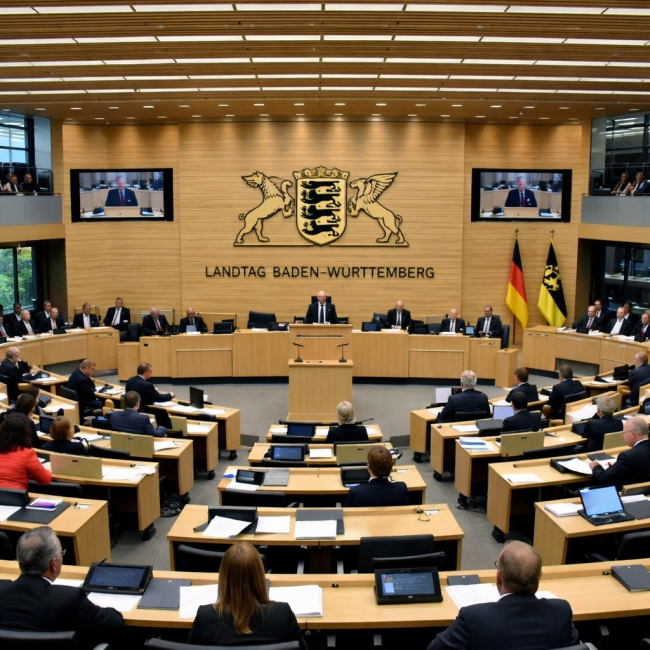
The 2026 State Elections in Baden-Württemberg: First Test For Chancellor Merz's Federal Government?
The state election in Baden-Wuerttemberg in March 2026 will be the first major test of public opinion for Chancellor Friedrich Merz's federal government. At the same time, Baden-Wuerttemberg is one of the federal states that—as an important location for the German automotive industry and its suppliers—is particularly affected by the transformation policy driven by climate change and the international conflict constellation.
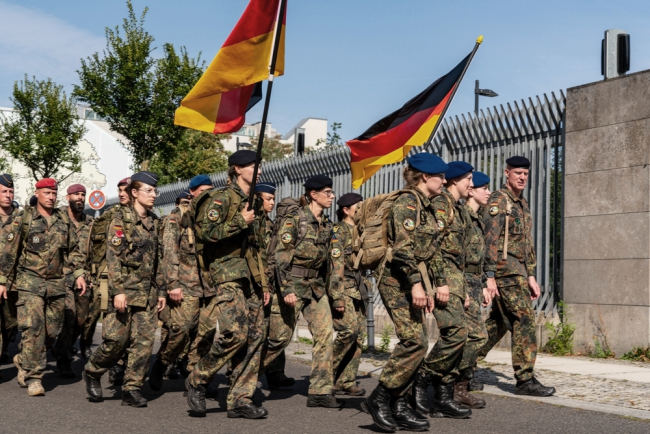
Bundeswehr: From Zeitenwende (historic turning point) to Epochenbruch (epochal shift)
The Zeitenwende (historic turning point) announced by Olaf Scholz on February 27, 2022, is shifting into high gear. Financially supported by the March 2025 reform of Germany’s “debt break” and backed by a broad political and societal consensus to strengthen and modernize the Bundeswehr, Germany's military capabilities are set to rapidly increase over the coming years. Expected to assume a central role in the defense of the European continent in the context of changing transatlantic relations, Berlin’s military-political position on the continent is being radically transformed.
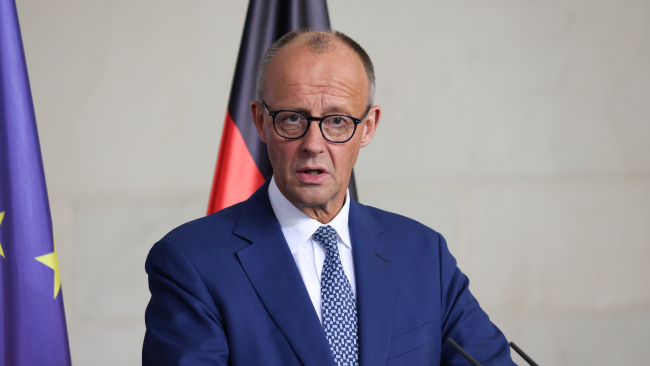
Merz’ European Policy-making: The End of the ‘German Vote’?
Friedrich Merz’s European ambition is to turn Germany, long seen as hesitant into a leading actor within the European Union (EU). To that end, he has pledged to end the “German vote,” a phenomenon that epitomizes the paradox of a country both indispensable and frequently absent from European decision-making.
"A shadow hangs over the BND": the secret dealings of August Hanning, the former German spy chief arrested for "treason"
This close friend of John le Carré acted as a mercenary for foreign powers, trading German intelligence documents for money. The DGSE discussed this unprecedented scandal, not seen since the Cold War, with L'Express.
"The US’s Trojan horse in Europe": Rheinmetall, the German defence giant with an insatiable appetite
Top secret. Land, sea, air and even space… Armin Papperger, the very powerful head of the German defence group, has grand ambitions—to the point of irritating France.
Europe Express: Macron and Merz move on from fighter jet heartbreak
The threat of a Le Pen presidency has provided an incentive for Paris and Berlin to come together.
Rethinking Global Imbalances
Today’s global imbalances, starting with China's massive trade surplus, are not simply the result of poor macroeconomic coordination. Rather, they reflect long-term strategic thinking and a departure from the bias toward openness on which the postwar trade order was built.
France and Germany seek to showcase military cooperation after FCAS collapse
President Emmanuel Macron and Chancellor Friedrich Merz were to hold a joint defense council and the traditional French-German Council of Ministers on Friday in North Rhine-Westphalia.
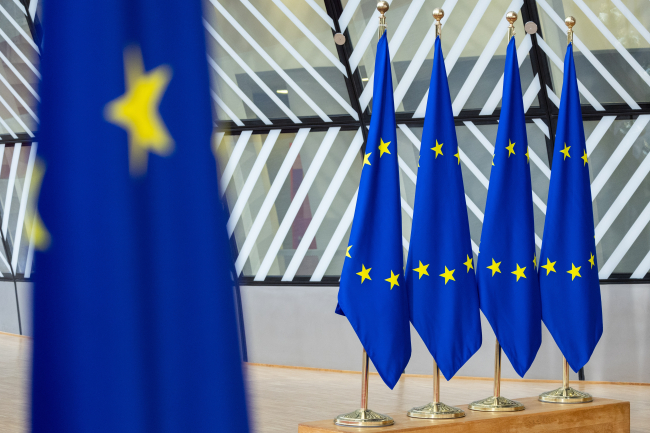
How smaller EU states are reshaping Europe’s power structure
Changing economic and trans-Atlantic conditions have led to power restructuring in the 27-nation European Union, opening doors for more negotiating power for many smaller central and former Eastern European nations such as Hungary.
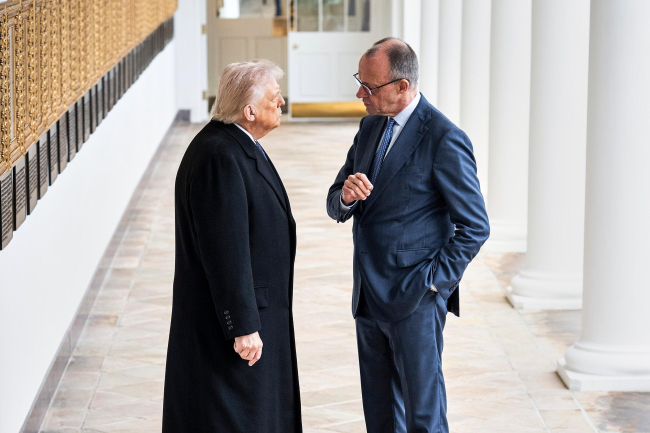
'With the withdrawal of US troops from Germany, Berlin is facing a historic dilemma'
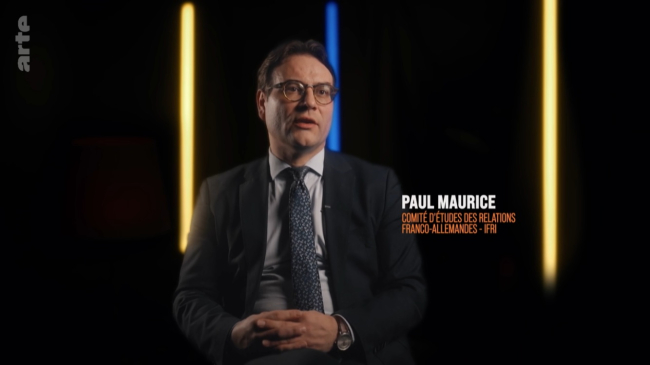
Donald Trump's announcement of the withdrawal of US troops is forcing Berlin to confront the long-standing taboo on its own defense, explains Paul Maurice, a specialist in Franco-German relations at the Study Committee on Franco-German Relations (Cerfa) at French Institute of International Relations.
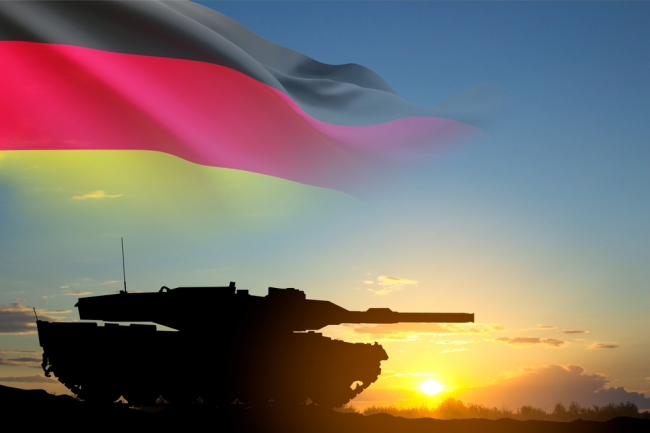
Germany re-arms: what does it mean for Europe?
Paris sees risks for its industry and the continent’s sovereignty in Berlin’s rapid defence build-up. Chancellor Friedrich Merz’s defence spending push has raised concerns about locking in procurement choices and giving German industry an advantage over its neighbours.
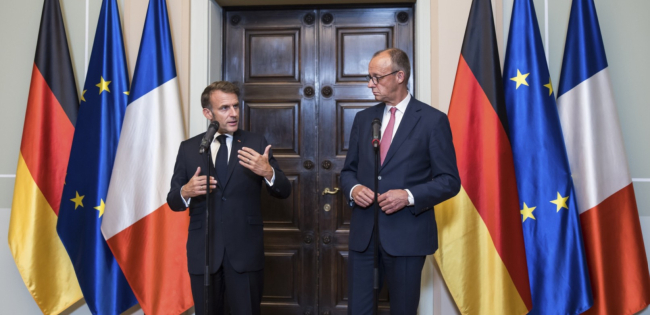
Germany and France now publicly display their disagreements over Macron's proposals
Friedrich Merz's government has criticized the idea of a joint European loan and the push for European preference in goods purchases advocated by Emmanuel Macron. These disagreements come on top of tensions over the Mercosur trade deal and how to use frozen Russian assets.
Greenland and transatlantic security: How Berlin, Warsaw and Paris could become more effective
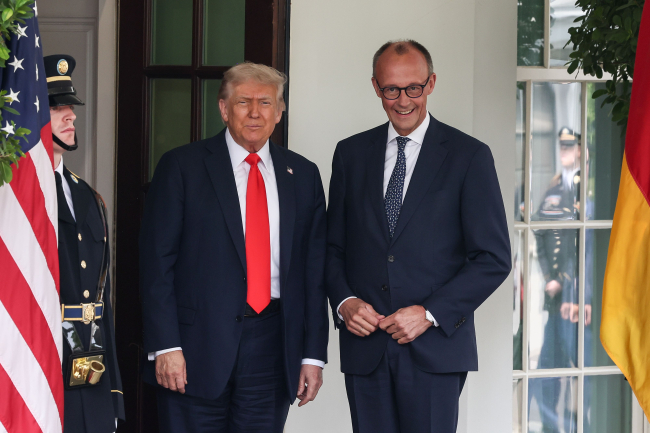
European NATO countries are backing a presence in Greenland in response to Trump’s claim on the island. But the US president is escalating the conflict with threats of new tariffs. In an interview with Table.Briefings, experts call for institutional reforms – if Europe wants to become more capable of acting.
French-German future combat aircraft project on the brink of collapse
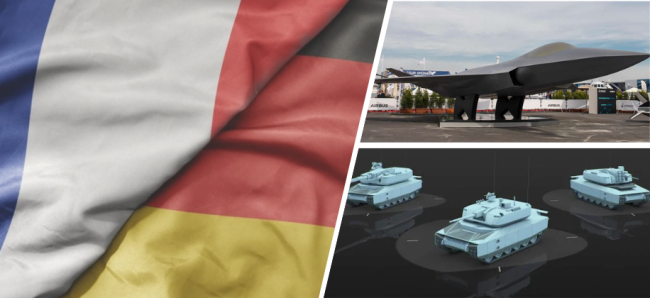
Eight years after Emmanuel Macron and Angela Merkel launched the SCAF, this symbol of European sovereignty in defense is on the verge of collapse. At issue are the demands of the project's main contractor, Dassault Aviation, which Berlin considers excessive, as well as political and strategic differences between France and Germany.

Macron turns to Merz as French parliament nears collapse
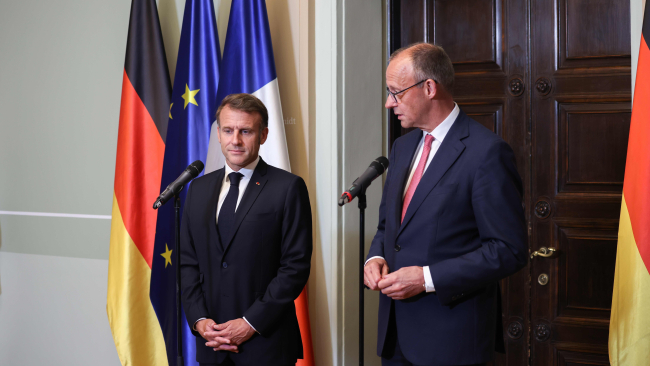
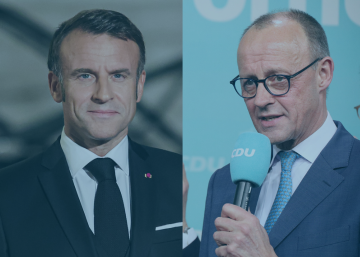
The French president must now rely more than ever on Merz to make his voice heard in Europe.
PARIS – Emmanuel Macron will host German Chancellor Friedrich Merz on the Riviera on Thursday evening, hoping support from Berlin can bolster his standing in the EU as the French government edges towards collapse.
Macron and Merz try to revive challenging French-German partnership in Berlin
The French president and the German chancellor met on Wednesday, July 23, to prepare for a joint cabinet meeting scheduled for August 29. From defense projects to trade negotiations, several disagreements remain.
Can France and Germany’s new love-fest survive their lingering differences?
Paris and Berlin have been at loggerheads for years, but things are at last looking up.

Germany and France agree Ukraine may strike Russian Military Targets
German Chancellor Olaf Scholz said Germany would not prohibit Ukrainian attacks on Russian military targets, saying Ukraine "is allowed to defend itself."
'Depth of Franco-German bond': Macron to meet German president in rare state visit
French President Emmanuel Macron will visit his German counterpart Frank-Walter Steinmeier in Berlin on Sunday in what is seen as the highest level of diplomatic courtesy gestures.

How Macron and Scholz broke the Franco-German alliance at the heart of the EU
Breakdown of continental partnership is a threat to Europe – and could be catastrophic for Ukraine. It was meant to be a patching up of the notoriously fraught Macron-Scholz relationship, a “reset”, to borrow Hillary Clinton’s expression.
Macron and Scholz Meet to Patch up Their Fraying Ties
Allies fret that Franco-German animosity is undermining western unity over Ukraine. Emmanuel Macron will arrive in Berlin on Friday for talks designed to repair a fractured Franco-German relationship marred by caustic public spats and mutual recriminations over the war in Ukraine.
The Nuclear Dispute Driving a Wedge Between France and Germany
The two nations have opposing ideas about atomic energy, threatening the EU’s transition away from fossil fuels.

Can Politics and Business Align? Policy, Transparency and Logistics
Politics and business can be intertwined in many ways but also conflicting. This is especially the case regarding foreign investments and possible influence by third countries in Europe, for example.
'Merz is in a very, very fragile situation'
The far right AfD claims it has become Germany’s new “people’s party”. The statement comes after AfD claimed its second regional election win in as many weeks, ramping up pressure on the poorly performing CDU and Chancellor Friedrich Merz. The far-left party also advanced, winning its third regional election thanks to its latest victory in Berlin.
German far right's breakthrough shakes Europe to its core
The result was not enough to win outright, but certainly enough to shake Germany and Europe to their core: the far-right Alternative für Deutschland (AfD) trounced the ruling conservatives in the impoverished former East German state of Saxony-Anhalt in Sunday's election. We ask about the consequences of voting for an anti-immigrant, pro-Russian party that wants schools to teach less about the ills of Hitler and more about the glory of Bismarck.
FCAS project failure: 'France, Germany characterised by totally different strategic cultures'
France and Germany said on Monday they had agreed to abandon a joint fighter jet programme due to disagreements between the companies involved, in a blow to European efforts to boost defence cooperation.
Macron-Merz: Power Behind the Scenes
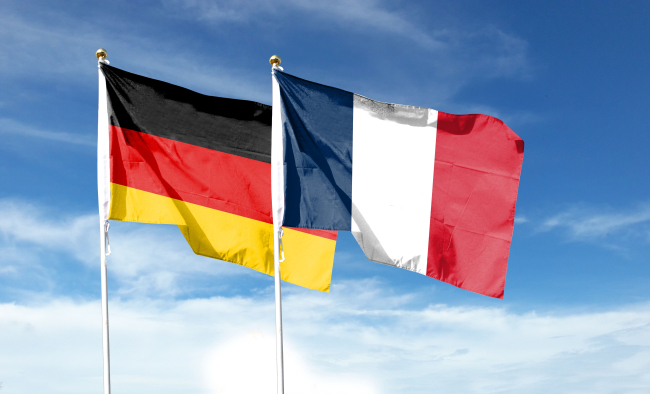
French German relations have been very close for decades as key partners in driving forward European integration within the EU. Can the current leaders President Emmanuel Macron and Chancellor Friedrich Merz reforge the relationship and build a Europe fit for the challenges of our times and the future? This documentary follows the two men across Europe and the world and observes their common goals as well as their differences.
Germany passes military service bill
In the wake of the war in Ukraine, Germany and France are working to define security guarantees for Kyiv.
France and Germany boost defense ties amid global tensions
French President Emmanuel Macron hosted German Chancellor Friedrich Merz on August 29 for the Franco-German Council of Ministers. They discussed Europe’s economy, support for Ukraine, and defense, with Merz pushing for German leadership on security. But political tensions in France and Germany are straining the partnership amid broader concerns over NATO, nuclear deterrence, and Europe’s reliance on US protection. Marie Krpata, Research Fellow at the Study Committee on Franco-German Relations at IFRI, has more on this issue.
Germany 'back on track' says Merz, unveiling new coalition
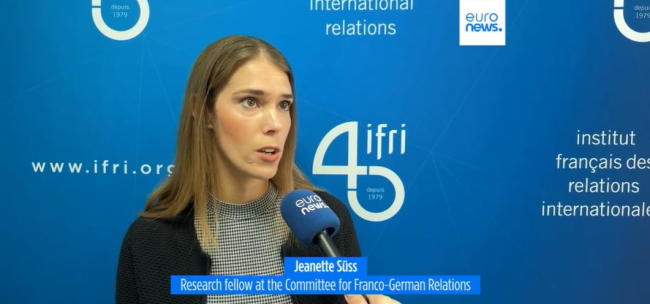
Yinka Oyetade speaks to Jeanette Süß, Research Fellow on the Study Committee on Franco-German Relations at the French Institute of International Relations about the German coalition and the challenges faced by the new government.
NATO: 75 Years of Strategic Solidarity (replay)
The war in Ukraine, burden-sharing between Allies, U.S. disengagement from Europe, new areas of conflict... At a time when the Alliance has just celebrated its 75th anniversary and the Stoltenberg era is drawing to a close after ten years at the head of the organization, NATO's agenda bears witness to the diversity of its areas of action, as well as to the different perceptions of the Allies on these issues.
In the wake of the Washington summit, this conference of diplomats, military officers and researchers aims to analyze the short- and medium-term prospects for the Atlantic Alliance.
Ifri, a foundation recognized as being of public utility, relies largely on private donors – companies and individuals – to guarantee its sustainability and intellectual independence. Through their funding, donors help maintain the Institute's position among the world's leading think tanks. By benefiting from an internationally recognized network and expertise, donors refine their understanding of geopolitical risk and its consequences on global politics and the economy. In 2026, Ifri partners with over 90 French and international companies and organizations.


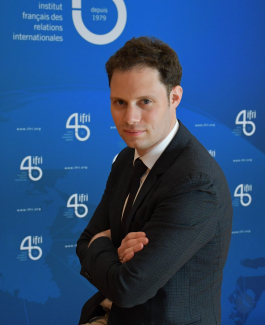
“There is, however, a real sense of urgency,” around the Franco-German relationship, says Marie Krpata, a researcher at the French Institute of International Relations (IFRI) and member of its Franco-German Relations Committee.
“Emmanuel Macron has only two years left to make progress on European files, while the far right lurks in the wings – in both Paris and Berlin.”

quoted by Laurent Geslin in Euractiv
I see some degree of — I don’t want to say panic — but really alarmed Europeans who realize they need to stick together as much as possible.
If the Europeans want to step up and make up for the loss of American aid to Ukraine, it needs to happen now, they need to put the money on the table; they need to pass on the orders to the defense industry.
Europe is lacking ammunition, we’re lacking replacement parts, we’re lacking readiness.
quoted by Lisa Bryant for Voice of America.

Merz's statement now needs to be followed up in the long term at political level, on both the French and German sides. It's been on the table for five years, and if we don't talk about it now, when Europe is in danger, we'll never talk about it.

cited by Politico.
The Study Committee on Franco-German Relations (Cerfa) was created in 1954 by an inter-governmental agreement between the Federal Republic of Germany and France, in order to raise awareness of Germany in France and analyze Franco-German relations, including in their European and international dimensions. In its conferences and seminars, which bring together experts, political leaders, senior decision-makers and representatives of civil society from both countries, Cerfa develops the Franco-German debate and stimulates political proposals. It regularly publishes studies through two collections: Cerfa notes and studies as well as Franco-German visions.
Cerfa maintains close relations with the network of German foundations and think tanks. In addition to its research and debate activities, Cerfa promotes the emergence of a new Franco-German generation through original cooperation programs. This is how in 2021-2022, Cerfa led a program on multilateralism with the Konrad Adenauer Foundation in Paris. This program is aimed at young professionals from both countries interested in the issues of multilateralism in the context of their activities. It covered a wide range of themes relating to multilateralism, such as international trade, health, human rights and migration, non-proliferation and disarmament. Previously, Cerfa had participated in the Franco-German future dialogue, co-led with the DGAP from 2007 to 2020, and supported by the Robert Bosch Foundation and the Daniel Vernet group (formerly the Franco-German Reflection Group) which was founded in 2014 upon the initiative of the Genshagen Foundation.