




Populism and International Relations
Populism is flourishing, in Europe and elsewhere: a populist holds power today in Argentina and perhaps tomorrow in the United States. What does its spread say about our societies? And how is it shaping them, where populists rule? Do their economic policies stand any chance of success? Do their foreign policies have a greater impact on the world around them or at home? If “Trump 2.0” comes to be, will he have a free hand? If so, what can we expect?
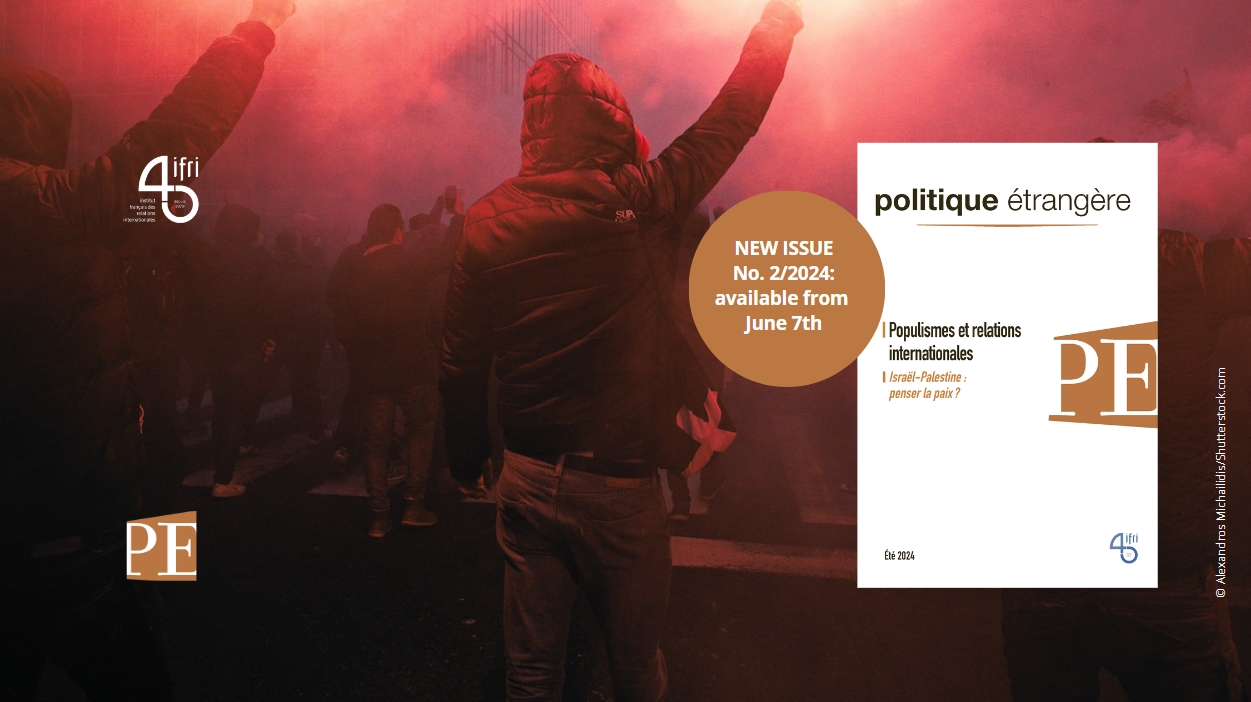
Does the tragedy in Gaza leave any room for hope? Can the two-state solution, the only rational one, still be implemented? The challenges are daunting: redrawing a geography fractured by colonization; establishing a credible Palestinian voice that can engage in a long negotiation; seeking acceptance in Israeli society; and rallying a range of foreign powers to take concrete action and push for the only remaining solution.
Beyond Ukraine and Gaza, Africa has been serving as a playing field for rival powers of all stripes: while France retreats and the US hesitates, Russia is advancing and several other states are making their presence felt—Turkey, Iran, the Gulf states, Hungary, even Ukraine. The range of opportunist strategies keeps growing, but is there a common geopolitical rationale underlying them all?
In the interview that opens this issue of Politique étrangère, Thierry de Montbrial analyzes an international scene in which the major instruments conceived in recent decades to foster global governance have been undermined. In particular, he considers the effects of the war in Ukraine and the uncertain destiny of the European Union.
This issue is available in French only: Populismes et relations internationales
Global Governance, Ukraine, and the European Union: Quo Vadis?, by Thierry de Montbrial
POPULISM AND INTERNATIONAL RELATIONS
Populism and the Far Right: What Exactly Do We Mean?, by Jean-Yves Camus
The Diversity and Failures of Economic Populism, by André Cartapanis
What Is a Populist Foreign Policy?, by Sandra Destradi
US Institutions and the “Trump 2” Hypothesis: The Lure of Authoritarianism, by Lauric Henneton
Argentina in the Era of “Mileism”, by Florian Vidal
ISRAEL-PALESTINE: THINKING ABOUT PEACE?
Israel-Palestine: One Solution, Two States, by Élie Barnavi
Israel-Palestine: The Question of Geography, by Michel Foucher
CURRENT AFFAIRS
The Red Sea: A New Geopolitical Era, by Cyrille P. Coutansais
Africa: The New Great Game, by Thierry Vircoulon
Myanmar: Military Victory Unattainable, Negotiated Peace Unlikely?, by Christian Lechervy
BAROMETERS
Paris 2024: The Geopolitics of the Olympic Games, by Jean-Baptiste Guégan
Syria: “Post–Civil War” Reprisals and the Persistence of the Past, by Myriam Benraad
BOOK REVIEWS
Editor: Marc Hecker
L’enchevêtrement des crises au Sahel. Niger, Mali, Burkina Faso, Jean-Pierre Olivier de Sardan
Le djihad de la vache. Pastoralisme et formation de l’État au Mali, Giovanni Zanoletti
Read by Alain Antil
Backfire. How Sanctions Reshape the World Against U.S. Interests, Agathe Demarais
Read by Michel Makinsky
This page contains only a summary of our work. If you would like to have access to all the information from our research on the subject, you can download the full version in PDF format.
Populism and International Relations

Security Studies Center
Heir to a tradition dating back to the founding of Ifri, the Security Studies Center provides public and private decision-makers as well as the general public with the keys to understanding power relations and contemporary modes of conflict as well as those to come. Through its positioning at the juncture of politics and operations, the credibility of its civil-military team and the wide distribution of its publications in French and English, the Center for Security Studies constitutes in the French landscape of think tanks a unique center of research and influence on the national and international defense debate.
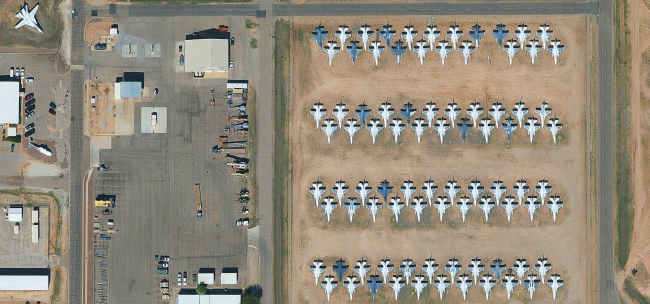
Toward Space-Based Intelligence for All? The Case of the Spring 2026 Iranian Strikes
The conflict in the Middle East has highlighted the effectiveness of Iranian strikes in identifying targets and conducting precision strikes. This raises the question: which capabilities enabled the Islamic Revolutionary Guard Corps (IRGC) to achieve these results?

Confronting Russia’s High-Velocity Arsenal: European Challenges and Solutions
Since February 2022, Russian missile and long-range drone strikes against Ukraine have served as near-daily reminders of what European states could face in a war with Russia. The same weapon systems battering Ukrainian infrastructure and population centers would be directed against European military and civilian targets in any confrontation between Russia and NATO. As Russian missile production expands and its arsenal diversifies, Europe must confront an uncomfortable question: how to deter, and if push comes to shove, fight Russia's long-range strike arsenal?
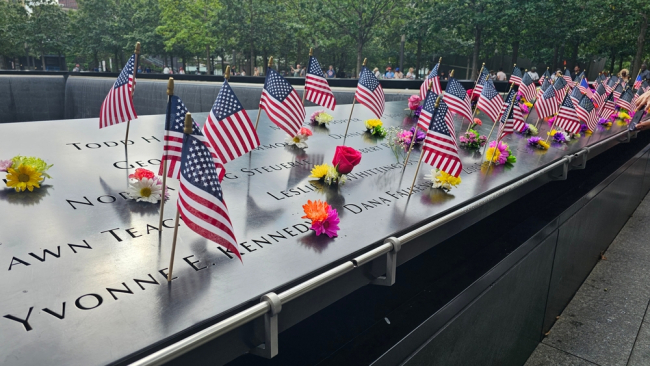
The War on Terrorism: Global Experts Reflect on Lessons Learned Twenty-Five Years After 9/11
Twenty-five years ago, the September 11 attacks prompted the invention of new security architectures that shaped the war on terrorism. Sixteen think tank experts from fifteen countries reflect on the successes, failures, and missed opportunities in the fight against terrorism—a fight that is still ongoing.
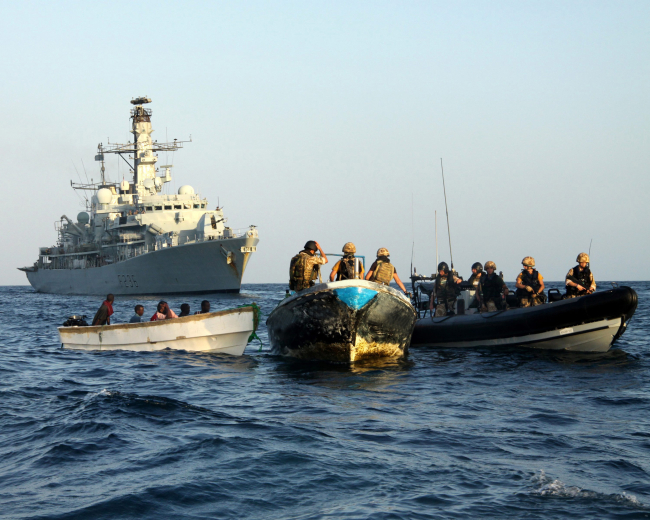
From Corsairs to Private Military Contractors. Nonmilitary Maritime Actors and the Historical Continuities of Naval Warfare
Since late 2023, several Houthi attacks on commercial shipping have involved privately contracted armed teams conducting defensive engagements and coordinating immediate response efforts, often in the relative absence of regular naval forces during the immediate hostilities at sea. These cases highlight a strategic tension that increasingly confronts modern navies. On the one hand, they are expected to conduct persistent, low-intensity maritime security tasks such as counterpiracy, maritime policing, and the protection of commercial shipping. On the other hand, they face renewed pressure to prepare for high-intensity conflict against peer and near-peer adversaries amid the return of great power competition.