






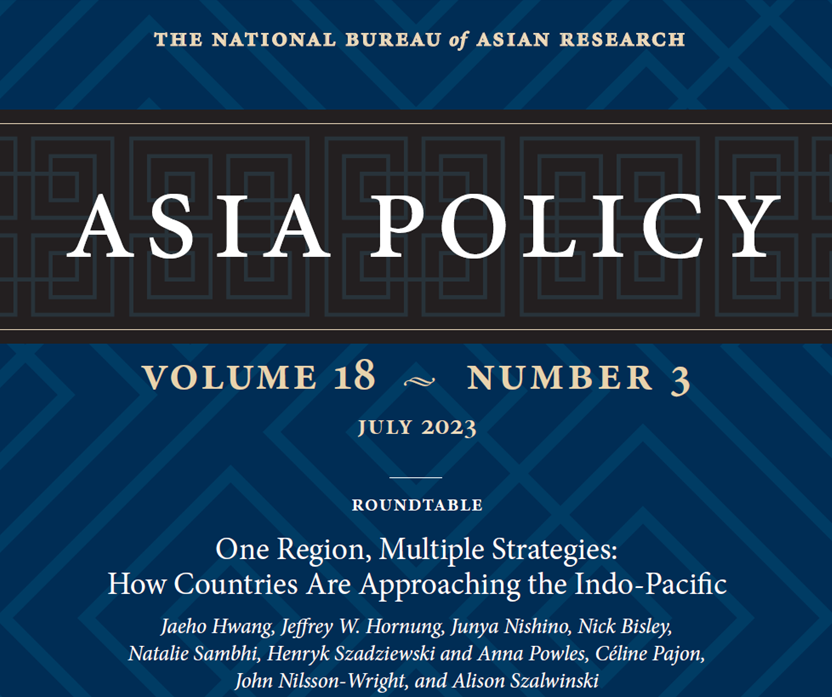
France's IndoPacific Strategy: From a Balancing Power to a Constructive Stakeholder
France was the first European country to announce an Indo-Pacific strategy, launching it in 2018.
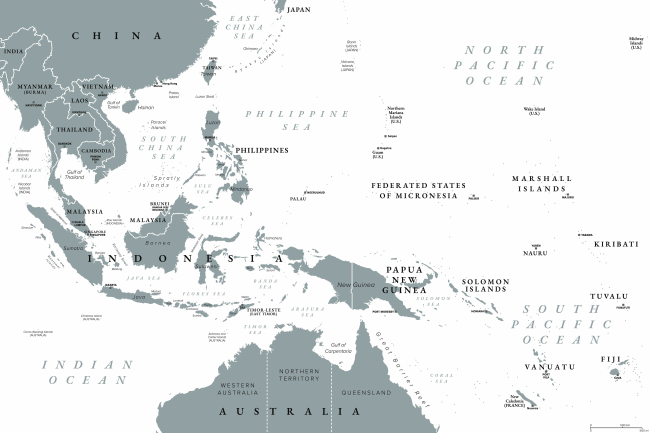
France is a resident power in the region, as it maintains territories in both the Indian Ocean (the islands of Mayotte and Réunion, the Scattered Islands, and the French Southern and Antarctic Territories) and the Pacific Ocean (New Caledonia, Wallis and Futuna, French Polynesia, and Clipperton Island), with 1.5 million citizens living in these territories and in other regional countries, and more than 90% of its large exclusive economic zone (9 million square kilometers) located in the two oceans. To take care of this vast area, France maintains a military presence of 8,000 personnel in the region. Its original position derives from the country’s sovereign interests in the Indo-Pacific and aims to propose a way out of the U.S.-China rivalry through an inclusive and multilateral approach to regional affairs that also maintains the rules-based order.
Since 2021, the French approach of “strategic autonomy” has been challenged by several developments, specifically by the AUKUS defense pact between Australia, the United Kingdom, and the United States but also more broadly by growing Chinese assertiveness, the ideological turn of the Sino-U.S. rivalry, and the implications of the war in Ukraine. However, as geopolitical polarization grows and international security worsens, the feasibility and sustainability of an Indo-Pacific strategy in which France acts as a “balancing power”—a puissance d’équilibre(s)—are seriously called into question. There is indeed a significant gap between the political rhetoric of French priority and ambition for the Indo-Pacific and the reality of the resources it has committed to the region. Against this background, this essay argues that France should recalibrate its Indo-Pacific posture away from being a balancing power and toward that of a pragmatic and constructive regional stakeholder.
This essay begins by examining the motivations for France’s Indo-Pacific Strategy, which include both protecting French interests in the face of Chinese expansion and the Sino-U.S. rivalry and, under Emmanuel Macron’s leadership, restoring France’s global influence and status in the future world order. The following section looks at this strategy itself and what it includes. The essay next addresses the challenges France’s strategy faces in a worsening geopolitical context. It then makes the argument that Paris should adopt a more modest and realistic stakeholder posture in the Indo-Pacific, before drawing together some concluding points.
- Read the full article on the website of Asia Policy.

Available in:
Regions and themes
Share

Céline PAJON
Chercheuse, responsable de la recherche Japon et Indo-Pacifique, Centre Asie de l'Ifri

Center for Asian Studies
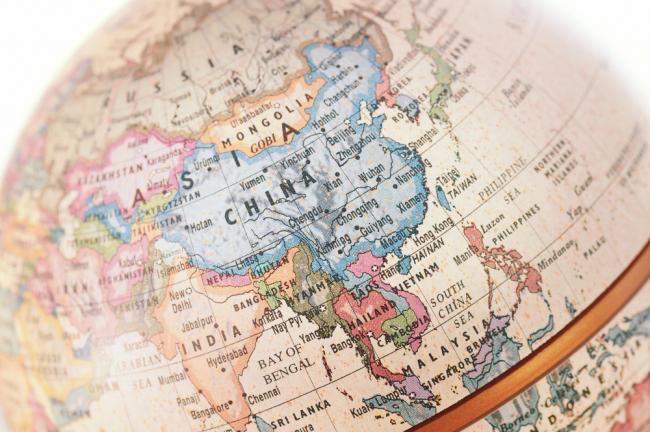
Asia is a nerve center for multiple global economic, political and security challenges. The Center for Asian Studies provides documented expertise and a platform for discussion on Asian issues to accompany decision makers and explain and contextualize developments in the region for the sake of a larger public dialogue.
The Center's research is organized along two major axes: relations between Asia's major powers and the rest of the world; and internal economic and social dynamics of Asian countries. The Center's research focuses primarily on China, Japan, India, Taiwan and the Indo-Pacific, but also covers Southeast Asia, the Korean peninsula and the Pacific Islands.
The Centre for Asian Studies maintains close institutional links with counterpart research institutes in Europe and Asia, and its researchers regularly carry out fieldwork in the region.
The Center organizes closed-door roundtables, expert-level seminars and a number of public events, including an Annual Conference, that welcome experts from Asia, Europe and the United States. The work of Center’s researchers, as well as that of their partners, is regularly published in the Center’s electronic journal Asie.Visions.
The Oceania Factor in France’s Evolving Indo-Pacific Strategy
This paper examines the two-way relationship between France’s Indo-Pacific strategy and developments in Oceania. Oceania was not a priority in the initial years of France’s Indo-Pacific strategy, as the region was largely treated as secondary to major strategic hotspots and key partnerships, while overseas territories were primarily handled as domestic issues and recipients of a top-down strategy.

France’s View: From Diplomacy to Public-Private Action
France has emerged as the EU’s IMEC forerunner, combining port infrastructure, diplomatic alliances and public-private cooperation. With Marseille Fos at its core, the country brings a strategic hub for logistics, energy and digital connectivity to the corridor.
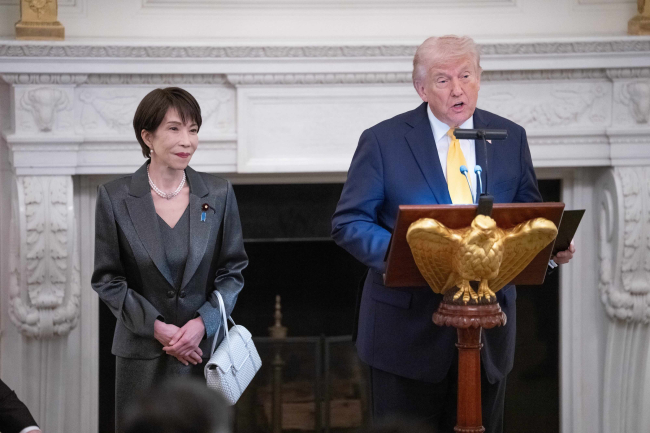
Trump II, the Crisis of the Rules-Based Order and Europe’s Indo-Pacific Strategy
This article examines the implications of Trump II for Europe’s engagement in the Indo-Pacific. The piece contends that Trump II is accelerating the erosion of the rules-based order and undermining the relevance of the Free and Open Indo-Pacific (FOIP) concept, while forcing Europe to refocus on its own continental security amid US retrenchment. Paradoxically, these very constraints create conditions for a more autonomous, pragmatic, and explicitly interest-driven European engagement in the Indo-Pacific, rather than outright withdrawal.
China and Trade in Critical Raw Materials (CRMs)
Critical raw materials (CRMs) have become central features of a new dynamic in global power politics, with China now wielding considerable leverage. Amid rising regional and global uncertainty, resource security is back in the spotlight as a key determinant of sovereignty and national security for Europe, its allies and its partners. The very survival of key, even vital industries, from automotive to aerospace to health to energy to defense, is at stake.