



Japan in South East Asia: Looking for a Balanced Indo-Pacific
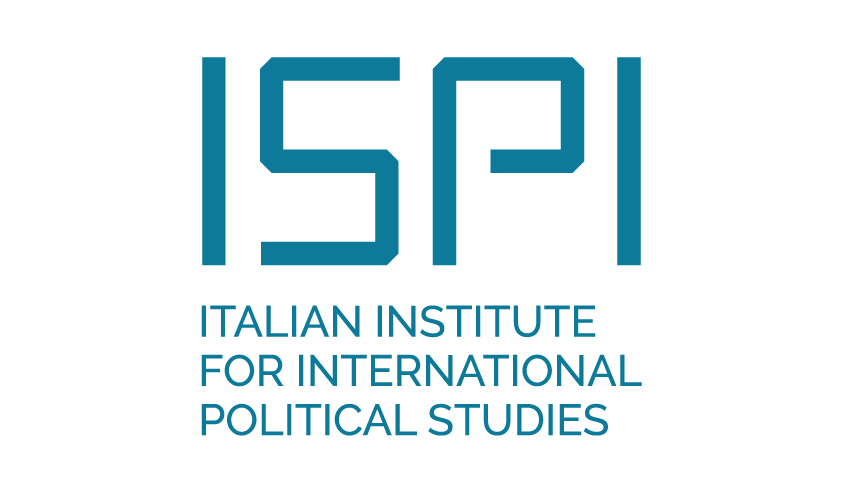
South East Asia is an area of utmost importance for Japan’s economic, political and security interests, amounting to “a core strategic interest” for Tokyo.
Major economic partners, South East Asian countries are also regarded as key partners in promoting a stable, prosperous and rules-based regional order, the main objective of Japan’s Free and Open Indo-Pacific (FOIP) policy. ASEAN countries are indeed at the forefront of the Sino-US competition, and their ability to remain united and resilient in front of pressures will be crucial to determine the future regional balance of power.
Therefore, Tokyo has been stepping up a smart strategic engagement to South East Asia while mitigating China’s growing influence in the region through the promotion of alternative connectivity initiatives and new security engagements.
Economically, in response to Chinese Belt and Road Initiative (BRI), Japan has been boosting its already good record of infrastructure investments. The “Partnership for Quality Infrastructure” in 2015, and its expanded version in 2016, provide respectively US$110 billion and US$200 billion to connectivity projects, mainly in South East Asia. Data actually shows that Japan is still ahead of China in terms of infrastructure investment in the region. At the difference of Beijing that prioritizes North-South routes, Tokyo is promoting East-West connectivity schemes, thus helping to integrate the whole region.
This proactive strategy has also been designed to improve the business conditions for Japanese companies. More than 12,000 of them operate in the region, and Japan is ASEAN’s first source of direct investments. As Japanese firms move from a “China+1” to a “Thailand+1” strategy, diversifying their production bases, they also help forming new supply chains, supported by new infrastructures.
Strategically, Japan has been soft-balancing China by strengthening the resiliency of South-East Asian countries through maritime capacity-building activities and institutionalized strategic dialogues. Through a strategic use of its development assistance, Japan has been playing an important role in training and equipping the coastguards units of Indonesia, Philippines and Vietnam, thus enabling these countries to better monitor their maritime domain and mitigate power asymmetry in the South China Sea. The capacity building assistance program set up in 2012 by the Ministry of Defense and prioritizing South-East Asian partners is also focusing on the appropriation and implementation of maritime law. Under new legal provisions, Tokyo was also able to supply five second-hand TC-90 patrol aircraft to the Philippines, which used them to monitor Scarborough Shoal, a place of intense friction with China.
The full article is available on ISPI website.


Céline PAJON
Chercheuse, responsable de la recherche Japon et Indo-Pacifique, Centre Asie de l'Ifri

Center for Asian Studies
Asia is a nerve center for multiple global economic, political and security challenges. The Center for Asian Studies provides documented expertise and a platform for discussion on Asian issues to accompany decision makers and explain and contextualize developments in the region for the sake of a larger public dialogue.
The Center's research is organized along two major axes: relations between Asia's major powers and the rest of the world; and internal economic and social dynamics of Asian countries. The Center's research focuses primarily on China, Japan, India, Taiwan and the Indo-Pacific, but also covers Southeast Asia, the Korean peninsula and the Pacific Islands.
The Centre for Asian Studies maintains close institutional links with counterpart research institutes in Europe and Asia, and its researchers regularly carry out fieldwork in the region.
The Center organizes closed-door roundtables, expert-level seminars and a number of public events, including an Annual Conference, that welcome experts from Asia, Europe and the United States. The work of Center’s researchers, as well as that of their partners, is regularly published in the Center’s electronic journal Asie.Visions.

Pakistan and the Israel-Palestine Conflict: Transformation in Pakistan’s Approach After the War in Gaza
Pakistan has long combined vocal support for the Palestinian cause with covert engagement with Israel. Since the war in Gaza, this balance has become untenable: public opinion is united against Israel, joining Trump’s Board of Peace has drawn rare cross-party criticism, and new regional alignments put normalization out of reach.
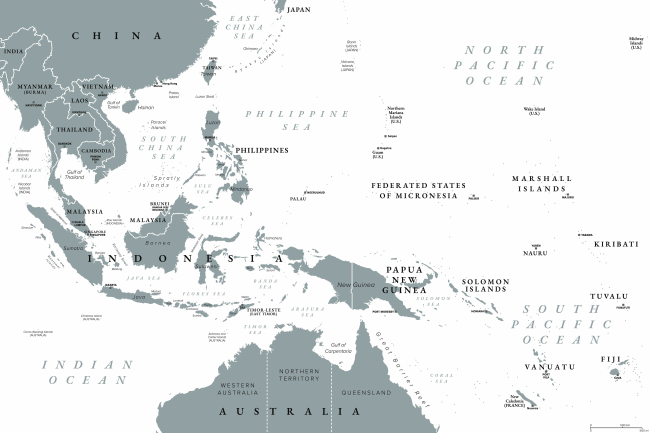
The Oceania Factor in France’s Evolving Indo-Pacific Strategy
This paper examines the two-way relationship between France’s Indo-Pacific strategy and developments in Oceania. Oceania was not a priority in the initial years of France’s Indo-Pacific strategy, as the region was largely treated as secondary to major strategic hotspots and key partnerships, while overseas territories were primarily handled as domestic issues and recipients of a top-down strategy.

France’s View: From Diplomacy to Public-Private Action
France has emerged as the EU’s IMEC forerunner, combining port infrastructure, diplomatic alliances and public-private cooperation. With Marseille Fos at its core, the country brings a strategic hub for logistics, energy and digital connectivity to the corridor.
Trump II, the Crisis of the Rules-Based Order and Europe’s Indo-Pacific Strategy
This article examines the implications of Trump II for Europe’s engagement in the Indo-Pacific. The piece contends that Trump II is accelerating the erosion of the rules-based order and undermining the relevance of the Free and Open Indo-Pacific (FOIP) concept, while forcing Europe to refocus on its own continental security amid US retrenchment. Paradoxically, these very constraints create conditions for a more autonomous, pragmatic, and explicitly interest-driven European engagement in the Indo-Pacific, rather than outright withdrawal.