




3435 publications
Are private companies agents in the implementation of French immigration policies?
Migration policies and rules applying to the recruitment of foreign workers impact HR and recruitment processes of French private companies. Administrative procedures are both complex and time consuming for they might require extra actions from those employees in charge of the recruitment process. The difficult access to clear information coupled with the impossibility to anticipate the outcome of recruitment procedures hinders economic objectives of firms and impacts their competitiveness.
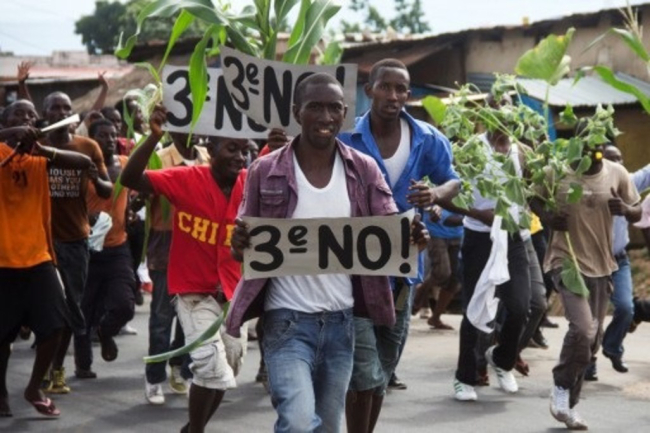
Burundi: Unravelling the Peace
Since achieving independence in 1962, Burundi has experienced several episodes of civil war, the last of which came to end when the Arusha Accord was signed in 2000. The gradual return to peace in the wake of the Arusha Accord has been jeopardised by Pierre Nkurunziza’s announcement on 25th April 2015 that he would stand as a candidate for the presidency.
Defending Europe? A stocktaking of French and German Visions for European Defense
The aim of this study consists of taking stock of strategic thinking in France and Germany. More concretely, it intends to identify compatible and incompatible aspects, as well as the potential for compromise, in these national considerations on the future of CSDP and NATO. In so doing, it concentrates on five issues: strategic visions, threat perception and military doctrine; the institutional framework for European defense; military interventions; capabilities as well as the industrial dimension.
Guerre de l'information : le web russe dans le conflit en Ukraine
Since the beginning of the crisis in Ukraine, Russia has been waging an information war.
Guerre de l'information : le web russe dans le conflit en Ukraine
Since the beginning of the crisis in Ukraine, Russia has been waging an information war that reflects its perception of its relationship towards the West as being that of a state of permanent conflict which needs the use of alternative tools to weaken both the enemy’s will and the capabilities.
EU Reform: Mapping out a state of flux
“EU Reform” is widely discussed across Europe but rarely defined. This report analyses how the 28 member states of the European Union understand “EU reform” and provides an insight into how their views might play out in debates on the future of the EU as well as on day-to-day politics.
Will the party “Alternative for Germany" be able to establish itself on the German political landscape?
Only a few months after it had been founded, the Alternative for Germany party (AfD) won 4.7% of the second votes in the federal elections, on 22 September 2013 – only 130,000 short of what was required for entry into the German Bundestag. Party and election researcher Oskar Niedermayer called it a "successful failure".
Ghana and the Oil Sector: Beyond the Resource Curse?
Four years after the Jubilee block went into production, we can make an initial assessment of the governance of Ghana’s oil resources. In terms of its institutional structure, Ghana is seen as a model for the entire continent.