




Sixteenth Edition of the World Policy Conference, Abu Dhabi, United Arab Emirates
Practical information
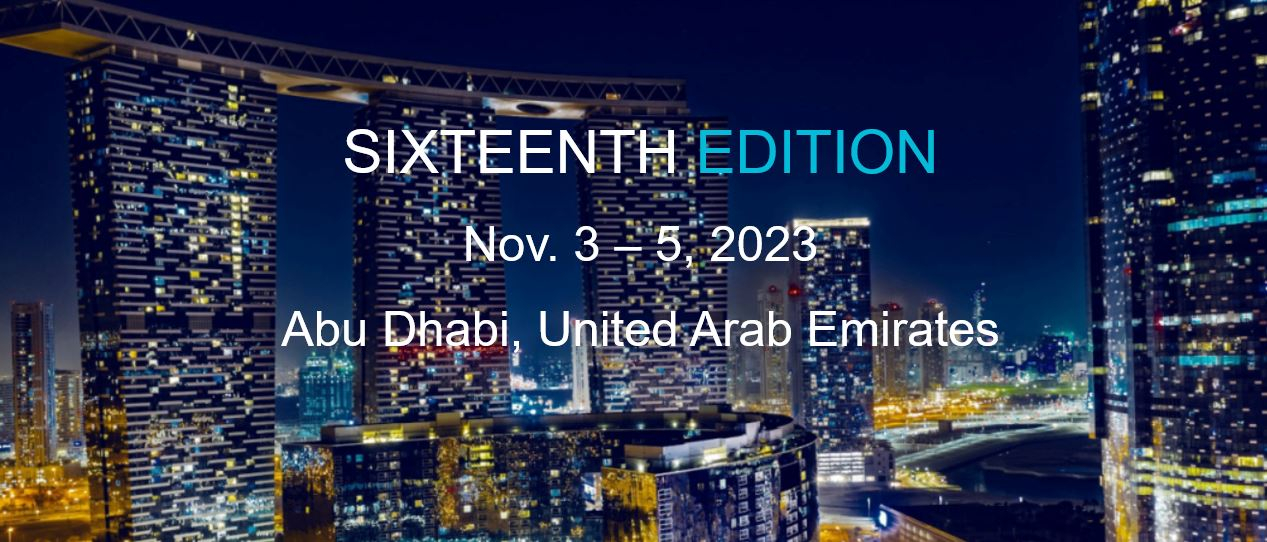
The 16th edition of the World Policy Conference (WPC), organized by Ifri and chaired by its founder Thierry de Montbrial, will be held in Abu Dhabi from 3-5 November. Since its first edition in 2008, the WPC's mission has been to reflect upon and to come up with solutions to the constant upheavals of today’s world and to create lasting bonds between the participants.
This international conference gives a voice to political, economic, academic and media players from over 40 countries - from major powers to medium and small countries, including emerging countries, thus ensuring a diversity and plurality of debates.
Abu Dhabi will host the World Policy Conference for the thid time.
More than 200 international leading figures will participate, including:
His Holiness Bartholomew I (Archbishop of Constantinople - New Rome and Ecumenical Patriarch), Reem Ibrahim Al Hashimy (Minister of State for International Cooperation of the United Arab Emirates), Dmytro Kuleba (Minister of Foreign Affairs of Ukraine), Haïm Korsia (Chief Rabbi of France), Tsakhiagiyn Elbegdorj (Former President of Mongolia), Kevin Rudd (Australia’s Ambassador to the United States, former Prime Minister of Australia), Aminata Touré (Former Prime Minister of Senegal), Lionel Zinsou (Former Prime Minister of Benin), Laurent Fabius (President of the French Constitutional Council, President of the COP 21, former Prime Minister of France), Mariam Al Mheiri (Minister of Climate Change and Environment of the United Arab Emirates), Miguel Ángel Moratinos (High Representative for the United Nations Alliance of Civilizations), Nicolas Terraz (President of Exploration & Production, member of the Executive Committee of TotalEnergies), Lasha Darsalia (First Deputy Minister for Foreign Affairs of Georgia), Anwar Mohammed Gargash (Diplomatic Advisor to President of the United Arab Emirates), Vahan Kostanyan (Deputy Minister of Foreign Affairs of Armenia), Roman Vassilenko (Deputy Minister of Foreign Affairs of Kazakhstan), Patrick Nicolet (CEO of Linebreak Ltd., former Group Chief Technology Officer of Capgemini), Bark Tae-ho (President of Lee&Ko Global Commerce Institute, former Minister for Trade of Korea), Lucia Sinapi-Thomas (Executive Director of Capgemini Ventures), Bogdan Klich (Senator in the Polish Parliament, Chairman of the Foreign and EU Affairs Committee), Norbert Röttgen (Member of the Deutscher Bundestag and member of the Foreign Affairs Committee), Hubert Védrine (Former Minister of Foreign Affairs of France), Jean-Claude Meyer (Vice Chairman International of Rothschild & Cie), Máximo Torero Cullen (Chief Economist of the Food and Agriculture Organization (FAO), Abdulrahman A. Al Hamidy (Director General and Chairman of the Board of Executive Directors at the Arab Monetary Fund), Nardos Bekele-Thomas (CEO of the African Union Development Agency/NEPAD), CY Leung (Vice-Chairman of the Chinese People's Political Consultative Conference).
The work of this sixteenth edition will cover issues such as: the World Economic Order, the Future of the Middle East, Artificial Intelligence and Technologies, Global Health, Food Security, the West after the Ukraine War, Crises and challenges in Africa, Short and Long-Term Perspectives in Russia and the Eurasian Region, Securing Critical Minerals for the Clean-Tech Transition, Climate change: is there still a common will? and many other topics.
Opening speech of the 16th WPC, Thierry de Montbrial, November 3, 2023, Abu Dhabi
All the sessions will be broadcasted live on the WPC TV Youtube channel
Information - www.worldpolicyconference.com
Contact with organizers: [email protected]
Follow the Livestream - Novemer 3
Follow the Livestream - Novemer 4
Follow the Livestream - Novemer 5
Other events
France-Ukraine Forum 2026
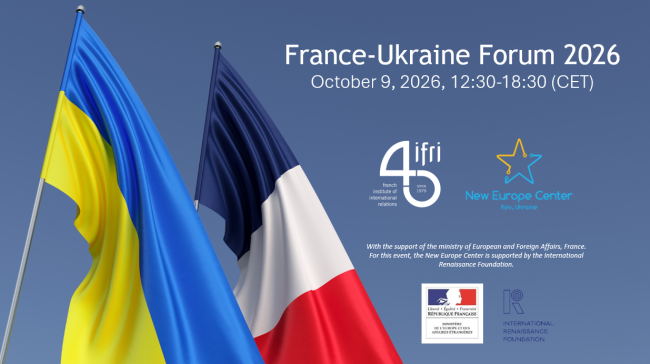
More than four and a half years after the start of the full-scale war launched by Russia against Ukraine, the 2026 France-Ukraine Forum will bring together policymakers, experts, academics, and civil society representatives from both countries to discuss three main topics: the formats and conditions for a lasting diplomatic settlement; Ukraine’s Euro-Atlantic integration, encompassing both the EU accession process and closer ties with NATO; and the societal transformations of postwar Ukraine, as well as its prospects for reconstruction.
The EU in a World of Economic Warfare: Trade, Geopolitics, and the Battle for Economic Sovereignty
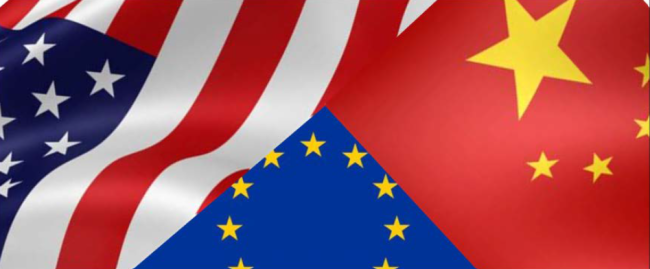
The international trading system has become a primary theatre of geopolitical competition. Tariffs, sanctions, and technology controls have replaced dialogue as the default instruments of economic relations.
The Road to 27 Electrification Action Plans: Planning and Investing in Europe’s Electric Future
The European Commission’s Electrification Action Plan places the continent on an electric path to structurally reduce dependence on fossil fuel imports and boost the energy transition in industry, transport and buildings.