




War and Armed conflict
The geography and modalities of wars and armed conflicts are evolving in step with the international system. While irregular wars and asymmetrical conflicts persist, high-intensity wars are multiplying, while crises are taking on new forms as a result of hybrid threats.
Related Subjects
Wars in the Next Decade
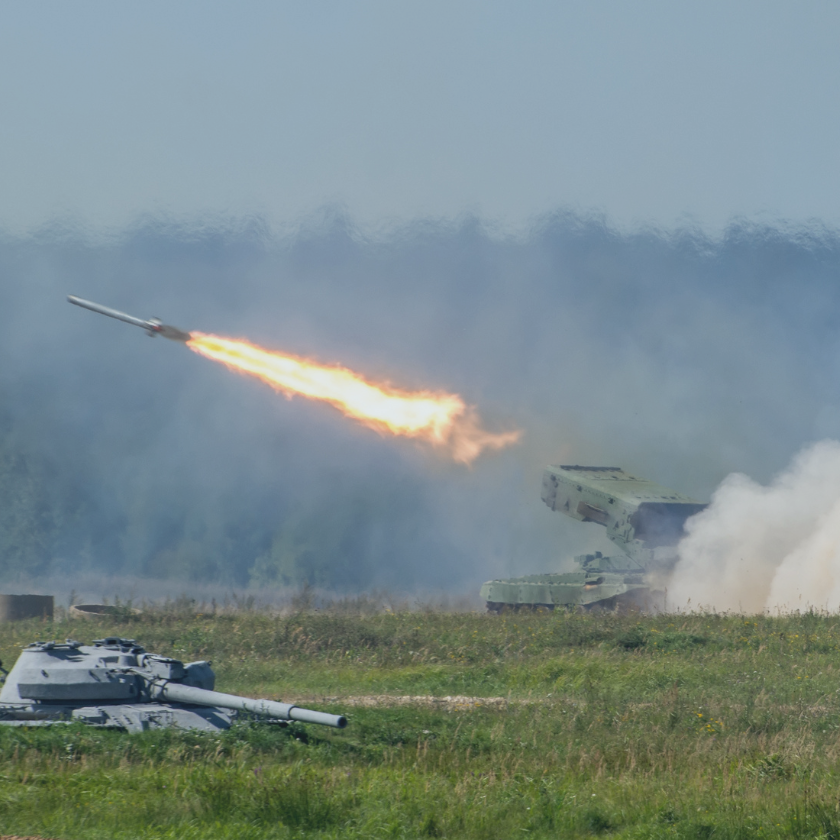
Forecasting in areas of strategy is particularly delicate as predictions may impact the course of events. While several major trends in the evolution of conflicts during the next decade can be identified, precise forecasts are impossible. Yet one thing is certain: in the next 10 years, decision-makers face unknown risks of significant consequence.
Of Walls and Men: Securing African Borders in the 21st Century
African borders are well-known for their porosity. Although they are crucial economic interfaces, they also crystallize political and security tensions, in both inter-state wars and intra-state conflicts involving rebels or autonomist groups.
Intelligence artificielle : vers une nouvelle révolution militaire ?
Artificial Intelligence (AI) is a priority defense issue for the military powers of the 21st century. Unsurprisingly, the United States and China are currently at the forefront of this new digitalized arms race.
Les guerres contre la drogue. Armées, sécurité intérieure et narcotrafic en Amérique latine
In the context of a persistent impunity enjoyed by organized crime and drug trafficking groups, many countries in Latin America, and especially Mexico and Colombia, have opted to assign military personnel to internal security tasks.
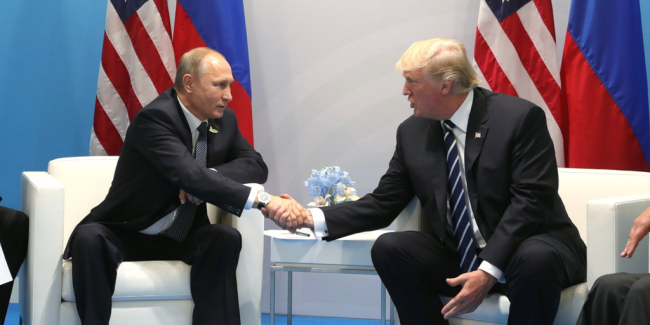
In Helsinki, Putin Can Grant Trump Great Success, of Sorts
The July 16, 2018, face-to-face between President Trump and Russian President Vladimir Putin is both entirely natural and extremely unconventional, very encouraging and deeply disturbing.
Opérations de déception. Repenser la ruse au XXIe siècle
Deception operations, which refer to manoeuver, economy of armed forces and surprise, need to be reintegrated at the center of strategy to respond efficiently to modern threats.

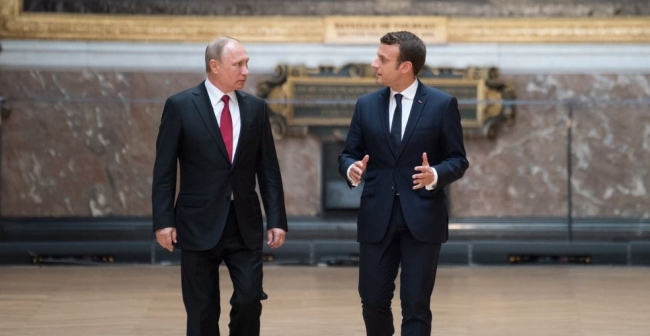
Russia, France look for way out of geopolitical deadlock
On Thursday, Russian President Vladimir Putin and his French counterpart Emmanuel Macron are due to hold a meeting in St. Petersburg.

Macron Heads to Russia in European Effort to Salvage Iran Deal
French President Emmanuel Macron’s trip to Russia this week once threatened to split France from its European allies. Now it’s part of a wider European effort to tie President Vladimir Putin to the Iran nuclear accord.

As fighting rages, can Russia forge a peace in Syria?
Nearly two and a half years after the Russian military began an intensive bombing campaign in Syria in support of Syrian President Bashar al-Assad, Russia is struggling to engineer a political solution in the war-ravaged country, analysts say.
Putinism: A Praetorian System?
Almost 20 years after Vladimir Putin's accession to the presidency in 2000, how should the Russian political system be defined?
Missiles of March: A political means of last resort for Putin
President Vladimir Putin’s extra-heavy emphasis on new strategic missile systems in his March 1 address to parliament was quite unexpected and rather out of character.
Beyond ‘pro’ and ‘anti’ Putin: Debating Russia Policies in France and Germany
Attitudes vis-à-vis Russia expressed in the public sphere are heterogeneous, in France more so than in Germany. In both France and Germany, the general public is by and large skeptical of Vladimir Putin and his policies. The picture is more diverse in the political realm. In Germany, there (still) is an approach that might be qualified as “mainstream”. The French debate, in turn, is highly fragmented.
Russia's election interference has undermined American democracy
In January 2017, U.S. intelligence agencies confirmed that Russia had indeed attempted to interfere with the 2016 U.S. election campaign. This effort took two forms: on the one hand, beginning in the Summer of 2016, the hacking and publication of the Democratic National Committee (DNC) emails, in order to hurt the Democratic candidacy; and on the other hand, an aggressive communication campaign aimed at disrupting the electoral process in favor of Donald Trump.
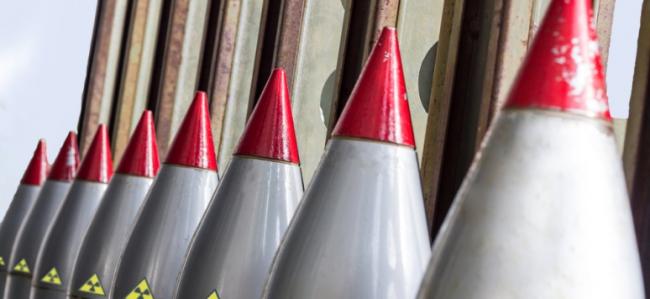
La guerre nucléaire limitée : un renouveau stratégique américain
Over the past few years, a debate on possible scenarios of limited nuclear weapons use has surfaced again in the United States. Russian nuclear saber-rattling since 2014 and the growing tensions in the Korean peninsula have led Washington to reassess its own ability to deter, or respond to, such a limited use of nuclear weapons.
Trade without Religion between Turkey and Syria
A saying claims that trade has no religion; it even adapts to a war situation, as demonstrated by the real-time reorganisation of trade channels at the Turkish-Syrian border.
Siloviki: What Influence on Russia's Domestic and Foreign Policy?
3 questions to Mark GALEOTTI, Senior Researcher at the Institute of International Relations Prague, Director of Mayak Intelligence consultancy.
Beyond national styles. Towards a connected history of Cold War counterinsurgency
This book is a major new study of the extent to which national mentalities, or 'ways of war', are responsible for 'national styles' of insurgency and counterinsurgency
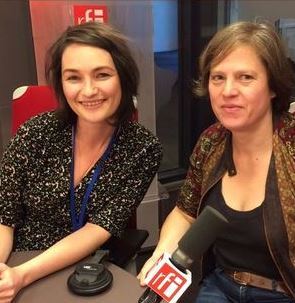
'Turkey Is Using Syria to Show its Strength - it's All About Image'
Turkey is looking to revive a fragile ceasefire in Aleppo, and the planned evacuation of civilians, which brokered with Russia. But why is Ankara, a staunch opponent of Damascus, interested in helping to create an outcome that would benefit President Assad? Amanda Morrow put the question to Dorothée Schmid, head of the Turkish studies programme at the French Institute of International Relations.
What evolution of US-Russia relationship after Trump’s election? An American point of view
3 questions to Stephen SZABO, Executive Director, Transatlantic Academy.
Ifri, a foundation recognized as being of public utility, relies largely on private donors – companies and individuals – to guarantee its sustainability and intellectual independence. Through their funding, donors help maintain the Institute's position among the world's leading think tanks. By benefiting from an internationally recognized network and expertise, donors refine their understanding of geopolitical risk and its consequences on global politics and the economy. In 2026, Ifri partners with over 90 French and international companies and organizations.
