War and Armed conflict
The geography and modalities of wars and armed conflicts are evolving in step with the international system. While irregular wars and asymmetrical conflicts persist, high-intensity wars are multiplying, while crises are taking on new forms as a result of hybrid threats.
Related Subjects


CNO Delivers Remarks at Paris Naval Conference
CNO Delivers Remarks at Paris Naval Conference
Below is a transcript of the remarks as delivered:
THOMAS GOMART: Just a quick announcement before starting. If you don't want to practice your French you can use receptors which are with this gentleman over there or at the table, because I will speak French and switch to English for the session.
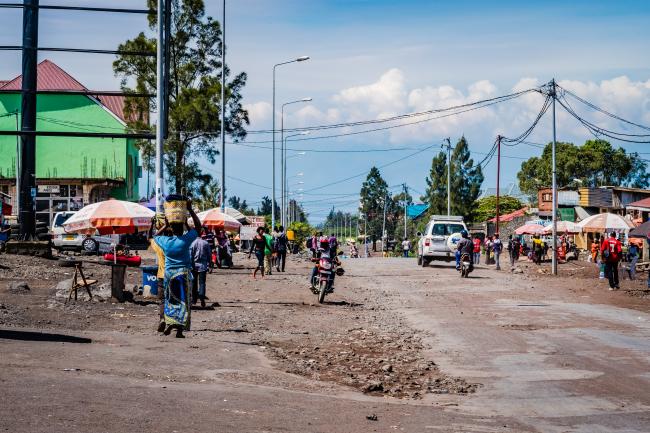
Democratic Republic of Congo: Nothing New in the East
While a state of siege was declared a year ago in two Congolese provinces and Kenyan authorities organized a meeting in Nairobi between the Congolese government and armed groups, the pacification of the Congolese East remains unresolved. This study looks back at the Tshisekedi government's policy and handling of this issue since 2019.
Military Stockpiles: A Life-Insurance Policy in a High-Intensity Conflict?
The war in Ukraine is a reminder of the place of attrition from high-intensity conflict in European armies that have been cut to the bone after three decades of budget cuts. All European forces have had to reduce their stocks to the bare minimum. As a result, support to Ukraine has meant a significant drain on their operational capabilities. A significant amount of decommissioned systems were also donated, due to the lack of depth in operational fleets.

French Navy bets on electronic warfare to counter anti-ship threats
With 2,000 miles of direct coastline and more than a dozen overseas territories, France’s naval vessels maintain a continuous presence in multiple maritime zones — from the North Sea to the Caribbean, and from the Indian Ocean to the Pacific.
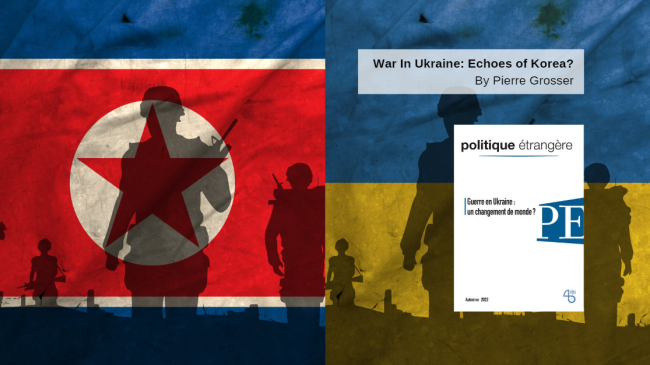
The War in Ukraine: Echoes of Korea?
The war in Ukraine has revived discussion about the Washington-Beijing-Moscow triangle as well as Europe’s place in the geopolitical power struggles.
War in Ukraine: A New World?
Beyond the tactical sphere, the conflict in Ukraine has already had numerous repercussions, and its conclusion will provoke many more in the global system. In this special issue, Politique étrangère explores some potential outcomes.

RAMSES 2023. Europe at War
For its 41st edition, RAMSES 2023. Europe at War, written by Ifri's research team and external experts, offers an in-depth and up-to-date analysis of geopolitics in today’s world.
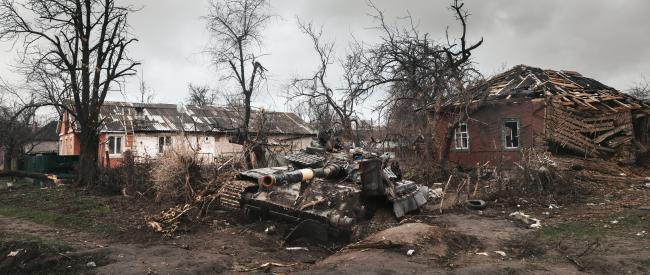
The Return of High-Intensity Conflict in Ukraine: Lessons for Land Forces
After twenty years of counter-terrorism, the Ukrainian battlefield marks the renewal of so-called “high-intensity” warfare. It constitutes a major strategic turning point, reversing the contemporary model of wars involving the West.
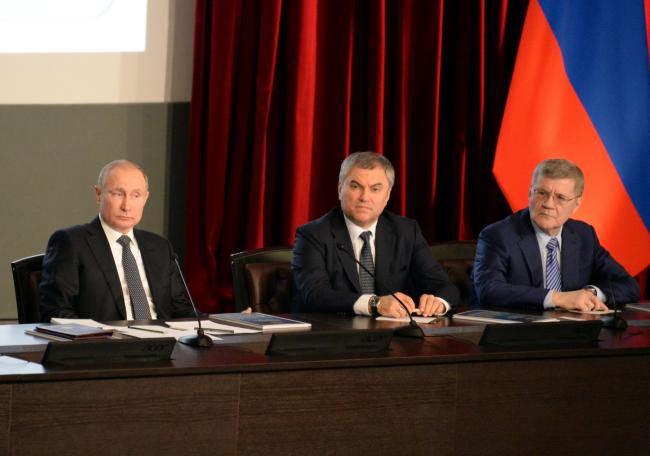
Cercles dirigeants russes : infaillible loyauté au système Poutine ?
Despite the unprecedented sanctions against Russia following Vladimir Putin's decision to invade Ukraine on February 24, 2022, no important member of Russia's ruling circles has defected.
War in Ukraine: Schumpeter in Sovietland ?
On 24 February 2022, Russia invaded Ukraine. Moscow’s initial plan was to use a “shock and awe” approach to conquer Kyiv quickly.
Ukraine: Between Two Peaces?
We have reentered the world of war. In its first special report, Politique étrangère offers a range of in-depth analyses of the military and political dynamics at work in a Europe that has just woken up from its dream of enduring peace. The direct confrontation between Ukraine and Russia has pitted two military and defense systems against each other, whose asymmetrical logics, strengths, and weaknesses we are discovering as the conflict unfolds.


War In Ukraine: Why Mariupol Is A Priority Target For Russia
Since the beginning of the Russian invasion, the port city of Mariupol, located on the Sea of Azov, has been of great strategic interest to Moscow. Vladimir Putin has made it a symbolic objective.
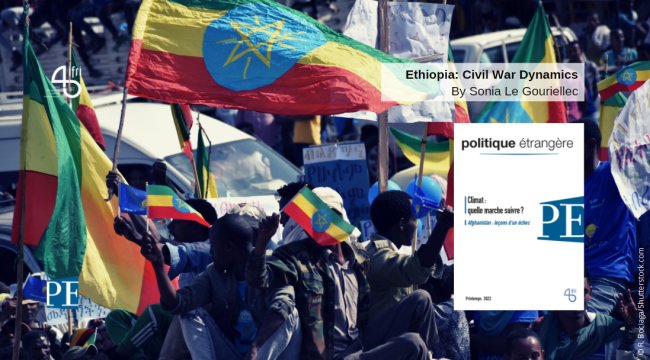
Ethiopia: Civil War Dynamics
Ethiopia has been in a state of civil war since November 2020. The hostilities have already gone through several phases.

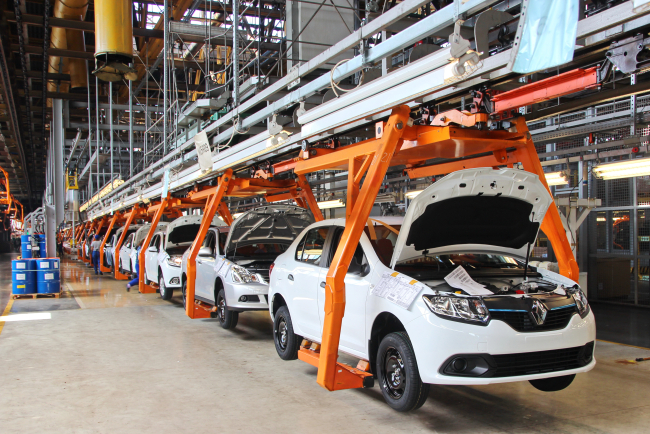
Renault’s Russia dilemma
Renault had for months been plotting to export a newfangled version of the Lada to the reste of the world. although realising that ambition remained some way off, it would have capped the revival of a brand arguably more synonymous with the Soviet Union than any other and which Renault first took a punt on in 2007 after then chief Carlos Ghosn identified Russia as a promising market.
Climate: Which Way Forward?
Thirty years after Rio, the case file “Climate: Which way forward?” assesses current climate commitments, which are undoubtedly less impressive and less certain than the political pronouncements and media fanfare make them seem. A number of fundamental problems remain.

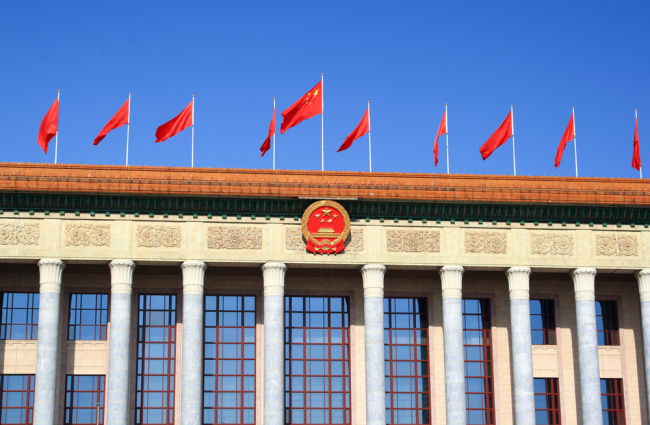
China sees at least one winner emerging from Ukraine war: China
Officials in Beijing believe it can take advantage of a distracted US and weakened Russia. The war in Ukraine is far from over, but a consensus is forming in Chinese policy circles that one country stands to emerge victorious from the turmoil: China.

Putin’s War is Stuck, Beware The Rising Risks
Data on the concentration of Russian troops was solid; the diplomatic offensive executed by Moscow was deliberately disagreeable; yet, many experts (myself including) refused to accept the proposition on the coming war as “inevitable”.
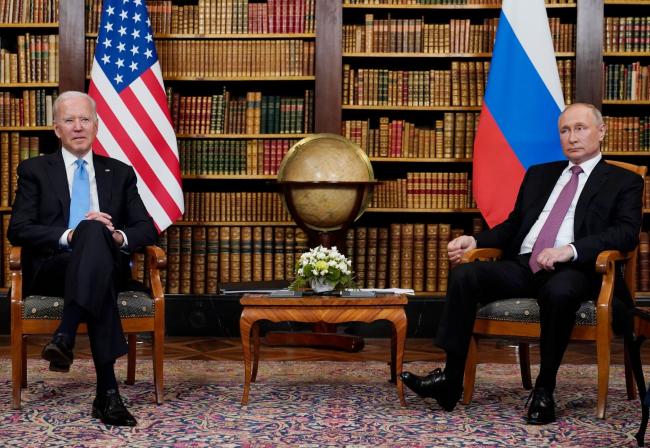
Rewinding the Clock? US-Russia Relations in the Biden Era
The escalating crisis in Ukraine in the winter of 2021-2022 has returned US-Russia relations to center stage.
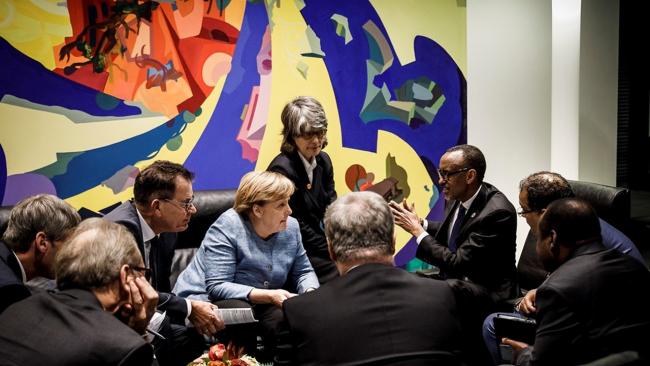
Germany’s Africa Politics: Renewal of an Unequal Cooperation?
In recent years, Germany’s Africa politics have been characterized by proactive international initiatives and the claim for a "partnership at eye level". However, a look at the power constellations of its cooperation indicates that inequalities are – contrary to Germany’s own claims – rather reproduced than reduced.
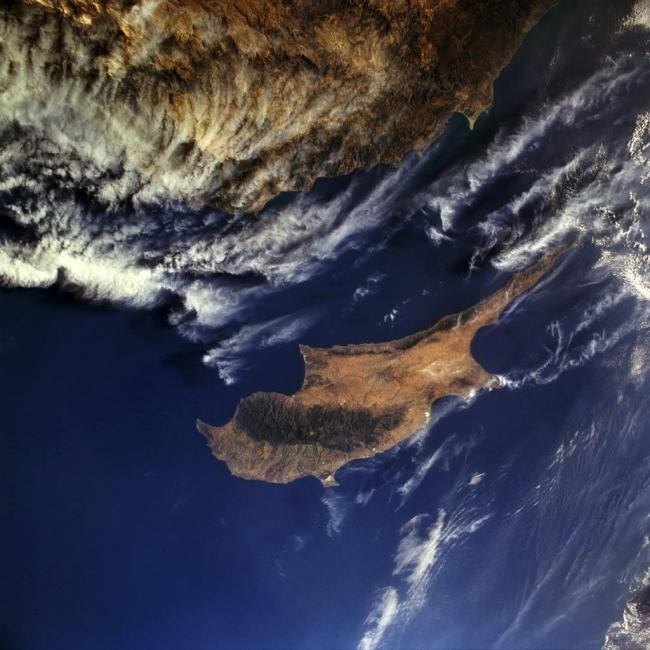
Back to “the Tradition”: Turkey’s Changing Position from a Federal to a Two-State Solution to the Cyprus Conflict
When it came to power in 2002, the Justice and Development Party (AKP) defended a bicommunal, federal solution for Cyprus, and supported the Annan Plan to reunite the island.
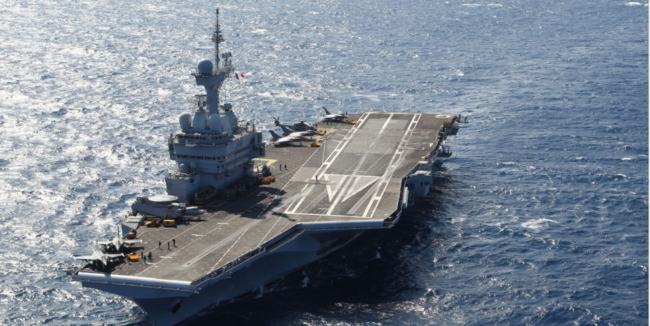
The Future of Europe’s Strategic Deterrence is (also) at Sea
A cursory look at both France and the UK suggests that the future of European nuclear deterrence is at sea.
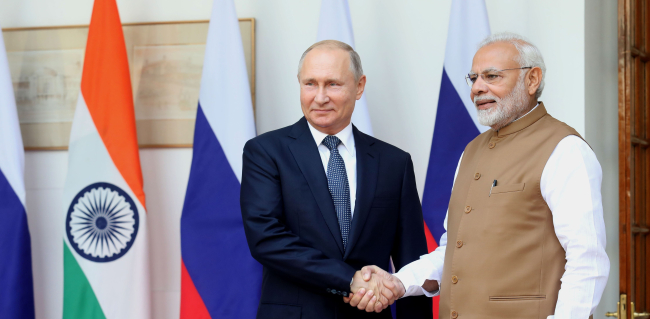
India-Russia Relations in Troubled Times: Steady but Stagnating
This paper examines the trajectory of India-Russia relations post-February 2022. The war in Ukraine emerged as a significant challenge for bilateral ties, presenting new obstacles to political and diplomatic relations and intensifying the previous difficulties in developing economic cooperation.
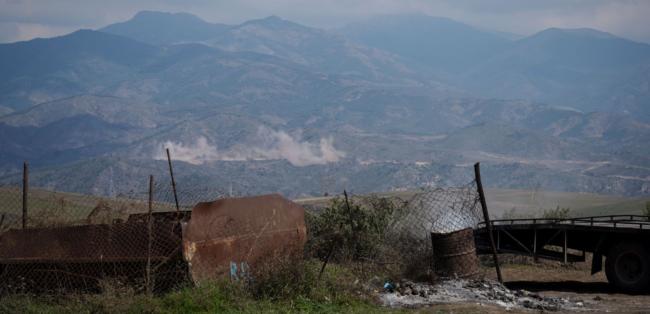
The Next Surge of Conflict in the South Caucasus Is Still Preventable
The tragic exodus of the Armenian population from the Nagorno Karabakh region has closed a chapter in the long saga of conflict between Armenia and Azerbaijan.

RAMSES 2024. A World to Be Remade
For its 42nd edition, RAMSES 2024 identifies three major challenges for 2024.
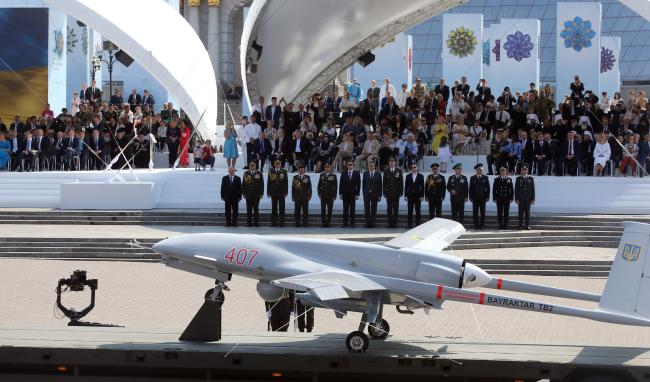
TB2 Bayraktar: Big Strategy for a Little Drone
Since 2016, the tactical drone TB2 Bayraktar—“standard bearer” in Turkish—has received considerable media attention, particularly during the conflict in Nagorno-Karabakh in 2020. Thanks to Azerbaijan’s victory over its neighbor Armenia, the drone, manufactured by Baykar, is now a proven combat system with increasing numbers of export clients.
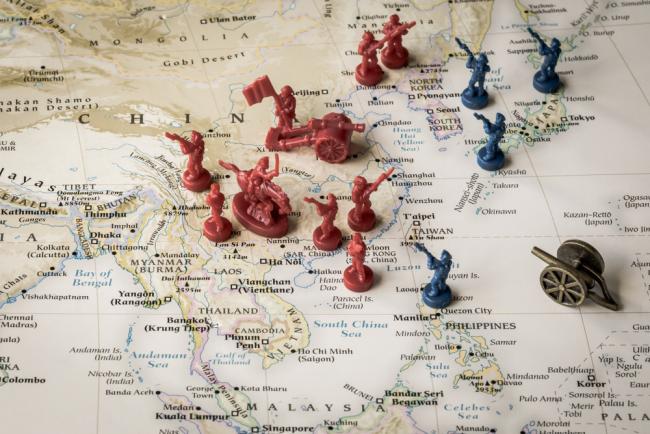
Imagining Beyond the Imaginary. The Use of Red Teaming and Serious Games in Anticipation and Foresight
The Red Team Defence demonstrates the Ministry of the Armed Forces' desire to appropriate new foresight tools. Thus, brain games or serious games aim to bypass the weight of the military hierarchy, the standardisation of thoughts and cognitive biases in order to avoid strategic unthinking.
Military Stockpiles: A Life-Insurance Policy in a High-Intensity Conflict?
The war in Ukraine is a reminder of the place of attrition from high-intensity conflict in European armies that have been cut to the bone after three decades of budget cuts. All European forces have had to reduce their stocks to the bare minimum. As a result, support to Ukraine has meant a significant drain on their operational capabilities. A significant amount of decommissioned systems were also donated, due to the lack of depth in operational fleets.
Back to “the Tradition”: Turkey’s Changing Position from a Federal to a Two-State Solution to the Cyprus Conflict
When it came to power in 2002, the Justice and Development Party (AKP) defended a bicommunal, federal solution for Cyprus, and supported the Annan Plan to reunite the island.
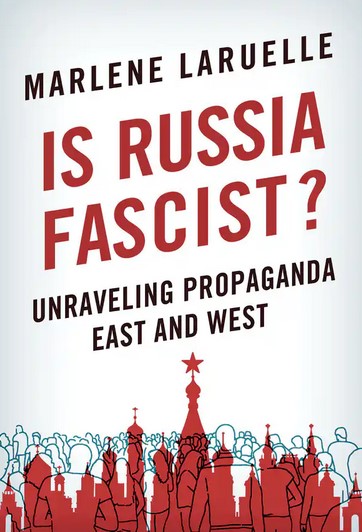
Is Russia Fascist? Unraveling Propaganda East and West
The charge of "fascism" has become a strategic narrative of the current world order.
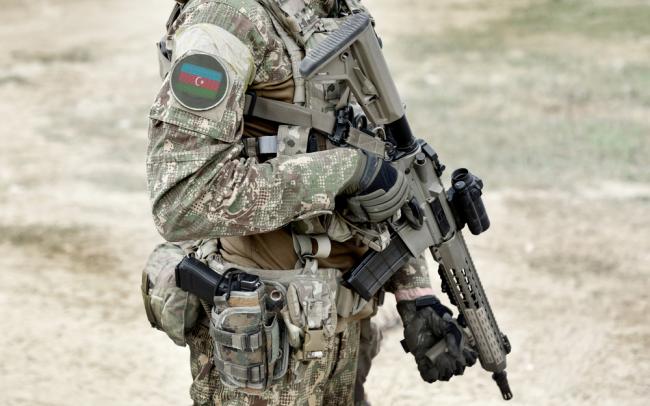
No Peacemakers for the New / Old Caucasian War: Understanding the Armenia-Azerbaijan Clash
A full-blown war erupted in the South Caucasus last Sunday, September 27, and as the two belligerents — Armenia and Azerbaijan — mobilize their forces under martial law, no international authority is trying in earnest to stop the hostilities. The conflict over the disputed Nagorno-Karabakh region ignited 30 years ago as the Soviet Union was collapsing and has never effectively “frozen.” The cease-fire Russia negotiated in May 1994 was not backed by a peacekeeping operation, and clashes have kept occurring, most notably in April 2016.
Ifri, a foundation recognized as being of public utility, relies largely on private donors – companies and individuals – to guarantee its sustainability and intellectual independence. Through their funding, donors help maintain the Institute's position among the world's leading think tanks. By benefiting from an internationally recognized network and expertise, donors refine their understanding of geopolitical risk and its consequences on global politics and the economy. In 2026, Ifri partners with over 90 French and international companies and organizations.