




Technology
Technologies, particularly digital and space technologies, raise political, strategic and economic issues that are profoundly transforming the dynamics of international competition and cooperation.
Related Subjects



Meet the woman researching the geopolitics of technology
Alice Pannier is leading a new programme looking at the relationship between technology and geopolitical alliances. Recent events have proven this to be more important than ever.

Europe’s Quest for Technological Power
Computing power plays a key role in enabling data analytics and machine learning, in cybersecurity, for scientific research, and in military domains like nuclear warhead design and detonation simulation.

Digital Sovereignty Review of Macron’s Term and Debates in the 2022 Presidential Campaign
One month before the French presidential election, this briefing assesses the actions undertaken during Macron's term as well as the presidential candidates' proposals concerning France's digital sovereignty.

The Space Downstream Sector: Challenges for the Emergence of a European Space Economy
As the commercial anchor of the space sector, the downstream sector plays an essential role in Europe where industry focuses mainly on application markets and where socio-economic considerations have become the main driver of space policy.

Convince and Coerce: U.S. Interference in Technology Exchanges Between its Allies and China
The tough-on-China policy adopted by the Trump and Biden administrations has – and will increasingly have – important consequences for Washington’s allies, both on their infrastructure choices (5G, submarine cables...) and on their technological exchanges with China.

China's Quantum Dream: A Giant's Aspirations in the Infinitely Small
Quantum physics, a field little known to the general public and relatively difficult to grasp as its laws are counter-intuitive, constitutes nevertheless a critical field of international strategic competition.

Europe and the Geopolitics of 5G: Walking a Technological Tightrope
The acute Sino-American tensions which started in 2018 have been coupled with controversies around 5G technology, exemplified by the spotlight placed on Chinese equipment manufacturer Huawei and the security risks associated with its use. For Europe, the 5G challenge at the international level is drawing a very complex landscape.
Technology at the Center of Geopolitical Relations
Technologies from big data to quantum computing, artificial intelligence and next-generation drones are fueling power struggles between nations and large industrial companies. Alice Pannier, head of the Geopolitics of Technology program at the French Institute of International Relations (IFRI), talks us through the impact of these new technologies, which have added a further level of complexity to the major energy issues seen in the 20th century.

Preparing for 2050: From “Foresight” to “Grand Strategy”
China and the United States both have a “grand strategy”: Beijing aspires to be the world’s leading power in 2049, while Washington plans to remain primus inter pares.
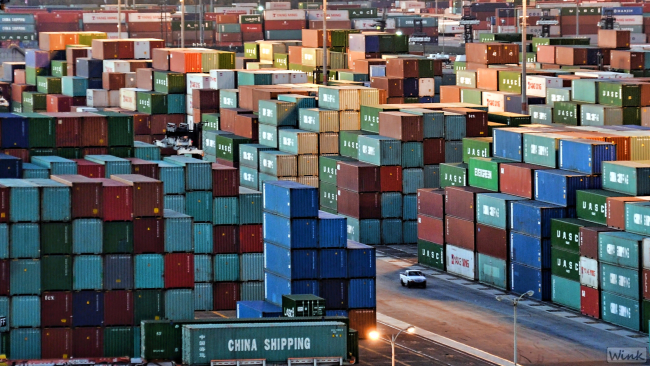
Strengthening Sovereignty in the Era of Global Value Chains
How to reduce the vulnerabilities induced by these global value chains to be more independent, while taking into account the reality of these productive processes which precisely generate interdependencies?

Le cloud défense : défi opérationnel, impératif stratégique et enjeu de souveraineté
Cloud computing – or data management – is considered as one of the pillars of the digital transformation of the French Ministry of the Armed Forces.

Video replay - Space and Quantum Technologies: What Strategies and Industrial Models for Europe?
Watch the video replay of the conference organized by Ifri's Geopolitics of Technology program on November 18, 2021.

Strategic Calculation: High-Performance Computing and Quantum Computing in Europe’s Quest for Technological Power
Computing power plays a key role in enabling machine learning, for scientific research, and in the military domain. Therefore, the race for computing power has become a key element of the US-China technological competition, and it is also a strategic priority for Europe.
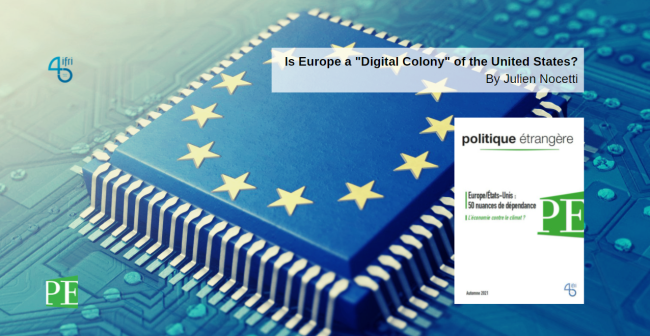
Is Europe a “Digital Colony” of the United States?
Edward Snowden’s revelations, the Cambridge Analytica affair and the digital transformation accelerated by the Covid-19 crisis have all shown Europe's technological dependence on foreign powers.

The Changing Landscape of European Cloud Computing: Gaia-X, the French National Strategy, and EU Plans
Non-European cloud service providers host the vast majority of European data, which is viewed as an economic as well as a political problem. Gaia-X, European governments and the European Union aim to bolster the European cloud market while responding to data privacy and cybersecurity concerns.

Exclusive: Western Intelligence Fears New Russian Sat-Nav’s Espionage Capabilities
GLONASS, Moscow’s answer to GPS, is set to launch an upgraded satellite network later this year, which it hopes to sell to the U.S. and Europe. Buyer beware.

Health Data Governance: Lessons Learned from the COVID-19 Pandemic in Europe, China, and the United States
The health crisis has triggered a tectonic movement in the recomposition of health data governance and protection models around the world, while accelerating the investment of large digital companies in the field of e-health.

USA/Europe: Seven Digital Challenges
As a consequence of the positive momentum in Transatlantic relations brought about by the arrival of the Biden administration, significant progress is expected on a range of key digital issues.
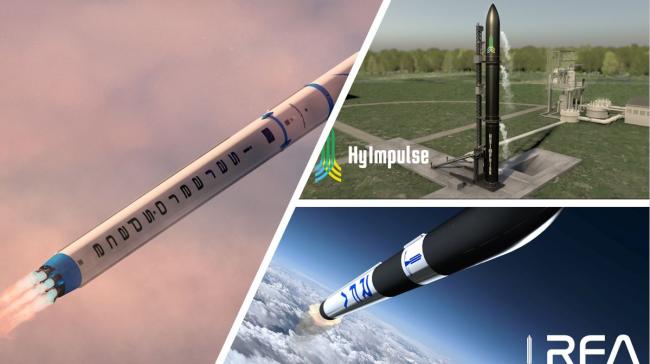
Commercial Space in Europe: A Balancing Act between Physics, Politics and Profession
Satellite constellations have become core elements of the digital transition. Over the next decade, several thousand satellites will have to be launched, to build these constellations. For positioning satellites, preferably in Low Earth Orbit (LEO), reliable and affordable launch services are essential.
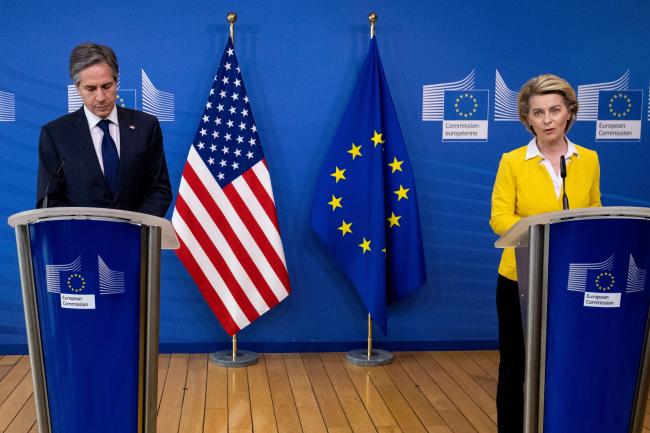
Europe in the Geopolitics of Technology: Connecting the Internal and External Dimensions
To respond to growing global competition, the EU has made notable progress on the internal dimension of technology policy over the past 3 years. It is now also seeking to adapt its foreign policy – from the transatlantic relationship to global partnerships – to technological challenges.
How to Curb Investments in Chinese Technology: Initiatives and Debates in the United States
In a continuation of U.S. efforts to slow China's development and acquisition of strategic technologies, Washington has imposed new restrictions on American investment in Chinese technology sectors such as artificial intelligence (AI), quantum, and semiconductors.

China in the Race to Low Earth Orbit: Perspectives on the Future Internet Constellation Guowang
In April 2021, the Chinese government officially, but rather quietly, established a new state-owned enterprise (SOE) named China SatNet. Its mission: build out China’s “mega-constellation” program for low Earth orbiting internet satellites, known as Guowang (“national network”).
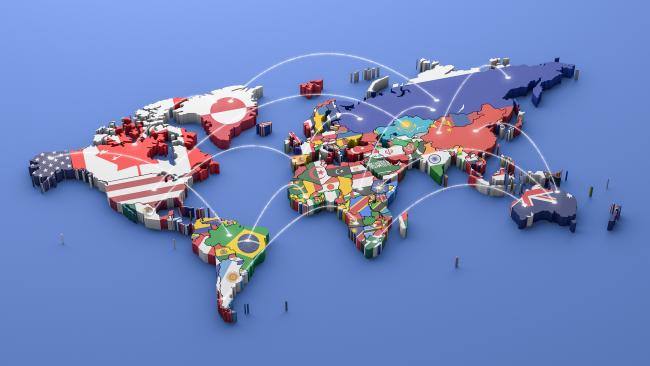
The Technology Policies of Digital Middle Powers
Digital technology is an element of power in the international system as well as an area for competition among countries. The study provides a qualitative comparison of the technology policies of nine of the digital middle powers: Brazil, India, Israel, Japan, Kenya, Nigeria, Russia, South Korea, and the United Kingdom. It seeks to reflect the diversity of national technology policies, as well as to identify those countries’ convergences and divergences with Europe, the United States and China.
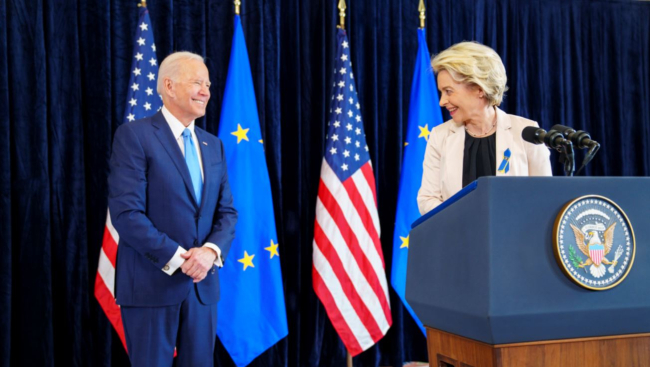
Digital Sovereignty: European Policies, American Dilemmas
European digital sovereignty has been made a priority by Ursula von der Leyen’s European Commission. Due to the privileged position of American companies in the European market, Brussels’ efforts towards digital sovereignty (on privacy, antitrust, data sovereignty, etc.) are closely scrutinized by American policymakers.
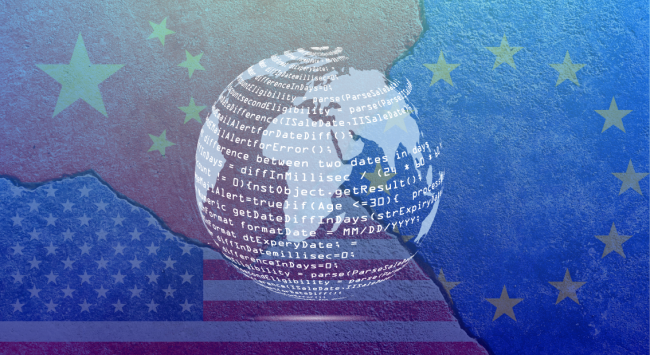
Software Power: The Economic and Geopolitical Implications of Open Source Software
Open source is at the heart of the Internet infrastructure, of the software used by individuals or governments, and of the innovation processes of tech companies. Faced with threats to the security and sustainability of the open source model, governments are getting a hold of the topic, which is becoming increasingly geopolitical.

Neither Surveillance nor Algorithm-driven Consumerism. Toward an Alternative European Model for Smart Cities
Numerous smart city projects are emerging, guided by objectives of efficiency and improvement of public policies. All of them are based on intensive use of data and digital tools, but their concrete achievements take various forms. Some models are being exported and are becoming levers of influence, while Europe is still looking for its own path.
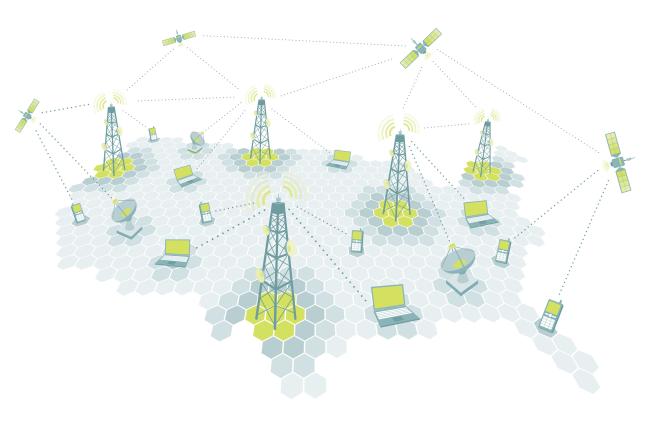
“Open” Telecom Networks (Open RAN): Towards a Reconfiguration of International Competition in 5G?
In line with the anti-Huawei diplomatic campaign of the Trump and Biden administrations, the United States has promoted an alternative: Open RAN, a concept defined by "open" network architectures. At the intersection of 5G geopolitics and standards, what risks and opportunities does Open RAN present for European technological sovereignty?
Critical technologies and industrial capabilities: National definitions and implications. The French case.
France has historically paid significant attention to strategic technologies and industries, whether they were strictly defence- and nuclear deterrence related, or considered as vectors of national independence and security, more broadly.
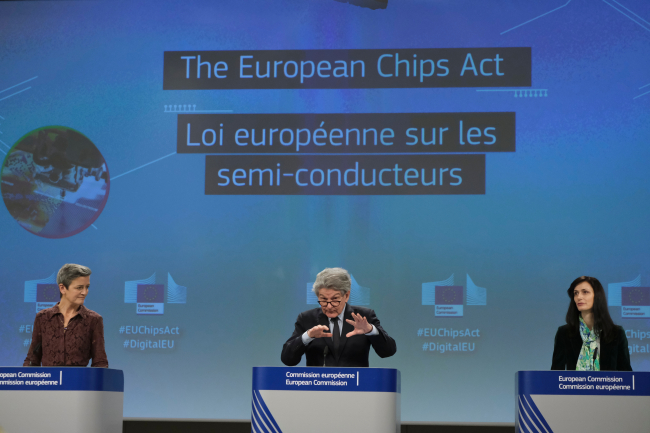
Fishing for Chips: Assessing the EU Chips Act
China, the United States, and the European Union (EU) are currently developing strategies for semiconductors aimed at financing R&D and the installation of new factories on their territories, in particular through subsidies. The EU Chips Act, announced in February 2022, represents a real break in Europe's industrial policy.
The Political Economy of the Metaverse
The "metaverse", at the heart of the strategy of large digital companies such as Facebook (Meta), does not yet exist and it will take decades to build it. This briefing provides an overview of the issues.
Ifri, a foundation recognized as being of public utility, relies largely on private donors – companies and individuals – to guarantee its sustainability and intellectual independence. Through their funding, donors help maintain the Institute's position among the world's leading think tanks. By benefiting from an internationally recognized network and expertise, donors refine their understanding of geopolitical risk and its consequences on global politics and the economy. In 2026, Ifri partners with over 90 French and international companies and organizations.


Space has become a crucial theme in the main international think tanks’ research activities as it entails important strategic, economic, and technological issues.
Since 2001, Ifri has integrated space in its research, notably by ensuring that the political dimension of scientific and human exploration programs is emphasized, and by supporting reflections on the Code of Conduct for Outter Space Activities.
Today, as part of its research agenda, Ifri mobilizes several of its centers and programs to transversally tackle the theme of space, through three main inputs:
- the competition of powers, driven by the Sino-American rivalry;
- critical points related to mastery of space, such as the issue of autonomous access to space or the mega-constellations necessary for the digital revolution;
- these developments’ challenges for Europe and its status as a space power.
Since the Summer 2020, Ifri has been coordinating a tripartite European Space Governance Initiative, together with two other renowned European think tanks: the Deutsche Gesellschaft für Auswärtige Politik (DGAP) in Germany and the Istituto Affari Internazionali (IAI) in Italy.
Artificial intelligence (AI), 5G, cybersecurity, robotics, semiconductors, space…Technologies—particularly digital technologies—now profoundly affect all human activities and, by extension, international relations. The political, strategic, economic, and social stakes that arise from them are expressed across multiple political levels, involving states, international organizations, and private companies alike. International dynamics of competition and cooperation are being reshaped as a result. To address these challenges, Ifri launched its Geopolitics of Technology Center in 2020, offering a distinctly European perspective on the international issues surrounding so-called critical technologies.