





Technology
Technologies, particularly digital and space technologies, raise political, strategic and economic issues that are profoundly transforming the dynamics of international competition and cooperation.
Related Subjects
China’s Mature Node Overcapacity: Unfounded Fears
China is decoupling from, not flooding, the global mature-node semiconductor market. As China increasingly pursues industrial policies encouraging domestic chip production, its own growing chip demand will prevent a direct flood of cheap Chinese chips on foreign shores. However, as Beijing achieves its goal of decreasing the reliance of domestic downstream manufacturers on foreign chips, European and American mature-node semiconductor companies will feel the ripple effects of an increasingly “involuted” Chinese chip ecosystem.
NATO: 75 Years of Strategic Solidarity (replay)
The war in Ukraine, burden-sharing between Allies, U.S. disengagement from Europe, new areas of conflict... At a time when the Alliance has just celebrated its 75th anniversary and the Stoltenberg era is drawing to a close after ten years at the head of the organization, NATO's agenda bears witness to the diversity of its areas of action, as well as to the different perceptions of the Allies on these issues.
In the wake of the Washington summit, this conference of diplomats, military officers and researchers aims to analyze the short- and medium-term prospects for the Atlantic Alliance.
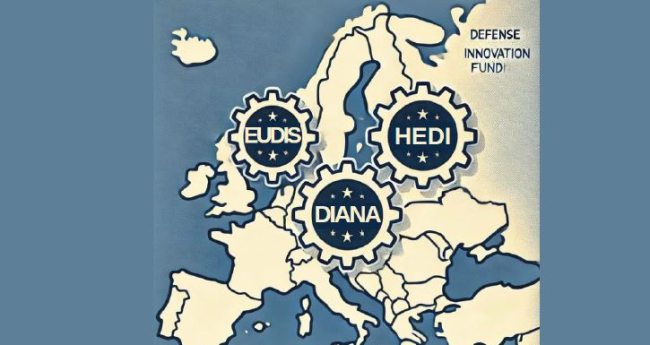
EUDIS, HEDI, DIANA: What's behind Three Defense Innovation Acronyms?
In Europe, with Russia’s war of aggression against Ukraine showing little sign of abating, a persistent gap remains between security needs and defense spending. According to a 2006 commitment enshrined at the 2014 Wales NATO summit, the North Atlantic Treaty Organization (NATO) members should disburse no less than 2% of their national gross domestic product (GDP) on defense, out of which 20% is to be spent on equipment and research and development. In 2024, only 23 Allies out of 32 are expected to meet or exceed this target, though a significant improvement from only three in 2014. This total includes the United States (US) devoting 3.38% of its GDP to defense, constituting almost 70% of all NATO member defense spending combined.

Sat-to-Cell: Towards Universal Connectivity?
Sat-to-Cell is a new type of service that connects smartphones directly to satellites. It has recently enabled innovative applications such as emergency text messaging via satellite. The technology is developing rapidly, and many questions are now being raised about its potential impact.
Russia and the New BRICS Countries: Potentials and Limitations of a Scientific and Technological Cooperation
At the fifteenth BRICS summit, held in Johannesburg, South Africa, from August 22 to 24, 2023, a resolution was adopted to extend an invitation to six new countries to join the organization: Argentina, Egypt, Ethiopia, Iran, Saudi Arabia, and the United Arab Emirates (UAE). All of these countries except Argentina duly became members of BRICS in 2024, with the expanded group known as BRICS+. In addition to the political and economic advantages, it is assumed that the incorporation of these new countries could potentially facilitate their scientific and technological development.

The Artemis Accords: An American Strategy for Lunar Governance
The Artemis Accords provide a framework for international cooperation in space exploration as part of the U.S. lunar program. They are part of a coherent strategy.
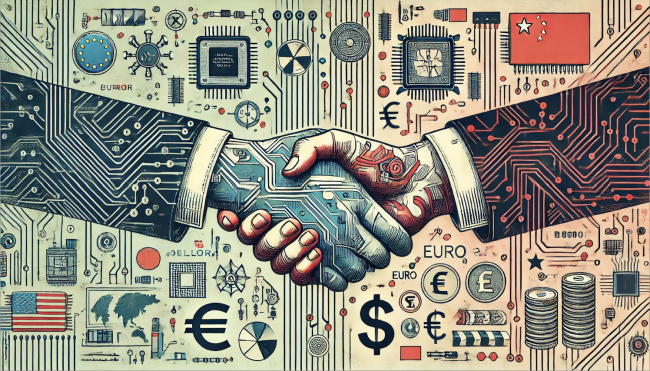
Funding A Rival: When the United States and Europe Invest in Chinese Tech
Outbound investments into rival powers are receiving increasing political attention on both sides of the Atlantic, as competition between the United States and China intensifies. The concern lies with American and European investments in certain Chinese technologies - such as artificial intelligence, biotechnology, semiconductors, or quantum computing - which could enable China to enhance its military capabilities and thus may pose risks to national and international security.
Groundbreaking Chip Sovereignty: Europe’s Strategic Push in the Semiconductor Race
The EU Chips Act’s enactment in September 2023 marks a major policy shift that revitalizes industrial policy in Europe. By allowing state subsidies for semiconductor projects, it has the potential to secure Europe’s supply chain security and technological autonomy in an industry dominated by the US and East Asia.
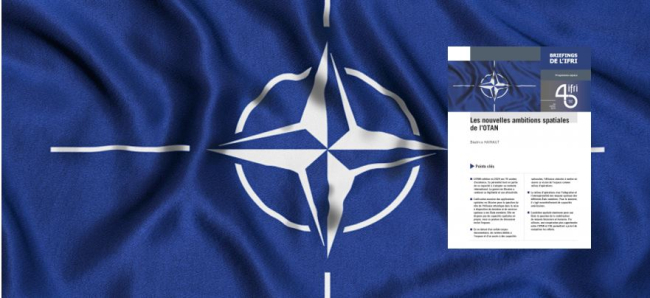
NATO's New Ambitions for Space
Ahead of Russia's invasion of Ukraine, a devastating cyber attack targets Ukrainian army communications, exposing Western dependence and vulnerability to space technologies, and calling NATO's defensive posture into question.

A Splintered Internet? Internet Fragmentation and the Strategies of China, Russia, India and the European Union
From the Covid-19 pandemic to the ramifications of Russia’s full-scale invasion of Ukraine, international events are fueling fears of an accelerated fragmentation of the global Internet.
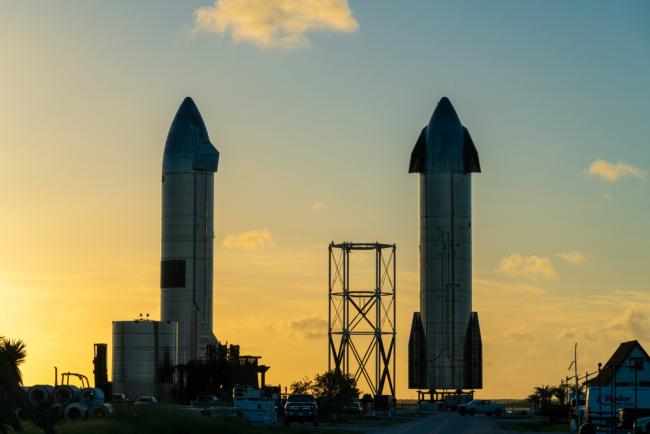
2024: A Pivotal Year for the Space Sector?
2024 could be a pivotal year for space exploration. New launchers are set to make their first flight, satellite constellations and other trends promise to redefine the way space is explored and exploited.
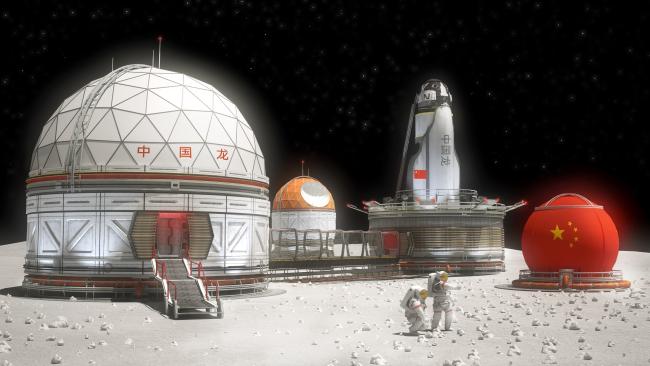
Racing to the Moon: China's Lunar exploration program in competition with the United States
A new Cold War-style race to the moon seems to be in the making. The People’s Republic of China and the United States are both investing in moon exploration with manned lunar scientific stations as the ultimate goal.

Balancing Security and Openness for Critical Technologies: Challenges for French and European Research
While matters related to research security and international partnerships in critical domains are certainly not new, they have become increasingly central to governments, research institutions and industry since the turn of the 2020s.
How to Curb Investments in Chinese Technology: Initiatives and Debates in the United States
In a continuation of U.S. efforts to slow China's development and acquisition of strategic technologies, Washington has imposed new restrictions on American investment in Chinese technology sectors such as artificial intelligence (AI), quantum, and semiconductors.


When the chips are down: China threatens to cut supply on rare minerals
China has just announced controls on exports of rare minerals - gallium and germanium - whose production it dominates and which are essential for the manufacture of electronic components.

China in the Race to Low Earth Orbit: Perspectives on the Future Internet Constellation Guowang
In April 2021, the Chinese government officially, but rather quietly, established a new state-owned enterprise (SOE) named China SatNet. Its mission: build out China’s “mega-constellation” program for low Earth orbiting internet satellites, known as Guowang (“national network”).
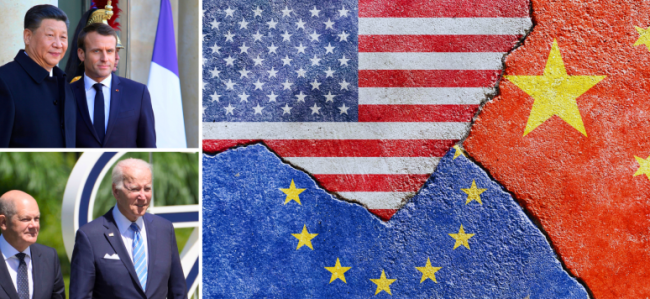
China/United States: Europe off Balance
As French President Emmanuel Macron (accompanied by Ursula von der Leyen) is on a state visit to China, some twenty Ifri researchers decipher the stakes of the U.S./China/Europe strategic triangle.


It’s not just TikTok: French also warn against WhatsApp, Instagram
In a typically French move, France's top lawmakers are refusing to side with the United States and single out China's TikTok.

Schisms in research collaboration risk worsening global crises
Barriers being put up by the US, China and the EU could hinder scientific progress at a time when it is most urgently needed, according to OECD’s latest report on the global R&D outlook.

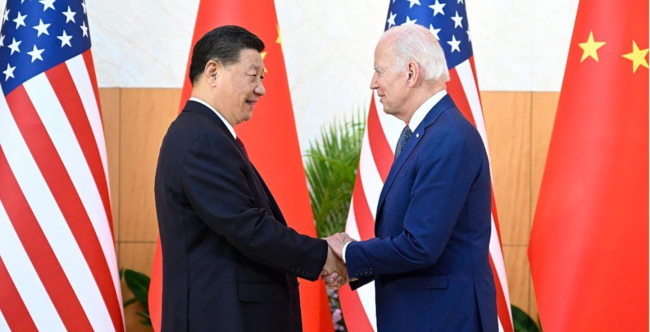
The world’s powers are engaged in a fierce technological race. This is the balance of forces
The US struggles to retain its supremacy, China catches up and overtakes the leader in many areas while the EU is falling behind.
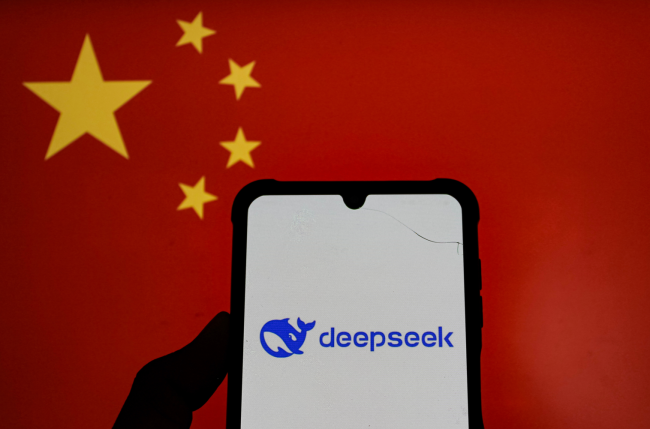
A "DeepSeek Moment"?
DeepSeek, hailed as a champion of Chinese AI, represents less a revolution than a significant optimization of existing technologies. Doubts remain regarding the figures put forward by the start-up, inviting a more measured response to the media hype surrounding China’s technological catch-up. Nonetheless, DeepSeek signals the need to question an economic model based solely on the race for computational power. By betting on open innovation, Europe can carve out its own path in a competition that is far from being a zero-sum game.

The European Space Model: Renewing Ambition in a Changing Strategic Landscape
The European space model, based on science, cooperation and trade, is now being undermined by changes in international relations and the economic upheavals brought about by New Space. In light of the war in Ukraine and American disengagement, Europe needs to rethink its strategy by adding a fourth pillar dedicated to defense, in order to strengthen its sovereignty and deter possible aggression against the continent.
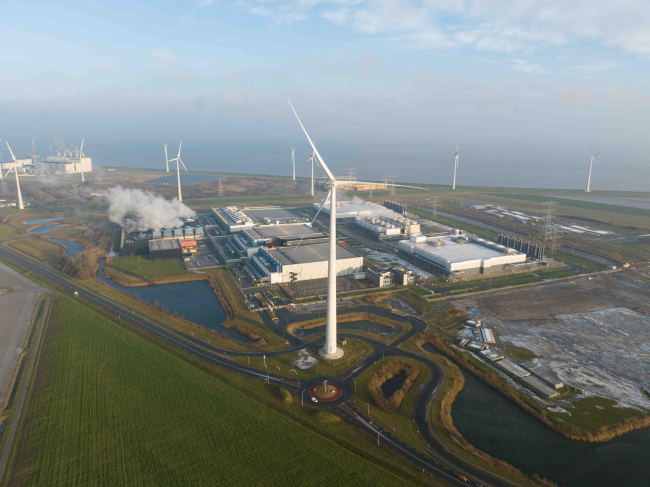
AI, Data Centers and Energy Demand: Reassessing and Exploring the Trends
The information and communication technologies sector today accounts for 9% of global electricity consumption, data centers for 1-1.3%, and artificial intelligence (AI) for less than 0.2%. The growing energy demands of cloud services first, and now AI workloads (10% of today’s data centers electricity demand), have exacerbated this trend. In the future, hyperscale data centers will gain shares amongst all kinds of data centers and AI will probably account for around 20% of data centers electricity demand by 2030.
Technical Standards, Soft Connectivity and China’s Belt and Road: Towards greater convergence or fragmentation?
As the intensification of geopolitical competition points toward increased global fragmentation, the definition of technical standards for future markets and industries will play an important role in determining just how deep the fissures will run.

Artificial Promises or Real Regulation? Inventing Global AI Governance
The risks inherent to the unregulated use of AI, a key technology and vector of profound transformations within societies underline the pressing need to harmonize governance efforts at the international level. The Summit for Action on Artificial Intelligence to be held in Paris in mid-February could be an unprecedented timely occasion to agree on a global governance framework of AI for the public good.

From Conservative Nationalists to Tech-Libertarians: Far-Right Ideologies in the Trump 2 Administration
The officials and advisers of the Trump 2 administration represent diverse ideological currents, some of which are relatively new to Washington.
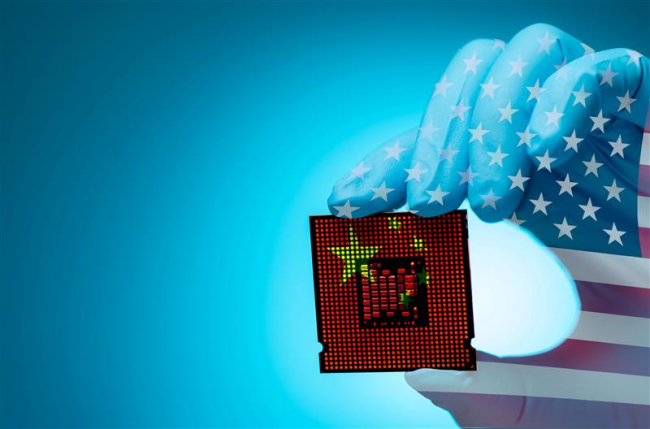
From nonproliferation to strategic competition: US export controls and China
Technological competition is at the heart of the renewed great-power competition that has characterized relations between the USA and China since the 2010s. The role of technological innovation in the evolution of power relations is already recognized in the literature of international relations. However, developments in US technology policy under the last two administrations raise the reverse question: how does the perception of changing power relations (in this case, Chinese technological catch-up perceived as a threat to US leadership) transform policies granting or denying access to technological innovation?

Taiwan’s Rising Space Program: Building Up Industry, Supporting National Security
Taiwan, known for its leadership in semiconductors and information and communications technology (ICT), is now making significant strides in the space industry. While historically modest, Taiwan’s space program has seen a transformation since 2020, driven by President Tsai Ing-wen’s commitment to expanding the country’s space capabilities. Key milestones include the passage of the Space Development Act and the creation of the Taiwan Space Agency (TASA), which has bolstered the resources and visibility of Taiwan’s space ambitions.
AI and Technical Standardization in China and the EU: Diverging priorities and the need for common ground
Given the highly disruptive potential of AI, global cooperation on AI safety and governance is imperative, and yet the deeply transformational potential of AI also ensures that a high level of competition and systemic rivalry is likely unavoidable. How can the EU best manage its complex relationship with China in the field of AI so as to ensure a necessary level of cooperation in spite of competition and rivalry?
China’s Quest for a Quantum Leap
The global race to harness quantum science is intensifying. Recognizing the strategic potential of quantum technology for economic, military, and scientific advancement, China is focusing on quantum breakthroughs as a way to shift the balance of power, especially in its competition with the United States. President Xi Jinping has emphasized the importance of scientific innovation, particularly in quantum fields, to fuel national development and ensure security.
Ifri, a foundation recognized as being of public utility, relies largely on private donors – companies and individuals – to guarantee its sustainability and intellectual independence. Through their funding, donors help maintain the Institute's position among the world's leading think tanks. By benefiting from an internationally recognized network and expertise, donors refine their understanding of geopolitical risk and its consequences on global politics and the economy. In 2026, Ifri partners with over 90 French and international companies and organizations.


Space has become a crucial theme in the main international think tanks’ research activities as it entails important strategic, economic, and technological issues.
Since 2001, Ifri has integrated space in its research, notably by ensuring that the political dimension of scientific and human exploration programs is emphasized, and by supporting reflections on the Code of Conduct for Outter Space Activities.
Today, as part of its research agenda, Ifri mobilizes several of its centers and programs to transversally tackle the theme of space, through three main inputs:
- the competition of powers, driven by the Sino-American rivalry;
- critical points related to mastery of space, such as the issue of autonomous access to space or the mega-constellations necessary for the digital revolution;
- these developments’ challenges for Europe and its status as a space power.
Since the Summer 2020, Ifri has been coordinating a tripartite European Space Governance Initiative, together with two other renowned European think tanks: the Deutsche Gesellschaft für Auswärtige Politik (DGAP) in Germany and the Istituto Affari Internazionali (IAI) in Italy.
Artificial intelligence (AI), 5G, cybersecurity, robotics, semiconductors, space…Technologies—particularly digital technologies—now profoundly affect all human activities and, by extension, international relations. The political, strategic, economic, and social stakes that arise from them are expressed across multiple political levels, involving states, international organizations, and private companies alike. International dynamics of competition and cooperation are being reshaped as a result. To address these challenges, Ifri launched its Geopolitics of Technology Center in 2020, offering a distinctly European perspective on the international issues surrounding so-called critical technologies.