




Technology
Technologies, particularly digital and space technologies, raise political, strategic and economic issues that are profoundly transforming the dynamics of international competition and cooperation.
Related Subjects


The US-EU Rivalry for Data Protection: Energy Sector Implications
The General Data Protection Regulation and the energy sector

Digital Transformation of the Industry: The Franco-German Challenge
The issue of the digital transformation of the industry provoked in France as in Germany the return of the state and the introduction of a subsidiary industrial policy. Feeling threatened in its industrial leadership, Germany mobilized its resources through industry 4.0 by building a vision around the concept of “cyber-physical system” before developing in each Land an accompanying offer. France has forged the concept of the industry of the future by following a logic of modernization of the production tool, reinforcing particularly the automation and building on the integration of new technological bricks.
Intelligence artificielle : vers une nouvelle révolution militaire ?
Artificial Intelligence (AI) is a priority defense issue for the military powers of the 21st century. Unsurprisingly, the United States and China are currently at the forefront of this new digitalized arms race.
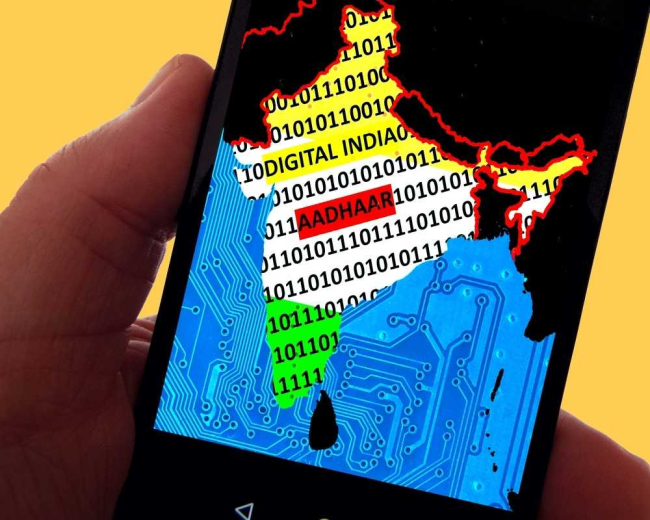
Questions of Fact: India’s Aadhaar Matter and the Limits of the Supreme Court
In September 2018, the Supreme Court of India rendered its verdict in a landmark case with major implications for the Aadhaar biometric identification project as well as the application of right to privacy in India, but the Aadhaar Matter raises important questions about the shortcomings of the Supreme Court’s practice of judicial review.
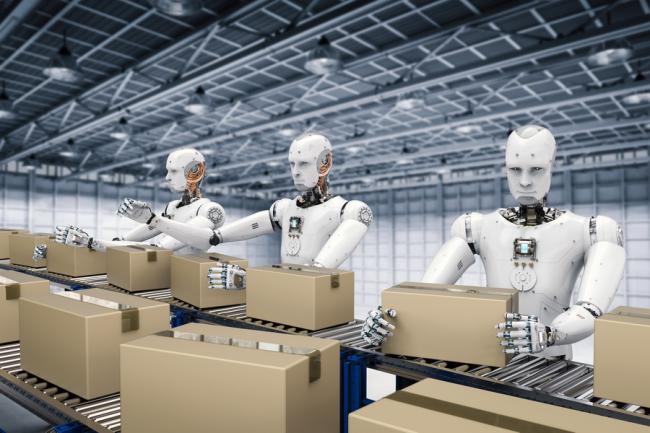
Europe Facing the Digitization of Work: The Political Risks
The nature of work has been remarkably transformed in a short period of time through the combined effect of globalization and technological disruptions. Ongoing technological breakthroughs, carried by increasingly digitalized and automated economic activities, and the “democratization” of artificial intelligence, heighten fears of massive job destructions and the deepening of social inequalities, to the detriment of downgraded and pauperized middle classes.

RAMSES 2019. The Clashes of the Future
RAMSES 2019. The Clashes of the Future, written by Ifri's research team and external experts, offers an in-depth and up-to-date analysis of global geopolitics.
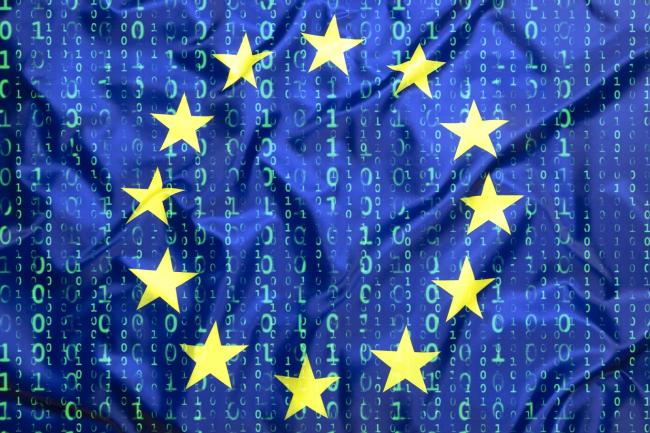
Europe: Subject or Object in the Geopolitics of Data?
Data no longer should be understood as a sole commercial or regulatory issue, but rather as an actual stake of international politics. Mastering data is an issue involving different set of actors, with diverging motivations: it is a sovereignty and national security stake for states, a democratic stake for people (personal data), and a fundamental source of value creation for companies.
Opérations de déception. Repenser la ruse au XXIe siècle
Deception operations, which refer to manoeuver, economy of armed forces and surprise, need to be reintegrated at the center of strategy to respond efficiently to modern threats.
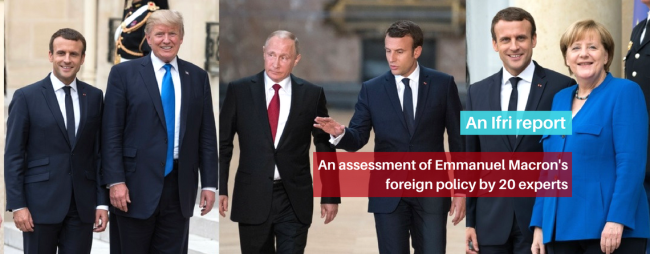
Macron, Diplomat: A New French Foreign Policy?
How can we define Emmanuel Macron’s foreign policy since he took office? After Nicolas Sarkozy’s brazen style of “gutsy diplomacy” and François Hollande’s “normal diplomacy”, the eighth president of the Fifth Republic seems to have opted for an agile classicism. In substance, he makes no claim to any radical break with the past, but sees his approach as being in line with historical tradition.

Cybersecurity in the Energy Sector: a Comparative Analysis between Europe and the United States
The acceleration of the digitization of energy infrastructure has brought many economic benefits, including greater efficiency in the rationalization of energy consumption. However, this has also increased the risk of cyberattacks, where malicious software is able to take advantage of the increasing digitization of energy equipment.
Russia's election interference has undermined American democracy
In January 2017, U.S. intelligence agencies confirmed that Russia had indeed attempted to interfere with the 2016 U.S. election campaign. This effort took two forms: on the one hand, beginning in the Summer of 2016, the hacking and publication of the Democratic National Committee (DNC) emails, in order to hurt the Democratic candidacy; and on the other hand, an aggressive communication campaign aimed at disrupting the electoral process in favor of Donald Trump.

European Space Programs and the Digital Challenge
The exploration of space and the use of digital tools and systems have in common to be quite recent in human history but to have changed the world, society and economy by connecting people and things, breaking down borders, and redistributing knowledge, power and control.

RAMSES 2018. Will the Information War Take Place?
RAMSES 2018. Will the Information War Take Place?, written by Ifri's research team and external experts, offers an in-depth and up-to-date analysis of global geopolitics.
Russia and Information Warfare: Aims, Tools and Implications for the West
How can the West counter Russia's cyber and psychological operations? Can we talk about a "militarization" of information in Russia?
Russia and Information Warfare: Aims, Tools and Implications for the West - Keir Giles
How can the West counter Russia's cyber and psychological operations? Can we talk about a "militarization" of information in Russia?

Foreign Policy Challenges for the Next French President
France’s current presidential campaign has created an unprecedented situation fuelled by revelations and a total absence of restraint, but it has not truly taken account of the disruptions of the last year: Brexit, the attempted coup in Turkey, the election of Donald Trump, the recapturing of Aleppo by Bashar al-Assad, Xi Jinping’s declarations about “economic globalization”, or the behavior of North Korea. The debate, or rather its absence, can be looked at in two ways.
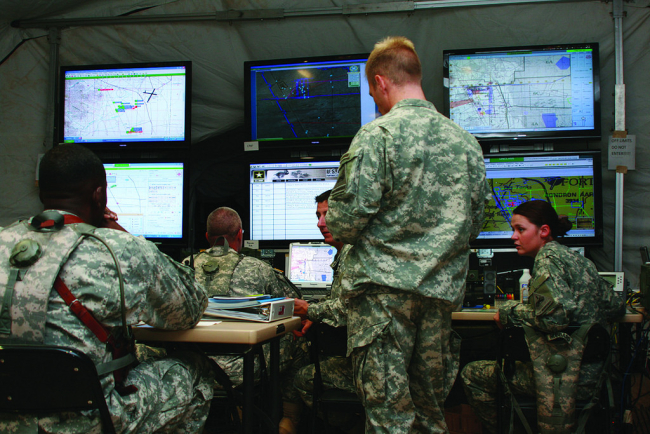
L'avenir de la surprise tactique à l'heure de la numérisation
Surprise is a crucial dimension of military tactics, which stems from incertitude inherent to war.

The Return of Geopolitical Risk - Russia, China and the United States
The year 2014 was defined by the conflict in Ukraine, the emergence of Daesh, and tensions between China and Japan. As for 2015, it has witnessed the spread of Daesh, the conflict in Yemen, the Greek crisis, revelations about the activity of the National Security Agency (NSA), the migrant crisis, and a ramping-up of terrorist attacks.

The Revolution of Big Data
Big Data is changing our view of the world by changing our modes of approach, moving from analogue systems to digital-based knowledge.
MOOCs: Re-Creating Affordable Education
This piece is the thrid in a series of four Chroniques américaines on education in the United States, published this week.
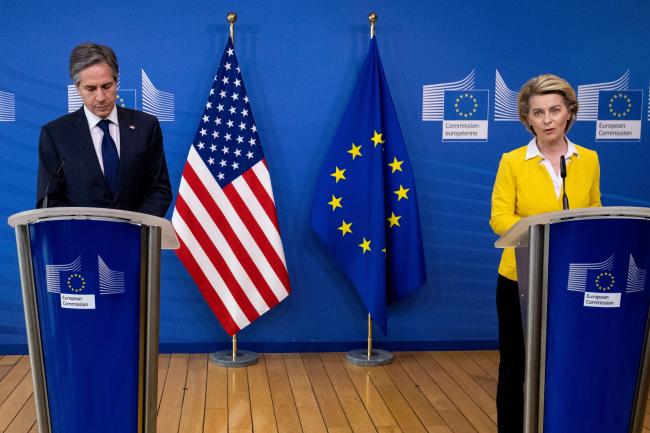
Europe in the Geopolitics of Technology: Connecting the Internal and External Dimensions
To respond to growing global competition, the EU has made notable progress on the internal dimension of technology policy over the past 3 years. It is now also seeking to adapt its foreign policy – from the transatlantic relationship to global partnerships – to technological challenges.

Cyber-influence : les nouveaux enjeux de la lutte informationnelle
The coming of age of a digital “info sphere” has dramatically changed the nature of military information support strategy.

Israeli Cyberpower: The Unfinished Development of the Start-up Nation?
Israel’s economic success in the cyber sector is undeniable. It is due to the development of an ecosystem encouraging the mastery of digital innovation.

GovTech, The New Frontier in Digital Sovereignty
The COVID-19 crisis has been a catalyst for a surge in the GovTech market, while triggering debate around the use of new technologies in the public health response to the pandemic. More broadly, the health crisis has shed a new light on the strategic importance of some domains relevant to GovTech such as HealthTech, smart cities and EdTech.
5G and the US-China Tech Rivalry – a Test for Europe’s Future in the Digital Age
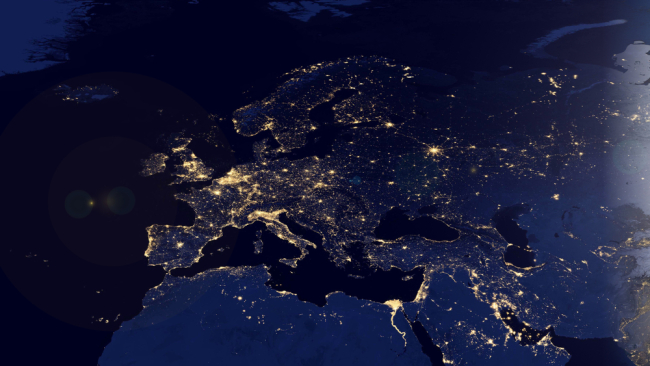
Assessing Europe's Space Dependency and Its Implications
It is a classic exercise to imagine what today’s world would be like if all satellites were shut down. The exact consequences of such a scenario, which is not unlikely given the inherent vulnerability of space systems to natural, accidental and deliberate interferences, are however difficult to appreciate, even for specialists.

Between Concentration and Dispersion: A Promising Future for Power Relations
The notion of power has long been a topic of study in international relations. In the coming decade, the evolution of power will be characterized by the dynamics of concentration and dispersion. On the one hand, the global system will be marked by the clash of two superpowers, the United States and China. On the other hand, capacity for individual action will proliferate through information and communication technologies.
When Technology Shapes the World
New technologies, particularly in cyberspace, have a strong impact on international relations and conflict. Malicious actors, be they lstates or non-state actors, have developed sophisticated means of influence. They tend to coordinate their physical and cyber activities with ever-greater precision. The security strategies of Western states need to change as a result and cease operating in silos.
European Space Programs and the Digital Challenge
The exploration of space and the use of digital tools and systems have in common to be quite recent in human history but to have changed the world, society and economy by connecting people and things, breaking down borders, and redistributing knowledge, power and control.
The Return of Geopolitical Risk - Russia, China and the United States
The year 2014 was defined by the conflict in Ukraine, the emergence of Daesh, and tensions between China and Japan. As for 2015, it has witnessed the spread of Daesh, the conflict in Yemen, the Greek crisis, revelations about the activity of the National Security Agency (NSA), the migrant crisis, and a ramping-up of terrorist attacks.
Ifri, a foundation recognized as being of public utility, relies largely on private donors – companies and individuals – to guarantee its sustainability and intellectual independence. Through their funding, donors help maintain the Institute's position among the world's leading think tanks. By benefiting from an internationally recognized network and expertise, donors refine their understanding of geopolitical risk and its consequences on global politics and the economy. In 2026, Ifri partners with over 90 French and international companies and organizations.


Space has become a crucial theme in the main international think tanks’ research activities as it entails important strategic, economic, and technological issues.
Since 2001, Ifri has integrated space in its research, notably by ensuring that the political dimension of scientific and human exploration programs is emphasized, and by supporting reflections on the Code of Conduct for Outter Space Activities.
Today, as part of its research agenda, Ifri mobilizes several of its centers and programs to transversally tackle the theme of space, through three main inputs:
- the competition of powers, driven by the Sino-American rivalry;
- critical points related to mastery of space, such as the issue of autonomous access to space or the mega-constellations necessary for the digital revolution;
- these developments’ challenges for Europe and its status as a space power.
Since the Summer 2020, Ifri has been coordinating a tripartite European Space Governance Initiative, together with two other renowned European think tanks: the Deutsche Gesellschaft für Auswärtige Politik (DGAP) in Germany and the Istituto Affari Internazionali (IAI) in Italy.

Artificial intelligence (AI), 5G, cybersecurity, robotics, semiconductors, space…Technologies—particularly digital technologies—now profoundly affect all human activities and, by extension, international relations. The political, strategic, economic, and social stakes that arise from them are expressed across multiple political levels, involving states, international organizations, and private companies alike. International dynamics of competition and cooperation are being reshaped as a result. To address these challenges, Ifri launched its Geopolitics of Technology Center in 2020, offering a distinctly European perspective on the international issues surrounding so-called critical technologies.