




Technology
Technologies, particularly digital and space technologies, raise political, strategic and economic issues that are profoundly transforming the dynamics of international competition and cooperation.
Related Subjects

Space as a Key Element of Europe's Digital Sovereignty
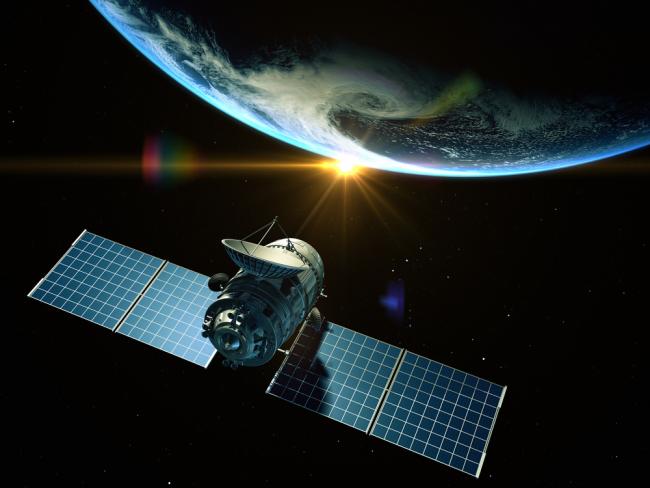
At the end of year 2020, the European space sector finds itself at a crossroads between challenges and opportunities. While the 2019 European Space Agency (ESA) Ministerial Conference marked a progression in terms of budgets, a sign of renewed space ambitions, the technological and financial acceleration from the United States represents a disruptive scenario that poses threats to the continuity of European space capabilities.


E.U.’s Top Drug Regulator Says It’s ‘Fully Functional’ After Cyberattack
The European Union’s top drug regulator, whose approval is necessary for countries of the bloc to begin rolling out the coronavirus vaccine, has begun an investigation after it was hit by a cyberattack, the head of the agency said on Thursday.
The Outsider: Russia in the Race for Artificial Intelligence
When analyzing the global state of play around artificial intelligence (AI), Russia so far looks like an “outsider” compared to the two technological leaders, the United States and China.

Contact tracing and Internet governance: debate with Audrey Tang, Digital Minister of Taiwan
Audrey Tang, Digital Minister of Taiwan, discussed the impact of technological changes such as 5G, contact tracing and Internet governance in an online debate.
Geopolitics of technologies : Ifri launches a new research program
Ifri is launching a permanent research program on the geopolitics of technologies. Researcher Alice Pannier will lead the program, which will address issues through four angles: power, sovereignty, governance, society.

Israeli Cyberpower: The Unfinished Development of the Start-up Nation?
Israel’s economic success in the cyber sector is undeniable. It is due to the development of an ecosystem encouraging the mastery of digital innovation.

GovTech, The New Frontier in Digital Sovereignty
The COVID-19 crisis has been a catalyst for a surge in the GovTech market, while triggering debate around the use of new technologies in the public health response to the pandemic. More broadly, the health crisis has shed a new light on the strategic importance of some domains relevant to GovTech such as HealthTech, smart cities and EdTech.

The Potential of Digital Technologies for Centralized Electricity Systems in Sub-Saharan Africa
Affordable and reliable electricity access is a prerequisite for the economic development of sub-Saharan Africa.
Cybersecurity and COVID-19: Responses from Japan
In this interview, Mihoko Matsubara, Chief Cybersecurity Strategist, NTT Corporation in Tokyo, examines Japan's cybersecurity responses during the COVID-19 pandemic.
Japan's cyber diplomacy: cooperation with the EU and challenges ahead
In this interview, Dai Mochinaga, senior researcher at Keio Research Institute looks at Japan's cyber diplomacy and challenges for global cybersecurity and data governance.

[Videoconference] Japan’s Cyber-Security Strategy: From the Olympics to the World
A videoconference on Japan’s cyber-security strategy was held by Ifri's Center for Asian Studies on September 15, 2020.
Bavaria and France. Preparing the Future together
France and Bavaria have a longstanding close and solid partnership. However, the relationship between France and Bavaria is not only marked by a common history and by the structures created over the decades.

What Is Digital Power?
Digital power refers to any actor’s ability to exploit digital data to help influence the behavior of other actors on the international stage and to achieve its own ends. It is about understanding how it influences events in the real world, despite its “intangible” nature.

RAMSES 2020. A World without a Compass?
RAMSES 2020. A World without a Compass?, written by Ifri's research team and external experts, offers an in-depth and up-to-date analysis of geopolitics in today’s world.
Regards croisés sur la guerre électronique
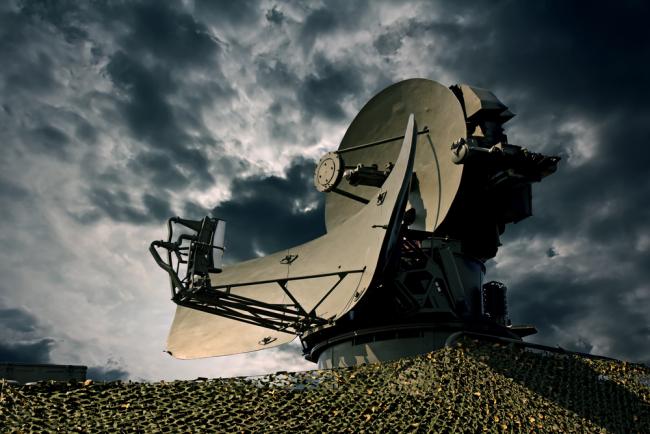
Information dominance through the exploitation of the electromagnetic spectrum has become a cornerstone of military superiority. However, it is now threatened by increasingly advanced electronic warfare capabilities.

5G and the US-China Tech Rivalry – a Test for Europe’s Future in the Digital Age

Assessing Europe's Space Dependency and Its Implications
It is a classic exercise to imagine what today’s world would be like if all satellites were shut down. The exact consequences of such a scenario, which is not unlikely given the inherent vulnerability of space systems to natural, accidental and deliberate interferences, are however difficult to appreciate, even for specialists.

Between Concentration and Dispersion: A Promising Future for Power Relations
The notion of power has long been a topic of study in international relations. In the coming decade, the evolution of power will be characterized by the dynamics of concentration and dispersion. On the one hand, the global system will be marked by the clash of two superpowers, the United States and China. On the other hand, capacity for individual action will proliferate through information and communication technologies.
When Technology Shapes the World
New technologies, particularly in cyberspace, have a strong impact on international relations and conflict. Malicious actors, be they lstates or non-state actors, have developed sophisticated means of influence. They tend to coordinate their physical and cyber activities with ever-greater precision. The security strategies of Western states need to change as a result and cease operating in silos.

The US-EU Rivalry for Data Protection: Energy Sector Implications
The General Data Protection Regulation and the energy sector
Europe’s Quest for Technological Power
Computing power plays a key role in enabling data analytics and machine learning, in cybersecurity, for scientific research, and in military domains like nuclear warhead design and detonation simulation.

Digital Sovereignty Review of Macron’s Term and Debates in the 2022 Presidential Campaign
One month before the French presidential election, this briefing assesses the actions undertaken during Macron's term as well as the presidential candidates' proposals concerning France's digital sovereignty.

Convince and Coerce: U.S. Interference in Technology Exchanges Between its Allies and China
The tough-on-China policy adopted by the Trump and Biden administrations has – and will increasingly have – important consequences for Washington’s allies, both on their infrastructure choices (5G, submarine cables...) and on their technological exchanges with China.
Europe and the Geopolitics of 5G: Walking a Technological Tightrope
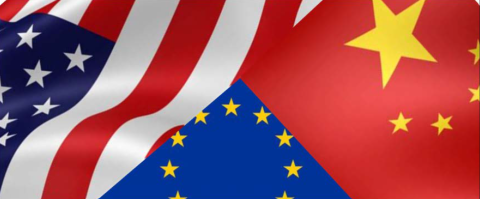
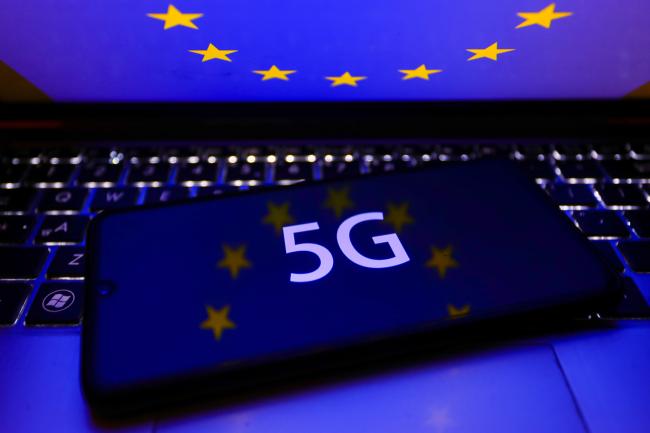
The acute Sino-American tensions which started in 2018 have been coupled with controversies around 5G technology, exemplified by the spotlight placed on Chinese equipment manufacturer Huawei and the security risks associated with its use. For Europe, the 5G challenge at the international level is drawing a very complex landscape.

Strengthening Sovereignty in the Era of Global Value Chains
How to reduce the vulnerabilities induced by these global value chains to be more independent, while taking into account the reality of these productive processes which precisely generate interdependencies?

Le cloud défense : défi opérationnel, impératif stratégique et enjeu de souveraineté
Cloud computing – or data management – is considered as one of the pillars of the digital transformation of the French Ministry of the Armed Forces.

Strategic Calculation: High-Performance Computing and Quantum Computing in Europe’s Quest for Technological Power
Computing power plays a key role in enabling machine learning, for scientific research, and in the military domain. Therefore, the race for computing power has become a key element of the US-China technological competition, and it is also a strategic priority for Europe.

The Changing Landscape of European Cloud Computing: Gaia-X, the French National Strategy, and EU Plans
Non-European cloud service providers host the vast majority of European data, which is viewed as an economic as well as a political problem. Gaia-X, European governments and the European Union aim to bolster the European cloud market while responding to data privacy and cybersecurity concerns.

Health Data Governance: Lessons Learned from the COVID-19 Pandemic in Europe, China, and the United States
The health crisis has triggered a tectonic movement in the recomposition of health data governance and protection models around the world, while accelerating the investment of large digital companies in the field of e-health.
Europe in the Geopolitics of Technology: Connecting the Internal and External Dimensions
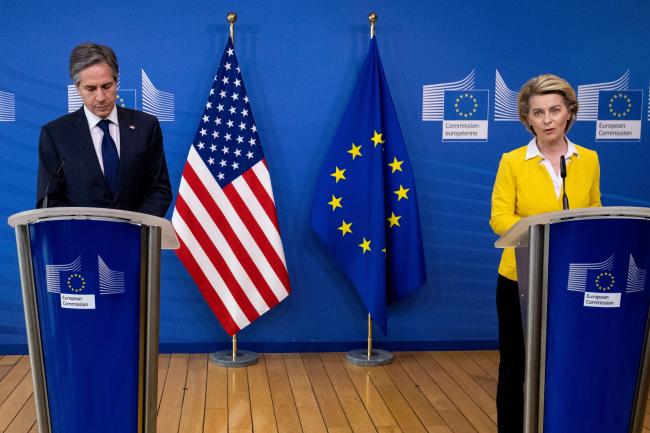
To respond to growing global competition, the EU has made notable progress on the internal dimension of technology policy over the past 3 years. It is now also seeking to adapt its foreign policy – from the transatlantic relationship to global partnerships – to technological challenges.
Ifri, a foundation recognized as being of public utility, relies largely on private donors – companies and individuals – to guarantee its sustainability and intellectual independence. Through their funding, donors help maintain the Institute's position among the world's leading think tanks. By benefiting from an internationally recognized network and expertise, donors refine their understanding of geopolitical risk and its consequences on global politics and the economy. In 2026, Ifri partners with over 90 French and international companies and organizations.


Space has become a crucial theme in the main international think tanks’ research activities as it entails important strategic, economic, and technological issues.
Since 2001, Ifri has integrated space in its research, notably by ensuring that the political dimension of scientific and human exploration programs is emphasized, and by supporting reflections on the Code of Conduct for Outter Space Activities.
Today, as part of its research agenda, Ifri mobilizes several of its centers and programs to transversally tackle the theme of space, through three main inputs:
- the competition of powers, driven by the Sino-American rivalry;
- critical points related to mastery of space, such as the issue of autonomous access to space or the mega-constellations necessary for the digital revolution;
- these developments’ challenges for Europe and its status as a space power.
Since the Summer 2020, Ifri has been coordinating a tripartite European Space Governance Initiative, together with two other renowned European think tanks: the Deutsche Gesellschaft für Auswärtige Politik (DGAP) in Germany and the Istituto Affari Internazionali (IAI) in Italy.
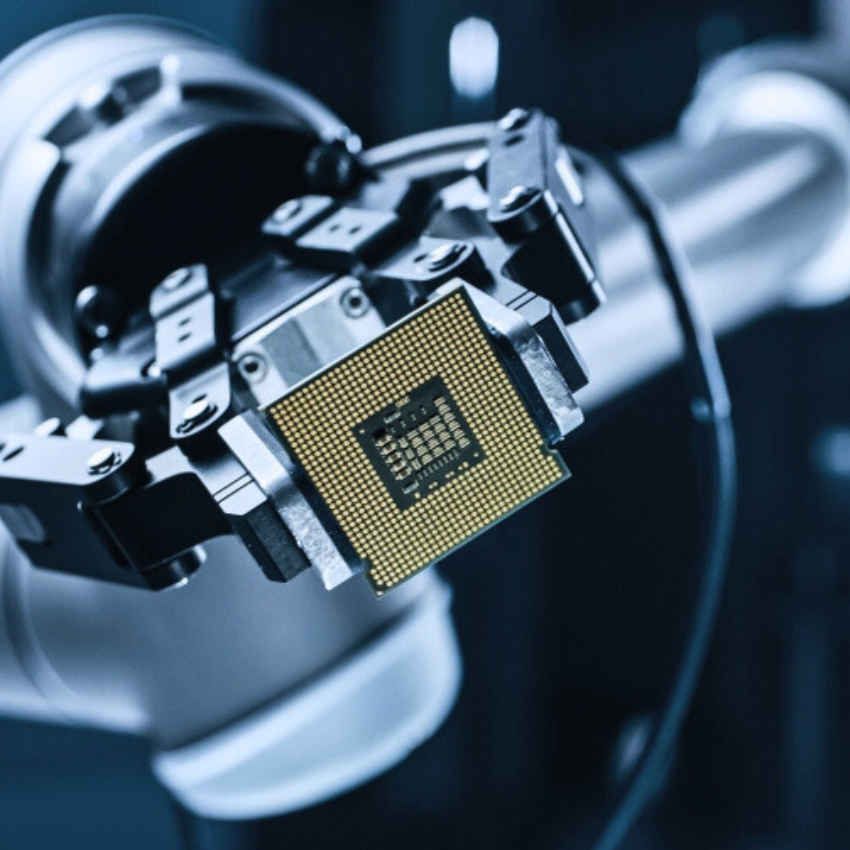
Artificial intelligence (AI), 5G, cybersecurity, robotics, semiconductors, space…Technologies—particularly digital technologies—now profoundly affect all human activities and, by extension, international relations. The political, strategic, economic, and social stakes that arise from them are expressed across multiple political levels, involving states, international organizations, and private companies alike. International dynamics of competition and cooperation are being reshaped as a result. To address these challenges, Ifri launched its Geopolitics of Technology Center in 2020, offering a distinctly European perspective on the international issues surrounding so-called critical technologies.