



Between Giants: The Sino-Indian contest for influence in the Indian Ocean

Practical information
China and India are emerging as major maritime powers as part of long-term shifts in the regional balance of power.

As their wealth, interests, and power grow, the two countries are increasingly bumping up against each other across the Indo-Pacific. China’s growing naval presence in the Indian Ocean is seen by many as challenging India’s aspirations towards regional leadership and major power status. How India and China get along in this shared maritime space—cooperation, coexistence, competition, or confrontation—will be one of the key strategic challenges for the entire region.
Presenter: David Brewster, Senior Research Fellow with the National Security College, Australian National University, and editor and co-author of India and China at Sea: Competition for Naval Dominance in the Indian Ocean, Oxford University Press, 2017.
Discussant: Isabelle Saint-Mézard, Associate Research Fellow, Center for Asian Studies, Ifri
Chair: Françoise Nicolas, Director, Center for Asian Studies, Ifri
The discussions will be held in English.
Other events
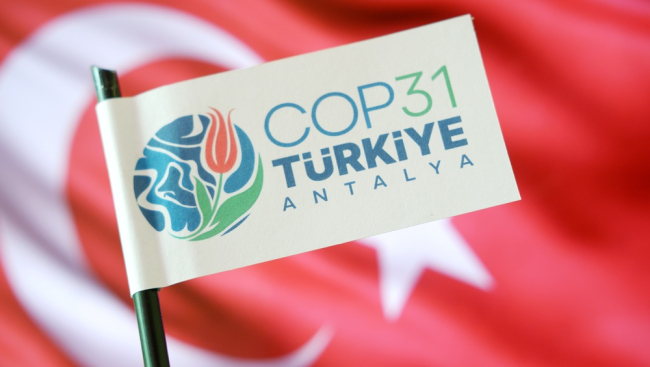
COP31 in Antalaya: State of the Global Climate Governance, Issues, Perspectives
COPs have become a year-end marathon to revigorate a world now entering the era of climate overshoot. While Türkiye exhibits the largest coal-fired power generation in OECD Europe, it has embraced the electrification agenda and aims at joining forces with Australia on fostering action and implementation. This is an unusual de facto co-presidency arrangement, but one that could yield promising results. This webinar will take stock of what climate governance has achieved and of the issues still to be negotiated, and explore what impetus this Turkish–Australian partnership could provide.
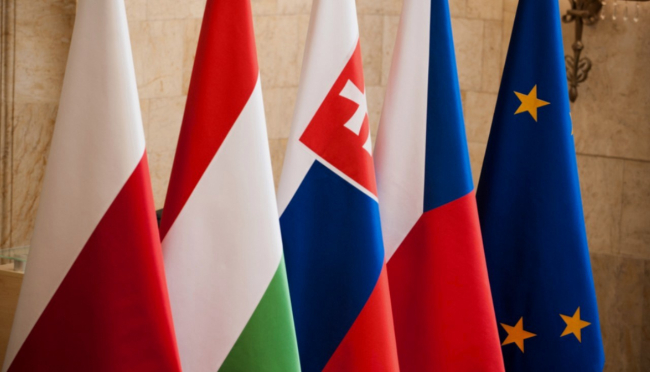
A New Moment for Central Europe? Regional Cooperation in a Time of European Strategic Choices
Recent political developments in Central Europe have revived the debate about the future of regional cooperation and the Visegrád Group. Changes in Hungary, Poland, the Czech Republic and Slovakia, together with Austria’s growing interest in closer cooperation with its neighbours, could create new opportunities for dialogue and coordination around shared priorities.