



Deathonomics: The Social, Political, and Economic Costs of War in Russia
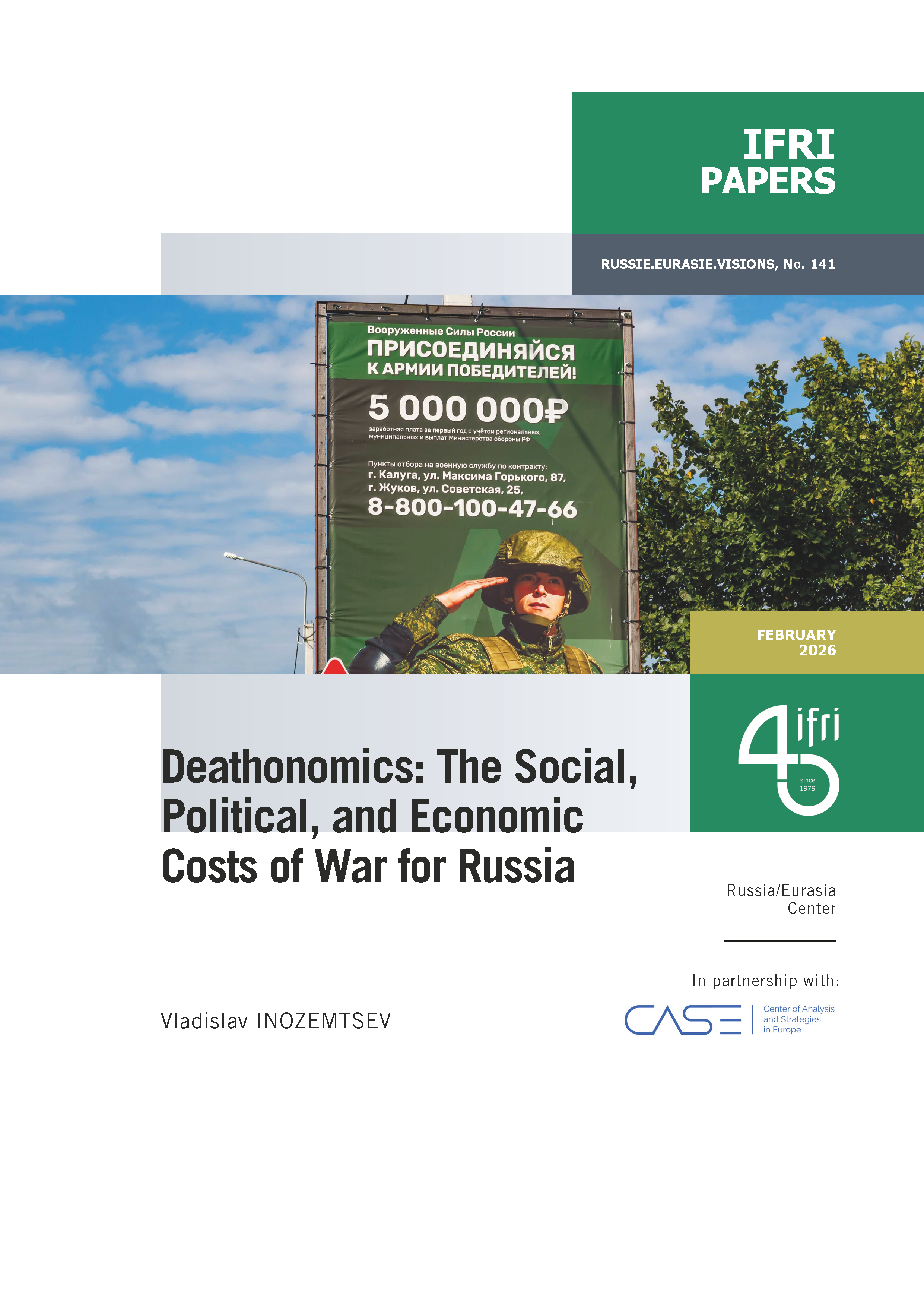
The report attempts to outline and examine a truly new phenomenon in Russian society, dubbed “deathonomics”—the making of a mercenary army against the backdrop of the Kremlin’s war in Ukraine, eventually replacing both the Soviet (conscript) and early new Russian (contract) armies. It notes that, by the end of 2023, this trend had turned the military service into one of the highest-paying professions in the country, something not seen in Russia on such a scale since the late 17th century.
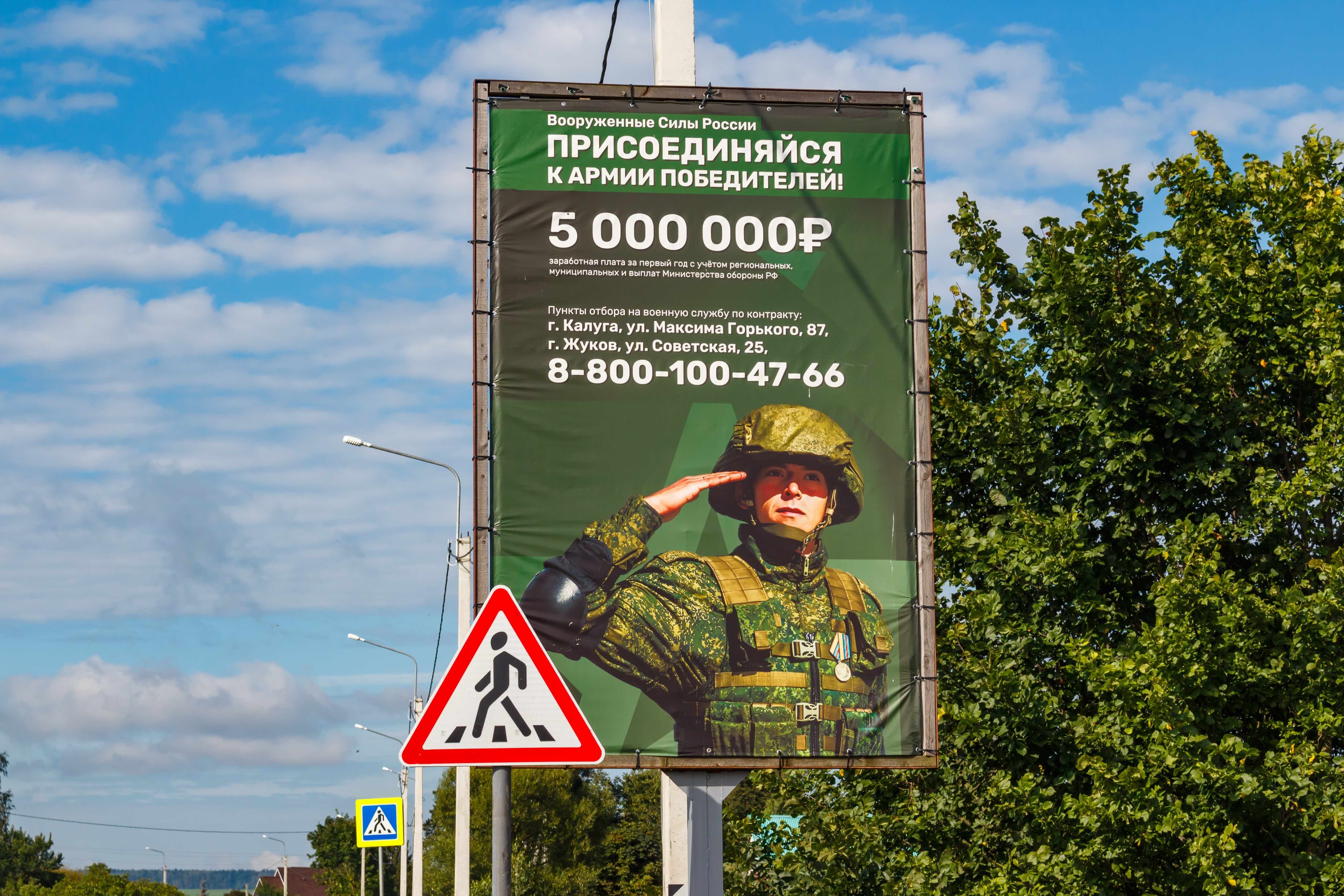
The rise of deathonomics has led to some profound changes in both the Russian economy and society. The prospect of enormous earnings attracted to the army ranks, en masse, residents of underdeveloped regions, those lacking permanent employment, indebted people, as well as criminal and pauperized elements, who were also attracted by the promise of having their criminal records expunged. As a result, the Kremlin has started to purchase the lives of Russians who possessed virtually no economic value—paying more than these people might expect to earn right up to their prospective retirement. In addition to injecting considerable funds into the economy, this policy led to a sharp rise in wages in most sectors, supporting consumer demand. The enormous number of deaths, resulting from individuals’ free choice, failed to provoke a public outcry, allowing the authorities to portray a readiness to die at the call of the state as an important social value inherent in Russians. This trend has reinforced the glorification of militarism and entrenched the Kremlin’s new cult of sacrifice.
Deathonomics is depicted not only as an important element of the new Russian economic system that has emerged since the start of the war, but also as a tool legitimizing the arbitrary use of legal norms inherent to Putin’s regime and a means of incorporating numerous elements of criminal culture into a broader social and political fabric. The “monetization of life”, which serves as its core principle, expands the standards of acceptable behavior and almost certainly will significantly affect Russians’ lifestyle and worldview for many years to come. The report places particular emphasis on assessing the quantitative impact of deathonomics on economic developments in Russia, and also offers answers to questions about whether such a practice can support Russian militarism and retain its significance even after Putin’s aggressive war in Ukraine terminates.
Russia’s war against Ukraine has been going on for four years so far, recently becoming longer than the epic clash between Nazi Germany and the Soviet Union. It’s the bloodiest military action that has erupted in Europe in the past three-quarters of a century. According to competing estimates, between 350,000 and 450,000 people on both sides have died, and at least a million have been wounded and maimed. The Kremlin’s brutal attack on the neighboring country has generated the largest influx of refugees into united Europe; the number of migrants from Ukraine currently residing in European Union (EU) countries is four times higher than the peak total of refugees arriving from Syria after 2014, and more than ten times the number of those who fled to the EU from the conflicts in former Yugoslavia. In Russia, the wave of emigration triggered by the outbreak of the war and the so-called “partial mobilization” of 2022 has become the “exodus of the century”.
However, despite the enormous losses of human life, unimaginable financial and material costs, and even a probability of the conflict escalating into a new world war, most Russians are treating the current situation without undue drama. Anxiety in Russian society in recent months has been far less widespread than it was in the summer of 2022, even though the war often affects the country’s civilian population as the Ukrainian attacks on Russian targets intensify. Yes, sociologists mention a growing weariness with what is happening, but this hasn’t translated into protest, let alone into a sustained rejection of Putin’s policy. Oddly enough, the opaque term “special military operation”, coined by the Kremlin, nowadays seems quite an adequate characterization of how the events are perceived by a significant portion of the Russian people, who refrain from considering the ongoing conflict “a real war”, and not simply because the Kremlin demands it.
Such an attitude looks understandable; for someone raised in Soviet society and steeped in its cultural canons, war will forever remain associated with a complete disruption to the normal way of life, loss of homes and property, shortages, ration cards for food and basic necessities, irregular working hours, forced loans and restrictions on movement. Russians today face nothing of the sort. The most obvious and fundamental difference between what is happening and a “real war” is the absence of mass mobilization (when the Kremlin attempted to implement its “partial” version in the fall of 2022, it became clear that the cost of such a move was far too high and could not be scaled up). On the contrary, the choice made by “volunteers” deciding to enroll in the army and proceed to the frontline appears to be their private affair. The risks they take concern only their families and their loved ones, whose protests are very rare and, recently, do not even require reactions similar to those taken by the authorities in the first months after the “partial mobilization” (certainly, there is nothing resembling the waves of public discontent that characterized the period of the First Chechen war).
It is precisely this reliance not on conscription or even on contract service (as with an army in which servicemen are paid more or less a given country’s average wage, as in Europe or in the United States) but on a mercenary army that allows Vladimir Putin to continue a war in which his soldiers and officers often descend into primitive barbarism. At the same time, the money the Kremlin pays both those who are killing their fellow Orthodox Slavs and the relatives of those who have perished in action is turning into a considerable stimulus for the ailing Russian economy. According to estimates by both Russian and European experts, the military salaries and death gratuities paid by the authorities, both when the soldiers are sent to the front and when they die there, now reach 3-4 trillion rubles annually, or close to 2% of Russia’s GDP. A person who enlists in the army in an average Russian region, fights for a year and is killed in action (with all the necessary evidence) earns for his family members money he could not have earned over fifteen or twenty years, and in some cases even twenty-five years of work in the civilian sector in his region. Thus, death is becoming the most economically effective way to live one’s life in Putin’s Reich.
All this may seem monstrous to an ordinary person, but it conceals an even more horrifying reality. In a country where living standards have risen significantly in recent decades, the high compensation for such extreme risk is not attractive to everyone. Therefore, the majority of those recruited are either criminals or pauperized individuals; people in dire straits (who have lost their jobs, cannot pay off loans, or desperately need to provide for their families); or those performing temporary, low-paid, unskilled jobs. In any case, these are people who are not a significant resource for the economy, and therefore, deathonomics can be defined as the transformation of economically useless lives into a tangible financial asset. The apparent monstrous nature of this assertion should not obscure its economic content. Putin’s reckless war remains so acceptable to Russians from many perspectives precisely because it does not directly destroy their human capital (which is degraded to a much greater extent by emigration than by military losses), but allows for the redistribution of considerable resources to depressed regions and low-income social groups. The primary economic benefits are realized “here and now”, while all the negative consequences
—from demographic decline to emerging technological backwardness—are postponed to the future.
This routinization of war and death, the natural outcome of deathonomics, actually strengthens Putin’s regime as it combines into a coherent blend the self-sacrifice presented by Kremlin ideologists as a Russian “traditional virtue” and the primitive economic logic that nurtures today’s mercenary military. Deathonomics ultimately becomes the brutal operating logic of the modern Russian regime, embodying its inhumane character and creating a solid economic foundation for its stability.
Vladislav Inozemtsev is a Russian economist and political scientist holding a PhD in economics, and the founder and director of the Center for Post-Industrial Studies from 1994 to 2011. From 2002 to 2012, he served as the editor-in-chief of the Free Thought monthly. From 2011 to 2014, he was a professor at the Higher School of Economics and Section Chair at the Department for Public Administration at the Moscow State Lomonossov University. Since 2014, he has been working outside Russia as a senior fellow at the Institute for Human Sciences (Vienna), the Center for Strategic and International Studies and the Johns Hopkins University’s SAIS (Washington), the German Council on Foreign Relations (Berlin), and at other European and American think-tanks. He is a co-founder and a senior fellow with the Center for Analysis and Strategies in Europe, a Cyprus-based independent think tank.

Available in:
Themes and regions
ISBN / ISSN
Share
This page contains only a summary of our work. If you would like to have access to all the information from our research on the subject, you can download the full version in PDF format.
Deathonomics: The Social, Political, and Economic Costs of War in Russia

Russia/Eurasia Center
Founded in 2005 within Ifri, the Russia/Eurasia Center conducts research and organizes debates on Russia, Eastern Europe, Central Asia, and the South Caucasus. Its goal is to understand and anticipate the evolution of this complex and rapidly changing geographical area in order to enrich public discourse in France and Europe and to assist in strategic, political, and economic decision-making.
The Plight of Russia’s Air Power in the Ukraine War: Drone-Driven Innovations and Transformation of Traditional Air Force
Since the start of the Ukraine War, Russian strategic guidelines on the application of air power—seen as the decisive instrument for achieving success in modern wars—have proven to be outdated, irrelevant and even self-defeating.
China in Kyrgyzstan and Tajikistan: From Economic Presence to a New Security Role
Over the past three decades, China’s influence in Central Asia has steadily expanded, but in the last three to five years this process has entered a markedly accelerated phase. Following 2022, Beijing effectively revised both its strategy and its operational approach toward the region.
Between Russia and Europe, between War and Peace: What is at Stake in Armenia’s Upcoming Elections?
Armenia’s June 7, 2026, parliamentary election is shaping up less as a routine vote than as a referendum on Nikol Pashinyan’s post-2020 course, which includes peace with neighbors, reduced dependence on Russia, and a more explicit European orientation. The ruling Civil Contract party is still the frontrunner, but its position is fragile, as the campaign is being fought in a highly polarized environment shaped by the trauma of defeat in the war against Azerbaijan, the displacement of Karabakh Armenians, and the massive election interference from Russia.
Russia, the Palestinians and Gaza: Adjustments after October 7th
The Soviet Union (USSR), and subsequently the Russian Federation as its internationally recognized legal successor, has consistently sought to play a visible role in efforts to resolve the Israeli-Palestinian conflict.