



Mapping the MilTech War: Eight Lessons from Ukraine’s Battlefield
This report maps out the evolution of key technologies that have emerged or developed in the last 4 years of the war in Ukraine. Its goal is to derive the lessons the North Atlantic Treaty Organization (NATO) could learn to strengthen its defensive capabilities and prepare for modern war, which is large-scale and conventional in nature.
Through open-source research, defense technology data analysis, and in-the-field interviews in Ukraine and in NATO countries with the military, industry, civil society and government actors, the report dives into 8 groups of technologies.
The rise of autonomous warfare: UAVs, USVs and UVGs
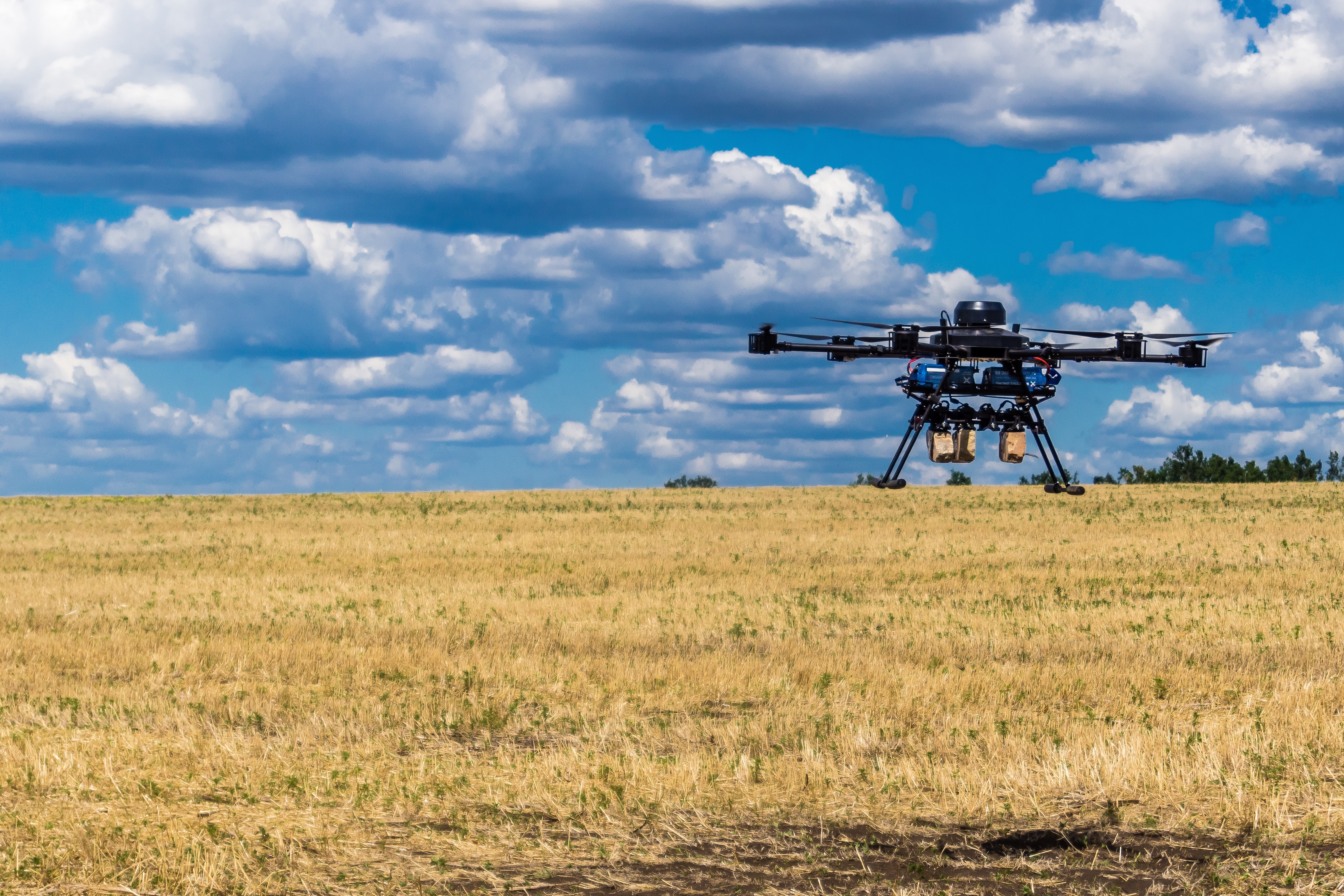
Key takeaways: The Unmanned Aerial Vehicles (UAVs) evolved in 8 phases in the last 4 years, transforming from simple reconnaissance tools into sophisticated, partially AI-coordinated weapon systems. They have sparked the electronic warfare (EW) arms race between Russia and Ukraine, which in turn was rendered obsolete with the emergence of the fiber-optic cable drone in 2024. The following year, machine learning and Artificial intelligence (AI) integration emerged as the strategic game-changer and signaled the race toward AI coordination of multiple systems and eventually decision-making.
Ukraine’s naval-drone campaign reflects a transition from improvised, isolated uncrewed surface vessels (USVs) strikes to a coordinated, multi-domain operational system. While it does not bring naval domination, it allowed to push back a far more superior enemy and secure vital export corridors.
The Unmanned Ground Vehicles (UGVs) in Ukraine deliver supplies, evacuate casualties, mine, demine, and strike targets, but remain experimental and experience last-mile challenges due to high battlefield transparency and setbacks in communication.
Lessons learned:
- Domestic drone production defines Ukraine’s future technological progress and scale-up capacity. To build and sustain such production, greater supply chain autonomy is key, as well as built-in scaling capacity and autonomous AI capabilities.
- Systematic battlefield data collection for the training of Chinese and Russian AI models poses a risk for NATO to lose a technological competition.
- Ukrainian USVs are a lesson to small and mid-size countries in how to secure a strategic advantage at sea without a military fleet. NATO should integrate USVs into its strategy and doctrine.
- USVs are complementary with conventional maritime weapons and a counter-USV strategy.
- Sea denial and strategic impact are achievable without a conventional navy when unmanned systems are integrated into a multi-domain concept that links USVs, UAVs, missiles, and cyber/EW.
- To maintain its technological advantage, NATO should build a long-term strategy of not only cooperation with Ukraine, but also its gradual integration into the European MilTech ecosystem.
- Ukraine’s UGV development demonstrates that warfare has shifted from large platforms to adaptive swarms of low-cost systems. Innovation is in adaptation capacity, not in any one design.
Electronic warfare
Key takeaways: The ubiquity of electronic equipment and reliance on the electromagnetic spectrum (EMS) for coordination and precision fire has transformed EW from a specialized function into a combined arms system, able to affect not only drone, but artillery and missile precision. Russian modernization of its satellite navigation hardware imposed forces a shift toward intelligent EW methods like spoofing (transmitting false coordinates) and sending corrupted data packets to overload receiver logic. Yet, EW efficiency is contested by a combination of much simpler (fiber optic cable) and more sophisticated technology (computer-vision drones).
Lesson learned: Electronic warfare has become a continuous, software-driven contest embedded at the tactical level, where adaptability, integration, and spectrum management matter more than centralized, high-power jamming systems.
Artificial Intelligence
Key takeaways: Artificial intelligence in the Ukraine war has been used mainly as an enabler rather than an independent decision-maker. In practice, “AI” on the battlefield of the Russo-Ukrainian war refers to software that accelerates data processing, target identification, and navigation under combat conditions, while human operators retain control over lethal decisions. Most frontline applications rely on narrowly defined functions such as computer vision for terminal guidance, route correction, and target tracking, especially where electronic warfare disrupts communications.
The main operational value of AI has been the compression of the decision cycle. Systems that filter drone feeds, satellite imagery, and sensor data allow commanders to act on processed information instead of raw inputs, while semi-autonomous drone functions reduce pilot workload during the most vulnerable phases of flight. Rather than true autonomy or large-scale swarming, current use emphasizes limited teaming between humans and machines, prioritizing reliability, speed, and cost over full automation.
Lessons learned: The Ukrainian experience shows that AI is most effective as a tool for speeding up analysis and coordination, not for replacing human decision-making. Practical gains come from integrating AI into existing systems to reduce workload and reaction time rather than pursuing full autonomy. Current limits in communication and reliability mean that small-scale human–machine teaming is more viable than autonomous swarms.
Space-based technologies for Ukrainian battlefield
Key takeaways: Space-based capabilities have shifted from a strategic enabler to a tactical dependency in Ukraine. Commercial satellite communications, navigation, and Earth-observation systems now underpin day-to-day battlefield operations, enabling distributed command and control, drone warfare, precision fires, and resilience under sustained attack. The scale of deployment—tens of thousands of terminals and near-continuous commercial ISR coverage—has effectively created a space-enabled “Internet of the Battlefield,” without which Ukrainian forces would be unable to sustain their current operational tempo.
At the same time, Ukraine’s reliance on commercial space services has revealed critical vulnerabilities. Single-provider dependence, exposure to electronic warfare, geofencing risks, and adversarial adaptation have turned space into a contested operational domain rather than a sanctuary. Ukrainian adaptation has therefore shifted toward hybrid, software-defined architectures that combine multiple space and terrestrial bearers, accept degraded connectivity as the norm, and push processing and decision-making to the tactical edge. The central lesson is that resilience now lies less in owning space assets than in designing flexible, redundant architectures able to fight through disruption.
Lesson learned: Modern land warfare is now structurally dependent on space-based services, but resilience comes from hybrid, multi-layered architectures rather than reliance on any single constellation or provider.
Combat software and the march toward integration
Key takeaways: Ukraine’s combat effectiveness has relied heavily on software as an integration layer compensating for material inferiority, heterogeneous equipment, and constant disruption. Systems such as Kropyva, Delta, and associated tools have compressed sensor-to-shooter timelines, enabled decentralized command, and managed unprecedented volumes of ISR data. The decisive factor has not been visibility alone, but the ability to filter, prioritize, and act faster than the adversary under conditions of information saturation.
Over time, these tools have evolved from volunteer-driven applications into a modular, federated combat management ecosystem linking sensors, shooters, communications, and decision-support across echelons. Rather than a single monolithic battle management system, Ukraine demonstrates the value of open, adaptable architectures that tolerate partial failure, function under degraded connectivity, and integrate new tools rapidly. The key shift is from situational awareness as “seeing the battlefield” to command as “managing cognitive load and decision speed.”
Main lesson learned: In modern high-intensity warfare, software integration and information management—not platform performance—are the primary drivers of operational tempo and combat effectiveness.
Air defense: counter-UAV systems
Key takeaways: From 2022 to 2025, counter-drone warfare in Ukraine shifted from traditional, centralized air defense toward flexible and economically sustainable solutions. Early in the war, legacy missile systems were effective against large drones but quickly became impractical once small, cheap drones appeared in large numbers. On the frontline, defense increasingly relied on local action and physical protection rather than formal air defense networks. Simple measures such as improvised armor, small arms fire, and later interceptor drones proved more adaptable than complex systems. Tactical innovation consistently emerged at the unit level, often faster than formal procurement could respond, reshaping how drones were detected and destroyed.
In the deep rear, air defense evolved from severe financial imbalance to relative parity. Initial reliance on expensive missiles against low-cost drones created an unsustainable model. Over time, Ukraine reduced this gap by combining passive sensors, mobile gun teams, and low-cost interceptor drones into a layered system able to absorb mass attacks. As offensive drones became cheaper, stealthier, and harder to jam, defenses moved away from electronic warfare toward physical detection and interception.
Lesson learned: modern air defense must prioritize scale, cost control, and integration across many simple systems rather than dependence on a small number of high-end weapons.
The salvo competition: economic approach to air defense
Key takeaways: Hundreds of drones and scores of missiles and guided bombs a night in Ukraine and numerous drone incursions to Europe through 2025 triggered the need to reevaluate the approach to air defense. As European responses as shown so far, the main weakness of NATO air defense can be its cost, unsustainable in the face of mounting domestic budget challenges in key European countries.
The war in Ukraine has transformed counter-UAV from a niche air-defense function into a central determinant of operational and strategic endurance. The mass employment of cheap, expendable drones—used for reconnaissance, strike, deception, and saturation—has exposed the unsustainability of missile-centric air defense architectures when confronted with salvo dynamics. Early reliance on high-end interceptors created prohibitive cost-exchange ratios, forcing rapid adaptation toward layered defenses that combine guns, mobile fire teams, low-cost interceptors, passive sensors, and selective use of advanced missiles against high-value threats.
Ukraine’s response demonstrates that effective counter-UAV is an ecosystem rather than a single capability. Success depends on tight integration between multi-spectral detection (acoustic, thermal, radar), automated data fusion, human-machine teaming, and economically viable kinetic effectors. As electronic warfare has become increasingly ineffective against fiber-optic and autonomous drones, physical interception has returned to the forefront, supported by AI-enabled cueing and decentralized command. Counter-UAV has thus evolved into a continuous, high-tempo battle of adaptation in which sustainability, manpower, and integration matter as much as technical performance.
Lesson learned: In a drone-saturated battlespace, air defense effectiveness is defined by sustainable cost-exchange ratios and integrated ecosystems, not by reliance on high-end interceptors alone.
Deep strike capabilities
Key takeaways: Ukraine’s deep-strike campaign has evolved from sporadic, opportunistic attacks into sustained, multi-layered pressure on Russian depth, logistics, and force generation. Constrained by limited access to Western long-range systems, Ukraine combined asymmetric UAV campaigns with a narrow set of conventional precision-strike capabilities to impose cumulative operational and economic costs. Success has been defined less by single-strike destruction than by repetition, disruption, and forcing the adversary to defend widely and continuously.
The Ukrainian experience highlights the decisive role of economics, availability, and survivability in deep strike. Scarce, high-end missiles deliver decisive effects but cannot be scaled, while lighter, cheaper systems impose persistent pressure despite limited payloads. The effective deep-strike posture, therefore, emerges from a layered mix of capabilities rather than from any single weapon system. This logic challenges traditional Western concepts that equate deep strike primarily with exquisite precision munitions.
Main lesson learned: Effective deep strike in modern war is a campaign logic built on layered, economically sustainable systems, not a capability defined by a single class of high-end weapons.

Available in:
Themes and regions
ISBN / ISSN
Share
This page contains only a summary of our work. If you would like to have access to all the information from our research on the subject, you can download the full version in PDF format.
Mapping the MilTech War: Eight Lessons from Ukraine’s Battlefield



Security Studies Center
Heir to a tradition dating back to the founding of Ifri, the Security Studies Center provides public and private decision-makers as well as the general public with the keys to understanding power relations and contemporary modes of conflict as well as those to come. Through its positioning at the juncture of politics and operations, the credibility of its civil-military team and the wide distribution of its publications in French and English, the Center for Security Studies constitutes in the French landscape of think tanks a unique center of research and influence on the national and international defense debate.

Confronting Russia’s High-Velocity Arsenal: European Challenges and Solutions
Since February 2022, Russian missile and long-range drone strikes against Ukraine have served as near-daily reminders of what European states could face in a war with Russia. The same weapon systems battering Ukrainian infrastructure and population centers would be directed against European military and civilian targets in any confrontation between Russia and NATO. As Russian missile production expands and its arsenal diversifies, Europe must confront an uncomfortable question: how to deter, and if push comes to shove, fight Russia's long-range strike arsenal?

The War on Terrorism: Global Experts Reflect on Lessons Learned Twenty-Five Years After 9/11
Twenty-five years ago, the September 11 attacks prompted the invention of new security architectures that shaped the war on terrorism. Sixteen think tank experts from fifteen countries reflect on the successes, failures, and missed opportunities in the fight against terrorism—a fight that is still ongoing.
From Corsairs to Private Military Contractors. Nonmilitary Maritime Actors and the Historical Continuities of Naval Warfare
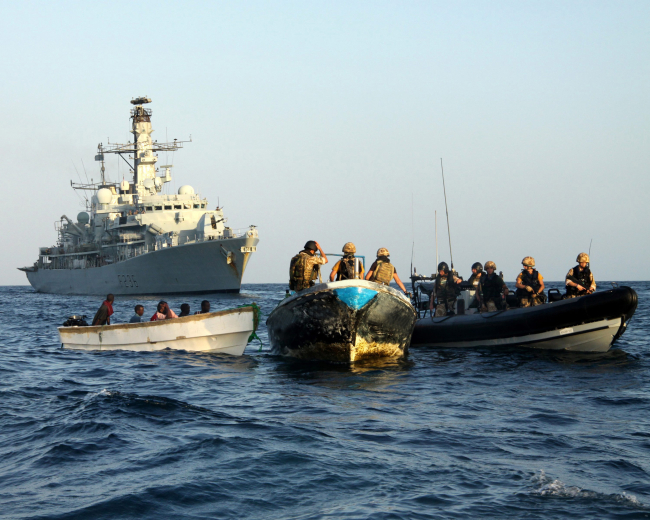
Since late 2023, several Houthi attacks on commercial shipping have involved privately contracted armed teams conducting defensive engagements and coordinating immediate response efforts, often in the relative absence of regular naval forces during the immediate hostilities at sea. These cases highlight a strategic tension that increasingly confronts modern navies. On the one hand, they are expected to conduct persistent, low-intensity maritime security tasks such as counterpiracy, maritime policing, and the protection of commercial shipping. On the other hand, they face renewed pressure to prepare for high-intensity conflict against peer and near-peer adversaries amid the return of great power competition.
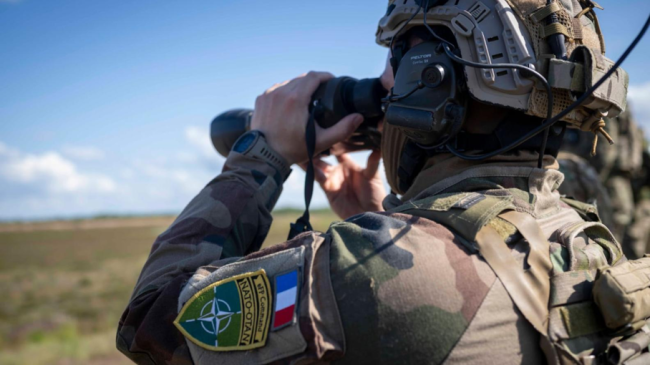
Framework Nation: A European Challenge and French Ambition
First appearing in the early 2000s, the framework nation concept follows several distinct rationales, whether it refers to a country assuming the leadership of a military operation, directing a multinational capability project, or commanding a permanent force structure. In every case, the country that takes on this role fully intends to derive from it additional politico-military influence.