





Practical information
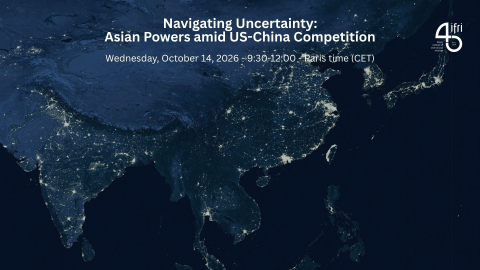
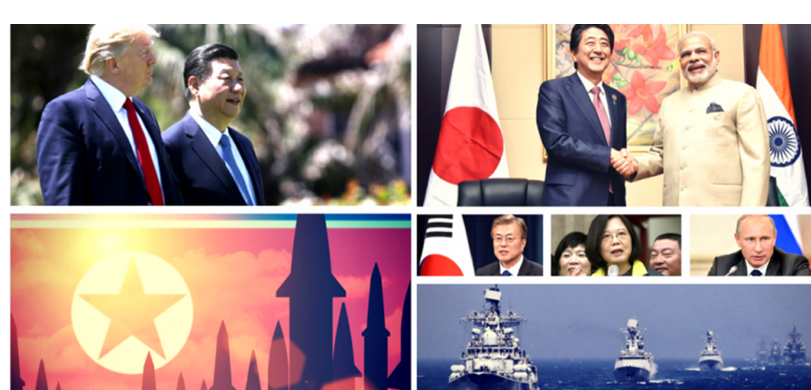
As the regional balance of power in Asia continues to evolve and tensions in a number of hot spots - from the Korean Peninsula to the East and South China Seas and the Taiwan Strait - either simmer or intensify, the future of regional stability is increasingly uncertain. Within this context, the region's major players are elaborating strategies, from the "Belt and Road" to a "Free and Open Indo-Pacific", that could either prove sources of greater stability, or of division and further tension. This conference will bring together points of view from across the region to discuss the latest developments and broader trends, and delve more deeply into the risks to stability on the Korean peninsula, and the implications for Asia's shifting geo-economic order.
09:30 - Opening Remarks
- Thomas Gomart, Director of Ifri
- Zhang Ming-zhong, Representative, Taipei Representative Office in France
09:45 - Systemic change in Asia and the future of the regional order
Interactive debate moderated by Françoise Nicolas, Director, Center for Asian Studies, Ifri
- Seong Whun Cheon, Visiting Research Fellow, ASAN Institute for Policy Studies, Seoul
- Cheng-yi Lin, Research Fellow, Academia Sinica, Taipei
- Harsh V. Pant, Distinguished Fellow and Head of the Security Studies Programme, Observer Research Foundation, New Delhi
- Dingli Shen, Professor, Institute of International Affairs, Fudan University, Shanghai
- Sheila Smith, Senior Fellow, Council on Foreign Relations, Washington DC
- Dmitry Streltsov, Head, Department of Oriental Studies, MGIMO, Moscow
- Hideshi Tokuchi, Senior Fellow, Graduate Institute for Policy Studies, Tokyo
11:45 - Coffee break
12:00 - France's strategic vision towards Asia
- Pauline Carmona, Deputy Director for Asia, Ministry for Europe and International Affairs, France
12:45 - Lunch break
14:00 - What options for stability on the Korean peninsula?
- Seong Whun Cheon, Visiting Research Fellow, ASAN Institute, and former Secretary to the President of the Republic of Korea for Security Strategy (2014-17)
- Discussants: Dingli Shen (Fudan University), Sheila Smith (Council on Foreign Relations), Dmitry Streltsov (MGIMO), Hideshi Tokuchi (GRIPS)
- Moderator: Alice Ekman, Research Fellow, Head of China Research, Center for Asian Studies, Ifri
15:30 - Coffee break
15:45 - The changing geo-economic order in Asia and implications for European trade policy
- Françoise Nicolas, Director, Center for Asian Studies, Ifri
- Heungchong Kim, Senior Research Fellow, former Vice President, Korean Institute for International Economic Policy (KIEP)
- Zhang Ming-zhong, Representative, Taipei Representative Office in France
- Moderator: Patrick Messerlin, Emeritus Professor, Sciences Po, Paris
Other events
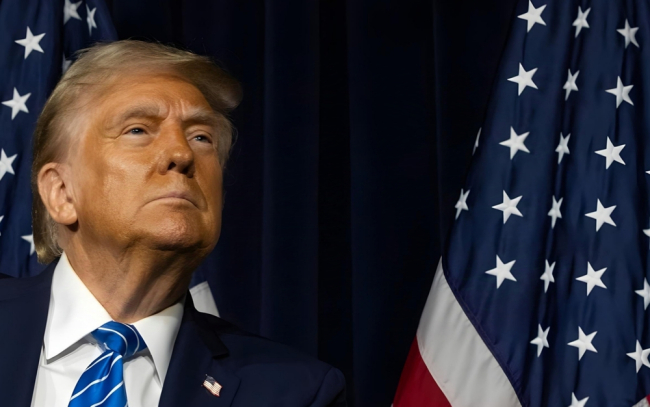
One Month Ahead of the Midterms: Where Is Trump’s America Headed?
The 24th edition of the Ifri Americas Programme Annual Conference will examine the dynamics at play in the United States and their implications for Europe and the transatlantic relationship. will examine the dynamics at play in the United States and their implications for Europe and the transatlantic relationship.
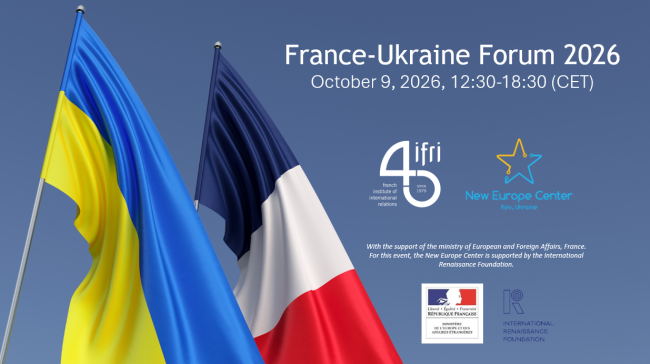
France-Ukraine Forum 2026
More than four and a half years after the start of the full-scale war launched by Russia against Ukraine, the 2026 France-Ukraine Forum will bring together policymakers, experts, academics, and civil society representatives from both countries to discuss three main topics: the formats and conditions for a lasting diplomatic settlement; Ukraine’s Euro-Atlantic integration, encompassing both the EU accession process and closer ties with NATO; and the societal transformations of postwar Ukraine, as well as its prospects for reconstruction.
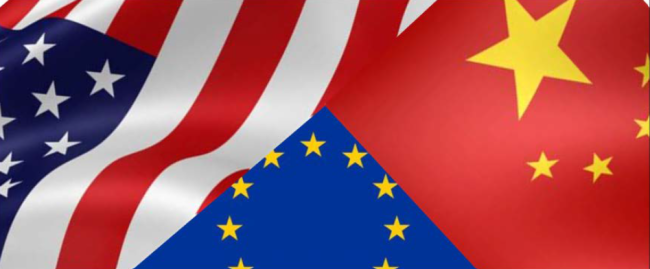
The EU in a World of Economic Warfare: Trade, Geopolitics, and the Battle for Economic Sovereignty
The international trading system has become a primary theatre of geopolitical competition. Tariffs, sanctions, and technology controls have replaced dialogue as the default instruments of economic relations.