




Practical information
Themes and regions
Related centers and programs
Makoto Iokibe, a renowned expert of Japanese diplomatic history and security policy, will offer his insight on Japan’s new security legislation.
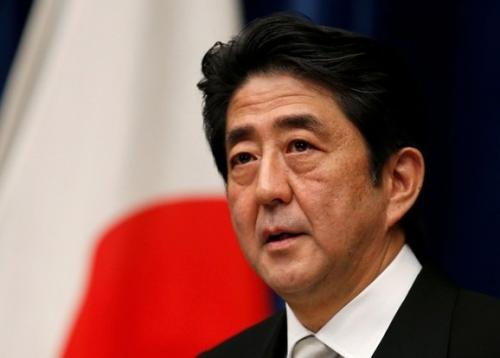
Japan recently adopted a new security legislation that expands the international activities of its Self-Defense Forces. The legislation sparks controversies as some consider it as a departure from the pacifist norm that dominated the country’s defense and security policy since 1945. However, the debate should not be set in black and white as Japan has actually implemented a gradual normalization of its military posture and is now accelerating this trend in front of growing regional and global security challenges.
Makoto Iokibe, a renowned expert of Japanese diplomatic history and security policy, will offer his insight on this issue.
Speaker: Makoto Iokibe, Chair, Hyogo Earthquake Memorial 21st Century Research Institute and President, Kumamoto Prefectural University
Discussant: Céline Pajon, Research Fellow, Center for Asian Studies, Ifri
Chair: Françoise Nicolas, Director, Center for Asian Studies, Ifri
The event will be held in English
Makoto Iokibe (born in 1943) is a Japanese expert on security legislation and policies. After his PhD in Law at the Kyoto University, he taught in numerous Japanese universities and completed research programs in Harvard and the London School of Economics. From 2006 to 2012, he was President of the National Defense Academy of Japan. In the past, he worked both for the Prime Ministers Obuchi’s and Koizumi’s cabinets, focusing on defense and security policy. Nowadays, he presides over the Kumamoto Prefectural University and the Hyogo Earthquake Memorial 21st Century Research Institute. Among his books stand “History of Post-war Japanese Diplomacy” (Yuhikaku, 1997) and “Decaying country, Japan” (Chikura Shobo, 2014).
Find out more
Nationalism in China and Japan and Implications for Bilateral Relations
Nationalism appears to be an important part of the growing frictions between China and Japan.
In Japan, the return to power of Shinzo Abe as prime minister, and the historic breakthrough of an extreme right-wing party onto the political scene reinforce the view that there has been a clear shift to the right. Public opinion is today also more realistic about direct security threats to Japan.
Related Subjects
Other events
COP31 in Antalaya: State of the Global Climate Governance, Issues, Perspectives
COPs have become a year-end marathon to revigorate a world now entering the era of climate overshoot. While Türkiye exhibits the largest coal-fired power generation in OECD Europe, it has embraced the electrification agenda and aims at joining forces with Australia on fostering action and implementation. This is an unusual de facto co-presidency arrangement, but one that could yield promising results. This webinar will take stock of what climate governance has achieved and of the issues still to be negotiated, and explore what impetus this Turkish–Australian partnership could provide.
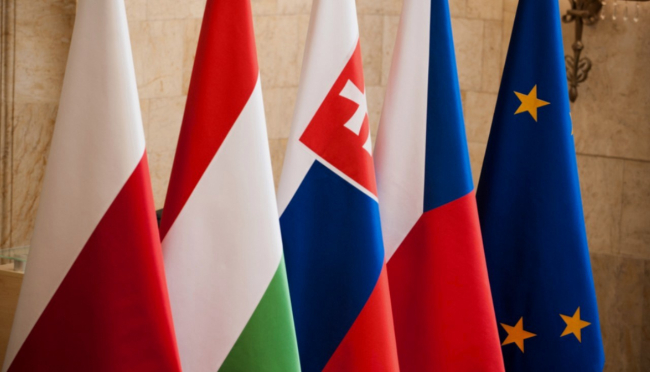
A New Moment for Central Europe? Regional Cooperation in a Time of European Strategic Choices
Recent political developments in Central Europe have revived the debate about the future of regional cooperation and the Visegrád Group. Changes in Hungary, Poland, the Czech Republic and Slovakia, together with Austria’s growing interest in closer cooperation with its neighbours, could create new opportunities for dialogue and coordination around shared priorities.
China’s Nuclear Buildup: Developments, Drivers, and Implications for Major-Power Relations and Arms Control
China has been steadily expanding its nuclear arsenal for several years amid levels of geopolitical tension unseen since the end of the Cold War, marked by a resurgence in nuclear proliferation and a broader, global arms race.