




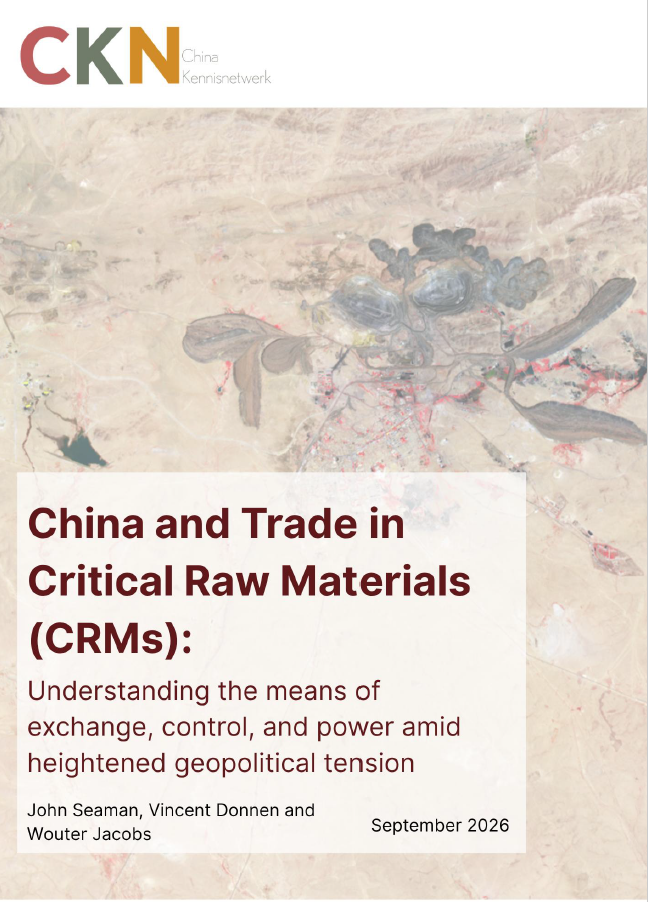
China and Trade in Critical Raw Materials (CRMs)
Critical raw materials (CRMs) have become central features of a new dynamic in global power politics, with China now wielding considerable leverage. Amid rising regional and global uncertainty, resource security is back in the spotlight as a key determinant of sovereignty and national security for Europe, its allies and its partners. The very survival of key, even vital industries, from automotive to aerospace to health to energy to defense, is at stake.

How Tokyo is widening regional defence ties to complicate Beijing’s Taiwan calculus
Tokyo is strengthening partnerships across the Indo-Pacific and beyond, possibly bolstering its ability to withstand a prolonged armed conflict.
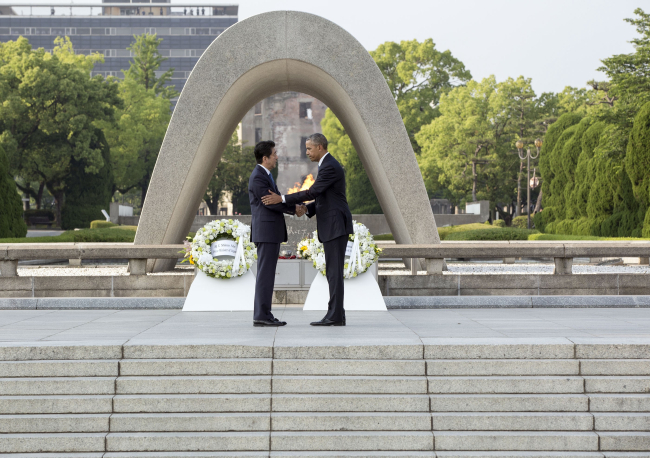
Japan and Nuclear Weapons: Between Extended Deterrence and Normative Dilemmas
Since the late 1950s, Japan’s nuclear weapons policy has been based on the coexistence of two competing normative rationales: the rejection of nuclear weapons, rooted in the legacy of Hiroshima and Nagasaki, and the recognition of the central role of US extended nuclear deterrence for Japan’s security.

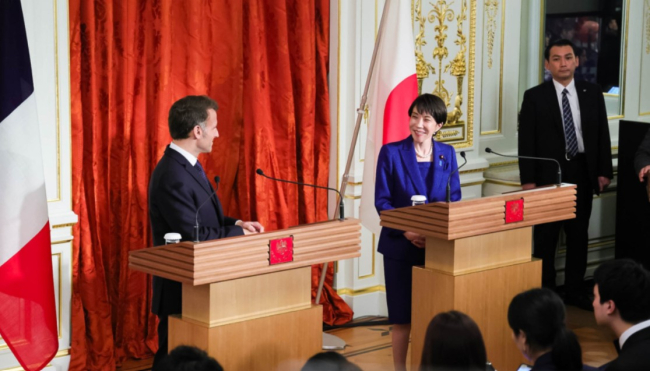
France and Japan hedge against rising threats with strategic autonomy push
As French President Emmanuel Macron arrived in Japan this week for his first visit to the country since 2023, international attention was largely centered on the ongoing Middle East conflict.
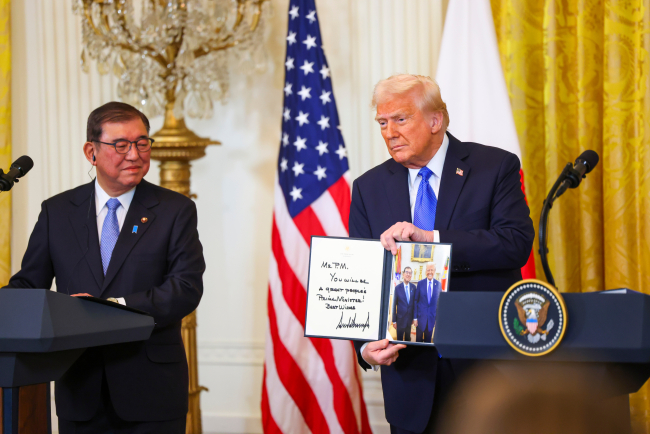
Japan Under Trump: Alliance Strains, the Push for Autonomy and Essential Partnerships
Japan is under pressure from the United States (US) on punitive tariffs and demands for increased defence spending. This has sparked deep concern over US credibility and triggered growing domestic calls for greater autonomy.
Trump's Indo-Pacific Vision & Japan's Strategic Autonomy
Satoru Mori, Senior Fellow at the Nakasone Peace Institute, explores key insights into President Trump's likely priorities for the Indo-Pacific region. His primary concerns include addressing economic trade imbalances with countries like China, Japan, and South Korea. Additionally, he aims to deter regional conflicts, particularly over Taiwan, and wishes to advance the denuclearization of North Korea.

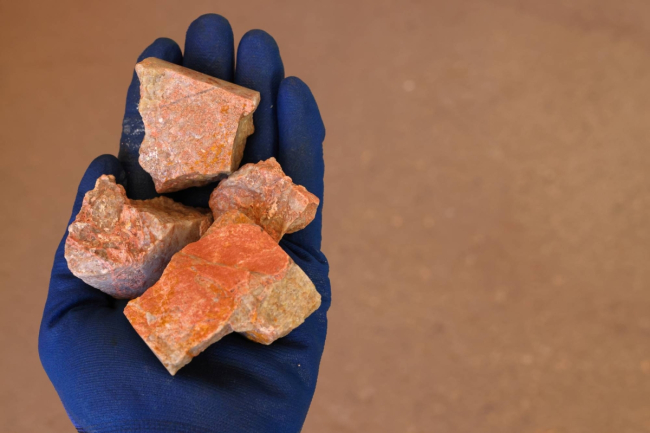
New rare earth plant shows strength of Japan-France cooperation
France and Japan broke new ground in March in a shared quest to bolster resilience in critical mineral supply chains amid growing geopolitical uncertainty.
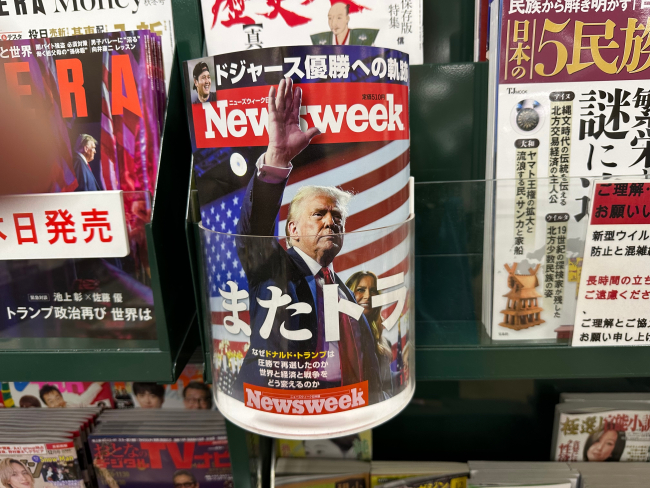
The Indo-Pacific and Trump II. In Uncle Sam’s brutal embrace
In this collective analysis, the research team of the Center for Asian Studies presents a synthetic and non-exhaustive assessment of the relations taking shape between the United States under the Trump II administration and some of the main players in the Indo-Pacific.

Japan: Deciphering Prime Minister Ishiba’s Strategic Vision. Toward an Asian version of NATO?
On Tuesday, October 1, Shigeru Ishiba was sworn in as Prime Minister of Japan. His proposal to revise the security alliance with the United States and create an Asian version of the North Atlantic Treaty Organization (NATO) attracted attention and sparked lively debate.


Japan’s New Leadership: Heralding a New Direction?
Japan’s ruling Liberal Democratic Party (LDP) chose its next leader on September 27, after in mid-August incumbent Prime Minister Kishida announced that he would not run for a second term as LDP President.

10th Pacific Islands Leaders Meeting: 5 things to know
Pacific leaders will gather in Tokyo for the 10th Pacific Islands Leaders Meeting (PALM10) from Tuesday to Thursday.

Japan’s Enhanced Security Engagement With the Pacific Islands
The expansion of security and defense cooperation stands as the most spectacular change in Japan’s contribution to the region in recent years.
Fumio Kishida's Visit to Paris. The France-Japan Relation Deserves Better
Chinese President Xi Jinping's state visit to France hit the headlines. President Macron rolled out the red carpet to welcome his guest, hoping to convince China to limit its support for Russia and respect fair trade rules.

Japan PM Kishida’s Africa tour lays groundwork for G7 summit, as China and Russia concerns loom large
While the impact of Kishida’s tour is ‘marginal, it can still send ‘a message of solidarity’ that it intends to take the continent’s concerns seriously. Getting the African countries to take active measures against Russia will be difficult if they are not offered strong incentives in exchange, one analyst notes.

Does Macron's stance on Taiwan weaken G7 deterrence against China?
One of Prime Minister Fumio Kishida’s top goals for next month’s Group of Seven summit in Hiroshima is to create a united front on issues like China and Ukraine. But finding a unified approach to dealing with Beijing’s assertiveness might have just become harder.
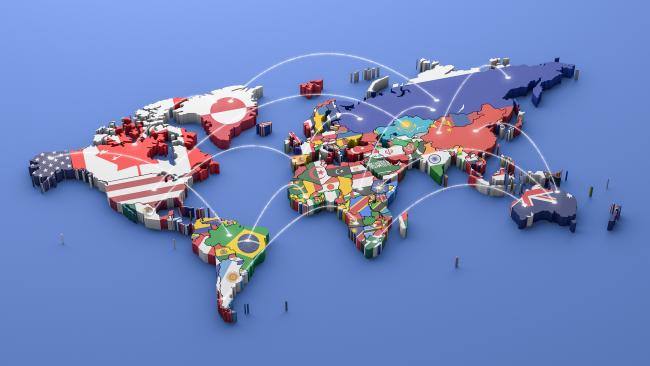
The Technology Policies of Digital Middle Powers
Digital technology is an element of power in the international system as well as an area for competition among countries. The study provides a qualitative comparison of the technology policies of nine of the digital middle powers: Brazil, India, Israel, Japan, Kenya, Nigeria, Russia, South Korea, and the United Kingdom. It seeks to reflect the diversity of national technology policies, as well as to identify those countries’ convergences and divergences with Europe, the United States and China.
Japan’s Africa aid rivals China in terms of ‘quality over quantity’: analysts
Japan has been investing in the continent for longer than China and applies international standards to its infrastructure financing, analysts said. Its pockets may not be as deep, but its support of good governance and democratic principles makes it a tempting development partner for African states.
War in Ukraine: A New World?
Beyond the tactical sphere, the conflict in Ukraine has already had numerous repercussions, and its conclusion will provoke many more in the global system. In this special issue, Politique étrangère explores some potential outcomes.
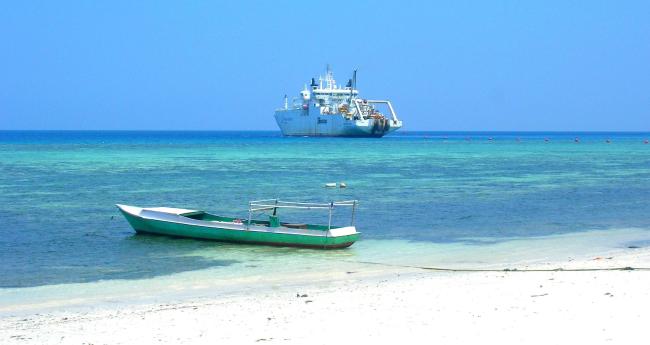
The Pacific caught in the World Wide Web? Geopolitics of submarine cables in Oceania
This article provides a review of the digital connectivity of the Pacific Islands nations (Polynesia, Melanesia, and Micronesia) and the main challenges and prospects arising from it, at a time when the submarine cable market is undergoing profound change and a growing politicization of this technology on the international scene.
Japan resumes its wooing of Africa, a counter to China’s efforts
Japan, which began developmental programmes in the 1990s, has been eclipsed in recent years by China, now Africa’s leading trade partner.Pledge to invest US$30 billion on the continent includes a focus on training Africans to run their economy.
China and Trade in Critical Raw Materials (CRMs)
Critical raw materials (CRMs) have become central features of a new dynamic in global power politics, with China now wielding considerable leverage. Amid rising regional and global uncertainty, resource security is back in the spotlight as a key determinant of sovereignty and national security for Europe, its allies and its partners. The very survival of key, even vital industries, from automotive to aerospace to health to energy to defense, is at stake.
Japan and Nuclear Weapons: Between Extended Deterrence and Normative Dilemmas
Since the late 1950s, Japan’s nuclear weapons policy has been based on the coexistence of two competing normative rationales: the rejection of nuclear weapons, rooted in the legacy of Hiroshima and Nagasaki, and the recognition of the central role of US extended nuclear deterrence for Japan’s security.
Japan Under Trump: Alliance Strains, the Push for Autonomy and Essential Partnerships
Japan is under pressure from the United States (US) on punitive tariffs and demands for increased defence spending. This has sparked deep concern over US credibility and triggered growing domestic calls for greater autonomy.
The Indo-Pacific and Trump II. In Uncle Sam’s brutal embrace
In this collective analysis, the research team of the Center for Asian Studies presents a synthetic and non-exhaustive assessment of the relations taking shape between the United States under the Trump II administration and some of the main players in the Indo-Pacific.
Japan: Deciphering Prime Minister Ishiba’s Strategic Vision. Toward an Asian version of NATO?
On Tuesday, October 1, Shigeru Ishiba was sworn in as Prime Minister of Japan. His proposal to revise the security alliance with the United States and create an Asian version of the North Atlantic Treaty Organization (NATO) attracted attention and sparked lively debate.
Japan’s Enhanced Security Engagement With the Pacific Islands
The expansion of security and defense cooperation stands as the most spectacular change in Japan’s contribution to the region in recent years.
Fumio Kishida's Visit to Paris. The France-Japan Relation Deserves Better
Chinese President Xi Jinping's state visit to France hit the headlines. President Macron rolled out the red carpet to welcome his guest, hoping to convince China to limit its support for Russia and respect fair trade rules.
The Technology Policies of Digital Middle Powers
Digital technology is an element of power in the international system as well as an area for competition among countries. The study provides a qualitative comparison of the technology policies of nine of the digital middle powers: Brazil, India, Israel, Japan, Kenya, Nigeria, Russia, South Korea, and the United Kingdom. It seeks to reflect the diversity of national technology policies, as well as to identify those countries’ convergences and divergences with Europe, the United States and China.
Japan steps up its Africa engagement
Laying the foundation for the Eighth Tokyo International Conference on African Development (TICAD), Japanese Foreign Minister Yoshimasa Hayashi held talks on 28 March 2022 with ministers from 50 African nations. Hayashi expressed concerns that the COVID-19 pandemic and the war in Ukraine had increased the economic and social vulnerabilities of African countries — deepening their dependence on China. He subsequently committed to increase Japan’s cooperation with Africa.

Rapprochement in Times of Crisis: War in Ukraine and the EU-Japan Partnership
The war in Ukraine has shaken the foundations of European security and of the global rules-based order. In many ways, Russia’s aggression has been a wake-up call for the EU, adding a sense of urgency to its ongoing transformation to becoming a stronger geopolitical actor, materialised by the recent publication of its Strategic Compass – its first-ever white paper for security and defence.
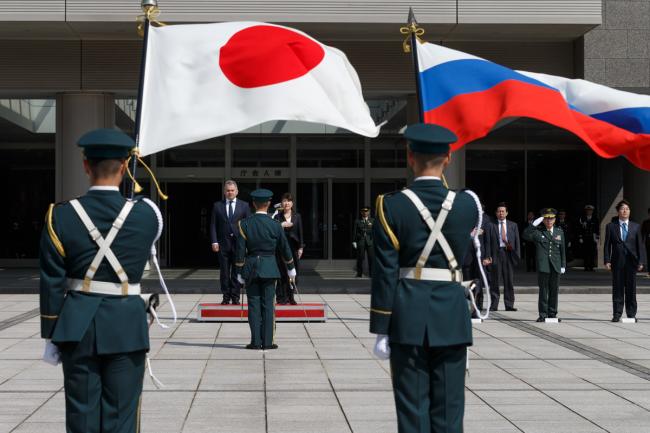
Japan-Russia: The end of delusions
The war in Ukraine has led to a major rift between Japan and Russia.
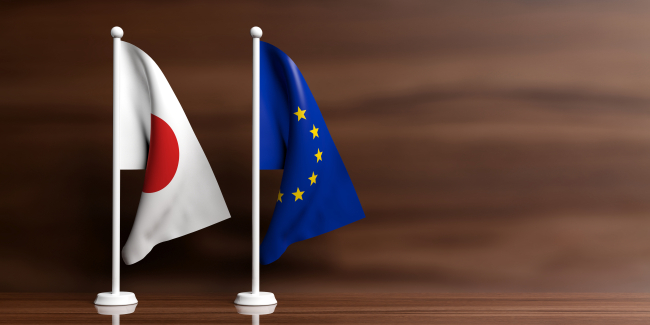
EU-Japan Relations: Moving Forward
EU-Japan relations have undergone a major uplift over the past 5 years. Bound by the Economic and Strategic Partnership Agreements, as well as the Partnership on Sustainable Connectivity, the two once-distant players have been stepping up efforts to address the many shared security concerns in the Indo-Pacific and beyond. Ahead of the upcoming EU-Japan summit, this Policy Brief takes stock of the current state of play and offers some food for thought on how to move forward with the bilateral relationship.
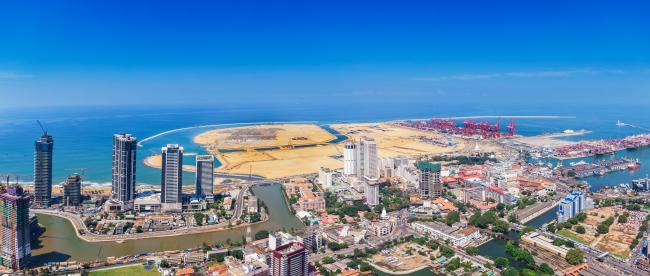
Japan’s Infrastructure Investment in the Indian Ocean: Checking China, Securing the Sea Lanes
In the 2010s, Japan gradually increased economic connections with the Indian Ocean region (IOR) through trade, foreign direct investment, and official development assistance (ODA).
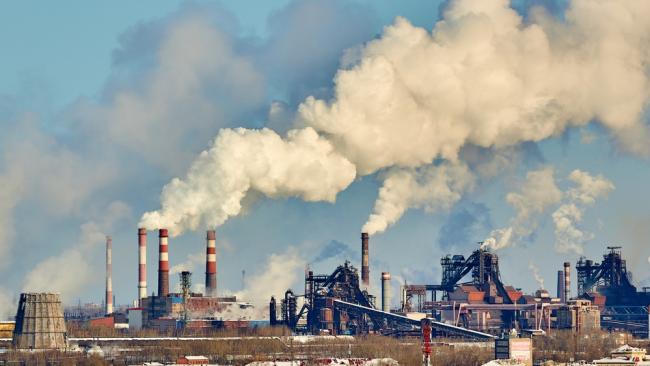
Can the Biggest Emitters Set Up a Climate Club? A Review of International Carbon Pricing Debates
The world’s largest emitting countries are reconsidering the role of carbon pricing instruments and increasingly looking at carbon border adjustment mechanisms (CBAMs) to address leakage concerns. This renewed momentum should trigger a broader discussion on how to make trade policies compatible with the climate agenda.

Tensions at Sea in East Asia: A Japanese View on Chinese Lawfare Practices
Tensions at sea are growing and multiplying both in the East and the South China Seas.

Improving Economic Security: Proposals from Japan
The COVID-19 crisis has made clear the importance of resilient supply chains and effective economic security.
Should We Forget about the Asia-Africa Growth Corridor?
The Asia-Africa Growth Corridor (AAGC), an Indian-Japanese collaborative vision regarding development, connectivity and cooperation between Asia and Africa, was announced in 2017.

Japan’s Hydrogen Society Ambition: 2020 Status and Perspectives
Japan has been steadfastly promoting the development of its hydrogen economy at all levels: political, diplomatic, economic and industrial. It is yet to be seen if this excitement can be turned into a credible, cost-effective and large scale deployment.
Japan’s Space Program: Shifting Away from “Non-Offensive” Purposes?
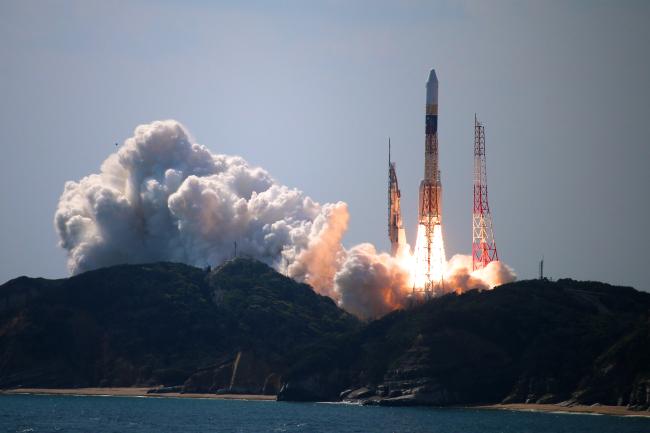
Japan’s space program has evolved greatly since the end of the Cold War, driven by a rapidly changing geopolitical environment and tailored by the emergence of an “intra-alliance hedging strategy”.
Japan in the 2019 G20 and G7 Summits: A Key Partner for Europe?
This essay offers a general assessment of Japan’s performance in the 2019 G20 and G7 Summits, held respectively in Osaka, Japan and Biarritz, France and looks at how Tokyo coordinated with its European partners (The European Union (EU) institutions and the EU Member States) in these international settings.
How Tokyo is widening regional defence ties to complicate Beijing’s Taiwan calculus
Tokyo is strengthening partnerships across the Indo-Pacific and beyond, possibly bolstering its ability to withstand a prolonged armed conflict.
France and Japan hedge against rising threats with strategic autonomy push
As French President Emmanuel Macron arrived in Japan this week for his first visit to the country since 2023, international attention was largely centered on the ongoing Middle East conflict.
New rare earth plant shows strength of Japan-France cooperation
France and Japan broke new ground in March in a shared quest to bolster resilience in critical mineral supply chains amid growing geopolitical uncertainty.
Japan’s New Leadership: Heralding a New Direction?
Japan’s ruling Liberal Democratic Party (LDP) chose its next leader on September 27, after in mid-August incumbent Prime Minister Kishida announced that he would not run for a second term as LDP President.
10th Pacific Islands Leaders Meeting: 5 things to know
Pacific leaders will gather in Tokyo for the 10th Pacific Islands Leaders Meeting (PALM10) from Tuesday to Thursday.
Japan resumes its wooing of Africa, a counter to China’s efforts
Japan, which began developmental programmes in the 1990s, has been eclipsed in recent years by China, now Africa’s leading trade partner.Pledge to invest US$30 billion on the continent includes a focus on training Africans to run their economy.
As Europe's interest in the Indo-Pacific grows, is Japan ready to lead the way?
Alarmed by China’s rising power, its frictions with neighboring countries in the East and South China seas, allegations of human rights abuses in the Xinjiang region and crackdowns in Hong Kong, European countries are seeking to step up their involvement in the Indo-Pacific region.
Abe dissolves Japan Parliament ahead of snap elections
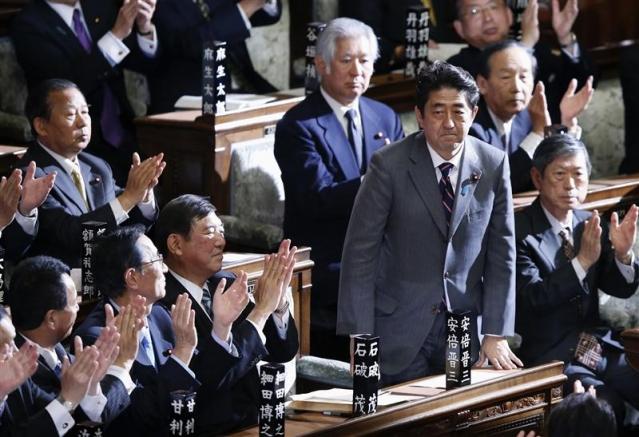
On Thursday, Japanese Prime Minister Shinzo Abe dissolved Japan’s parliament, the starting pistol for the snap elections he called a year early to get over a “national crisis.”
Législatives au Japon: une victoire pour les "abenomics"
Lancées début 2013 pour tirer l’Archipel de la déflation, les « Abenomics » sont d’ambitieux programme de relance du premier ministre, Shinzo Abe.
Invité: l’économiste Claude Meyer spécialiste de la zone Asie.
Trump's Indo-Pacific Vision & Japan's Strategic Autonomy
Satoru Mori, Senior Fellow at the Nakasone Peace Institute, explores key insights into President Trump's likely priorities for the Indo-Pacific region. His primary concerns include addressing economic trade imbalances with countries like China, Japan, and South Korea. Additionally, he aims to deter regional conflicts, particularly over Taiwan, and wishes to advance the denuclearization of North Korea.
Japan's upgraded economic security strategy
An interview with Kazuto SUZUKI, Professor, Graduate School of Public Policy, University of Tokyo.
What are the impact of the COVID-19 crisis on Japan's economic security?
In this interview, Shin Oya, Senior Consulting Fellow, Asia Pacific Initiative and Chief Representative for Strategic Research, JBIC looks at COVID-19's impact on economic security in Japan.
Cybersecurity and COVID-19: Responses from Japan
In this interview, Mihoko Matsubara, Chief Cybersecurity Strategist, NTT Corporation in Tokyo, examines Japan's cybersecurity responses during the COVID-19 pandemic.
Japan's cyber diplomacy: cooperation with the EU and challenges ahead
In this interview, Dai Mochinaga, senior researcher at Keio Research Institute looks at Japan's cyber diplomacy and challenges for global cybersecurity and data governance.
Cooperation Despite Frictions in Northeast Asia
Cooperation Despite Frictions in Northeast Asia
Cooperation Despite Frictions in Northeast Asia
Despite the political tensions that oppose Japan, China and South Korea, recent months have seen a certain rapprochement between Tokyo, Seoul and Beijing. The first trilateral summit in three years was held in November 2015.
Ifri, a foundation recognized as being of public utility, relies largely on private donors – companies and individuals – to guarantee its sustainability and intellectual independence. Through their funding, donors help maintain the Institute's position among the world's leading think tanks. By benefiting from an internationally recognized network and expertise, donors refine their understanding of geopolitical risk and its consequences on global politics and the economy. In 2026, Ifri partners with over 90 French and international companies and organizations.
