






Practical information
The online registrations for this conference are now closed but you can still register by mail to Matthieu Tardis [email protected]
Both in the US and in Europe, border control has become one central component of immigration and asylum policies with seemingly the same objective: preventing irregular entries of migrants and refugees. This trend has accelerated in recent years, with ever stricter border controls, more detention of migrants and refugees, the use of the notion of “safe third country” and partnerships with third countries, some of which now play a pivotal role in controlling the borders of their US and European neighbors, such as Turkey and Mexico.

What are the differences and similarities in the policies implemented in the EU and the US? What is their impact on the fundamental rights of migrants and refugees? In both contexts, what relative weight is given to the rights of migrants and refugees on the one hand, and to border enforcement measures on the other? Finally, what long-term consequences will the covid-19 crisis have on border policies in both cases?
The Webinar aims at offering a comparative perspective on border enforcement and immigration policies on both side of the Atlantic. It will bring together a wide range of European and US-based stakeholders: academics and experts, representatives of NGOs, members of institutions and policymakers. The webinar will be organized in two parts, with pre-recorded interviews and live presentations followed by a Q&A session.
The Border Between the US and Mexico: The Making of a Migration Crisis? Interviews (in English) with:
- Clara Long, Senior Researcher, US Program, Human Rights Watch
- Tom K Wong, Associate Professor and Director, U.S. Immigration Policy Center, University of California San Diego
- Veronica Ortiz Ortega, General Director, Consejo Mexicano de Asuntos Internacionales (COMEXI)
Discussion and Q&A session Live (in French) with:
- Vincent Cochetel, Special Envoy for the Mediterranean Situation, United Nations High Commissioner for Refugees (UNHCR)
- Juan Fernando Lopez Aguilar, Member of the European Parliament, Chair of the Committee on Civil Liberties, Justice and Home Affairs, European Parliament
Registered participants will receive the access codes a few hours prior to the debate.
Find out more

U.S. Immigration Policy: The Making of a Crisis
Donald Trump’s election to the White House appeared to be the beginning of a profound change in the United States’ immigration policy. He reneged on bipartisan consensus that recognized the “positive contribution” of immigration to the country. This resulted in an increase in policies that affected all aspects of immigration. However, it is the most symbolic of Donald Trump’s goals: building a wall between the United States and Mexico that caused the longest government shutdown in American history.

Les politiques migratoires en France, en Italie et en Espagne : un système complexe d’interdépendances internes et régionales
Depuis la crise de l’accueil des migrants de 2015, la question migratoire est au cœur de l’évolution des débats politiques sur l’Europe. Cinq ans après, nous disposons aujourd’hui du recul nécessaire pour mieux saisir l’enchevêtrement entre les dimensions internes et externes des politiques migratoires européennes et les intérêts propres aux États membres.
Other events
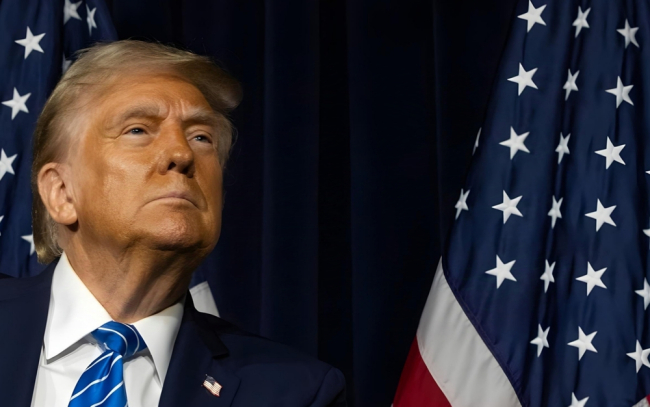
One Month Ahead of the Midterms: Where Is Trump’s America Headed?
The 24th edition of the Ifri Americas Programme Annual Conference will examine the dynamics at play in the United States and their implications for Europe and the transatlantic relationship. will examine the dynamics at play in the United States and their implications for Europe and the transatlantic relationship.

France-Ukraine Forum 2026
More than four and a half years after the start of the full-scale war launched by Russia against Ukraine, the 2026 France-Ukraine Forum will bring together policymakers, experts, academics, and civil society representatives from both countries to discuss three main topics: the formats and conditions for a lasting diplomatic settlement; Ukraine’s Euro-Atlantic integration, encompassing both the EU accession process and closer ties with NATO; and the societal transformations of postwar Ukraine, as well as its prospects for reconstruction.
The EU in a World of Economic Warfare: Trade, Geopolitics, and the Battle for Economic Sovereignty
The international trading system has become a primary theatre of geopolitical competition. Tariffs, sanctions, and technology controls have replaced dialogue as the default instruments of economic relations.