





G20 Energy Transitions and Climate Finance Task Force Report
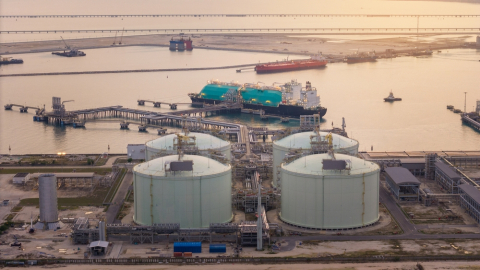
India is at the helm of the G20 presidency since the 1st of December 2022 for the duration of a year, with energy transition and climate finance being key topics on its agenda. In this context, the Gateway House put in place a G20 Energy Task Force to which Ifri’s Research Fellow, Diana-Paula Gherasim, participated.


Delhi to Paris: A strategic partnership
Prime Minister Narendra Modi’s visit to France on May 4 is his fifth since 2015, and the 10th such high-level bilateral visit.
India–East Africa: A Not So Healthy Relationship?
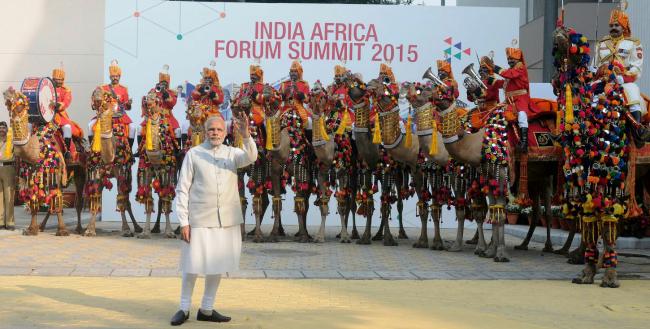
Due to historical as well as geographical reasons, India and East Africa have long been close partners. In the recent period however, and even more so since the early 2000s, these ties have tightened as a result of combined efforts by the government of India and its business community.
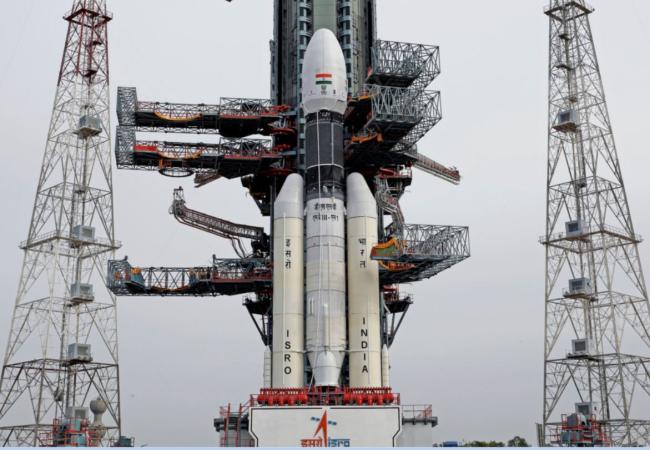
Indian Space Program and its Drivers: Possible Implications for the Global Space Market
India has one of the oldest space programs in the world with space playing a critical role in India’s national development and external power projection capability.
India-Taiwan Ties: A Case for Stronger Partnership
The links between India and Taiwan have gathered unprecedented momentum in recent years. This has largely come about due to growing support for Taiwan at civil society level in India.
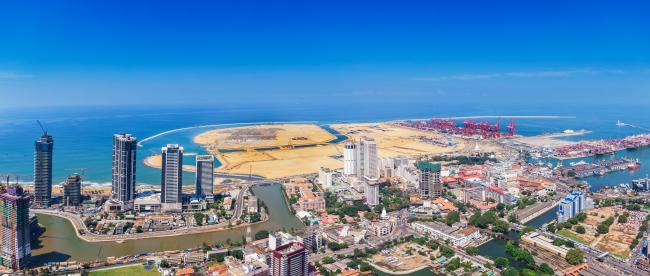
Japan’s Infrastructure Investment in the Indian Ocean: Checking China, Securing the Sea Lanes
In the 2010s, Japan gradually increased economic connections with the Indian Ocean region (IOR) through trade, foreign direct investment, and official development assistance (ODA).
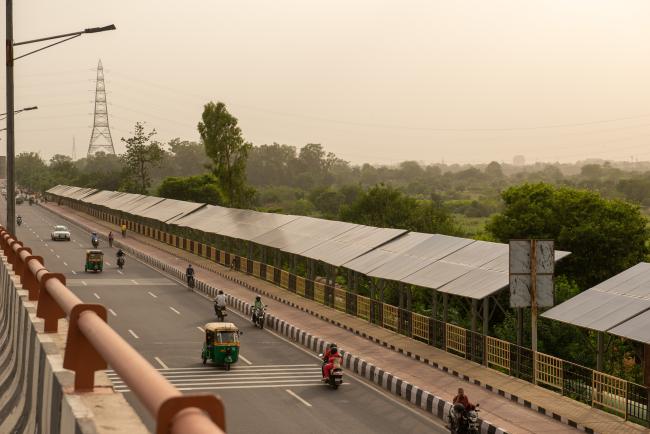
India’s Energy and Climate Policies Post COVID-19: Short Term Slowdown, Longer Term Boom in Renewables
India has long been a positive and committed partner in global and domestic climate change mitigation efforts.

75 millions de nouveaux pauvres en Inde: le modèle de développement indien à l’épreuve du COVID-19
The pandemic has revealed the fragility of the Indian economy.


Destination Moon: is it time for us to send astronauts back?
The series For All Mankind (2019) is a fictional alternate history that imagines a world where the Soviet Union was the first power to send an astronaut to the moon. From that starting point, the two rival superpowers compete to establish their own lunar station.
The Economic Pillar of Korea’s New Southern Policy: Building on Existing Assets
Diversification is a key tenet of South Korea’s New Southern Policy (NSP). In the economic sphere, however, the need for diversification is apparently less pressing as, unlike what is observed in the diplomatic and security domains, Korea’s economic partnerships are less unbalanced and are not (or not as clearly) polarized on the big Four (China, Japan, the United States, and Russia).
“New Southern Policy”, Korea’s Newfound Ambition in Search of Strategic Autonomy
The New Southern Policy (NSP), the signature foreign policy initiative by President Moon Jae-in of the Republic of Korea (ROK) that was officially launched in November 2017, has opened a new chapter in Seoul’s relations with the Association of Southeast Asian Nations (ASEAN) as well as India.
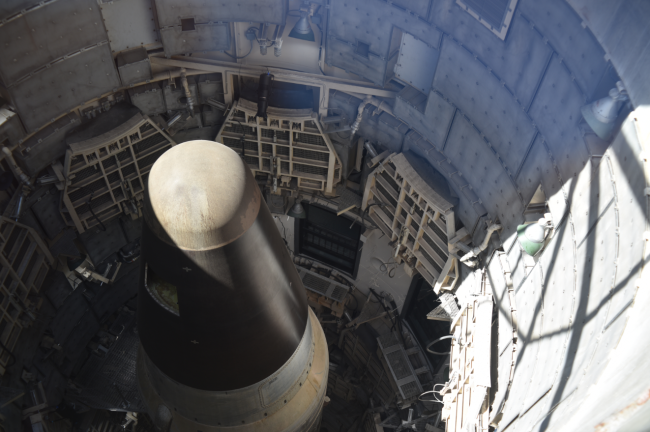
Strategic Risk Reduction between Nuclear-Weapons Possessors
The topic of nuclear risk reduction has gained momentum in the international security debate among policymakers, nongovernmental organizations, and experts.
Korea’s New Southern Policy : An Economist’s Perspective
In this interview, Choong-Ryeol Lee, professor at Korea University looks at the objectives of Korea's New Southern Policy, its economic impact, and Korea's economic cooperation with India.
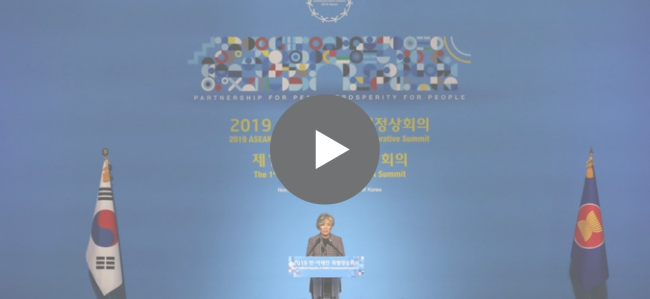
A New Player in the Indo-Pacific? South Korea’s New Southern Policy
A webinar by the Center for Asian Studies on South Korea's New Southern Policy examined the motivations, objectives, and means of, as well as possible challenges to, this policy, through an analysis of economic and trade cooperation on the one hand (Prosperity) and diplomatic and security cooperation on the other (People and Peace).
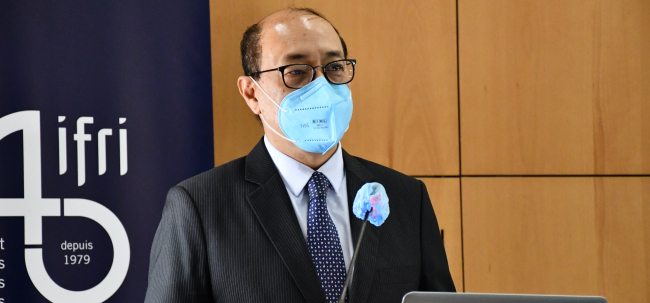
Conference with Harsh Vardhan Shringla, Foreign Secretary of the Republic of India
On October 29,2020, Ifri welcomed Harsh Vardhan Shringla, Foreign Secretary of the Republic of India, for a conference/debate chaired by Thomas Gomart, Director of Ifri.
Should We Forget about the Asia-Africa Growth Corridor?
The Asia-Africa Growth Corridor (AAGC), an Indian-Japanese collaborative vision regarding development, connectivity and cooperation between Asia and Africa, was announced in 2017.
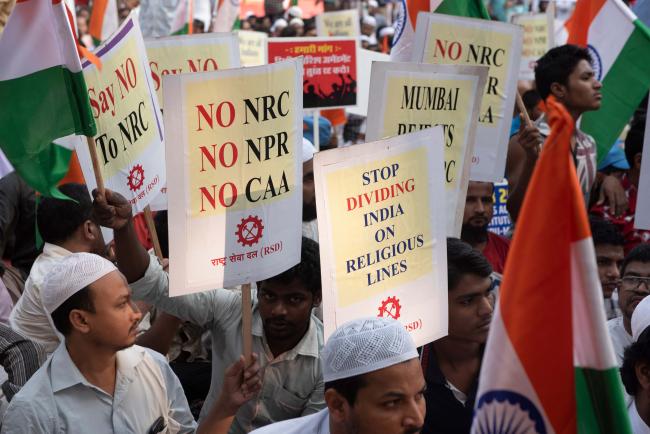
Making Sense of India’s Citizenship Amendment Act 2019: Process, Politics, Protests
India's new citizenship law is an outcome of Hindutva Constitutionalism that legitimizes the notion of Hindu victimhood. While the opposition to the law has been vocal, it has remained fragmented.
India’s Space Program - International Competition and Evolution
India’s space program has grown and evolved significantly in the last five decades. The program originally focused on developing space assets that provided direct developmental benefits, for example telecommunications and remote sensing satellites that helped both in improving communication facilities and giving direct assistance to India’s farmers. But over time, India has shifted a part of its focus towards space exploration and other high-profile missions that do not have as clear a developmental purpose as earlier. This includes, for example, India’s Mars and Moon exploratory missions. Overall, India has been fairly successful in these efforts and its space program has become a comprehensive one that includes not only a robust launch capacity and very large remote sensing satellite systems, but also a very well rounded scientific and deep space exploratory program.
Friends in Need: Whither the Russia-India Strategic Partnership?
This paper explores the latest developments in key spheres of the Russia-India relationship in order to identify the state of bilateral ties at a time when South Asia has turned into an area of geopolitical contest of both global and regional powers.
Prospects for the New EU Strategy on India: Game Changer or Business as Usual?
The new European Union (EU) strategy on India marks a major moment of departure in EU-India relations.
“New Southern Policy”, Korea’s Newfound Ambition in Search of Strategic Autonomy
The New Southern Policy (NSP), the signature foreign policy initiative by President Moon Jae-in of the Republic of Korea (ROK) that was officially launched in November 2017, has opened a new chapter in Seoul’s relations with the Association of Southeast Asian Nations (ASEAN) as well as India.
Should We Forget about the Asia-Africa Growth Corridor?
The Asia-Africa Growth Corridor (AAGC), an Indian-Japanese collaborative vision regarding development, connectivity and cooperation between Asia and Africa, was announced in 2017.
Making Sense of India’s Citizenship Amendment Act 2019: Process, Politics, Protests
India's new citizenship law is an outcome of Hindutva Constitutionalism that legitimizes the notion of Hindu victimhood. While the opposition to the law has been vocal, it has remained fragmented.
India’s Space Program - International Competition and Evolution
India’s space program has grown and evolved significantly in the last five decades. The program originally focused on developing space assets that provided direct developmental benefits, for example telecommunications and remote sensing satellites that helped both in improving communication facilities and giving direct assistance to India’s farmers. But over time, India has shifted a part of its focus towards space exploration and other high-profile missions that do not have as clear a developmental purpose as earlier. This includes, for example, India’s Mars and Moon exploratory missions. Overall, India has been fairly successful in these efforts and its space program has become a comprehensive one that includes not only a robust launch capacity and very large remote sensing satellite systems, but also a very well rounded scientific and deep space exploratory program.
Prospects for the New EU Strategy on India: Game Changer or Business as Usual?
The new European Union (EU) strategy on India marks a major moment of departure in EU-India relations.
Between Giants: The Sino-Indian Cold War in the Indian Ocean
Strategic competition between India and China in the Indian Ocean is growing and has the potential to profoundly impact the stability and security of the region. The Indian Ocean is becoming the scene of a sustained contest that in some ways resembles strategic competition during the Cold War.
Migration Flows and Policies: India at a Turning Point
India hosts millions of economic migrants from neighboring countries, especially Nepal and Bangladesh. It is also a haven for large refugee communities from Tibet or Sri Lanka. In the past years, India’s dynamic economic growth has brought in new types of migrants: young European graduates, entrepreneurs and highly skilled Indian migrants returning home.
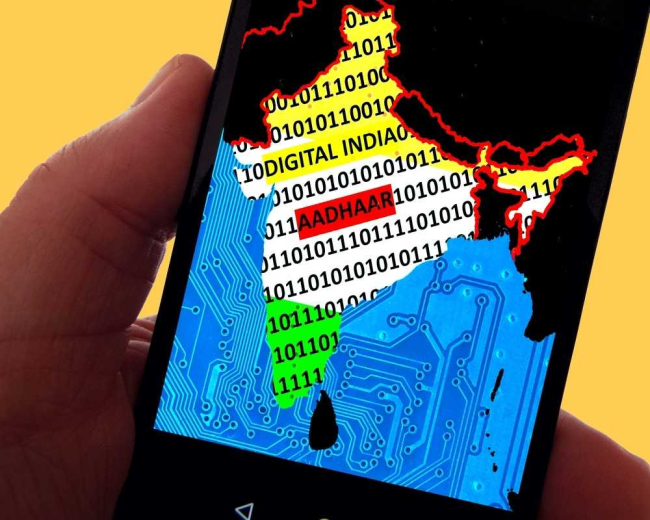
Questions of Fact: India’s Aadhaar Matter and the Limits of the Supreme Court
In September 2018, the Supreme Court of India rendered its verdict in a landmark case with major implications for the Aadhaar biometric identification project as well as the application of right to privacy in India, but the Aadhaar Matter raises important questions about the shortcomings of the Supreme Court’s practice of judicial review.
The Japan-India Economic Partnership: A Politically Driven Process
In the last decade, the strengthening of the India-Japan strategic partnership has been primarily driven by geopolitical considerations, in an era of competing regional visions and influence.
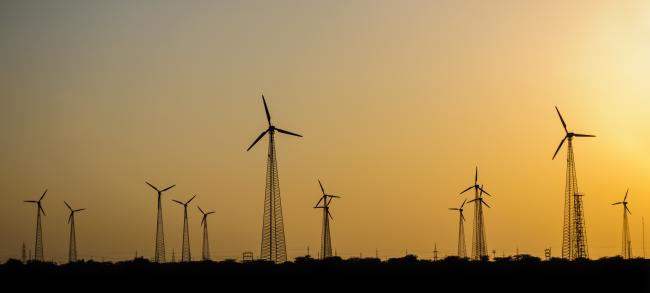
Renewable Energy in India: Solutions to the Financing Challenge
India has committed to ambitious action on climate change, but financing its renewable energy goals remains a significant challenge.
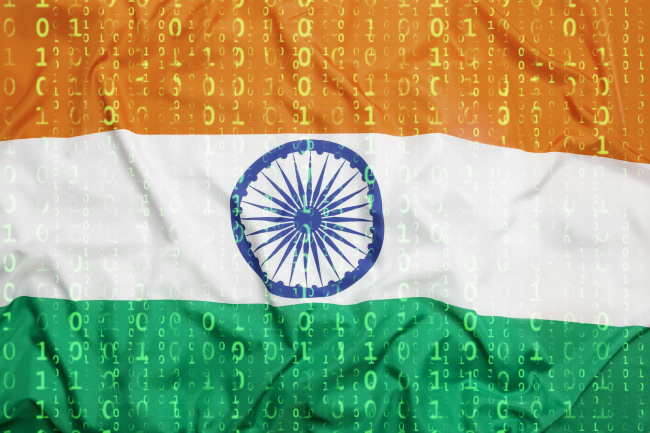
Working with “Last Mile” Data Protection in India
India’s digital economy is characterized by “last mile” data protection, with privacy norms, data collection and sharing standards being set at the level of the application (“app”), operating system (OS) and the device. This practice lends itself to multiple, often crisscrossing rules maintained by smartphone manufacturers, mobile operating system vendors and application developers. The user is caught in a maze of privacy policies that bear on important questions: what data is collected, where it is stored, who it is shared with, and legal recourse in the face of policy violations or unauthorized use of data by third parties.
Diplomacy as Diaspora Management: The Case of India and the Gulf States
In today’s world, diaspora management and diplomacy have become increasingly enmeshed, reflecting the growing interconnections between domestic and international issues.
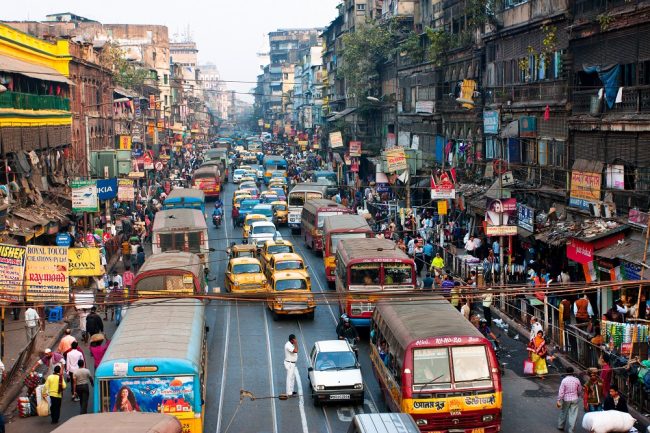
Challenge of Making Smart Cities in India
The Indian government has launched the Smart Cities Mission in June 2015 with the aim of providing a better quality of life to the citizens in 100 cities of the country. This paper describes the main features of the Mission and attempts to explain the challenges in the way forward.

The BJP and State Politics in India: A Crashing Wave? Analyzing the BJP Performance in Five State Elections
In May 2014, the Bharatiya Janata Party (BJP), led by Narendra Modi, decisively won India’s sixteenth General Elections. For the first time in thirty years, a party secured a single majority of seats in the lower house of parliament – the Lok Sabha (282 out of 543) – and for the first time since independence, that party wasn’t the Congress.
Space Collaboration between India and France: Towards a New Era
In the sphere of space research, France-India collaboration began in the early 1960s, with France providing assistance to India’s Rohini sounding rockets programme. Over the years, France has played a constructive role in helping India to develop its ground and space infrastructure, as well as its launching platforms and human resources. In point of fact, France has emerged as one of India’s most dependable partner in the realm of space.
Economics in Narendra Modi’s Foreign Policy
A distinct feature of Prime Minister Narendra Modi’s first year in office was the remarkable speed and alacrity with which he moved on external engagement. During his first twelve months as Prime Minister, he travelled to almost twenty countries in different parts of the world. Indeed, Modi appeared to be guided by the impression that high rates of economic growth cannot be generated only by domestic policies and initiatives.
ASEAN-India Political Cooperation: How to reinforce a much-needed pillar?
India is one of Southeast Asia’s principal neighbors and there is certainly great potential for cooperation with the region and its institutional representation, ASEAN. But does India properly exploit this opportunity? Is Southeast Asia satisfied with the level of engagement?
From 'Looking' to Engaging: India and East Asia
The Look East policy (LEP), launched in the early 1990s, was intended to engage India more closely with the East Asian region, but it met with only limited success initially, for India was not seen to be a major contributor either to regional security or economic development.
Fiscal Deficit, Crowding Out, and the Sustainability of Economic Growth: The Case of the Indian Economy
This study examines the long-run relationship between the fiscal deficit, the crowding out of private capital formation and net exports for the Indian economy during the period from 1980-81 to 2008-09.
Hospital Chains in India: The Coming of Age?
In many countries, the provision of hospital care is turning into an industry with the increasing presence of large corporate hospital chains. Along with public agencies and small private operators, corporations are now investing in the Indian hospital sector.
Since the 1980s, health sector reforms and the liberalization policy in India have created new profit-making opportunities in the health care market for local and international corporations. A new pro-market regulatory environment has helped private corporations to invest in the hospital sector.
Ifri, a foundation recognized as being of public utility, relies largely on private donors – companies and individuals – to guarantee its sustainability and intellectual independence. Through their funding, donors help maintain the Institute's position among the world's leading think tanks. By benefiting from an internationally recognized network and expertise, donors refine their understanding of geopolitical risk and its consequences on global politics and the economy. In 2026, Ifri partners with over 90 French and international companies and organizations.
