




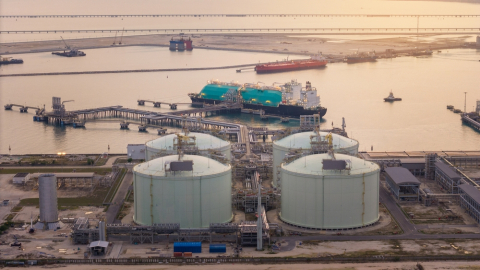

Between Giants: The Sino-Indian Cold War in the Indian Ocean
Strategic competition between India and China in the Indian Ocean is growing and has the potential to profoundly impact the stability and security of the region. The Indian Ocean is becoming the scene of a sustained contest that in some ways resembles strategic competition during the Cold War.
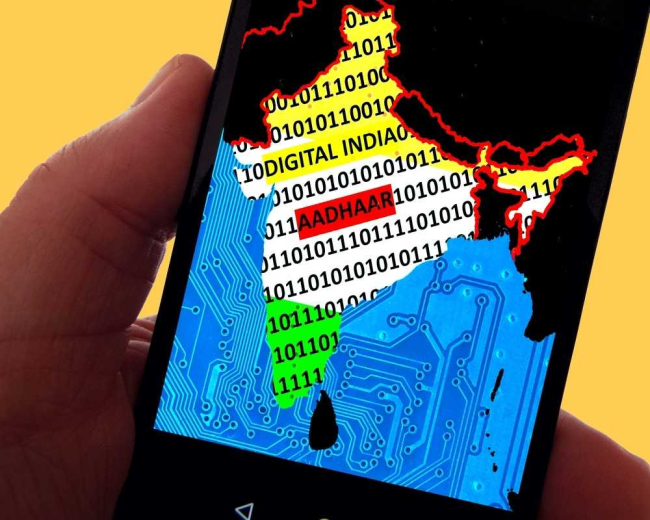
Questions of Fact: India’s Aadhaar Matter and the Limits of the Supreme Court
In September 2018, the Supreme Court of India rendered its verdict in a landmark case with major implications for the Aadhaar biometric identification project as well as the application of right to privacy in India, but the Aadhaar Matter raises important questions about the shortcomings of the Supreme Court’s practice of judicial review.
The Japan-India Economic Partnership: A Politically Driven Process
In the last decade, the strengthening of the India-Japan strategic partnership has been primarily driven by geopolitical considerations, in an era of competing regional visions and influence.
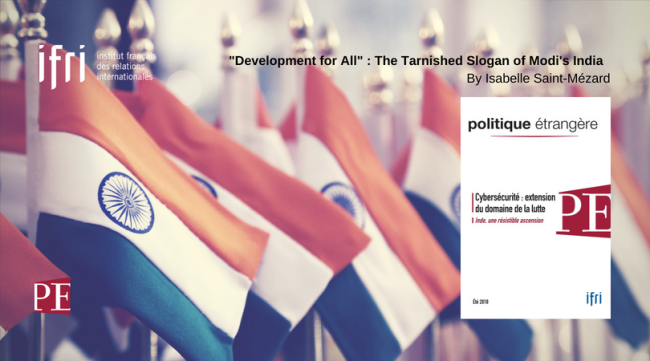
“Development for All”: The Tarnished Slogan of Modi’s India
Narendra Modi’s BJP (Bharatiya Janata Party) has held an unprecedented majority since the 2014 elections.

Cybersecurity and Cyber Defence: From Hacking to Information Warfare
The cyber world has undoubtedly become a part of geopolitics, in the way that it shapes, in its own way, relationships between the actors of the international stage.
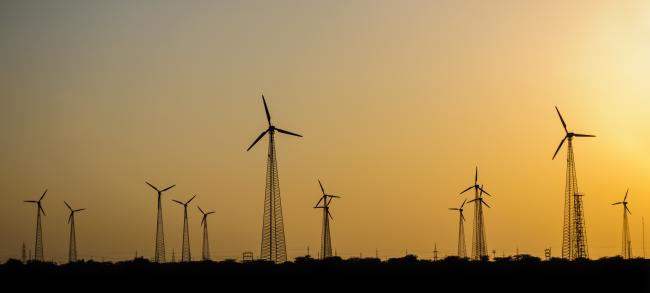
Renewable Energy in India: Solutions to the Financing Challenge
India has committed to ambitious action on climate change, but financing its renewable energy goals remains a significant challenge.
Working with “Last Mile” Data Protection in India
India’s digital economy is characterized by “last mile” data protection, with privacy norms, data collection and sharing standards being set at the level of the application (“app”), operating system (OS) and the device. This practice lends itself to multiple, often crisscrossing rules maintained by smartphone manufacturers, mobile operating system vendors and application developers. The user is caught in a maze of privacy policies that bear on important questions: what data is collected, where it is stored, who it is shared with, and legal recourse in the face of policy violations or unauthorized use of data by third parties.
Diplomacy as Diaspora Management: The Case of India and the Gulf States
In today’s world, diaspora management and diplomacy have become increasingly enmeshed, reflecting the growing interconnections between domestic and international issues.
New Order for Old Triangles? The Russia-China-India Matrix
As the US-led international system struggles under the strain of multiple challenges, the complex web of relations between Russia, China, and India will be critical to the formation of a new world order.
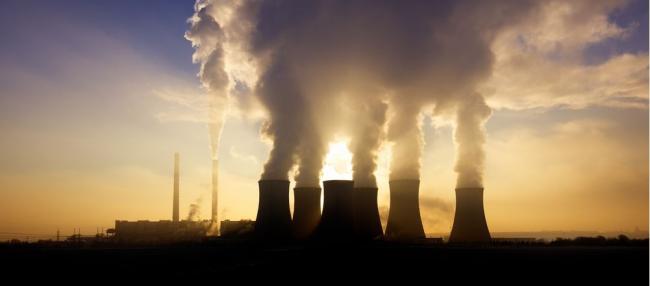
The Steam Coal Market in 2016: the Supply Shock
Surprising coal markets: while the world coal demand is diminishing, the steam coal price doubled in 2016. After five years of uninterrupted price decline and a sluggish world demand, this strong price hike might appear as paradoxical. This paper explains the principal reasons for this situation.
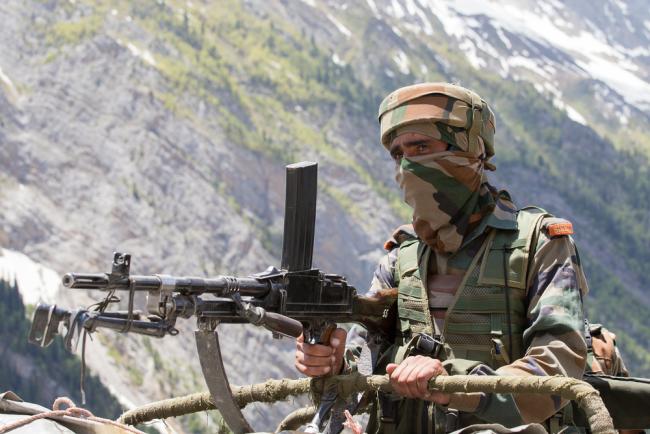
The Kashmir Uprising and India-Pakistan Relations: A need for conflict resolution, not management
This paper analyses the causes and consequences of the 2016 uprising in Kashmir, making six interrelated arguments.
India’s Act East policy: strategic implications for the Indian Ocean
Since the Modi government came to power in June 2014, it has invested diplomatic capital in announcing the transformation of India’s ‘Look East’ policy into a new ‘Act East’ policy.
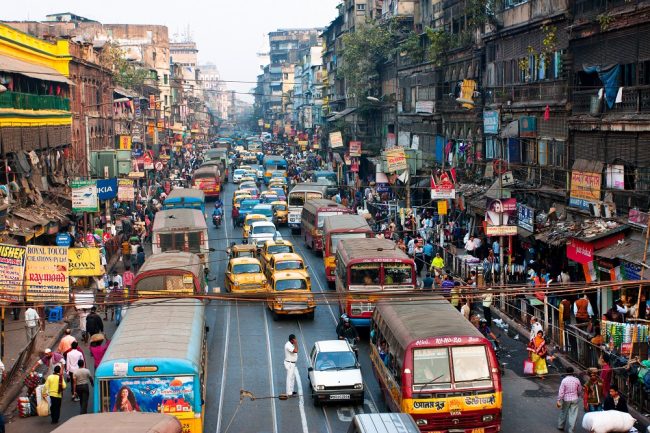
Challenge of Making Smart Cities in India
The Indian government has launched the Smart Cities Mission in June 2015 with the aim of providing a better quality of life to the citizens in 100 cities of the country. This paper describes the main features of the Mission and attempts to explain the challenges in the way forward.

The BJP and State Politics in India: A Crashing Wave? Analyzing the BJP Performance in Five State Elections
In May 2014, the Bharatiya Janata Party (BJP), led by Narendra Modi, decisively won India’s sixteenth General Elections. For the first time in thirty years, a party secured a single majority of seats in the lower house of parliament – the Lok Sabha (282 out of 543) – and for the first time since independence, that party wasn’t the Congress.
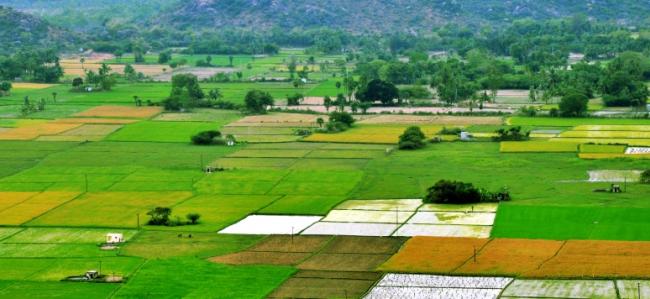
Indian Policies in the Phosphate and Fertiliser Sectors: International and domestic aspects
India is now a major player in the international fertiliser market, regardless of the nutrients considered. Whether it is a question of imports, domestic production, or consumption, India ranks among the top three global players in the sector.
India’s Approach to Climate Negotiations: From the South to the North?
India’s approach to climate negotiations results from the interplay of two distinct logics, an external one and an internal one. While the external logic is derived from quantitative attributes at the aggregate level, such as the overall size of India’s economy, the internal logic is derived from qualitative attributes at the individual level such as per person incomes and productivity. For three decades, from the early 1970s to the early 2000s, India’s internal and external logics overlapped.
Space Collaboration between India and France: Towards a New Era
In the sphere of space research, France-India collaboration began in the early 1960s, with France providing assistance to India’s Rohini sounding rockets programme. Over the years, France has played a constructive role in helping India to develop its ground and space infrastructure, as well as its launching platforms and human resources. In point of fact, France has emerged as one of India’s most dependable partner in the realm of space.
Economics in Narendra Modi’s Foreign Policy
A distinct feature of Prime Minister Narendra Modi’s first year in office was the remarkable speed and alacrity with which he moved on external engagement. During his first twelve months as Prime Minister, he travelled to almost twenty countries in different parts of the world. Indeed, Modi appeared to be guided by the impression that high rates of economic growth cannot be generated only by domestic policies and initiatives.
Climate: Injustice for the South
While climate change is already producing devastating effects, climate negotiations so far have been largely unsuccessful.
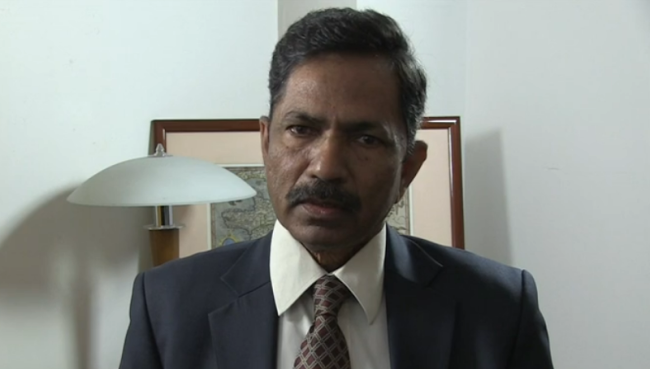
(Dis)integrating Asia? - Interview with GVC Naidu
GVC Naidu is a Professor of International Relations at the Jawaharlal Nehru University in New Delhi.
Ifri, a foundation recognized as being of public utility, relies largely on private donors – companies and individuals – to guarantee its sustainability and intellectual independence. Through their funding, donors help maintain the Institute's position among the world's leading think tanks. By benefiting from an internationally recognized network and expertise, donors refine their understanding of geopolitical risk and its consequences on global politics and the economy. In 2026, Ifri partners with over 90 French and international companies and organizations.
