




China’s National Carbon Market: a Game Changer in the Making?
As 2017 drew to close, China officially approved plans for its long-awaited national Emission Trading Scheme (ETS) and the National Development and Reform Commission (NDRC) outlined some of the implementation details[1]. Though it will be limited to the power sector (and combined heat and power, or CHP) at first, it will nevertheless be the world’s largest carbon market. It is expected to cover 1,700 companies representing approximately 30% of China’s total greenhouse gas (GHG) emissions. China’s CO2 emissions from fuel combustion amounted to approximately 8,796 metric tonnes of CO2 equivalent (MtCO2Eq.) in 2016, and seem to remain stable since 2014, though they appear to increase again in 2017[2]. Shanghai should host the national market exchange, which will be jointly owned by the governments of other provinces while Hubei should host the registry[3].
Decarbonizing Germany’s Power Sector: Ending Coal with a Carbon Floor Price?
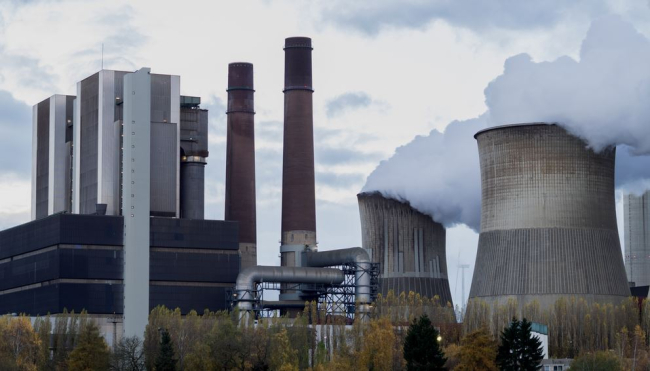
Germany has a long tradition of climate policy programmes with ambitious greenhouse gas emission reduction targets and comprehensive climate and energy policy packages.
This target-driven policy approach is, however, increasingly facing challenges due to the lack of progress on greenhouse gas emission reductions in key sectors, i.e. the power, the transport and the building sector.
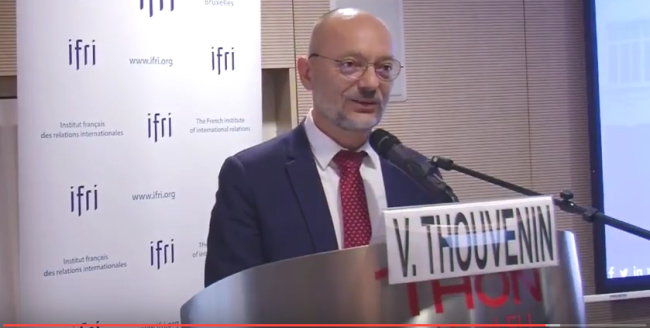
RTE and the transformation of the European electricity system - Keynote Address by Vincent THOUVENIN
Vincent Thouvenin, Director for European Affairs of RTE, explains the role and challenges faced by transmission system operators in the energy transition at the 2030 horizon, and how the Clean Energy Package will accompany the transformation of our electricity systems.
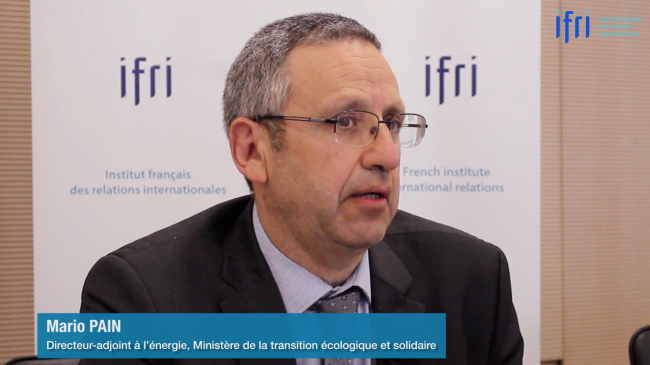
The Transformation of the Electricity French System in 2030 - Mario Pain
Deputy Director, Ministère de la transition écologique et solidaire, describes the main challenges for the French energy system at the 2030 horizon and highlights the need to find the right balance between EU harmonization and national measures to achieve energy transition at the lowest cost.

Europe in the Global Race for Electrical batteries
This study weighs up the different strategic approaches that Europe may adopt in the industrial race for electrical batteries, taking into account the demand potential for e-mobility and stationary storage, the global competitive landscape and the policy support for local players in Asia and the U.S.
The Landscape of Renewable Energy Sources in Europe in 2030
The study analyses the European rules designed to promote renewable energy, highlighting their innovations and the difficulties they will raise. The study highlights the consequences of some of the measures envisaged and pays particular attention to the electricity market.
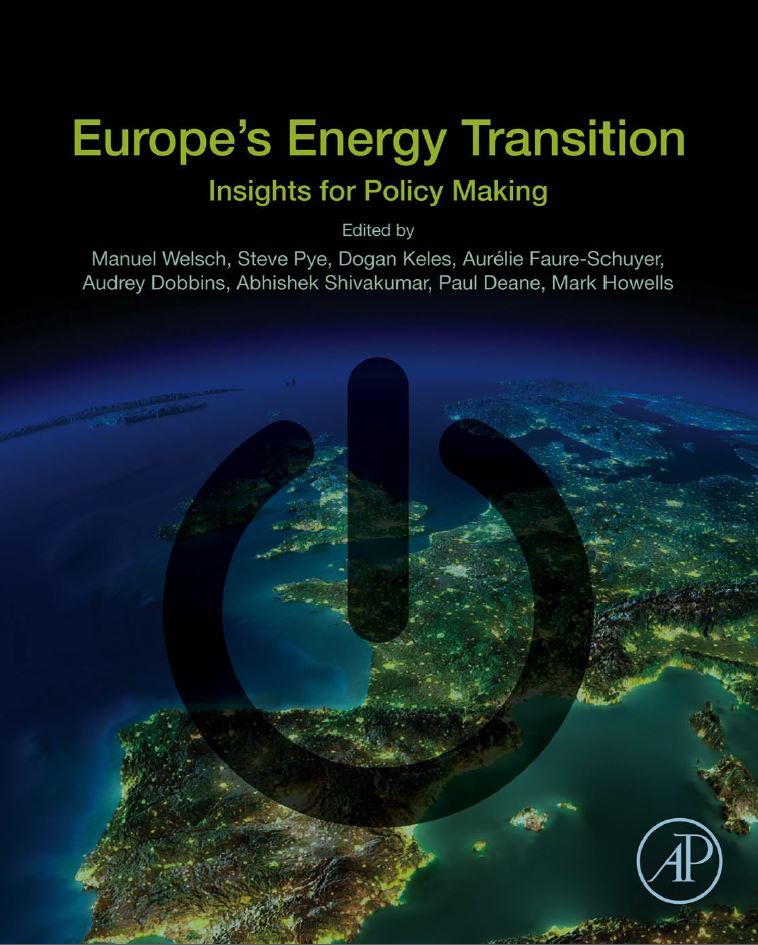
Europe's Energy Transition - Insights for Policy Making
This book was authored by the Insight_e European consortium, in which the Ifri Center for Energy was involved between 2014 and 2017. It is based on the key research projects carried out over the last three years on the Energy Union, greenhouse gas emissions reduction policies, security of gas and electricity supplies and the societal dimensions of the energy transition.
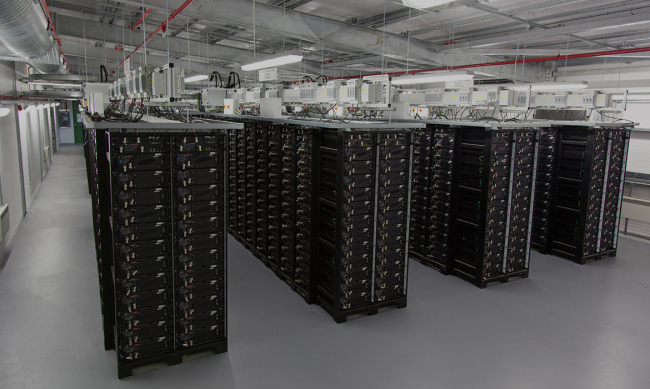
Electricity storage in a redesigned market
Storage technologies have the potential to significantly support the EU’s electricity system, bringing a number of flexibility services. There are numerous electric energy storage (EES) technologies, tackling different magnitudes in terms of quantity of energy, ramp-up time, duration of discharge, costs, and lifetime.
A Point of View on the UK Energy Policy
The United Kingdom chose to leave the European Union at a crucial moment for the Energy Union, and in a period when the necessity of leading a coherent energy transition is strongly shared by EU countries. In the light of this conjunction of events, this study analyses the determining factors of the UK energy policy.
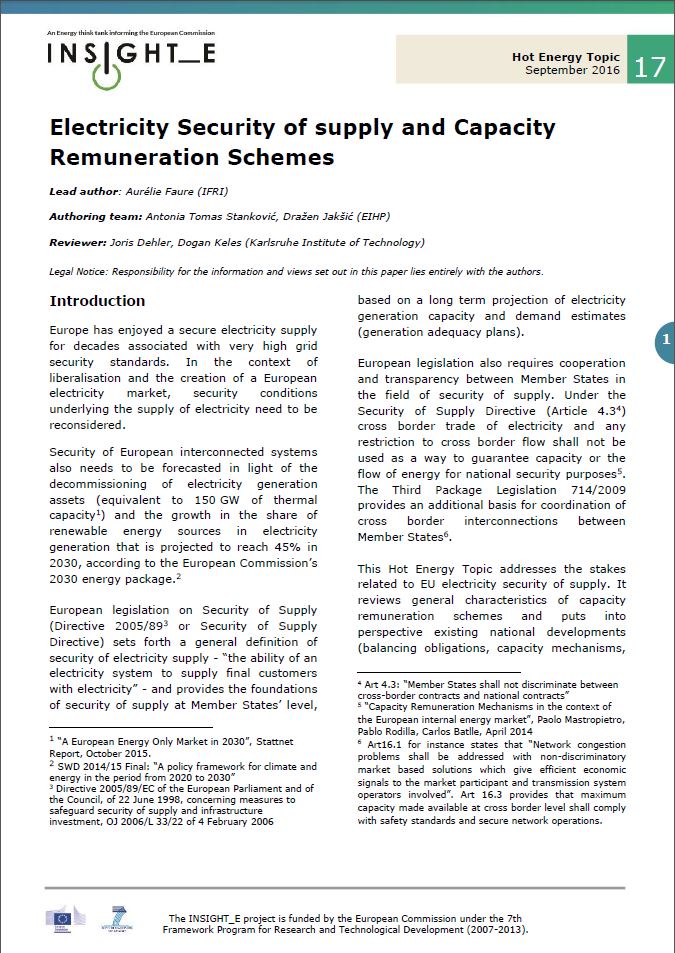
Electricity Security of Supply and Capacity Remuneration Schemes
In the context of liberalisation and the creation of a European electricity market, security conditions underlying the supply of electricity need to be reconsidered.

Business Models for Flexible Production and Storage
This report explores business models for storage solutions that may help the European energy system adapt to new challenges.
The European Union : When the Commission and Governments put the Future of Electricity Producers at Stake
RWE, EON, EDF, ENGIE and other large utilities are in financial turmoil. This situation, which would have been unlikely twenty years ago, is related to several failures in governance within the EU as well as to global evolutions. This Edito Energie analyses the situation of large European electricity producers in light of the European energy policy.
The US Electricity Industry and the Low-Carbon Transition
Transitioning to a low-carbon, decentralized and digitalized electricity system requires setting out new roles for incumbent suppliers, new entrants and consumers now generating their own power. Where is the US electricity industry heading and what does it say about market designs for the 21st century electricity system?
Electric Networks and Energy Transition in Europe
After a century of close development between power generation facilities and networks, the liberalisation of the electricity sector has broken this link in Europe. Long-distance transmission networks now play a key role in stimulating competition between generators by giving consumers access to remote power generation facilities.
Demand Response in Europe’s Electricity Sector: Market barriers and outstanding issues
In October 2014, Europe’s drive for sustainability has been further continued with the set objectives for 2030, aiming for 40% emission reduction compared to 1990 levels and at least a 27% share of renewable energy sources. For the longer term, the European Commission (EC) targets a zero CO2 emitting electricity sector in 2050. Those objectives for the electricity sector have a large impact on the expected development of electricity generation, but also on the evolution of demand. To meet those objectives, a larger share of electricity supply will come from intermittent sources like wind turbines and solar panels.
The Saudi Electricity Sector: Pressing Issues and Challenges
With 266 billion barrels of proved oil reserves (16% of world total), Saudi Arabia holds the world's largest (conventional) crude oil reserves, was the largest exporter of total petroleum liquids in 2013, and the second largest petroleum liquids producer behind the United States[1].
The EU Electricity Policy Outlook for the Smart Grid Roll-Out
The energy transition from a socio-economic system based on fossil fuels to a sustainable low-carbon system is a multi-facetted process. This “transformation” of the energy system, more specifically of the power system, creates several challenges.
The European Power System - Decarbonization and Cost Reduction: Lost in Transmissions?
Europe’s energy policy is commonly defined by three axes of equal importance: security of supplies, competitiveness and sustainable development. The European Commission is mandated to develop the policy tools that allow the implementation of this common policy. Early on, challenges arose from the trade-offs to be made not only between these three pillars but also between a common European policy and national approaches. The European Commission has always had to struggle in attempting to keep a balanced line.
German Nuclear: Green Is Good Politics
In polarized politics, the voter must take on faith the wisdom inherent in the principled political position. Who cannot be impressed by the nuclear catastrophe at Fukushima, especially after living through the fallout from Chernobyl? But is it reasonable to send the voter to the booth with only half the information? Does the German voter have any idea what it means to shut down its nuclear power in just ten years? Have German politicians made any effort to tell them?
German Power Options: Lack of Clarity Will Be Costly
The German environment minister Norbert Röttgen (CDU) revived the German debate about the future of nuclear power in February when he argued for a limited lifetime extension of Germany’s nuclear plants.
Ifri, a foundation recognized as being of public utility, relies largely on private donors – companies and individuals – to guarantee its sustainability and intellectual independence. Through their funding, donors help maintain the Institute's position among the world's leading think tanks. By benefiting from an internationally recognized network and expertise, donors refine their understanding of geopolitical risk and its consequences on global politics and the economy. In 2026, Ifri partners with over 90 French and international companies and organizations.
