The Shock of Reality: The Traffic Light Coalition in the Russian-Ukrainian Crisis
The Russian-Ukrainian crisis puts to the test the cohesion of the new traffic light coalition, the authority of Chancellor Scholz and the ambition to adapt the post-Merkel German foreign policy.
The Importance of the OSCE in German Diplomacy
As an essential platform for multilateralism, the Organization for Security and Co-operation in Europe (OSCE) has always been important to German diplomacy, although in varying degrees. Historically, Germany’s support for the Conference on Security and Co-operation in Europe (CSCE) process was motivated by the aim of mitigating and ultimately overcoming the division of Germany.
European Security – Challenges at the Societal Level
Relations between Russia and the West have deteriorated dramatically in recent years. The institutional foundations of cooperative security in Europe and the rules and principles they represent are rapidly disappearing.
War’s Indirection or the Return of the Limited War
Over the last few years both the United States and Russia seem to have changed their conception of how to deploy force.
The Atlantic Partnership’s Trial of Multipolarity: End of Illusions
European solidarity seems to be breaking down just as Europe is becoming a lesser factor in American strategy and alongside the proliferation of divergent poles affirming the differences of interests on the international scene.
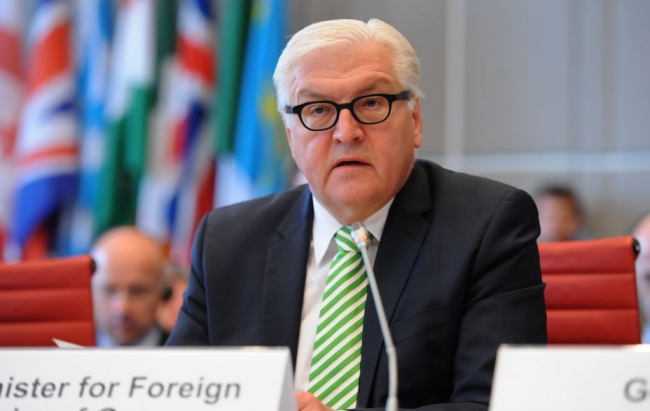
The German OSCE Chairmanship in 2016: Towards a renewed dialogue with Russia?
The Organization for Security and Cooperation in Europe (OSCE) represents the perfect framework for discussion of pan-European security issues thanks to its unique composition - fifty-seven member states of the Euro-Atlantic sphere, including the United States and Russia. The OSCE remains indeed one of the few forums of institutionalized dialogue between Western countries and Moscow and the only one to also include Washington.
The war could still last for years and paradoxically, time is not on the Kremlin's side
Dimitri Minic, Scientific Director of the Observatory on Russia, Eastern Europe, the Caucasus, and Central Asia and a Research Fellow at Ifri’s Russia/Eurasia Center, argues in an interview with Le Monde that “Ukraine should not be buried too quickly,” even if the current balance of power favors Russia.
Replay - France-Ukraine Forum 2025
Replay of the France-Ukraine Forum 2025. - Three years after the start of Russia's full-scale war against Ukraine, the France-Ukraine 2025 Forum will welcome politicians, experts, academics, and civil society representatives from both countries to discuss three main topics: Ukraine's current military strategy and strategic perspectives; the country's resilience and recovery; Ukraine's European and transatlantic perspectives, including the EU accession process and its aspirations to join NATO.
Germany passes military service bill
In the wake of the war in Ukraine, Germany and France are working to define security guarantees for Kyiv.
European safety guarantees for Ukraine: The torch burns between Paris and Rome
Last week, France summoned the Italian ambassador in a dispute that reveals the differences between Europeans over the security guarantees they would be prepared to provide to Ukraine in the event of a peace agreement.
Support independent French research
Ifri, a foundation recognized as being of public utility, relies largely on private donors – companies and individuals – to guarantee its sustainability and intellectual independence. Through their funding, donors help maintain the Institute's position among the world's leading think tanks. By benefiting from an internationally recognized network and expertise, donors refine their understanding of geopolitical risk and its consequences on global politics and the economy. In 2025, Ifri supports more than 80 French and foreign companies and organizations.