





Practical information
As part of the Ifri Energy Program, a seminar with Claude Breining, Head of European Affairs and Standardization Strategy, Schneider Electric Industries, Yamina Saheb, Senior Building Energy Policy Analyst, Energy Efficiency Unit, IEA, and a Representative of the European Commission (tbc). Chaired by William C. Ramsay, Senior Fellow and Director of the Ifri Energy Program and Jacques Lesourne, Chairman of the Scientific Committee of the Ifri Energy Program.
Several voices have raised doubts that the EU can reach its energy efficiency objective under the current set of policies. National Energy Efficiency Action Plans have been criticized and we must acknowledge the fact that Members have still not grasped the full potential for energy savings which could yield as much as 40% of the emissions reduction needed by 2050 to achieve the 450 ppm objective. How to re-position energy efficiency at the core of EU strategy to fight global warming? Through three different perspectives, this seminar will try to answer this question. A representative of the European Commission will present the comprehensive new Energy Efficiency Plan implemented by the European Commission. Yamina Saheb, an energy efficient expert at the IEA, will address the considerable potential for energy savings in buildings. Claude Breining of Schneider Electric will conclude the presentations with an industrial perspective.
Other events
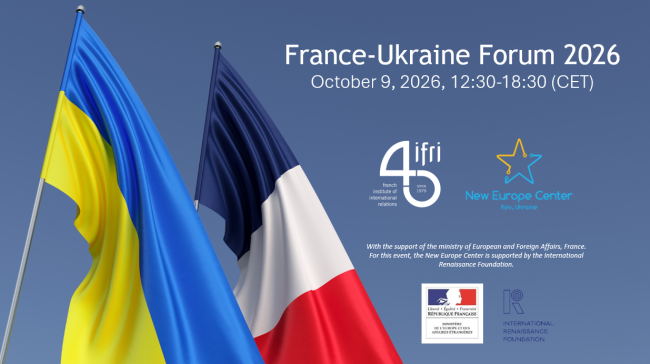
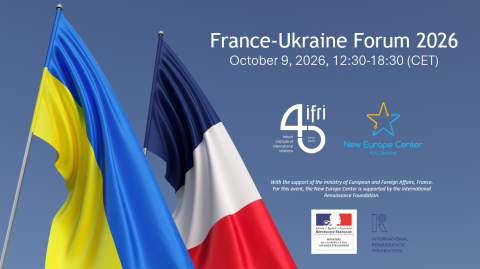
France-Ukraine Forum 2026
More than four and a half years after the start of the full-scale war launched by Russia against Ukraine, the 2026 France-Ukraine Forum will bring together policymakers, experts, academics, and civil society representatives from both countries to discuss three main topics: the formats and conditions for a lasting diplomatic settlement; Ukraine’s Euro-Atlantic integration, encompassing both the EU accession process and closer ties with NATO; and the societal transformations of postwar Ukraine, as well as its prospects for reconstruction.
The EU in a World of Economic Warfare: Trade, Geopolitics, and the Battle for Economic Sovereignty
The international trading system has become a primary theatre of geopolitical competition. Tariffs, sanctions, and technology controls have replaced dialogue as the default instruments of economic relations.
The Road to 27 Electrification Action Plans: Planning and Investing in Europe’s Electric Future
The European Commission’s Electrification Action Plan places the continent on an electric path to structurally reduce dependence on fossil fuel imports and boost the energy transition in industry, transport and buildings.