

Finland: In Search of an Effective and Equitable European Union
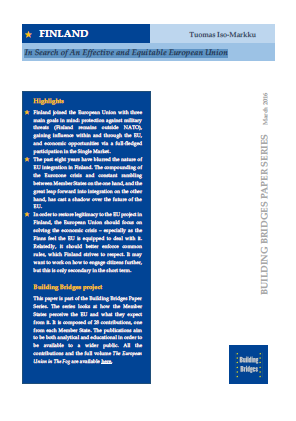
Finland joined the European Union with three main goals in mind: protection against military threats (Finland remains outside NATO), gaining influence within and through the EU, and economic opportunities via a full-fledged participation in the Single Market.
The past eight years have blurred the nature of EU integration in Finland. The compounding of the Eurozone crisis and constant rambling between Member States on the one hand, and the great leap forward into integration on the other hand, has cast a shadow over the future of the EU.
In order to restore legitimacy to the EU project in Finland, the European Union should focus on solving the economic crisis – especially as the Finns feel the EU is equipped to deal with it. Relatedly, it should better enforce common rules, which Finland strives to respect. It may want to work on how to engage citizens further, but this is only secondary in the short term.
This publication is part of the "Building Bridges Paper Series". For more information about this project, click here.

Available in:
Regions and themes
Share
Download the full analysis
This page contains only a summary of our work. If you would like to have access to all the information from our research on the subject, you can download the full version in PDF format.
Finland: In Search of an Effective and Equitable European Union

Author(s)
Related centers and programs
Discover our other research centers and programs
Center for Asian Studies
Asia is a nerve center for multiple global economic, political and security challenges. The Center for Asian Studies provides documented expertise and a platform for discussion on Asian issues to accompany decision makers and explain and contextualize developments in the region for the sake of a larger public dialogue.
The Center's research is organized along two major axes: relations between Asia's major powers and the rest of the world; and internal economic and social dynamics of Asian countries. The Center's research focuses primarily on China, Japan, India, Taiwan and the Indo-Pacific, but also covers Southeast Asia, the Korean peninsula and the Pacific Islands.
The Centre for Asian Studies maintains close institutional links with counterpart research institutes in Europe and Asia, and its researchers regularly carry out fieldwork in the region.
The Center organizes closed-door roundtables, expert-level seminars and a number of public events, including an Annual Conference, that welcome experts from Asia, Europe and the United States. The work of Center’s researchers, as well as that of their partners, is regularly published in the Center’s electronic journal Asie.Visions.
Find out more
Discover all our analyses
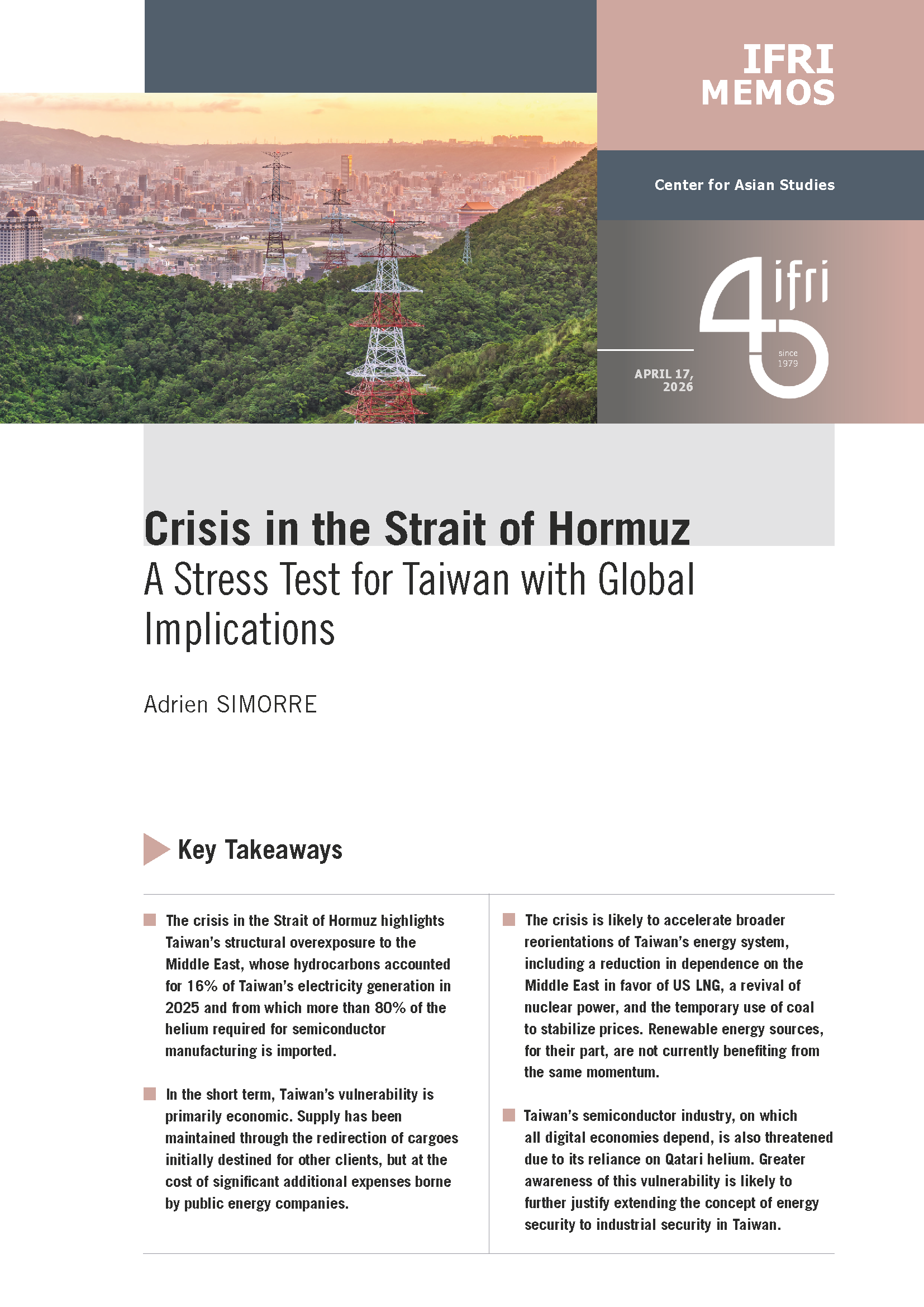
Crisis in the Strait of Hormuz. A Stress Test for Taiwan with Global Implications
The large-scale military operation carried out by the United States (US) and Israel against Iran triggered an Iranian retaliation that resulted in the partial destruction of natural gas liquefaction infrastructure and severe disruption of maritime traffic in the Strait of Hormuz. The economies of East Asia—South Korea, Japan, and Taiwan in particular—are highly exposed to this crisis due to their reliance on liquefied natural gas (LNG) imports for electricity generation.
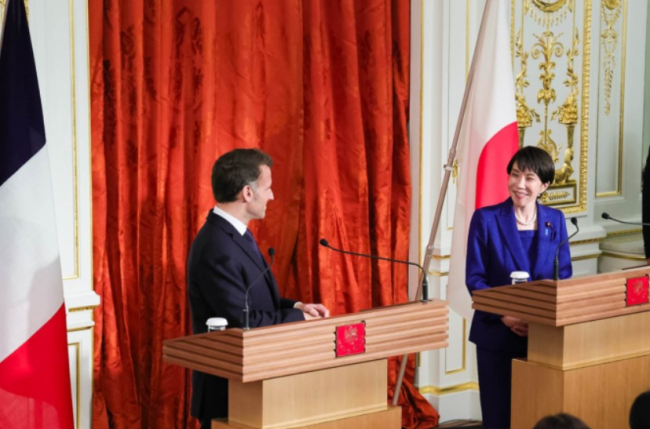
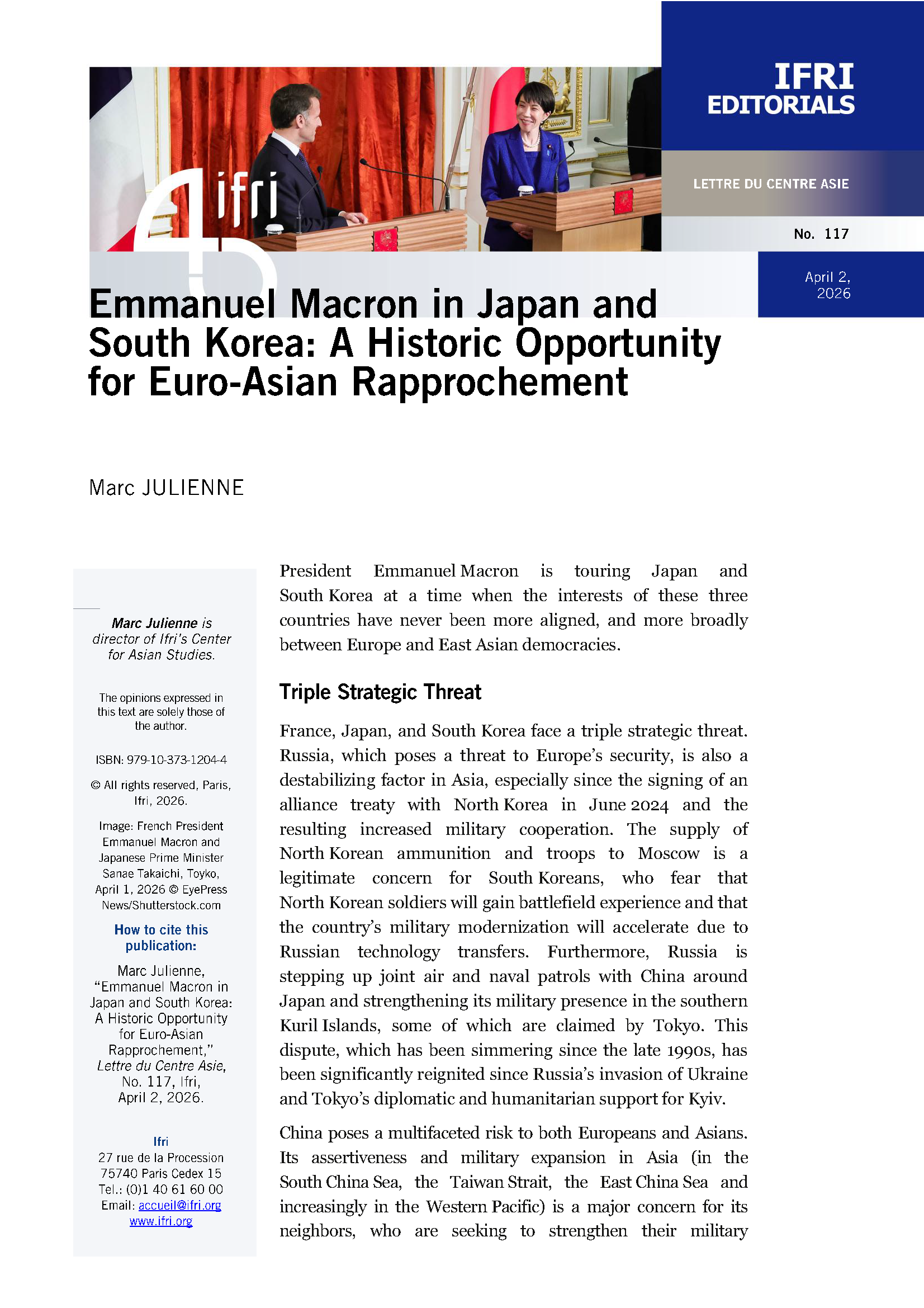
Emmanuel Macron in Japan and South Korea: A Historic Opportunity for Euro-Asian Rapprochement
President Emmanuel Macron is touring Japan and South Korea at a time when the interests of these three countries have never been more aligned, and more broadly between Europe and East Asian democracies.

Afghanistan-Pakistan: The Overlooked War at the Margins of the Middle East Conflict
Pakistan has historically maintained the closest ties to the Taliban movement and initially viewed its return to power in Afghanistan in the summer of 2021 with considerable optimism. The bilateral relationship has since deteriorated, and the two neighbors have been caught in a cycle of escalation since last fall. In October 2025, Pakistan launched its first airstrikes on Kabul. For three weeks in February–March 2026, Afghanistan intensified ground assaults on the Pakistani side of the border as well as drone attacks on Islamabad and Rawalpindi. Pakistan, for its part, has intensified airstrikes on Afghan border areas, as well as on Kabul and Kandahar. Given the dynamics at play at the bilateral and regional levels, the prospects for a sustained return to stability appear limited.
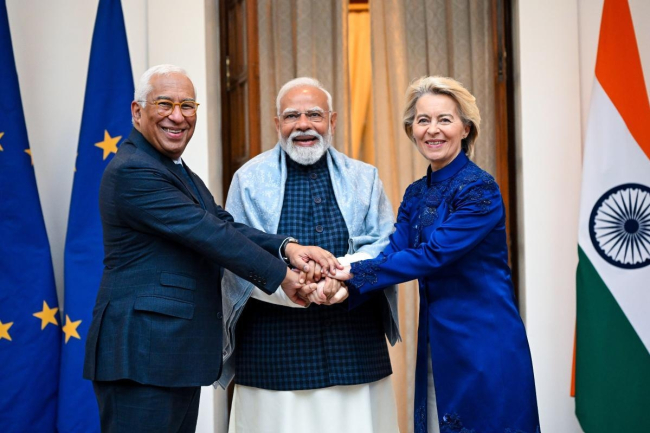
European Union-India: Lasting Rapprochement or Partnership of Convenience?
The partnership between the European Union (EU) and India has long been limited to economic exchanges. Its political dimension has gradually developed, culminating in its elevation to the status of a “strategic partnership” in 2004. However, the failure of negotiations for a free-trade agreement in 2013 slowed this momentum. Since the early 2020s, in an uncertain geopolitical context, bilateral rapprochement has gained new momentum.