





Practical information
With ratification of the new Treaty behind it, the European Union is under pressure to "return to the serious business of governing". At this critical juncture in the EU's development, nine leading Brussels-based think tanks : the Bertelsmann Stiftung, the Brussels European and Global Economic Laboratory (Bruegel), the Centre For European Studies (CEPS), the Egmont Institute, the European Policy Centre (EPC), the Institut français des relations internationales (Ifri), Madariaga - College of Europe Foundation, the Stiftung Wissenschaft und Politik (SWP) and Friends of Europe-Les Amis de l'Europe, in cooperation with Agence Europe have initiated an annual forum to deal with the Union's emerging politico-strategic agenda. How can the EU best apply its new institutional apparatus to incipient societal and global challenges including climate policy, migration, the economic crisis and global governance? The results of a brainstorming exercise by policymakers and other experts on the Copenhagen Agreement, the current financial turbulence, the Stockholm Programme, as well as the EU's role in a changing global environment will be presented for discussion. Due to limited space, registration is on a first come first serve basis. Dead line for registration is Friday 9th January, 9:00 am
Media partner: Agence Europe
In order to register your attendance, please send an email to Matt Dann at Bruegel, [email protected]
Photos Copyright: Ulla Kimmig
Other events
COP31 in Antalaya: State of the Global Climate Governance, Issues, Perspectives
COPs have become a year-end marathon to revigorate a world now entering the era of climate overshoot. While Türkiye exhibits the largest coal-fired power generation in OECD Europe, it has embraced the electrification agenda and aims at joining forces with Australia on fostering action and implementation. This is an unusual de facto co-presidency arrangement, but one that could yield promising results. This webinar will take stock of what climate governance has achieved and of the issues still to be negotiated, and explore what impetus this Turkish–Australian partnership could provide.
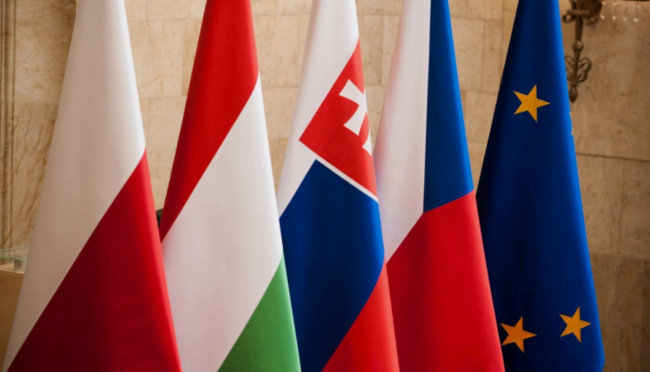
A New Moment for Central Europe? Regional Cooperation in a Time of European Strategic Choices
Recent political developments in Central Europe have revived the debate about the future of regional cooperation and the Visegrád Group. Changes in Hungary, Poland, the Czech Republic and Slovakia, together with Austria’s growing interest in closer cooperation with its neighbours, could create new opportunities for dialogue and coordination around shared priorities.