




Practical information
One month after Obama's reelection, Ifri's 11th Annual Conference on the United States will review the new political and economical landscape and the main challenges of America's foreign policy. A unique opportunity for European and U.S. thinkers to engage in an in-depth discussion of the main current issues regarding the United States.
Short videos of the presentations and ensuing debates are available here. To download the speakers' powerpoints, please click "See the event report" above.
9:00-10:45 The Political Outlook of President Obama's Second Term
The social and political evolutions of U.S. public opinion as shown by the November vote
John ZOGBY, Senior analyst, JZ Analytics
Will President Obama and the new Congress break the institutional deadlock? Can bipartisanship be renewed?
Corine LESNES, Washington correspondent for Le Monde
The role of the Supreme court in U.S. politics: what can we expect from upcoming decisions?
Jeffrey ROSEN, Law Professor, George Washington University
Moderator: Laurence NARDON, Head of the U.S. Program, Ifri
11:15-13:00 The Economy: How to Bounce Back to Growth?
Can we trust the current signs of a macroeconomic improvement?
Florence PISANI, Economist, Dexia Asset Management
Will the new energy mix boost the U.S. economy?
Antoine HALFF, Head of the Oil Industry and Markets Division, International Energy Agency
Is there a future for blue-collar jobs in America; is re-industrialization possible?
Rob CARNELL, Chief International Economist, ING UK
Moderator: Anne BAGAMERY, European Day Editor, The International Herald Tribune
15:00-17:15 Foreign Policy Issues
15:00-15:30 Keynote Speech
Where does American nationalism stand today?
Anatol LIEVEN, Professor, War Studies Department, King"s College London
15:30-17:15 Foreign Policy: the Major Issues America Faces
Cyber threats and cyber weapons: a U.S. perspective
Thomas RID, Reader, King"s College London
Next steps in the U.S. Pivot to Asia
Ely RATNER, Fellow, Center for a New American Security
U.S. perceptions and policies as to the risk of nuclear and ballistic proliferation
Alex LENNON Senior Fellow, International Security Program, CSIS
Moderator: Alexandra DE HOOP SCHEFFER, Director of the Paris Office, German Marshall Fund of the United States
17:15-17:45 Conclusion
The enduring relevance of the transatlantic perspective
Simon SERFATY, Zbigniew Brzezinski Emeritus Chair, CSIS
Discussions will be held in English and French with a French to English translation.
Contact : [email protected]
Lieu : Ifri: 27, rue de la Procession, 75015 Paris
Organisateurs : Laurence Nardon, head of the United-States.
<p style=" In partnership with:

Other events
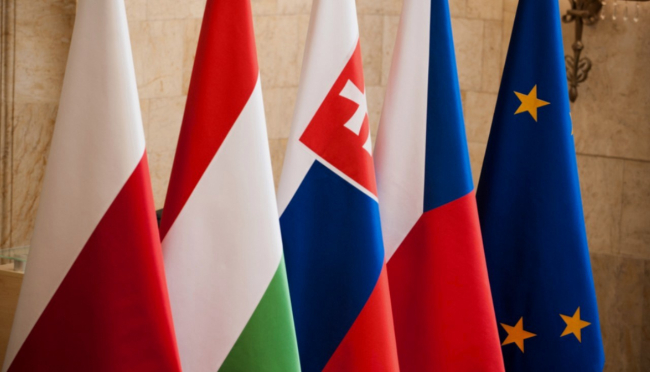
A New Moment for Central Europe? Regional Cooperation in a Time of European Strategic Choices
Recent political developments in Central Europe have revived the debate about the future of regional cooperation and the Visegrád Group. Changes in Hungary, Poland, the Czech Republic and Slovakia, together with Austria’s growing interest in closer cooperation with its neighbours, could create new opportunities for dialogue and coordination around shared priorities.
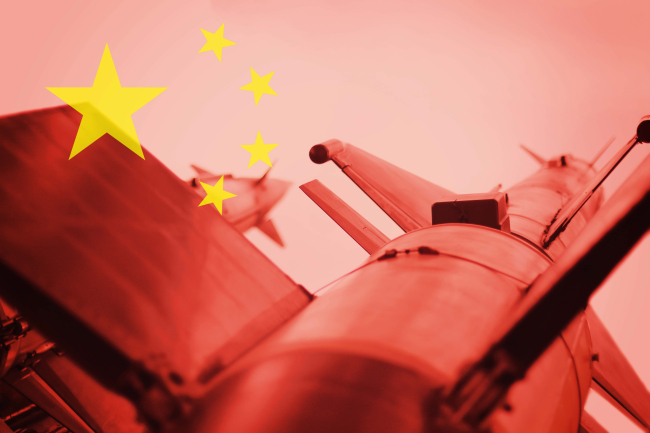
China’s Nuclear Buildup: Developments, Drivers, and Implications for Major-Power Relations and Arms Control
China has been steadily expanding its nuclear arsenal for several years amid levels of geopolitical tension unseen since the end of the Cold War, marked by a resurgence in nuclear proliferation and a broader, global arms race.

Reinventing Coordination in an Age of Fragmentation
The world economy is being reordered. The certainties of the post-Cold War era, open trade, dollar centrality, predictable multilateral coordination, are giving way to a landscape shaped by rivalry between the United States and China, the weaponization of interdependence, and a scramble to secure supply chains, technologies and critical resources. What once looked like a stable architecture now appears fragile, contested, and in places actively being dismantled.