


Paris and Berlin in search of a compass: convergences and divergences in foreign policy in a world lacking points of orientation



France and Germany now share the same assessment of a world lacking clear beacons—a world marked by American disengagement under a second Trump administration, the Russian threat looming toward 2030, and the need to reduce dependencies on China.
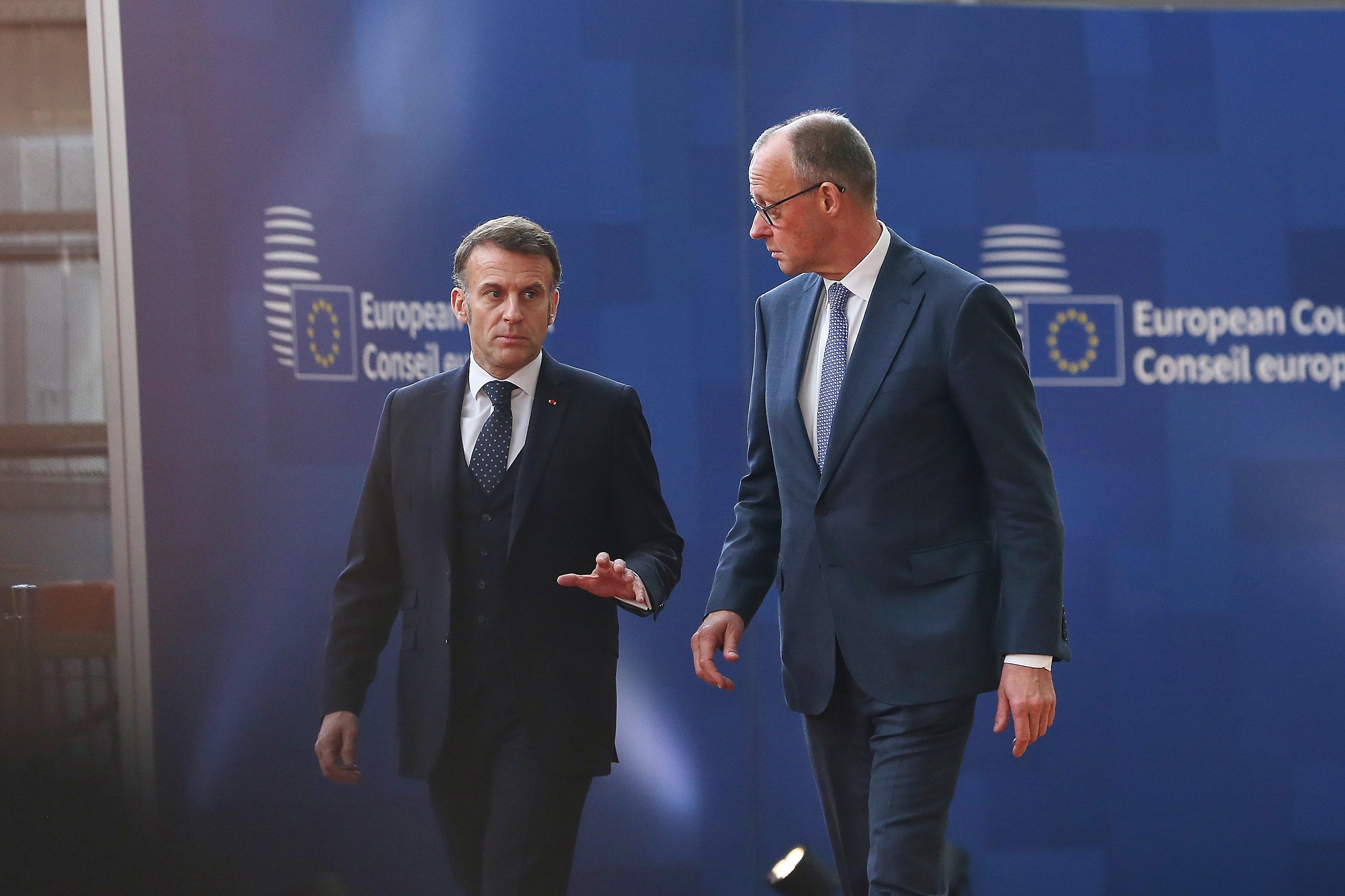
While both countries agree on the diagnosis of the geopolitical shock facing the world, their respective historical backgrounds lead to different approaches. Although there is a genuine alignment regarding China, concrete cooperation—for instance, in the defense industry—is becoming increasingly difficult. This cross-cutting study on French and German foreign policy consists of eleven chapters that examine the convergences and divergences between Paris and Berlin, while also identifying opportunities for closer collaboration. It covers the following topics: transatlantic relations; relations with China; the Indo-Pacific; the Middle East; the Global South; European Union (EU) enlargement; migration policy; energy diplomacy; trade and competitiveness; European defense and NATO; and space policy and digital sovereignty.
Given the current situation and the challenges facing the EU, it is essential to advance areas where cooperation has already proven successful, foster opportunities for pragmatic collaboration, and systematically link bilateral initiatives with European ones.
- This publication is available in French: "Paris et Berlin face à un monde sans repères. Entre convergences et divergences en matière de politique étrangère".
- This publication will be available in German soon: "Paris und Berlin auf der Suche nach einem Kompass: Konvergenzen und Divergenzen in der Außenpolitik in einer Welt ohne Orientierungspunkte".
Edited by: Paul Maurice, Marie Krpata, and Jeanette Süß
Florian Bigge, Program Director, International Affairs, Körber Foundation
Dominique David, Advisor to the President of Ifri, Editor-in-Chief of Politique étrangère, Co-Director of Ramses, and President of the Franco-Austrian Centre for Rapprochement in Europe (CFA)
Alix Frangeul-Alves, Program Manager, Strategic Foresight, The German Marshall Fund of the United States (GMFUS)
Esther Goreichy, Associate Fellow, Mercator Institute for China Studies (MERICS)
Klemens Kober, Director for Trade Policy, EU Customs, and Transatlantic Relations, DIHK
Jonathan Lehrer, Program Manager, "Körber Emerging Middle Powers" Initiative, *The Berlin Pulse*, Körber Foundation
Annabelle Livet, Research Fellow, Foundation for Strategic Research (FRS)
Florent Marciacq, Associate Fellow at Ifri, Deputy Secretary General of the Franco-Austrian Centre for Rapprochement in Europe (CFA)
Rose Massenez, Staff Member, Turkey/Middle East Program, Ifri
Céline Pajon, Research Fellow and Head of Japan and Indo-Pacific Research, Asia Center, Ifri
Isabelle Schäfer, Associate Fellow, Center for Migration, DGAP
Dorothée Schmid, Head of the Turkey/Middle East Program, Ifri
Eva Seiwert, Analyst, Mercator Institute for China Studies (MERICS)
Tara Varma, Director, Strategic Foresight, The German Marshall Fund of the United States (GMFUS)
Paul Wohrer, Research Fellow, Space Program, Geopolitics of Technology Center, Ifri
Amélie Zima, Research Fellow and Head of the European and Transatlantic Security Program, Security Studies Center, Ifri

Available in:
Themes and regions
Share
Dominique DAVID
Chair of the Austro-French Centre for Rapprochement in Europe (ÖFZ), Advisor to the Executive Chairman, Editor-in-chief of Politique étrangère and co-Director of Ramses
Florent MARCIACQ
Associate Research Fellow and Deputy Secretary General of the Austro-French Centre for Rapprochement in Europe (ÖFZ), Ifri

Céline PAJON
Research Fellow, Head of Japan and Indo-Pacific Research, Center for Asian Studies, Ifri

Dorothée SCHMID
Head of the Turkey/Middle East Program, Ifri
Paul WOHRER
Research Fellow, Space Program, Center for Geopolitics of Technology, Ifri
Amélie ZIMA
Research Fellow, Head of European and Transatlantic Security Program, Security Studies Center


The Study Committee on Franco-German Relations (Cerfa)
The Study Committee on Franco-German Relations (Cerfa) was created in 1954 by an inter-governmental agreement between the Federal Republic of Germany and France, in order to raise awareness of Germany in France and analyze Franco-German relations, including in their European and international dimensions. In its conferences and seminars, which bring together experts, political leaders, senior decision-makers and representatives of civil society from both countries, Cerfa develops the Franco-German debate and stimulates political proposals. It regularly publishes studies through two collections: Cerfa notes and studies as well as Franco-German visions.
Cerfa maintains close relations with the network of German foundations and think tanks. In addition to its research and debate activities, Cerfa promotes the emergence of a new Franco-German generation through original cooperation programs. This is how in 2021-2022, Cerfa led a program on multilateralism with the Konrad Adenauer Foundation in Paris. This program is aimed at young professionals from both countries interested in the issues of multilateralism in the context of their activities. It covered a wide range of themes relating to multilateralism, such as international trade, health, human rights and migration, non-proliferation and disarmament. Previously, Cerfa had participated in the Franco-German future dialogue, co-led with the DGAP from 2007 to 2020, and supported by the Robert Bosch Foundation and the Daniel Vernet group (formerly the Franco-German Reflection Group) which was founded in 2014 upon the initiative of the Genshagen Foundation.
Franco-German Relations Through the Lens of Donald Trump’s Second Term: Between Strategic Realignments, European Sovereignty, and the Enduring Transatlantic Bond
Donald Trump’s return to the presidency of the United States in 2025 acts as a powerful catalyst for the Franco-German relationship. Faced with growing uncertainty over the reliability of US security guarantees, Germany, more directly affected by the questioning of the transatlantic relationship, is gradually moving closer to the French position in favor of strengthening European strategic sovereignty.
MAGA and AfD: Toward a Transatlantic Alliance of Nationalist Right-Wing Parties
The rapprochement between Donald Trump’s MAGA movement and Germany’s AfD has accelerated significantly since Trump’s return to the White House.
VW, Mercedes, and BMW in the Face of Donald Trump—A Tightrope Walk Between Investing in the U.S., Maintaining Operations in Europe, and Catching Up in Electric Mobility
The German automotive industry faces a threefold challenge: competition from China; a difficult transition to electric vehicles; and US tariffs.
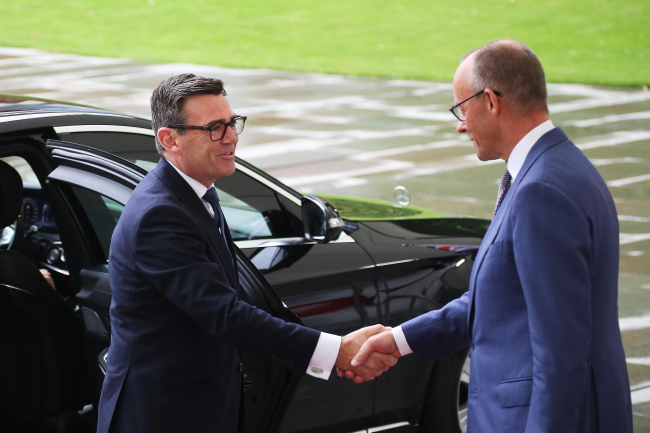
A Partnership Built on Security: Post-Brexit Rapprochement between Germany and the United Kingdom
Since the UK’s withdrawal from the EU, UK-German relations have undergone a remarkable transformation: from Berlin’s deliberate distancing from London during the Brexit negotiations, when Germany consistently prioritised EU-27 unity over bilateral arrangements, to a gradual rapprochement, culminating, for the time being, in the 2025 Kensington Treaty of Friendship.