




Japan's Energy Policy in a Post-3/11 World: Juggling Safety, Sustainability and Economics
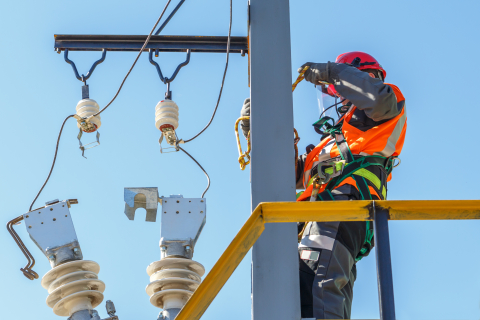
The March 2011 accident at the Fukushima Daiichi Nuclear Power Station turned Japan’s energy policy on its head, shedding a harsh new light on Japan’s energy policy and power supply system, and throwing into relief six major problem areas that had largely escaped scrutiny before the disaster.
(1) Fragmentation of the power grid under the regional monopolies of Japan’s 10 “general electric utilities” and the resulting failure to develop the kind of wide-area transmission system needed to transfer electricity from regions with a surplus to those suffering shortages.
(2) The low electric supply capacity of entities other than the 10 regional utilities, making procurement of electric power from other sources difficult.
(3) The lack of effective mechanisms for curtailing demand at times when a reliable electric supply is jeopardized.
(4) The inability of customers to choose a power source or supplier.
(5) The failure to manage the energy risks associated with a shutdown of Japan’s nuclear power plants.
(6) The urgent need to confront the risk of severe accidents and other hazards associated with nuclear power facilities.
The pre-quake Strategic Energy Plan announced by the Democratic Party (DPJ) in 2010 put an emphasis on nuclear power as the mainstay of Japan’s energy supply and offered little guidance for addressing these issues. The plan was subsequently rejected, and a new policy was announced by the DPJ to eliminate nuclear power from Japan’s energy mix before 2040. The coalition agreement between the Liberal Democratic Party and the New Komeito Party, which defeated the DPJ in the December 2012 general election, backtracked from the “zero nuclear power” policy, which constituted an important shift from the nuclear-dependent policies of the pre-Fukushima era.
In April 2013, the LDP government of Prime Minister Shinzo Abe approved a document titled Policy on Electricity System Reform emphasizing the need to make use of a wider range of energy sources, and in April this year, the cabinet adopted an updated Strategic Energy Plan aimed at reducing reliance on nuclear power as much as possible and building a flexible, diversified, multilevel supply-and-demand structure.
Many challenges remain to be overcome, however, such as accelerating the use of renewable energy, securing stable and lower-cost sources of fossil fuels, holding down rising electricity costs, and overcoming opposition to restarting nuclear power plants. Challenges related to the liberalization and unbundling of Japan’s power sector are also a lingering cause for concern.
The problems that emerged in the aftermath of 3/11 exposed the existing electricity system’s deep vulnerability. Sweeping reforms will be needed to overhaul this system and reduce reliance on nuclear power by diversifying energy sources.
Electricity system reform will thus be of vital importance. Such reforms will be advanced in a three-stage process under the April 2013 Policy on Electricity System Reform. However, this scheme seems imperfect at best and a number of lingering concerns remain regarding its consistency and efficiency. Electricity system reform is indispensable to rebuilding Japan’s post-Fukushima energy policy and ensuring the success of the Abenomics program of economic growth. Japan must thus carry out drastic electricity system reforms, without being swayed by vested interests.
Hikaru Hiranuma is Research Fellow at the Tokyo Foundation, Japan

Available in:
ISBN / ISSN
Share
This page contains only a summary of our work. If you would like to have access to all the information from our research on the subject, you can download the full version in PDF format.
Japan's Energy Policy in a Post-3/11 World: Juggling Safety, Sustainability and Economics

Center for Asian Studies
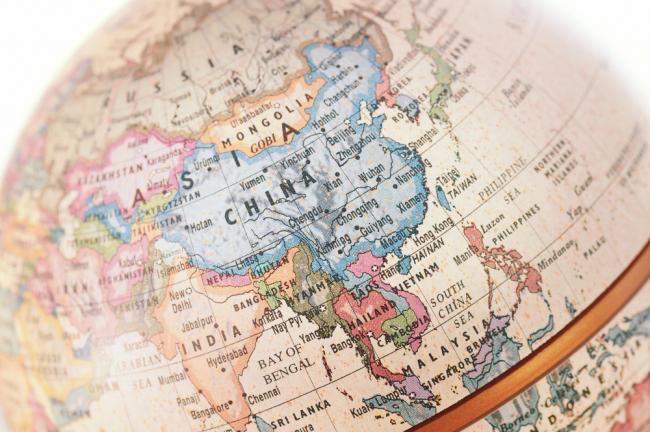
Asia is a nerve center for multiple global economic, political and security challenges. The Center for Asian Studies provides documented expertise and a platform for discussion on Asian issues to accompany decision makers and explain and contextualize developments in the region for the sake of a larger public dialogue.
The Center's research is organized along two major axes: relations between Asia's major powers and the rest of the world; and internal economic and social dynamics of Asian countries. The Center's research focuses primarily on China, Japan, India, Taiwan and the Indo-Pacific, but also covers Southeast Asia, the Korean peninsula and the Pacific Islands.
The Centre for Asian Studies maintains close institutional links with counterpart research institutes in Europe and Asia, and its researchers regularly carry out fieldwork in the region.
The Center organizes closed-door roundtables, expert-level seminars and a number of public events, including an Annual Conference, that welcome experts from Asia, Europe and the United States. The work of Center’s researchers, as well as that of their partners, is regularly published in the Center’s electronic journal Asie.Visions.
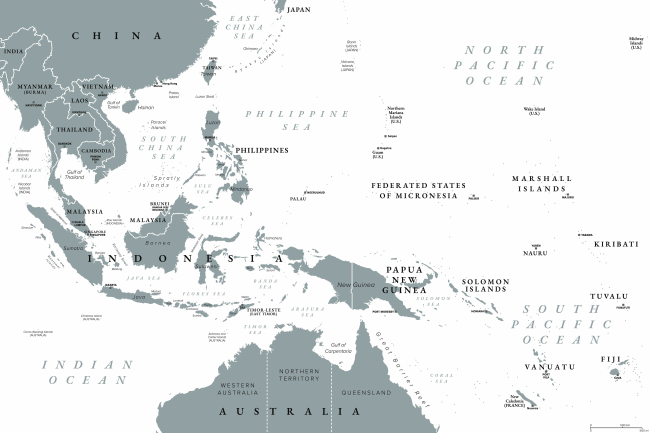
The Oceania Factor in France’s Evolving Indo-Pacific Strategy
This paper examines the two-way relationship between France’s Indo-Pacific strategy and developments in Oceania. Oceania was not a priority in the initial years of France’s Indo-Pacific strategy, as the region was largely treated as secondary to major strategic hotspots and key partnerships, while overseas territories were primarily handled as domestic issues and recipients of a top-down strategy.

France’s View: From Diplomacy to Public-Private Action
France has emerged as the EU’s IMEC forerunner, combining port infrastructure, diplomatic alliances and public-private cooperation. With Marseille Fos at its core, the country brings a strategic hub for logistics, energy and digital connectivity to the corridor.
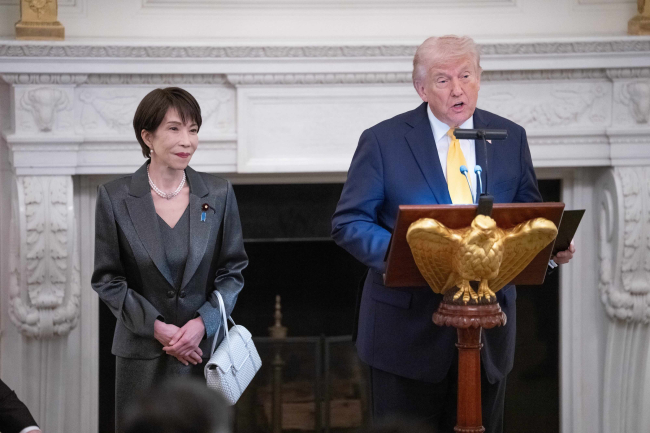
Trump II, the Crisis of the Rules-Based Order and Europe’s Indo-Pacific Strategy
This article examines the implications of Trump II for Europe’s engagement in the Indo-Pacific. The piece contends that Trump II is accelerating the erosion of the rules-based order and undermining the relevance of the Free and Open Indo-Pacific (FOIP) concept, while forcing Europe to refocus on its own continental security amid US retrenchment. Paradoxically, these very constraints create conditions for a more autonomous, pragmatic, and explicitly interest-driven European engagement in the Indo-Pacific, rather than outright withdrawal.
China and Trade in Critical Raw Materials (CRMs)
Critical raw materials (CRMs) have become central features of a new dynamic in global power politics, with China now wielding considerable leverage. Amid rising regional and global uncertainty, resource security is back in the spotlight as a key determinant of sovereignty and national security for Europe, its allies and its partners. The very survival of key, even vital industries, from automotive to aerospace to health to energy to defense, is at stake.