
14 publications for "briefings"
First Year of Lula: Overview of the Political Situation in Brazil
This Briefing offers an analysis of Brazil's political and economic situation and prospects at the end of 2023. It also examines Brazil's position on certain international relations issues, thirteen months after Lula's election.
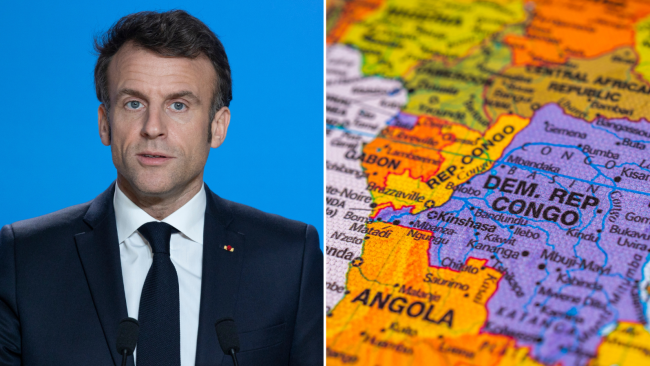
Emmanuel Macron's Trip to Central Africa: A Look Back on a Difficult Diplomatic Exercise
On February 27, 2023, Emmanuel Macron delivered a speech on French-African relations before traveling to Central Africa to meet with the leaders of four countries: Gabon, Angola, Congo, and the Democratic Republic of Congo. This briefing looks back at the key moments of his latest presidential trip and analyzes the limits of this diplomatic exercise.

Charles III's United Kingdom and Africa. A Temptation to Withdraw
On May 6, 2023, King Charles III will be crowned at Westminster Abbey in London. This briefing assesses the UK-Africa relations against the backdrop of the new King's discourse on Global Britain.
The Political Economy of the Metaverse
The "metaverse", at the heart of the strategy of large digital companies such as Facebook (Meta), does not yet exist and it will take decades to build it. This briefing provides an overview of the issues.
Digital Sovereignty Review of Macron’s Term and Debates in the 2022 Presidential Campaign
One month before the French presidential election, this briefing assesses the actions undertaken during Macron's term as well as the presidential candidates' proposals concerning France's digital sovereignty.
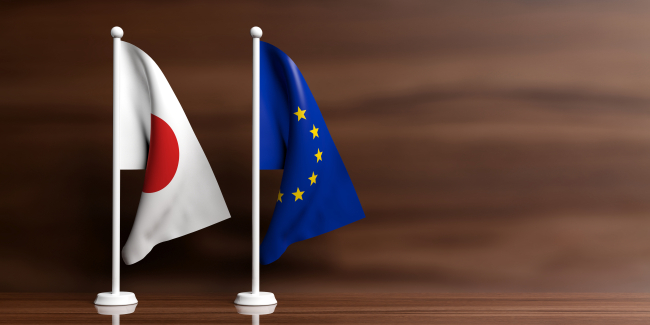
EU-Japan Relations: Moving Forward
EU-Japan relations have undergone a major uplift over the past 5 years. Bound by the Economic and Strategic Partnership Agreements, as well as the Partnership on Sustainable Connectivity, the two once-distant players have been stepping up efforts to address the many shared security concerns in the Indo-Pacific and beyond. Ahead of the upcoming EU-Japan summit, this Policy Brief takes stock of the current state of play and offers some food for thought on how to move forward with the bilateral relationship.
Russo-British Relations in the Age of Brexit
The paper examines the reasons for the poor state of relations between Russia and the United Kingdom, providing a brief historical and political account of why relations have deteriorated. The various options facing the UK after Brexit, and within this framework the ambiguity of current British foreign policy and diplomacy, are outlined.
Climate Action beyond COP21 - Conference Brief
On November 4th 2015, the Ifri Center for Energy held an international conference on the future of Climate Action beyond the COP21. The conference brought together key experts to outline reasonable expectations for the Paris Climate Summit, in terms of binding commitments from the parties and, more broadly, in terms of the profound transformation that an agreement could trigger.
Russia’s New Energy Alliances: Mythology versus Reality
This brief paper analyzes the energy relations between Russia and its “new” energy partnerships – with China and Turkey – that the Kremlin tends to publicly promote as an alternative to energy relations with the West.
The Nexus Between the Conflicts in the Mideast and Ukraine
Two simultaneous conflicts in Europe and the Middle East have brought the international order into flux. Russia’s annexation of Crimea and destabilization of eastern Ukraine have deeply undermined European security. Meanwhile, the self-declared Islamic State’s proclamation of a caliphate in western Iraq and eastern Syria has unsettled the Middle East. While it may be tempting for foreign policymakers to consider "Syraq" and "Rukraine" as unrelated crises, the tensions in Eastern Europe have strong implications for the situation in the Middle East, and vice versa. Indeed one of the greatest challenges to global governance is the combination of an assertive and declining Russia, and a disintegrating Middle East.
|
Global Memos are briefs by the Council of Councils that gather opinions from global experts on major international developments. The Council of Councils is a Council on Foreign Relations initiative connecting leading foreign policy institutes from around the world in a common conversation on issues of global governance and multilateral cooperation. The Council of Councils draws on the best thinking from around the world to find common ground on shared threats, build support for innovative ideas, and introduce remedies into the public debate and policymaking processes of member countries. The membership of the Council of Councils includes leading institutions from twenty-five countries, roughly tracking the composition of the Group of Twenty (G20). The network facilitates candid, not-for-attribution dialogue and consensus building among influential opinion leaders from established and emerging nations. FOUNDING COUNCIL OF COUNCILS MEMBER THINK TANKS
|
Why Russia and the EU Should Cooperate in Ukraine
Ukraine is divided along historical, ideological, economic, religious and linguistic lines, which it has failed to unite in its brief history.
The Religious Diplomacy of the Russian Federation
The Russian Federation is shaping its religious diplomacy (i.e., in brief, the use of the religious factor in foreign policy) and exercises it with a growing efficiency. This is, to a certain degree, a consequence of processes taking place in Russia, namely, first and foremost, the solving of the crisis of identity and values, and, closely connected with this, the renaissance of religion in Russian political and social life.
Coming in from the Cold? An Update on North Korea's External Economic Relations
This brief analysis of the current external economic relations of the Democratic People’s Republic of Korea (DPRK) leads to a number of conclusions.
High Stakes in the High North: Russian-Norwegian Relations and their Implications for the EU
After the collapse of the Soviet Union, Norway embarked on a policy to overcome old dividing lines in the High North and encourage closer cooperation with Russia, its large neighbor to the east. In addition to being neighbors in the High North - an area that still plays an important part in Russian strategic designs - both countries are important global energy players and share interests in developing energy resources in the area. However, their energy cooperation is influenced by many historical and geopolitical factors and concerns, and their bilateral relationship is strongly influenced by a visible disparity of their respective potentials and by their historically determined perceptions of each other. To what extent their cooperation in the energy sphere will be influenced by these perceptions, and to what extent their energy related interests overlap or collide are a few of the questions addressed in this brief analysis of the developing Russian-Norwegian energy relationship, particularly in light of Gazprom's decision to invite StatoilHydro to join the Shtokman gas field project.