
U.S. Domestic Policy
Trump's tenure has left a deep mark on the United States, resulting in strong disagreements at all levels of the political sphere that disrupt the proper functioning of institutions and weaken the country's equilibrium.
Jeffrey GOLDBERG - Trump: One Year After The Election
3 questions to Jeffrey GOLDBERG, Editor in Chief, The Atlantic
Karlyn BOWMAN - Trump: One Year After The Election
3 questions to Karlyn BOWMAN, Senior Fellow, American Entreprise Institute
Where is the U.S. nuclear arsenal headed?
An interview with Jon WOLFSTHAL, nonresident scholar, Nuclear Policy Program, Carnegie Endowment for International Peace


Trump : enough is enough?
The provocative, contemptuous and threatening style of the American president even irritate Republicans. Facing his overflows at the national and international levels, what mechanisms could limit the potential damages ?
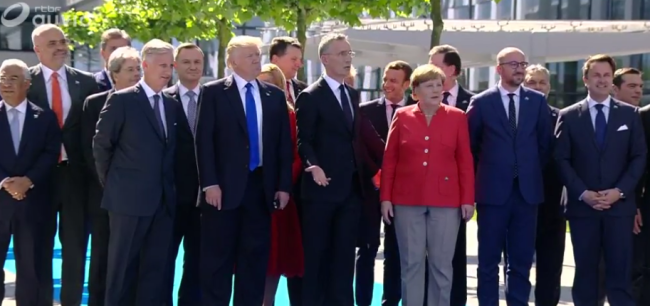
New Appointments Give Clues on Trump's European Policy: Wess Mitchell nominated for Assistant Secretary of State for European and Eurasian Affairs
Benjamin Haddad, research fellow at Hudson Institute in Washington D.C., reviews Wess Mitchell’s nomination for Assistant Secretary of State for European and Eurasian affairs. According to Haddad, as U.S. President Donald Trump struggles to appoint leaders to his administration, Wess Mitchell, who awaits the U.S. Senate’s confirmation, could be a wise choice.
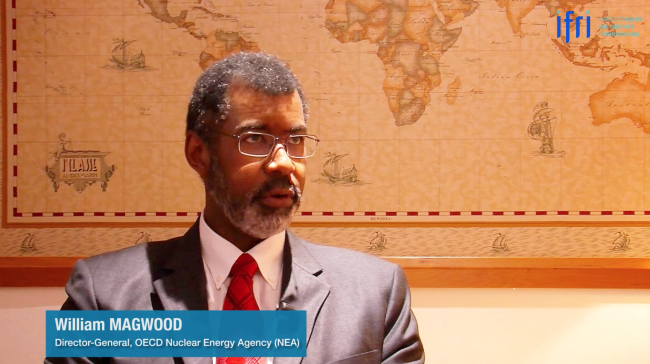
Nuclear Energy in the United States: an Appraisal
An interview with William D. Magwood, IV, Director-General of the OECD Agency for Nuclear Energy
Donald Trump's challenge to American democracy and the western alliance
On April 27, 2017, Ifri hosted David FRUM (former speechwriter for President George W. Bush, senior editor for The Atlantic magazine) to discuss Donald Trump's challenge to American democracy and the western alliance.

Trump and the Crisis of American Democracy
Trump’s victory in the 2016 presidential election is an expression of the crisis of American democracy.

Allies Fear Trump Is Eroding America’s Moral Authority
PARIS — When the State Department released its annual human rights report last week, it contained many of the usual tough American judgments of other countries. Iran was criticized for restricting freedom of religion and the media; Russia for discriminating against minorities; Eritrea for using torture; Bulgaria for violence against migrants and asylum seekers. The list went on.
Democratic Deconstructions
Today’s democratic governments appear less legitimate and their longevity less assured than ever.
Siloviki: What Influence on Russia's Domestic and Foreign Policy?
3 questions to Mark GALEOTTI, Senior Researcher at the Institute of International Relations Prague, Director of Mayak Intelligence consultancy.
What evolution of US-Russia relationship after Trump’s election? A Russian point of view
3 questions to Andrey KORTUNOV, Director General of the Russian International Affairs Council (RIAC).
What evolution of US-Russia relationship after Trump’s election? An American point of view
3 questions to Stephen SZABO, Executive Director, Transatlantic Academy.
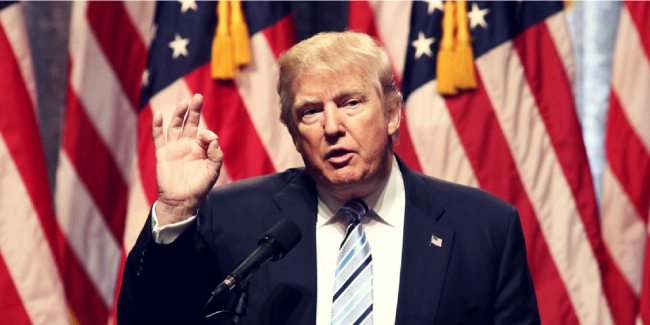
Reaction to U.S. Election Results
Europe needs better relations between Moscow and Washington. President-Elect Donald Trump spoke on the campaign trail of mending U.S. relations with Russia.

The "alt-right" votes for Trump
Donald Trump's xenophobic rethoric draws the support of white supremacists.
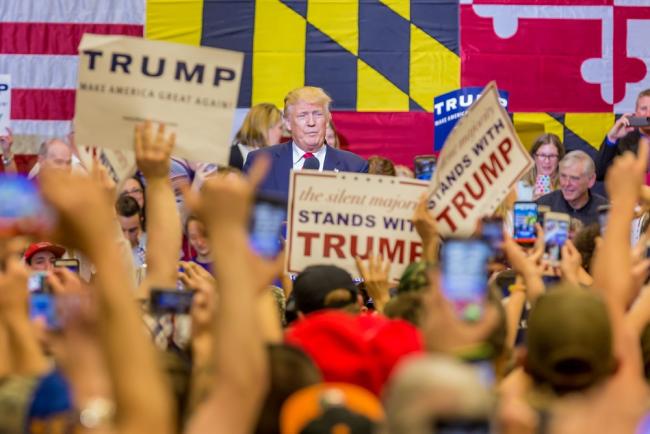
Trump et l'électorat populaire blanc
Donald Trump won the 2016 Republican primaries thanks to the mobilization of a specific part of the electorate: the white, non-college-educated, lower middle-class.

"Hillary Clinton's health is as much a problem as her credibility"
For Ifri's U.S. specialist, the Democratic presidential candidate's illness sheds a bright light not only on her health but also on her relationship to transparency.

After summer of chaos, Trump can calm our world
Reflecting on the events that shaped the summer of 2016, its easy to be overwhelmed by the many images evoking contradictory emotions. The smiles of triumphant athletes mixed in with the tears of parents of the victims of the Nice terror attack. And yet, one image prevails over all the others. It’s the picture of a five-year-old Syrian boy pulled from the rubble of his home in the besieged city of Aleppo, after yet another bombing from Syrian forces.
Trump's Vice President: Attempting to heal the Republican rift
The announcement of Mike Pence as Republican presidential nominee Donald Trump’s running mate on July 15 was decidedly lackluster, if not downright awkward. Far from his normal persona of self-assurance to the point of hubris, Trump seemed uncomfortable and even nervous throughout, shifting plans and issuing contradictory statements in the days leading up to his running mate’s finalization.
As Pence’s name began to circulate last week, Trump signaled his malaise by insisting that the leaks were not a “final, final decision,” revealing his inability to confidently stick to Pence. Trump cancelled his first joint event with Pence scheduled for Friday, citing a desire to pay tribute to the victims of the attack in Nice, France the day prior; regardless, Trump drew attention back to himself and announced his choice on Friday evening anyway, via Twitter. Insiders reported that Trump sought assurance from advisors that Pence was the man for the job, even as Trump’s campaign fielded a last-minute appeal from New Jersey Governor Chris Christie.
The selection of Pence represents Trump committing himself to the Republican Party and its unification. Alliance building is Trump’s strategy, but drawing in Republicans is risky as it requires shunning others. A polarizing candidate is what Trump feels his campaign needs but comes with the unease of sacrificing his ability to say or do whatever he pleases, Trump’s characteristic trademark.
Hillary Clinton et le leadership américain
Hillary Clinton, the frontrunner in the U.S. presidential election, has plans for American foreign policy. Clinton wants ISIS and Bashar Al-Assad out of Syria and to focus on human rights in trade negotiations with China. Now, Clinton and her campaign hope that voters will believe in her vision and her ability to make it happen.
Ifri, a foundation recognized as being of public utility, relies largely on private donors – companies and individuals – to guarantee its sustainability and intellectual independence. Through their funding, donors help maintain the Institute's position among the world's leading think tanks. By benefiting from an internationally recognized network and expertise, donors refine their understanding of geopolitical risk and its consequences on global politics and the economy. In 2026, Ifri partners with over 90 French and international companies and organizations.