





U.S. Foreign Policy
Recent presidencies have sought to restructure U.S. foreign policy around opposition to China. The Biden administration is seeking to revitalize alliances (AUKUS, European Union) and manage well the crises in Ukraine and the Middle East.
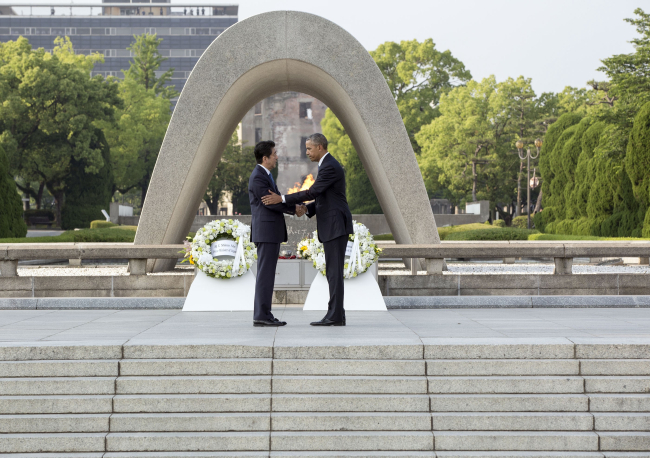
Japan and Nuclear Weapons: Between Extended Deterrence and Normative Dilemmas
Since the late 1950s, Japan’s nuclear weapons policy has been based on the coexistence of two competing normative rationales: the rejection of nuclear weapons, rooted in the legacy of Hiroshima and Nagasaki, and the recognition of the central role of US extended nuclear deterrence for Japan’s security.

Democratic Anchor, Pragmatic Reach
Despite facing their own democratic challenges, including political fragmentation, rising populism, and electoral uncertainty, European countries retain valuable experience in democratic resilience.
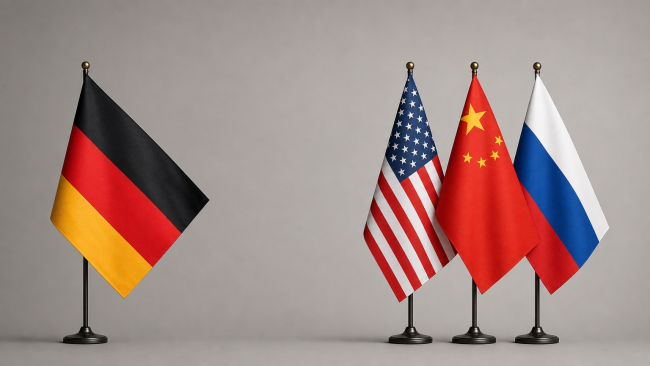
Germany in the Shadow of the United States, Russia, and China – Systemic Paradigm Shifts
Since reunification, Germany has built its prosperity on an international order based on free trade, multilateralism, and geopolitical stability. This model relied on three relationships considered complementary: U.S. military protection, Russian energy supplies, and economic integration with China. For several decades, Berlin viewed these interdependencies as factors contributing to peace, growth, and security.
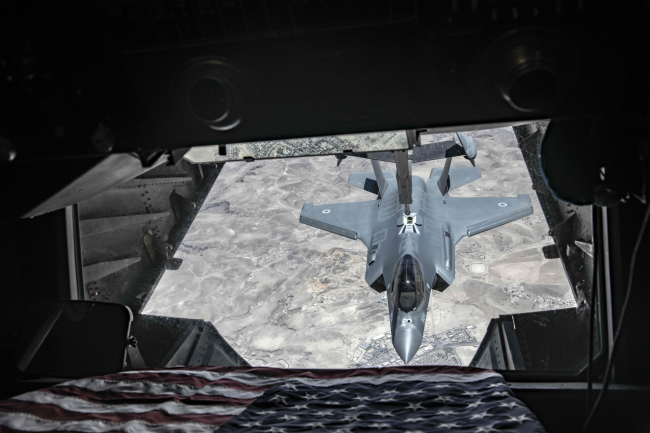
Fury from the Skies. A Strategic Analysis of Air Campaign against Iran
What is the outcome of Operations Roaring Lion (RL) and Epic Fury (EF), launched by Israel and the United States against the Islamic Republic of Iran on February 28, 2026?
Replay - The United States and Europe Adrift: Transatlantic Security in the Trump Era
Against an international backdrop marked by the war in Ukraine, Russia’s emergence as a lasting threat to Europe, and an uncertain U.S. commitment to the Old Continent, questions about the future of the transatlantic relationship are mounting.
The United States: Internal and External Perspectives
Plenary session of the 2026 World Policy Conference dedicated to analyzing the continuities and discontinuities of American policy under the presidency of Donald Trump.
Both sides of the Atlantic | Warsaw European Conversation 2026
This episode discusses the future of transatlantic relations and the evolution of security policy on both sides of the Atlantic. It examines France’s strategic stance and the implications of potential leadership change. It also looks at the dynamics of U.S. domestic politics – the role of political parties and civil society in curbing Donald Trump’s power, and the significance of the midterm elections. It considers what these processes mean for Europe, especially in the context of Article 5. Joining Marta Prochwicz-Jazowska, Deputy Head of the ECFR Warsaw office, in the discussion will be Thomas Gomart, director of the French Institute of International Relations, and Amanda Sloat, professor at the School of Politics, Economics, and Global Affairs at IE University.
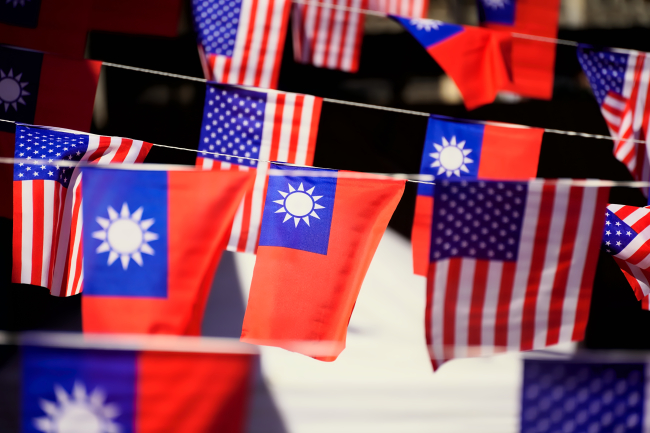
The U.S. Policy Toward Taiwan Beyond Donald Trump: Mapping the American Stakeholders of U.S.-Taiwan Relations
Donald Trump’s return to the White House reintroduced acute uncertainty into the security commitment of the United States (U.S.) to Taiwan. Unlike President Joe Biden, who repeatedly stated the determination to defend Taiwan, President Trump refrains from commenting on the hypothetical U.S. response in the context of a cross-Strait crisis.
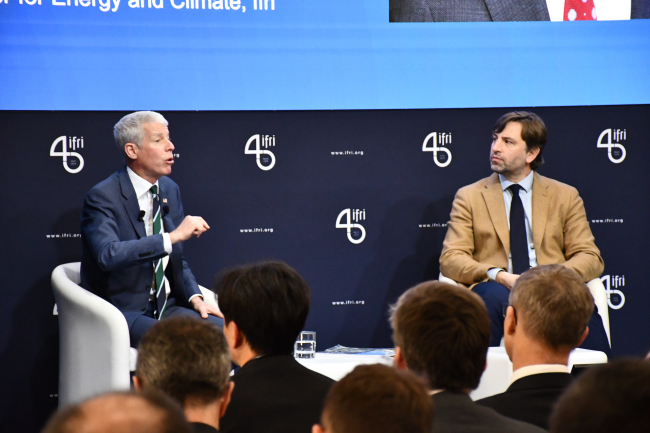
Replay - Conference with Chris Wright, Secretary, U.S. Department of Energy
Welcomed at the French Institute of International Relations (Ifri), Chris Wright outlined his vision of American energy policy built around two core axes: the human reality of energy access, and a data-driven approach. For the Secretary, energy is the foundation of prosperity, health, and longer life expectancy on a global scale. His doctrine rests on an ambition of American "energy dominance" — not merely independence, but the capacity to produce at scale in order to lower domestic costs, reindustrialize the country, and support U.S. allies.
Regulatory Dynamics and Tensions in the Space Sector: Towards and Americanization of Space Law?
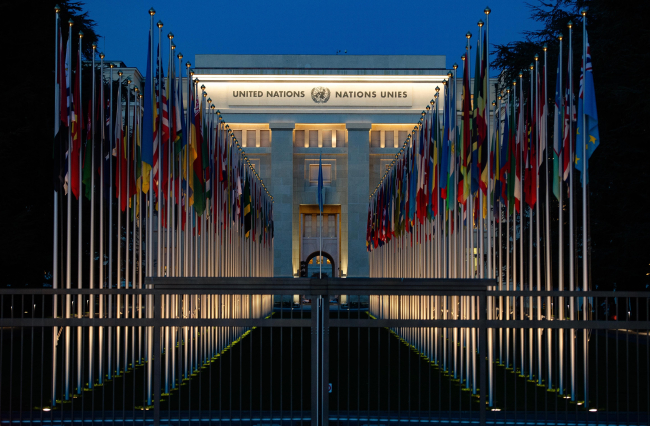
The development of space law has gradually evolved from a top-down normative dynamic dominated by the founding impetus of the UN to a bottom-up normativity driven by national and industrial practices. This evolution is now accompanied by growing normative competition, raising the risk of an Americanization of space law and prompting the question of a European response.


Thomas Gomart, director of the French Institute of International Relations: 'Trump reasserts the US' strategic centrality'
By bombing Iran alongside Israel, Donald Trump has performed a show of force aimed at China and Russia, explains the director of the French Institute of International Relations in an interview.
Trump's Indo-Pacific Vision & Japan's Strategic Autonomy
Satoru Mori, Senior Fellow at the Nakasone Peace Institute, explores key insights into President Trump's likely priorities for the Indo-Pacific region. His primary concerns include addressing economic trade imbalances with countries like China, Japan, and South Korea. Additionally, he aims to deter regional conflicts, particularly over Taiwan, and wishes to advance the denuclearization of North Korea.
Migrations Between Mexico and the United States: More of the Same or a Headlong Rush?
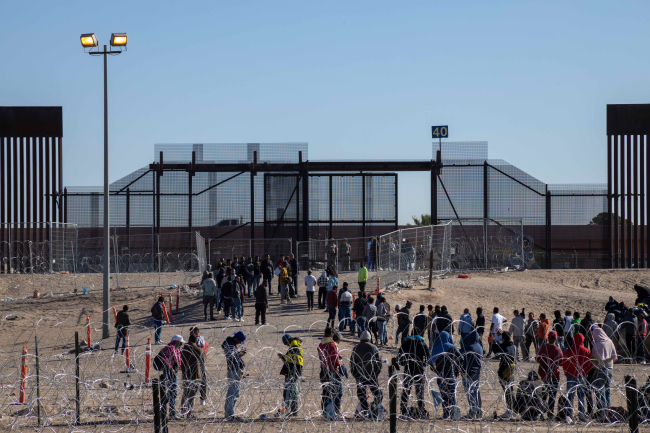
As Trump prepares to tighten border controls with Mexico and carry out mass deportations of undocumented immigrants, Mexico is questioning the economic consequences of this migration policy and expects to have to negotiate the issue in connection with the tariffs imposed by the Trump administration.
A Transatlantic Defense Industrial Base? Two Contrasting Views
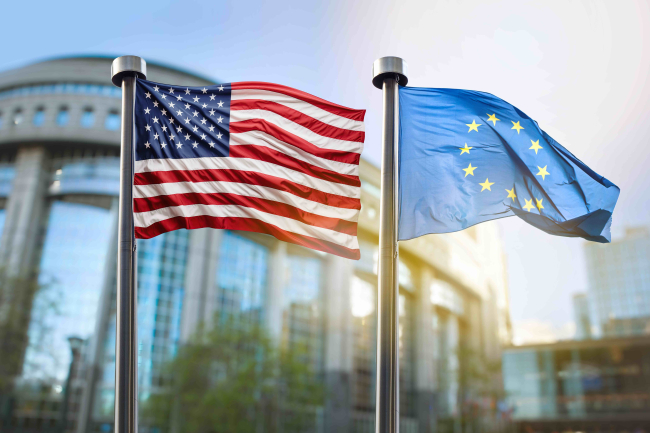
The evolving landscape of global defense cooperation has brought the transatlantic relationship between the United States (US) and Europe into sharp focus. As geopolitical tensions rise and the threat environment becomes more complex, the question of how Europe can best ensure its security while navigating its relationship with the United States has become paramount. This double feature report offers two contrasting views on the dynamics of US-Europe defense industrial relations, highlighting the challenges and opportunities that lie ahead for both parties.
How the US under Trump Became a Strategic and Ideological Adversary of Europe
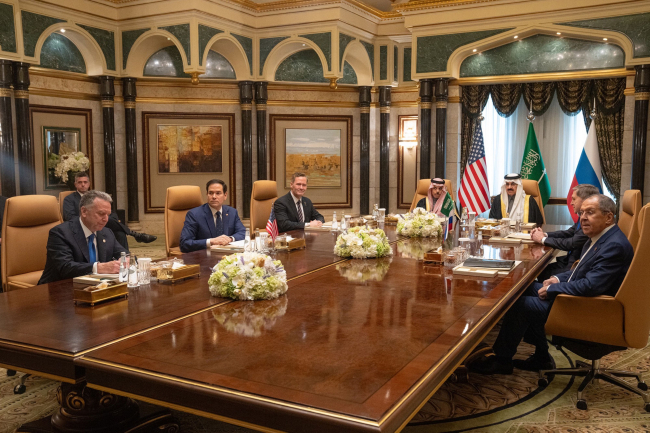
The Europeans' worst security nightmare seems to be coming true: on Tuesday, February 18, 2025, U.S. Secretary of State Marco Rubio and Russian Foreign Minister Sergey Lavrov met in Saudi Arabia to initiate the normalization of relations between their two countries. The meeting also aimed to set up peace negotiations for Ukraine. However, despite having the potential to affect the entire continent, the discussions took place without the Europeans or the Ukrainians being present.

From nonproliferation to strategic competition: US export controls and China
Technological competition is at the heart of the renewed great-power competition that has characterized relations between the USA and China since the 2010s. The role of technological innovation in the evolution of power relations is already recognized in the literature of international relations. However, developments in US technology policy under the last two administrations raise the reverse question: how does the perception of changing power relations (in this case, Chinese technological catch-up perceived as a threat to US leadership) transform policies granting or denying access to technological innovation?

The Artemis Accords: An American Strategy for Lunar Governance
The Artemis Accords provide a framework for international cooperation in space exploration as part of the U.S. lunar program. They are part of a coherent strategy.

European Union: A Geopolitical Illusion?
The European Union (EU) is holding firm in the face of the war in Ukraine—perhaps better than expected. But what long-term effects will the war have on European institutions and policies? The institutions will need to be changed to cope with the forthcoming expansions. The EU has certainly made progress toward common industrial and technological policies. But will this dynamic do away with a conception of strategic autonomy, encompassing both diplomacy and strategy? The European Union, which will undoubtedly be a key mover of future changes for the continent, remains largely uncertain in terms of its future configurations.
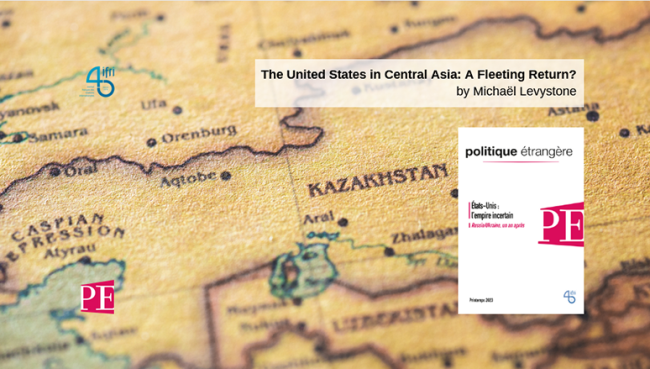
The United States in Central Asia: A Fleeting Return?
The chaotic retreat of the United States from Afghanistan in August 2021 might lead to an expectation of a lasting loss of influence in central Asia.
Japan and Nuclear Weapons: Between Extended Deterrence and Normative Dilemmas
Since the late 1950s, Japan’s nuclear weapons policy has been based on the coexistence of two competing normative rationales: the rejection of nuclear weapons, rooted in the legacy of Hiroshima and Nagasaki, and the recognition of the central role of US extended nuclear deterrence for Japan’s security.
Germany in the Shadow of the United States, Russia, and China – Systemic Paradigm Shifts
Since reunification, Germany has built its prosperity on an international order based on free trade, multilateralism, and geopolitical stability. This model relied on three relationships considered complementary: U.S. military protection, Russian energy supplies, and economic integration with China. For several decades, Berlin viewed these interdependencies as factors contributing to peace, growth, and security.
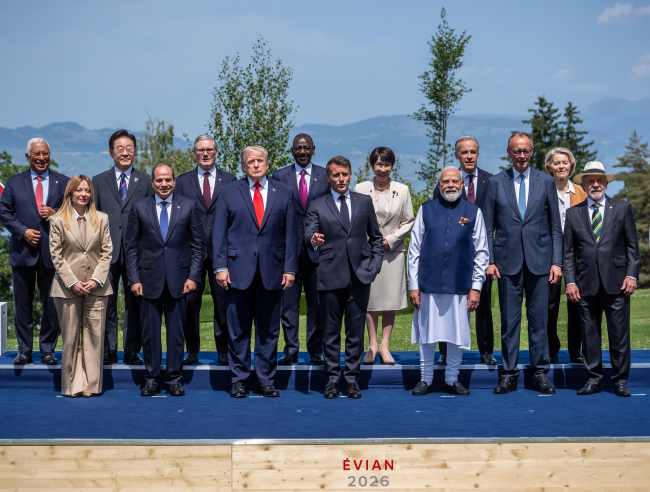
The G7 Leaders’ Summit in France: An Unexpected Success
Overall, it was a successful summit for President Macron. However, caution is warranted regarding the 2026 G7’s lasting legacy, as the unpredictability of the U.S. president could affect the durability of commitments made.
Fury from the Skies. A Strategic Analysis of Air Campaign against Iran
What is the outcome of Operations Roaring Lion (RL) and Epic Fury (EF), launched by Israel and the United States against the Islamic Republic of Iran on February 28, 2026?
The U.S. Policy Toward Taiwan Beyond Donald Trump: Mapping the American Stakeholders of U.S.-Taiwan Relations
Donald Trump’s return to the White House reintroduced acute uncertainty into the security commitment of the United States (U.S.) to Taiwan. Unlike President Joe Biden, who repeatedly stated the determination to defend Taiwan, President Trump refrains from commenting on the hypothetical U.S. response in the context of a cross-Strait crisis.
Regulatory Dynamics and Tensions in the Space Sector: Towards and Americanization of Space Law?
The development of space law has gradually evolved from a top-down normative dynamic dominated by the founding impetus of the UN to a bottom-up normativity driven by national and industrial practices. This evolution is now accompanied by growing normative competition, raising the risk of an Americanization of space law and prompting the question of a European response.
Migrations Between Mexico and the United States: More of the Same or a Headlong Rush?
As Trump prepares to tighten border controls with Mexico and carry out mass deportations of undocumented immigrants, Mexico is questioning the economic consequences of this migration policy and expects to have to negotiate the issue in connection with the tariffs imposed by the Trump administration.
A Transatlantic Defense Industrial Base? Two Contrasting Views
The evolving landscape of global defense cooperation has brought the transatlantic relationship between the United States (US) and Europe into sharp focus. As geopolitical tensions rise and the threat environment becomes more complex, the question of how Europe can best ensure its security while navigating its relationship with the United States has become paramount. This double feature report offers two contrasting views on the dynamics of US-Europe defense industrial relations, highlighting the challenges and opportunities that lie ahead for both parties.
How the US under Trump Became a Strategic and Ideological Adversary of Europe
The Europeans' worst security nightmare seems to be coming true: on Tuesday, February 18, 2025, U.S. Secretary of State Marco Rubio and Russian Foreign Minister Sergey Lavrov met in Saudi Arabia to initiate the normalization of relations between their two countries. The meeting also aimed to set up peace negotiations for Ukraine. However, despite having the potential to affect the entire continent, the discussions took place without the Europeans or the Ukrainians being present.
From nonproliferation to strategic competition: US export controls and China
Technological competition is at the heart of the renewed great-power competition that has characterized relations between the USA and China since the 2010s. The role of technological innovation in the evolution of power relations is already recognized in the literature of international relations. However, developments in US technology policy under the last two administrations raise the reverse question: how does the perception of changing power relations (in this case, Chinese technological catch-up perceived as a threat to US leadership) transform policies granting or denying access to technological innovation?
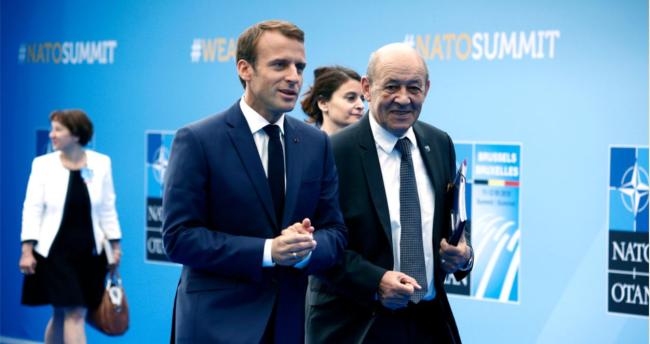
How to Keep France Engaged in NATO
France’s policy vis-à-vis the North Atlantic Treaty Organization (NATO) has always been ambivalent. On paper, France’s strategic culture fits well within NATO’s nature and agenda. Yet, in practice, French membership of NATO has always been uneasy. Several intra-alliance developments will likely affect the quality of French-NATO relations over the next few years.
The Middle East that Awaits a New US Administration
Along with a history marked by intervention from external powers, the Middle East is now confronting conflicts which combine political, ethnic and religious dimensions. The United States can not withdraw its “leadership” in the area. Aside from the Syrian question, the next American administration will have to redefine the network of partnerships and alliances in the region and grapple with a multitude of problems, none of which have simple solutions.
War’s Indirection or the Return of the Limited War
Over the last few years both the United States and Russia seem to have changed their conception of how to deploy force.
Can Washington move beyond "Ukraine fatigue"?
For the past two years, the United States has been at grips with an increasingly revisionist Russia in continental Europe. The crisis in Ukraine deteriorated the state of the bilateral relationship with Moscow [1] to what could be an all-time low since the end of the Cold War [2].
U.S. Engagement Towards Central Asia: No Great Game After All?
Since the collapse of the Soviet Union in the 1990s, Washington has defined general foreign policy objectives towards the Republics of Kazakhstan, Kyrgyzstan, Tajikistan, Turkmenistan, and Uzbekistan.
Obama at West Point
President Obama presented the case for his foreign policy last week – again. He addressed the cadet corps at West Point in what was billed as a comprehensive strategic statement for the balance of his tenure in office, and for America's future. Obama's speech came just over a week after John Kerry issued his own call for America to take a large and active role in the world — urging Americans not to "allow a hangover from the excessive interventionism of the last decade to lead now to an excess of isolationism in this decade." It set the pitch and tone for the President's address. [1]
Accountability: "Missing In Action"
Accountability is on the endangered species list. No - not the word. Indeed, “accountability” reverberates around the electronic ether almost as frequently as “thwarking.” It is the reality of persons, especially public persons, taking responsibility for acts of malfeasance in ways that entail exemplary punishment and personal costs.
The Obama Administration and Syria: From "off the table" to on
A quick look at the news dealing with the Syrian uprising the last year shows a slow progression from protests and civil resistance towards violence. The Obama Administration’s policy dealing with what many have called “slow motion revolution” has evolved in fits and starts, with mixed episodes of confusion, assertiveness, denial and drift.
U.S. Foreign Policy and the Israeli-Palestinian Conflict: A View from Palestine
How will the US respond to the changing Palestinian and Arab paradigm?
The Reform of NATO and the Free World’s Security Pact
Reforming the structure does not go to the heart of the problem. A new understanding has to be reached among the allies that takes into consideration the political, economic and technical changes of the last decade.
Democratic Anchor, Pragmatic Reach
Despite facing their own democratic challenges, including political fragmentation, rising populism, and electoral uncertainty, European countries retain valuable experience in democratic resilience.
Both sides of the Atlantic | Warsaw European Conversation 2026
This episode discusses the future of transatlantic relations and the evolution of security policy on both sides of the Atlantic. It examines France’s strategic stance and the implications of potential leadership change. It also looks at the dynamics of U.S. domestic politics – the role of political parties and civil society in curbing Donald Trump’s power, and the significance of the midterm elections. It considers what these processes mean for Europe, especially in the context of Article 5. Joining Marta Prochwicz-Jazowska, Deputy Head of the ECFR Warsaw office, in the discussion will be Thomas Gomart, director of the French Institute of International Relations, and Amanda Sloat, professor at the School of Politics, Economics, and Global Affairs at IE University.
Replay - Conference with Chris Wright, Secretary, U.S. Department of Energy
Welcomed at the French Institute of International Relations (Ifri), Chris Wright outlined his vision of American energy policy built around two core axes: the human reality of energy access, and a data-driven approach. For the Secretary, energy is the foundation of prosperity, health, and longer life expectancy on a global scale. His doctrine rests on an ambition of American "energy dominance" — not merely independence, but the capacity to produce at scale in order to lower domestic costs, reindustrialize the country, and support U.S. allies.
Thomas Gomart, director of the French Institute of International Relations: 'Trump reasserts the US' strategic centrality'
By bombing Iran alongside Israel, Donald Trump has performed a show of force aimed at China and Russia, explains the director of the French Institute of International Relations in an interview.

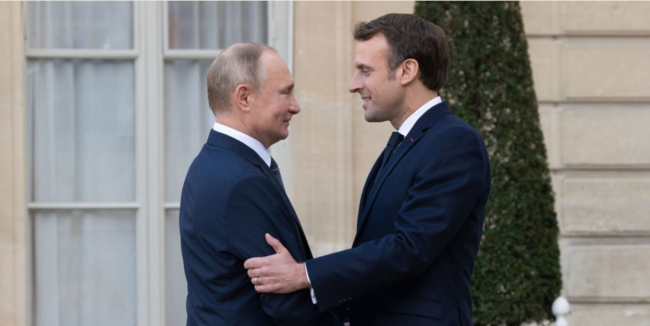
Kremlin Is Top Destination For Spooked European Leaders
Rarely in recent years has the Kremlin been so popular with European visitors. French President Emmanuel Macron arrives Monday. The Hungarian prime minister visited last week. And in days to come, the German chancellor will be there, too. All are hoping to get through to President Vladimir Putin, the man who singlehandedly shapes Russia’s course amid its military buildup near Ukraine and whose designs are a mystery even for his own narrow inner circle.

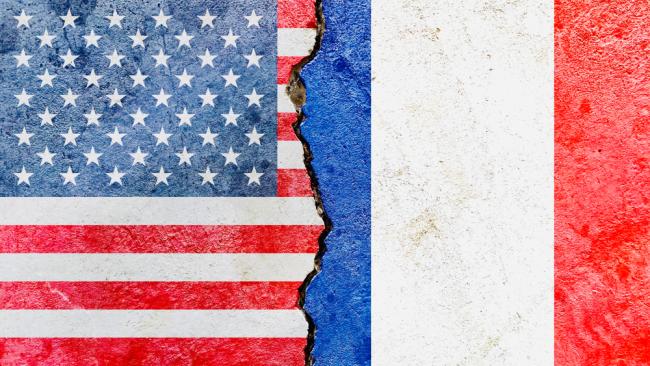
Sub snub just one symptom of longtime French unease with US
Born of a revolution fought for liberty, ties between the United States and its oldest ally, France, have long been fraternal, but they've also been marked by deep French unease over their equality.
Replay - The United States and Europe Adrift: Transatlantic Security in the Trump Era
Against an international backdrop marked by the war in Ukraine, Russia’s emergence as a lasting threat to Europe, and an uncertain U.S. commitment to the Old Continent, questions about the future of the transatlantic relationship are mounting.
The United States: Internal and External Perspectives
Plenary session of the 2026 World Policy Conference dedicated to analyzing the continuities and discontinuities of American policy under the presidency of Donald Trump.
Both sides of the Atlantic | Warsaw European Conversation 2026
This episode discusses the future of transatlantic relations and the evolution of security policy on both sides of the Atlantic. It examines France’s strategic stance and the implications of potential leadership change. It also looks at the dynamics of U.S. domestic politics – the role of political parties and civil society in curbing Donald Trump’s power, and the significance of the midterm elections. It considers what these processes mean for Europe, especially in the context of Article 5. Joining Marta Prochwicz-Jazowska, Deputy Head of the ECFR Warsaw office, in the discussion will be Thomas Gomart, director of the French Institute of International Relations, and Amanda Sloat, professor at the School of Politics, Economics, and Global Affairs at IE University.
Replay - Conference with Chris Wright, Secretary, U.S. Department of Energy
Welcomed at the French Institute of International Relations (Ifri), Chris Wright outlined his vision of American energy policy built around two core axes: the human reality of energy access, and a data-driven approach. For the Secretary, energy is the foundation of prosperity, health, and longer life expectancy on a global scale. His doctrine rests on an ambition of American "energy dominance" — not merely independence, but the capacity to produce at scale in order to lower domestic costs, reindustrialize the country, and support U.S. allies.

The European Pillar of Security
Leo Litra and Lesia Ogryzko are joined by Élie Tenenbaum and Oleksandr Sushko to discuss June’s NATO summit—and what Europe’s security step up means for Ukraine.
Trump's Indo-Pacific Vision & Japan's Strategic Autonomy
Satoru Mori, Senior Fellow at the Nakasone Peace Institute, explores key insights into President Trump's likely priorities for the Indo-Pacific region. His primary concerns include addressing economic trade imbalances with countries like China, Japan, and South Korea. Additionally, he aims to deter regional conflicts, particularly over Taiwan, and wishes to advance the denuclearization of North Korea.
The Biden Administration: What Consequences for Allies? Views from Japan and France
The US allies greeted the election of Joe Biden with relief, but also with expectations.
U.S. foreign policy and the World's new power balance: an interview with Gordon Adams
Gordon Adams, Professor Emeritus of International Relations, School of International Service, American University speaks about U.S. foreign policy and the World's new power balance on the sidelines of Ifri's 18th annual U.S. conference held on December 6, 2019.
U.S. Foreign Policy in the Age of Trump
Despite a very particular style, the Trump administration's foreign policy continues on many points the American withdrawal from World affairs which had started under Barack Obama. The main trends of thought of American foreign policy show this evolution, with the resurgence of non-interventionist and even nationalist ideas amongs DC think-tankers.
Donald Trump's challenge to American democracy and the western alliance
On April 27, 2017, Ifri hosted David FRUM (former speechwriter for President George W. Bush, senior editor for The Atlantic magazine) to discuss Donald Trump's challenge to American democracy and the western alliance.
Ifri, a foundation recognized as being of public utility, relies largely on private donors – companies and individuals – to guarantee its sustainability and intellectual independence. Through their funding, donors help maintain the Institute's position among the world's leading think tanks. By benefiting from an internationally recognized network and expertise, donors refine their understanding of geopolitical risk and its consequences on global politics and the economy. In 2026, Ifri partners with over 90 French and international companies and organizations.
