




India
Through its "multi-alignment" diplomacy, Narendra Modi's India is an essential partner for the Indo-Pacific powers, while retaining its freedom to cooperate with Russia and Iran. Its main rival remains China.


Narendra Modi’s India
The Indian People’s Party (BJP) coming to power in the 2014 legislative elections raises many questions about the country’s governance.
France, Germany, Turkey: A New Triangle of Powers
Relations between Germany, France and Turkey have been strictly bilateral for a long time, with varying intensity, styles and areas of cooperation. The European perspective that is now part of these relations has introduced a three-way dynamic.
The Expanding Chinese Footprint in Latin America: New Challenges for China, and Dilemmas for the US
The physical presence of China in Latin America is entering a phase of significant expansion, as the logical consequence of the rapid growth over the past decade of its trade, investment, and infrastructure for doing business in the region.
Russia, China and the United States: From Strategic Triangularism to the Postmodern Triangle
Over the past decade, there has been much talk about a new world order, in which American "unipolarity" would be superseded by more equal arrangements between the great powers. One such idea is a return to the Russia-China-US triangle. In truth, however, the time for such geopolitical schemes has long passed.
Ifri, a foundation recognized as being of public utility, relies largely on private donors – companies and individuals – to guarantee its sustainability and intellectual independence. Through their funding, donors help maintain the Institute's position among the world's leading think tanks. By benefiting from an internationally recognized network and expertise, donors refine their understanding of geopolitical risk and its consequences on global politics and the economy. In 2026, Ifri partners with over 90 French and international companies and organizations.

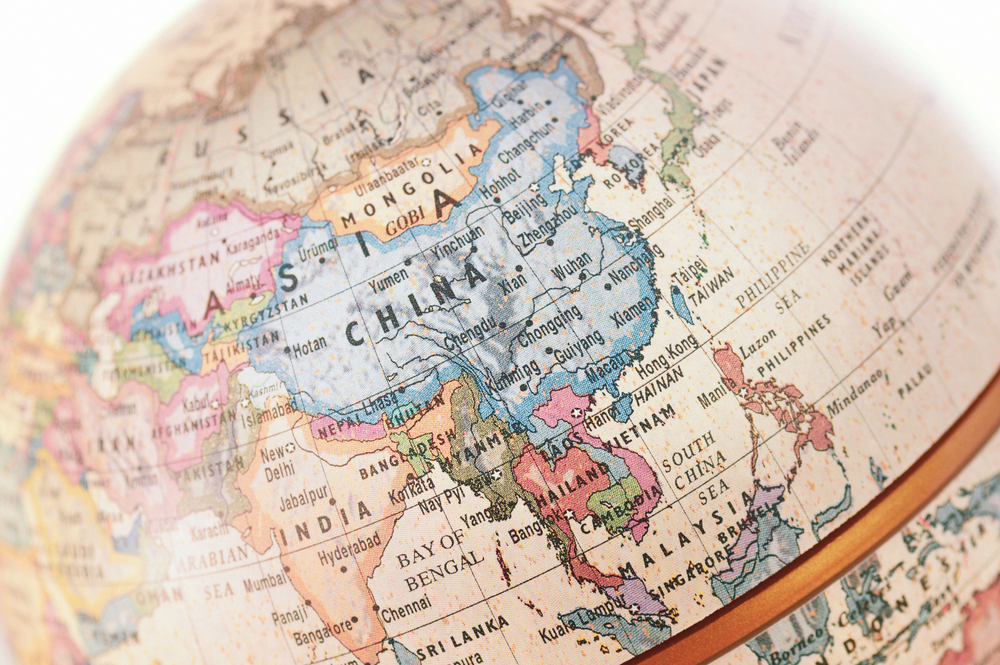
Asia is a nerve center for multiple global economic, political and security challenges. The Center for Asian Studies provides documented expertise and a platform for discussion on Asian issues to accompany decision makers and explain and contextualize developments in the region for the sake of a larger public dialogue.
The Center's research is organized along two major axes: relations between Asia's major powers and the rest of the world; and internal economic and social dynamics of Asian countries. The Center's research focuses primarily on China, Japan, India, Taiwan and the Indo-Pacific, but also covers Southeast Asia, the Korean peninsula and the Pacific Islands.
The Centre for Asian Studies maintains close institutional links with counterpart research institutes in Europe and Asia, and its researchers regularly carry out fieldwork in the region.
The Center organizes closed-door roundtables, expert-level seminars and a number of public events, including an Annual Conference, that welcome experts from Asia, Europe and the United States. The work of Center’s researchers, as well as that of their partners, is regularly published in the Center’s electronic journal Asie.Visions.