




Oceania
Today, Oceania is a key part of the Indo-Pacific region, where geopolitical competition is juxtaposed with the challenges of climate change and maritime safety.

Replay - Navigating Uncertainty: Asian Powers amid US-China Competition
On 14 October 2026, Ifri’s Center for Asian Studies brought together experts from Taiwan, South Korea, Japan, the Philippines and India to discuss how Asian countries are adapting to the competition between Washington and Beijing. They share a common concern: being caught out either by a sudden military escalation or by a deal struck between the two superpowers at their expense.

Democratic Anchor, Pragmatic Reach
Despite facing their own democratic challenges, including political fragmentation, rising populism, and electoral uncertainty, European countries retain valuable experience in democratic resilience.

Australia’s Recognition of Palestine: A Case of Supporting the Status Quo over Accountability
Hamas’s terrorist attacks against Israel on October 7, 2023, killed over a thousand Israelis, altering irrevocably the way the Palestinian/Israeli conflict is viewed internationally. Australia’s government professed profound shock and disgust at Hamas’s attacks, together with its unwavering diplomatic and political support for Israel. But as Israel’s response became more concerned with exacting revenge and as the pretext to fulfill long-held ideological dreams of a Greater Israel, support from Australia became more muted and conditional. This culminated in Australia joining Britain, France, and Canada in formally recognizing a Palestinian state at the United Nations General Assembly meeting in September 2025.

China’s Strategy Toward Pacific Island countries: Countering Taiwan and Western Influence
Over the past decade, China has deployed a diplomatic strategy toward the Pacific Island Countries (PICs). This strategy pursues two main objectives: countering Taiwan's diplomatic influence in the region and countering the influence of liberal democracies in what Beijing refers to as the "Global South."
France’s Contributions to Pacific Maritime Governance
France stands out as the only European country capable of making a substantial security contribution to the South Pacific, with a permanent presence of 2,800 military personnel extensively skilled in regional cooperation.
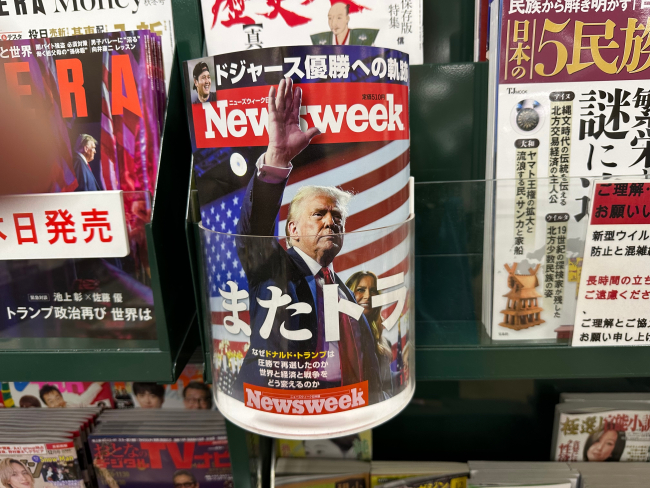
The Indo-Pacific and Trump II. In Uncle Sam’s brutal embrace
In this collective analysis, the research team of the Center for Asian Studies presents a synthetic and non-exhaustive assessment of the relations taking shape between the United States under the Trump II administration and some of the main players in the Indo-Pacific.
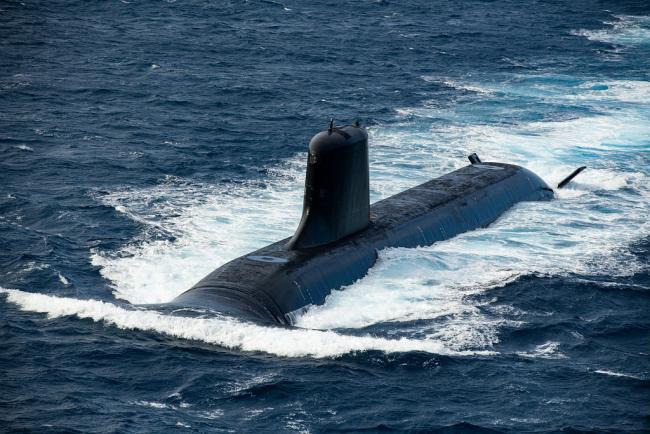
Naval Nuclear Propulsion: The Technical and Strategic Challenges of a Restricted Technology
The technical and operational capabilities of naval nuclear propulsion - discretion, power, autonomy and manoeuvrability - make this technology a strategic asset for nuclear deterrence.
The Ambitions of the Islamic Republic of Iran in the Pacific
In January 2023, the Iranian Navy staged a show of force near the Australian Exclusive Economic Zone (EEZ) amid growing tensions between Tehran and Canberra.
Japan and the Pacific Islands Countries. Longstanding Strategic Interests, Recent Strategic Engagement
Food Systems in the Pacific: Addressing Challenges in Cooperation with Europe
More frequent climate disasters, rising sea levels, the economic fallout of Covid-19 lockdowns, border closures, supply chain constraints, and the global impact of the war in Ukraine have aggravated the challenge of maintaining sustainable and resilient food systems for Pacific Island Countries (PICs).
Attention to the Periphery? Germany and the Pacific Island States
In September 2020, Germany adopted policy guidelines for the Indo-Pacific that comprehensively set out its approach towards this increasingly important region, seeking to diversify partnerships beyond China.
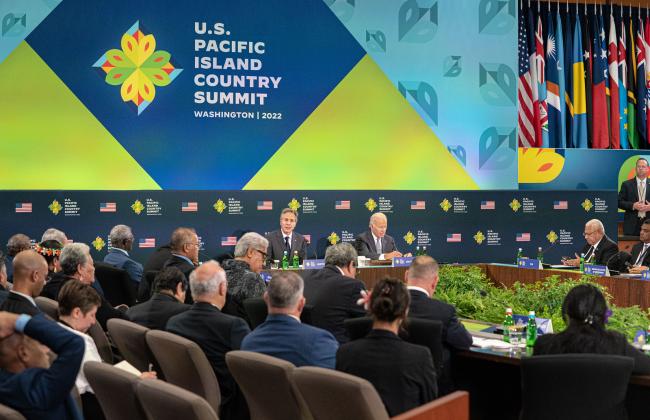
The United States and France: Partners for the Pacific Islands Region?
Emmanuel Macron and Joe Biden are meeting for the first state visit under the Biden administration, which is reserved for France.
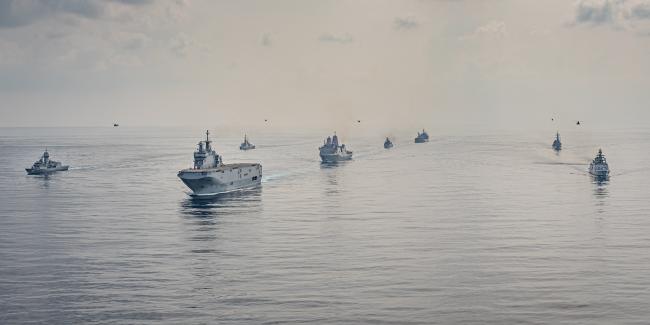
France and AUKUS: Bouncing Back to Live up to Pacific Challenges
Back in September 2021, the announcement of AUKUS – the defense partnership between Australia, the United Kingdom (UK) and the United States (US) was a shock to Paris.
China's power: views from Kevin Rudd, former Prime Minister of Australia
An interview with Kevin Rudd, former Prime Minister of Australia.

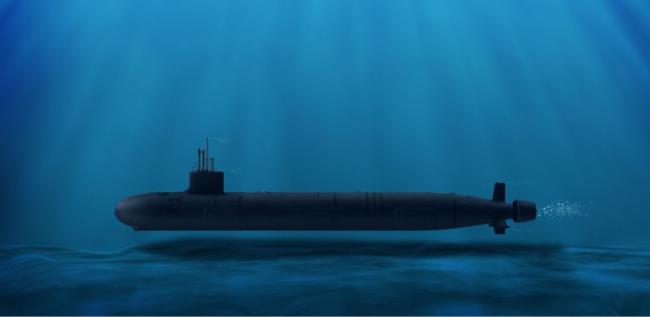
France and AUKUS: A Necessary Reconciliation
One year on, the announcement of the Australia-U.K.-U.S alliance has not been accompanied by any major changes to France’s Indo-Pacific defense strategy.
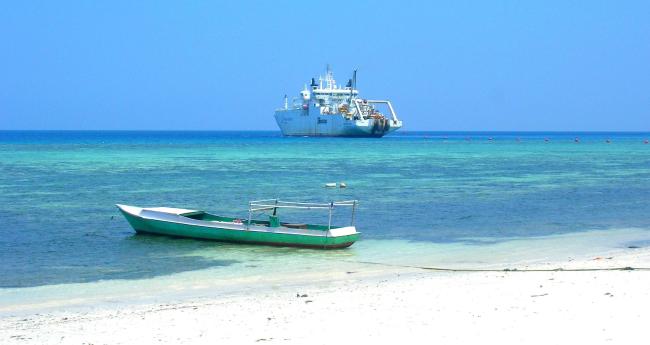
The Pacific caught in the World Wide Web? Geopolitics of submarine cables in Oceania
This article provides a review of the digital connectivity of the Pacific Islands nations (Polynesia, Melanesia, and Micronesia) and the main challenges and prospects arising from it, at a time when the submarine cable market is undergoing profound change and a growing politicization of this technology on the international scene.

Building Bridges over the Blue Pacific. Beyond Marine Protected Areas – A Europe-Oceania Cooperation
The “new scramble for the Pacific” is characterized by a race for the control of maritime space and resources, oscillating between ocean grabbing and ocean commoning.
New government in Canberra: A reset for Australia’s Indo-Pacific approach?
Following the May Federal election, Australia has its first centre-left government in close to a decade, led by Prime Minister Anthony Albanese.
Video: How Strong is the Taiwan-US-Japan Triangle?
The United States is the linchpin of Taiwan’s security. Under Donald Trump’s presidency, as tensions with the People’s Republic of China grew, the US increasingly took steps to signal ever more clearly its commitment to supporting and defending Taiwan, a trend that seems to have continued somewhat under Joe Biden’s leadership. In recent months, Tokyo has also become more visibly engaged in declaring its commitment to ensuring peace and stability in the Taiwan Strait. This webinar will explore these recent trends, analyse the strength of ties between these three actors, and the implications for the future of stability in the Taiwan Strait and for regional and global peace and security more broadly.
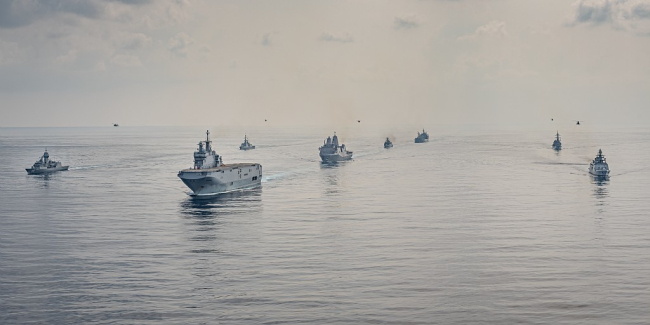
AUKUS, the Indo-Pacific, and France’s Role: Fluctuat Nec Mergitur
The announcement of the new AUKUS alliance between Australia, the UK and the U.S. came as a shock for France.
Australia’s Recognition of Palestine: A Case of Supporting the Status Quo over Accountability
Hamas’s terrorist attacks against Israel on October 7, 2023, killed over a thousand Israelis, altering irrevocably the way the Palestinian/Israeli conflict is viewed internationally. Australia’s government professed profound shock and disgust at Hamas’s attacks, together with its unwavering diplomatic and political support for Israel. But as Israel’s response became more concerned with exacting revenge and as the pretext to fulfill long-held ideological dreams of a Greater Israel, support from Australia became more muted and conditional. This culminated in Australia joining Britain, France, and Canada in formally recognizing a Palestinian state at the United Nations General Assembly meeting in September 2025.
China’s Strategy Toward Pacific Island countries: Countering Taiwan and Western Influence
Over the past decade, China has deployed a diplomatic strategy toward the Pacific Island Countries (PICs). This strategy pursues two main objectives: countering Taiwan's diplomatic influence in the region and countering the influence of liberal democracies in what Beijing refers to as the "Global South."
France’s Contributions to Pacific Maritime Governance
France stands out as the only European country capable of making a substantial security contribution to the South Pacific, with a permanent presence of 2,800 military personnel extensively skilled in regional cooperation.
The Indo-Pacific and Trump II. In Uncle Sam’s brutal embrace
In this collective analysis, the research team of the Center for Asian Studies presents a synthetic and non-exhaustive assessment of the relations taking shape between the United States under the Trump II administration and some of the main players in the Indo-Pacific.
Japan and the Pacific Islands Countries. Longstanding Strategic Interests, Recent Strategic Engagement
Attention to the Periphery? Germany and the Pacific Island States
In September 2020, Germany adopted policy guidelines for the Indo-Pacific that comprehensively set out its approach towards this increasingly important region, seeking to diversify partnerships beyond China.
The United States and France: Partners for the Pacific Islands Region?
Emmanuel Macron and Joe Biden are meeting for the first state visit under the Biden administration, which is reserved for France.
Democratic Anchor, Pragmatic Reach
Despite facing their own democratic challenges, including political fragmentation, rising populism, and electoral uncertainty, European countries retain valuable experience in democratic resilience.
France and AUKUS: A Necessary Reconciliation
One year on, the announcement of the Australia-U.K.-U.S alliance has not been accompanied by any major changes to France’s Indo-Pacific defense strategy.
Replay - Navigating Uncertainty: Asian Powers amid US-China Competition
On 14 October 2026, Ifri’s Center for Asian Studies brought together experts from Taiwan, South Korea, Japan, the Philippines and India to discuss how Asian countries are adapting to the competition between Washington and Beijing. They share a common concern: being caught out either by a sudden military escalation or by a deal struck between the two superpowers at their expense.
China's power: views from Kevin Rudd, former Prime Minister of Australia
An interview with Kevin Rudd, former Prime Minister of Australia.
Video: How Strong is the Taiwan-US-Japan Triangle?
The United States is the linchpin of Taiwan’s security. Under Donald Trump’s presidency, as tensions with the People’s Republic of China grew, the US increasingly took steps to signal ever more clearly its commitment to supporting and defending Taiwan, a trend that seems to have continued somewhat under Joe Biden’s leadership. In recent months, Tokyo has also become more visibly engaged in declaring its commitment to ensuring peace and stability in the Taiwan Strait. This webinar will explore these recent trends, analyse the strength of ties between these three actors, and the implications for the future of stability in the Taiwan Strait and for regional and global peace and security more broadly.
Ifri, a foundation recognized as being of public utility, relies largely on private donors – companies and individuals – to guarantee its sustainability and intellectual independence. Through their funding, donors help maintain the Institute's position among the world's leading think tanks. By benefiting from an internationally recognized network and expertise, donors refine their understanding of geopolitical risk and its consequences on global politics and the economy. In 2026, Ifri partners with over 90 French and international companies and organizations.

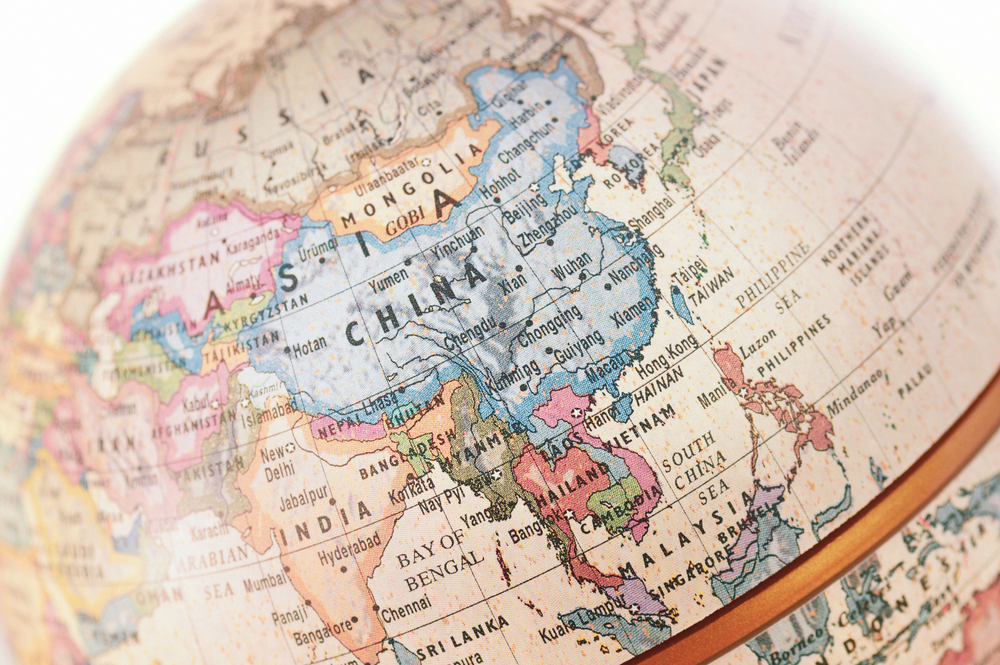
Asia is a nerve center for multiple global economic, political and security challenges. The Center for Asian Studies provides documented expertise and a platform for discussion on Asian issues to accompany decision makers and explain and contextualize developments in the region for the sake of a larger public dialogue.
The Center's research is organized along two major axes: relations between Asia's major powers and the rest of the world; and internal economic and social dynamics of Asian countries. The Center's research focuses primarily on China, Japan, India, Taiwan and the Indo-Pacific, but also covers Southeast Asia, the Korean peninsula and the Pacific Islands.
The Centre for Asian Studies maintains close institutional links with counterpart research institutes in Europe and Asia, and its researchers regularly carry out fieldwork in the region.
The Center organizes closed-door roundtables, expert-level seminars and a number of public events, including an Annual Conference, that welcome experts from Asia, Europe and the United States. The work of Center’s researchers, as well as that of their partners, is regularly published in the Center’s electronic journal Asie.Visions.