




France
Although France's demographic and economic weight in the world is tending to decline, it nevertheless retains important attributes of power. Its diplomacy and defense policy bear witness to this.
Related Subjects

The European Union's Struggle Against Terrorism
Since 2015, several countries in the European Union have been hit by attacks.
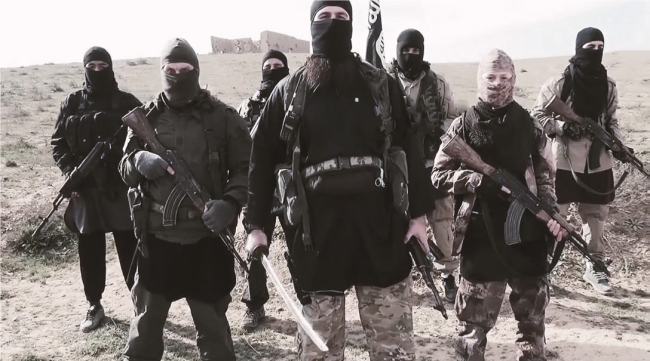
137 Shades of Terrorism. French Jihadists Before the Courts
This study, based on original judicial sources, assesses the profiles of 137 individuals sentenced in France for cases related to jihadism.
What Is a Good Security Sector Reform?
For about 20 years, security sector reform (SSR) has emerged as an essential tool for crisis recovery and reconstructing weak and failed states at the heart of the security-development continuum. It is time to take stock of the lessons learnt about SSR and to offer an analysis of good practices and the lessons learned from these experiences.
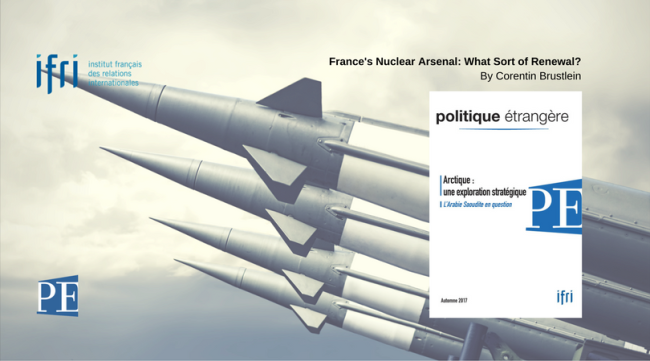
France's Nuclear Arsenal: What Sort of Renewal?
Over the course of the next few years, France will have to renew its nuclear arsenal to ensure that it remains a credible dissuasion in the eyes of its potential enemies.
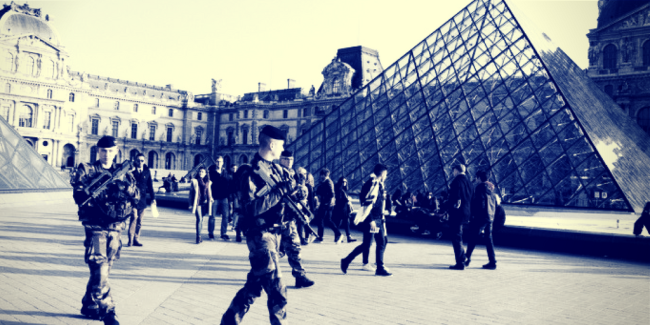
France vs. Jihadism: The Republic in a New Age of Terror
This paper assesses the current state of the jihadist threat to France, as well as the French authorities’ security response. With the upcoming presidential election, 2017 will be a decisive year for the country. Terrorism will be at the heart of the campaign and ISIS will most likely try to strike again.

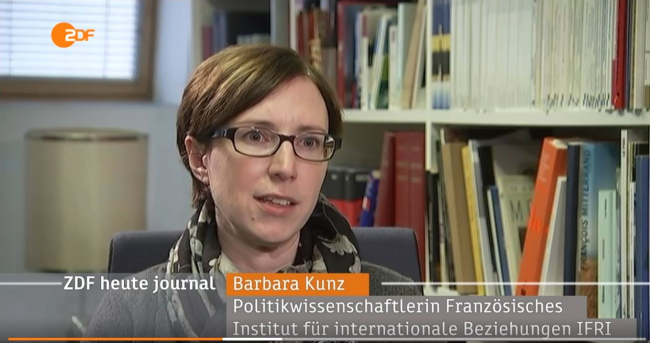
Political scientist Barbara Kunz invited to Heute journal
Primary elections of the French conservative party "Les Républicains": analysis by Barbara Kunz.
La Sentinelle égarée ? L’armée de Terre face au terrorisme
The 2015 terror attacks in France and the ensuing activation by the Ministry of Defense of its homeland protection plan opened a new phase in the long history of the French Army’s involvement in internal security.


In France, are soldiers outside the Eiffel Tower and the Louvre really worth it?
Sentinel represents a watershed development in French military operations. For the first time since the end of the Cold War, the number of French army soldiers actively deployed in metropolitan France roughly equals that of overseas operations. But the military establishment here is far from unified on the value of an operation often seen as a costly and superficial means of reassuring civilians and tourists at the expense of substantive improvement to national security.

NATO wrestles with internal divisions ahead of Warsaw summit
The alliance is struggling to assemble four battalions to safeguard its eastern flank from a possible Russian attack. In addition, many member states are falling short of their financial commitments to the alliance.

Semi-Mutual Defense: Europe’s Patchwork Response to Paris Attacks
The offer of active military support to France in Syria or in the Sahel by several European member states is likely to overshadow the absence of meaningful commitment from others. On balance, the picture will not be too disheartening for supporters of the EU: its foreign and security policy apparatus will not come out damaged, but only because it has not been properly tested.
De-radicalization and the Prevention of Radicalization in Germany, Great Britain and Denmark
To date, a few thousand Europeans have left Europe to join jihadi fighters in Syria and Iraq. Several hundreds of them have already returned. To deal with this phenomenon, some countries have developed radicalization prevention and de-radicalization programs.
Guerre de l'information : le web russe dans le conflit en Ukraine
Since the beginning of the crisis in Ukraine, Russia has been waging an information war.
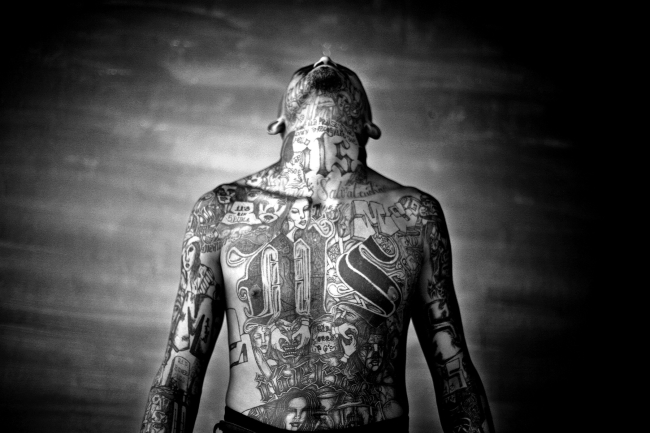
La cyberguerre des gangs aura-t-elle lieu ?
Gangs have relied on cyberspace to evolve. New information technologies have allowed them to speed up and globalize their operations.
Web social et djihadisme : du diagnostic aux remèdes
From Al Qaeda to Islamic state, the international jihadist movement understands how to adapt to the web’s evolution, which it is using as an operating platform.
Terrorism and Counter-Radicalization: the Danish Model
There have only been two terrorist attacks in Denmark over the last thirty years: in 1985 and 2015. Other attacks have been prevented, notably those planned against the illustrators whose drawings of the prophet Mohammed were published in Jyllands-Posten.
Jihad in Syria and in Iraq: a Сhallenge for France
One week after the terrorist attacks in Paris, the police killed two jihadists in Belgium. Officials said that the two men were coming back from Syria and were on the brink of targeting Brussels. The capital of Belgium was already targeted a few months ago: in May 2014, Mehdi Nemmouche – a French citizen who had trained in Syria – killed 4 persons in Brussels’ Jewish museum.
Don’t Overhaul French Anti-terrorism
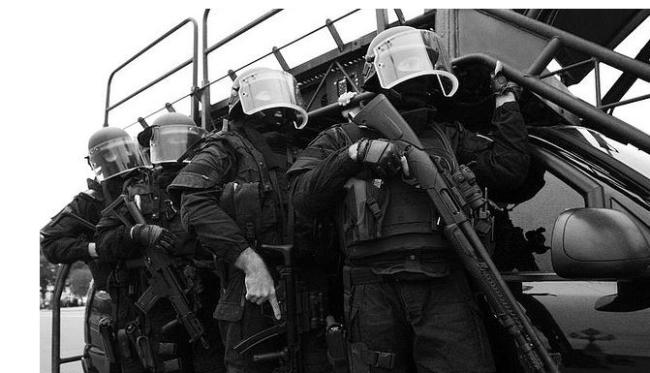
For the past two years, French experts on terrorism have felt anxious. They often emphasized: “The question is not whether France will be targeted by a terrorist attack, but when.” The dreaded attack took place on January 7th, 2015. That evening, various speakers across the media expressed their solidarity with the victims, but also criticized intelligence agencies for their failure, and asked for the implementation of a completely different strategy or the adoption of a new antiterrorist law. Never mind that the last one was only voted on a couple of months ago — the mere occurrence of the attacks shows that something went wrong somewhere. The French Prime Minister, Manuel Valls, didn’t hide this fact and asked for a thorough report. But let’s face it: No antiterrorist scheme is foolproof. The attack against Charlie Hebdo should not lead to an entire rethink of a French system that had become stronger over the years and now seems solid.
The Digital Tsunami. Natural Disasters Management in the Age of Social Media
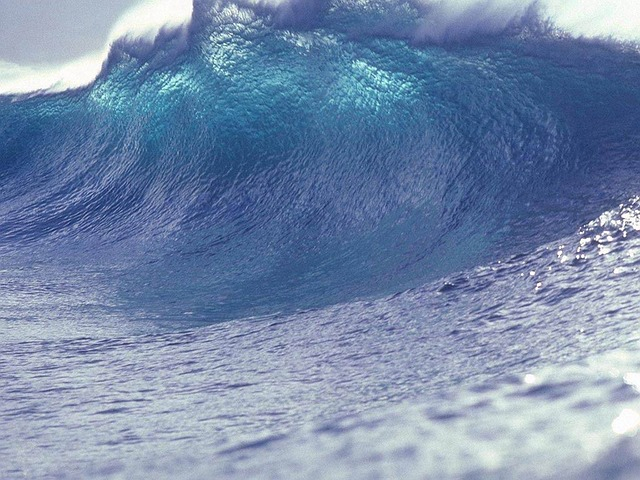
Social media enable new means of natural disasters management. It is now easier to locate victims, to find shelters, or to coordinate humanitarian aid. Prevention has also become more efficient. From now on, this tool will be more and more present in the field of natural disasters management; however, it also poses some risks because of its open nature, which makes control more difficult.
The Impact of the First World War on Strategy
The First World War helped redefine the notion of strategy, giving it a political dimension that it previously lacked.
France and the Fight against Terrorism in the Sahel: The History of a Difficult Leadership Role
Except for its extreme poverty and the disastrous effects of a series of droughts, the Sahel region has been largely out of the spotlight of international attention in the past. Yet the rise of terrorism and especially the creation of Al-Qaida in the Islamic Maghreb (AQIM) in 2007 brought the region into the focus of world politics. Initially, AQIM"s activities in the Sahel mainly posed a threat to the stability of the Sahelian states themselves. In an effort to internationalize its agenda, however, AQIM also started targeting Western countries.
Ifri, a foundation recognized as being of public utility, relies largely on private donors – companies and individuals – to guarantee its sustainability and intellectual independence. Through their funding, donors help maintain the Institute's position among the world's leading think tanks. By benefiting from an internationally recognized network and expertise, donors refine their understanding of geopolitical risk and its consequences on global politics and the economy. In 2026, Ifri partners with over 90 French and international companies and organizations.
